 17:57
DJ Lesson on Mixing Old School Disco Music from the 1980's and 1970's
Contents of the video
0:00 Jonathan here, The DJ Tutor
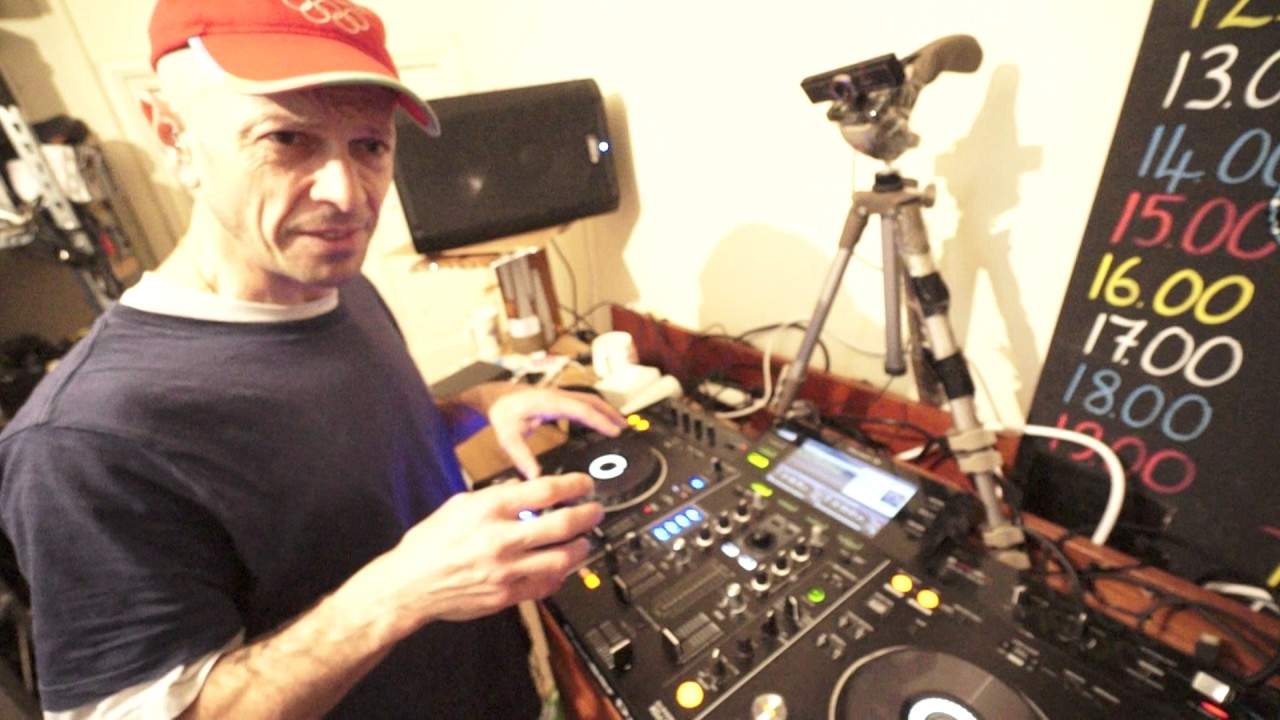
Alright guys, Jonathan here, The DJ Tutor. First of all I'd like to say a very big thank you for inviting me to the WDJ convention that was held in Greece just last week. Also I'd like to say a very big thank you very much to the interpreter, what a lovely lady. Very kind, also very intelligent and she had a bit of a wacky sense of humour which is what gets you through life. Also I'd like to say thank you very much to V-Moda for letting me give away prizes. Of course Nikos had the in-ear headphones and then there was a mixing competition and the first prize was a set of M100, second prize was the LP2s. So, without further ado, we're going to do some old school mixing. Now, right, if you've let's say just started music.
Becoming a DJ and you find that mixing EDM is relatively simple. It's pretty much easy to do because it's the same BPM practically all the way through, except if the producer is on acid and all of a sudden starts to dip the speed and realizes that's a great idea and leaves it in there. That does happen sometimes. Not the fact that they take acid, but maybe they just like to slow the track down halfway through and bring it back up, which is really difficult to mix because if you've mixed it before they slow it down, you start to mix in when they slow it down. You realize it's out of beat. That does make sense. Just rewind so EDM is relatively easy because same BPM practically all the way through, I won't go back into what I've just said key changes does happen.
You get the bridge, but very rarely will you have lots of key changes through the tracks? You do get key changes in tracks, but not as frequent as let's say old school music. So old school. Tracks. Why is it more difficult to mix them because most of the time they're made by real people playing real instruments and the music is all over over the place? And I don't mean as in someone has just turned up to the studio and has decided to just sort of strum along on a guitar and then just chuck it in randomly into a track. Of course there is structure, but there is the old school tunes are they are more difficult to mix end of. There's more going on. There's more happening in there if you listen to an a modern day dance track, whether it be techno trance electro house dubstep that there is format to that track, you go back in time 20 or 30 years.
3:12 Mate, I'm milking cows
There is still format, but you just need a little bit more intuition. You've got to, you've got to listen to the tune. You've got to understand it. All right, now I'm going to play you two tracks really one that is in my mind and you can do a thumbs up if you agree or a thumbs down if you don't. And if anyone does a thumbs down, I'm going to visit you in this small hours and chop your thumb off. Really? What a good idea. You're walking around like this, we're going to make like that and they'll be going, That's really rude. No, I want to do that. That's actually very rude. Milking cows. He said. All right, mate, I'm milking cows. No, I'm not. I'm singing me thumbs up anyway. Thoughts. So first tune is one of my classic all time the best disco tracks of like for ever.
It's not Michael Jackson, it's the Brothers Johnson and Stomp. Um, hold on, did I have it queued up? Yeah, I did this tune here. I mean, if you haven't heard this track before, then I suggest you have a listen again. Again, without me waffling over it. It's by the Brothers Johnson. It's a track entitled Stomp and the Brothers Johnson are probably one of the reasons why we have a few modern day tracks today because they have lots of soul and energy in their tunes. And this one is just a beautiful, beautiful track. Check it out.
4:25 I've set a couple of goals
That's called a talkover. Okay, so I've set a couple of goals. Okay, so I've set a couple of goals. Now, what I'm going to bring in is something that's a little bit more commercial now. The Brothers Johnson from, let's say, a scale of 1 to 10, depending on the sort of DJ set you're doing. Let's imagine you're doing a wedding set from a scale of 1 to 10 to bring the Brothers Johnson in knowing full well the dance floor will dance or the people will dance. I would say it's at a 50-50. It's the sort of tune that you could put in. Put on and if people know it, they go, wow, I remember this. Yes, let's go for it. Let's just dance because it's such a great tune. We haven't heard it in ages. Alternatively, it's the sort of tune where people would look at you and think what on earth are you playing?
So you either love it or hate it. The next one I'm about to play is the sort of tune at a wedding gig where I would say it's more like an eight to a nine where you put it on at right time, right place and the crowd go bananas because they're like, yeah, it's nice. It's not a makeshift like modern day version of it. It's the original, which is this level Lady Marmalade. Now, this tune here is just it's got it's got balls, you know, it has absolute balls, right? So both of these were made by real bands, both of them maybe start at, I don't know, 113 BPM, but then maybe slow down a little bit speed up because this is the problem. For example, I could start, let's say, beat matching Lady Marmalade at the beginning of Brothers Johnson.
And then when I want to bring Lady Marmalade in towards the latter part of Brothers Johnson and I start beat matching it, I may find that it's now out of time. It's because the speed of Brothers Johnson may have increased or decreased very slightly. And so to know, actually, the Lady Marmalade wouldn't have done because I've got it set up anyway. So what? What can we do now? There are many ways of mixing tracks like this. One is chopping them, the other one is getting a small loop or the other one is somehow forming a mix right time, right place. But as I said earlier on with tracks like this, especially with the radio versions, very important, it's more compact. So you have very little gaps where you've got an instrumental break or you've got just a part in the track that you've just got some beat that you can loop.
So you've got to try and find the right place. And it's about listening to the track. It's about listening to those notes and to those notes work at that point in this track with the beginning of the next track, or maybe the notes at this point in this track may work halfway through the other track, or maybe the notes in this one won't even work with the notes in that one at all. In that case, chuck it away and find something else. So, right.
Now, I set a cue point here and I'm going to do some random kind of transitions. So let me just bring the camera down a little bit and press play there. Okay, that's one.
8:04 The last thing I want to do is mix vocals over vocals
Now again, a bit of vocals going on there. The last thing I want to do is mix vocals over vocals. So that's really a no-no you don't try desperately not to put vocals over vocals simply because it's like half a dozen people talking and someone trying to listen to me just too much. There's too much going on. So again, I'll just do repeat that. So we're at the chorus. Right. Hey, sister, go sister. Okay, so I did another one here. Now we're towards the end of the track. Now let's go back a bit loop going on there now. We've got a loop, two bar loop. Okay, I'm not using Rekordbox. I'm just using basic MP3 files and the loop there. I don't know if you could hear it, but it definitely was slightly off. So I'm going to do a manual loop.
10:14 I'm not saying it'll be any better, but we'll try
Let's go back again. I'm not saying it'll be any better, but we'll try. There's another one now thinking about it as well. Again, some of the tutorials. I try and work them out before I do them. Others, I just turn up and I do them and others, I don't know why I do. So what I'm going to do is let's come out of that loop. And you see what I'm feeling here is at this point in the track anyway, we've got a nice kind of rolling sound anyway. So I can probably bring that in without doing a loop. Three, four, one, two, three, two. Three, four, one, two, three, four. One, two, three, four. One, two, three, four. One, two, three, four. One, two, three, four. One, two, three, four. Something like that. Donna Summer. Okay, so the next one I've got now is Donna Summer Hot Stuff.
12:48 Let's rewind a little bit and listen to the beginning of the track now
So I'm just going to set a hot cue there. Hot on hot. Right. So let's have a listen to my hot cue. Okay. Let's rewind a little bit and listen to the beginning of the track now. Okay, so the beginning one, two, three, four, two, two, three, four, three, two, three, four, four, two, three, four, five, six, seven. There again. Very important when and seriously, this is really important actually. Never ever. Put your head inside a sink and pour boiling water over it from a kettle. That's really important. Never do that. Never actually put your hand on the road whilst a steamroller is going to maybe roll over it. Not a good idea. Also, never put your willy inside a map. Sorry. Right. So we listened to the beginning and I've also said hot cue there.
Now what I'm thinking again, you see when you're playing live and you have not got a set that's already there. So you're going to play track two into one, three into two, four and so on. So all the list is there and all you're going to do is just drag the next one, the next one, the next one. The best sets are the ones that come naturally where you just feel as though I want to play that. I've got to play that. That one works here and that one will work there and so on. Those are great sets because they're just coming out the blue and boom. And there will be more interaction with the crowd because you're working with them and they're working with you instead of you giving them a set meal and hoping for the best.
15:28 Lady Marmalade is 114 and Hot Stuff is 121 BPM
They like what you've eaten, what you've eaten, what you've made. So what I was thinking there and this is exactly what happens while I'm doing a gig and many of the DJs out there is you're listening to a track and you're going, I know what will go in with that. Not only I know what will go in with that, I know where the track that will go in with that will go into the track that's playing. That does make sense. So listen, let's go back a bit. Something like that simple. Now even to the extent of the track on the right Lady Marmalade is at the moment 116 BPM and Hot Stuff is 117 so there isn't that much difference in BPM. But let's slow that one down and let's speed that one up. Now Lady Marmalade is 114 and Hot Stuff
Is 121 BPM. So it's a lot faster. Now, a couple of things very important. One is that you can't mix those two completely different BPM. You'd be an absolute Muppet if you even tried. But the other one, think about it. You're playing a well known track into another relatively well known old school track because you're doing a chop, the transition is just snapping straight in. But also because the Hot Stuff is a lot faster. You will not only keep the vibe because the two tracks work well together, but you'll also increase the energy because this one's a lot faster now. So let's just have a listen to that transition with the two tracks at the correct BPM to about okay. Right. Sorry I was listening to you. All right, we'll go back there. Okay, here we go.
That's been a help and if you are a new DJ and you're interested in mixing some old school stuff and you want a few more bits of tips and tricks, give us a shout. I'm still doing the one to one Skype lessons. Don't think for one second that mixing this kind of stuff is simple. It is really difficult. So I'll finish off with practice and enjoy and hopefully see you in Frankfurt this coming week at the Pro Light and Sound. I'll be helping out on Laser World and I will be doing a lot of live streaming. So there'll be live streaming via Facebook and YouTube as well. Once again, thank you very much indeed for inviting me to Greece. It was an app I had a wonderful experience and I'm sure that event will just go
From strength to strength because it has passion behind it. Practice and enjoy. Thank you.
This transcript was produced automatically from the audio of the video and may contain mistakes.