 12:55
Mixing progressive house
On YouTube this video is called DJ Lesson on Mixing Progressive House Music. Tunes BY C K. Back from Subbass Ep
What this lesson teaches
Prog, as he calls it: underground, minimalistic, close to techno in sparseness and close to house in pulse.
What the genre asks of you
Minimal music is the most demanding kind to mix well, for a reason that is not obvious.
When very little is happening, everything that happens is audible. In a dense track a small error disappears under the arrangement; in a sparse one there is nothing to hide behind, and a kick a fraction out or a bassline that does not belong is the most noticeable thing in the room.
So progressive and minimal reward precision in a way that busier genres do not - and they punish inattention immediately.
Patience
The other characteristic: these records develop slowly. A change arrives every thirty-two or sixty-four bars rather than every eight, and the development over a six-minute track is the point of it.
Which means long mixes, long overlaps, and resisting the urge to move on. A DJ in a hurry makes a mess of this music.
The offer to producers
Half the video is him asking producers to send him their own music to use in tutorials, and the conditions are worth noting:
Original work only. No bootlegs, no edits of somebody else's record, no bedroom remix of a chart single. If you made the original and the bootleg, that is fine. If somebody else made the original, it is not.
In exchange, a full credit and the links in the description, on a video that stays up indefinitely.
That is a clean arrangement and it explains something about the catalogue: a great deal of the music demonstrated across these tutorials is there because somebody sent it, which is why the examples are so often records nobody else was playing.
Contents of the video
0:00 Another demonstration stroke tutorial for you
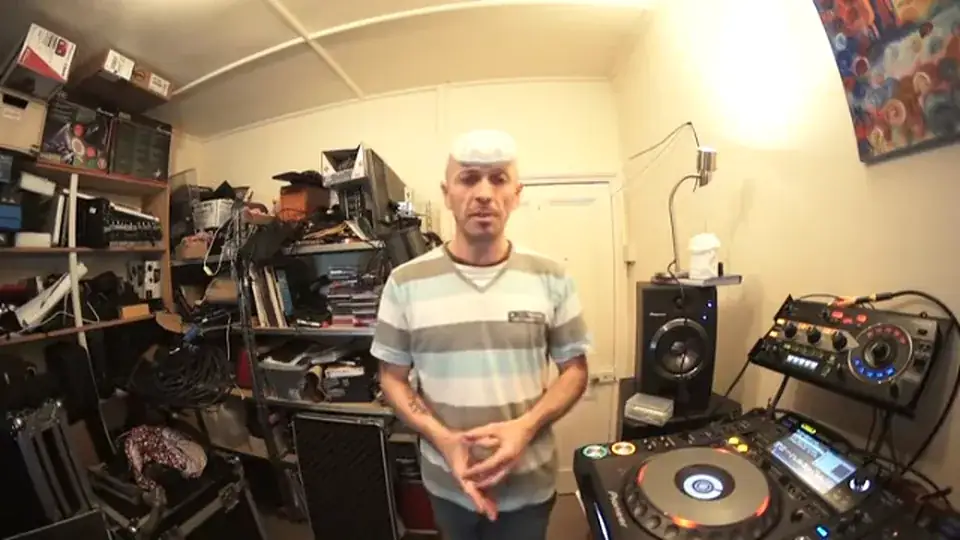
Alright guys, another demonstration stroke tutorial for you. In this one we're going to be mixing Progressive House, also known as Prog, sort of underground techno, very minimalistic kind of music. Now before we go into the tutorial I have to say a big thank you to CK. He was one of the first people who responded to my last video that I uploaded about an hour ago requesting for music from music producers. Established music producers. So I just need to reiterate and maybe chuck in a bit more info. First of all, if you are interested in me using some of your music in my video tutorials then check out my email underneath this video. Very important. I cannot use bootlegs or any such like that. It has to be music that you've made. If you made the original and you made a bootleg, that's fine.
I can't use music if you are, say, a bedroom producer and then you've cut up different tracks. I did have someone say, look, I've just got something, a remix of Miley Cyrus. I'm sorry, I can't do that. What I can do is I can promote your music that you made. And if you let me use your music, then you will get full shout out in the video like CK will with all the info down there on how to get the two tracks I'm using in this video. These videos will be there for as long as YouTube's Right, the two tracks I'm going to be using, I've written them down so you get all the info, is Back From Sub Bass and Tectonic Bridge. Right, now, let's get into the tutorial. A lot of people have been... Stay there, just shouting at the paper. A lot of people have been asking me about, you know, what do you do when you mix underground house? What do you do when you mix progressive house? What are the key factors and features?
2:37 You don't have to have loads of samples and effects and catches and sc
The main thing I personally think about and I feel that you should be doing, and also you should not be doing, you should be doing very long mixes. What you shouldn't be doing is coughing using loads of effects. Because the whole beauty about progressive house and underground deep house is the vibe, the bass line. You don't have to have loads of samples and effects and catches and scratches. What you do find is when you hear a DJ who will mix underground styles of house music, or for that matter most underground styles of any, well it's mostly house anyway, is that... They won't be using effects, maybe a little bit of filter, maybe subtle effects. In other words, if you're going to have an effect but normal DJ 100%, the DJ who mixes progressive house may have that effect at 10% because they just want to keep the vibe of the tunes. They don't want to over-emphasize the effects. If you're going to use them, keep them low. Right, now again, I'm not going to be using headphones.
So what you have to bear in mind is the beats may go off slightly. The whole idea of this video is to show you what's going on. So I'm going to turn the camera that way, just like that. There you go. OK, right, so what we've got here, we've got two tracks. We have here Tectonic Bridge. I'll just turn it up a bit. Turn it up on the speaker as well. Now you'll see what I'm on about. With progressive house and underground styles of house music, you know, if we listen, if you're not familiar with this or these kinds of genres, it's deep and it's vibing. Now that is a break. In other more uplifting styles of house music, you have piano, keyboards, you maybe have some vocals, you maybe have lots of women screaming and shouting, chucking their knickers in the air, with this one, bang, bang, bang. Sorry, I'm just imagining loads of women chucking their knickers in the air.
5:20 With a sound system of about 30 or 40 kilowatts, chugging out this
Alright, so there you go. Look, please, concentrate. This one here, back from sub-bass. So what we're going to be doing is we're going to be mixing the tectonic bridge into back from sub-bass, beg your pardon. I'll just play little bits of this track to give you an idea of what it's like all the way through. Again, there are tiny little breaks. We go to a break. What I want you to picture now is a big nightclub. With a sound system of about 30 or 40 kilowatts, chugging out this. Of course depending on how many people are there, if you've got 50 people there that would be quite awesome and they'd probably sort of die from blood squirting out their ears but we're not going to do that actually. Alright now let's have a listen to the latter part of the track. Now if you have a listen to that, you see there's not much going on. So what producers who make this style do is they try and make sure
There's a very good outro and there's also a very good intro to keep the mix smooth. Now if we listen to, again I said earlier on in this particular video, I said that there's no need for loads of effects and what DJs tend to do is they'll add effects during the mix and if we listen to this part of the end of back from sub-bass... There's not much going on, so really there's no point adding effects because all you're going to be doing is adding effects on a beat in the bassline. Right, what I need to do, I'm going to now listen and I want to try and find a point on this track where we start to have a very subtle change. Listen, it could be there, hold on. There. OK, so we had a hand clap and then the hand clap disappeared. So if I wanted to get this mix perfect, I mean absolutely perfect...
7:49 Yeah, so we'll start from there
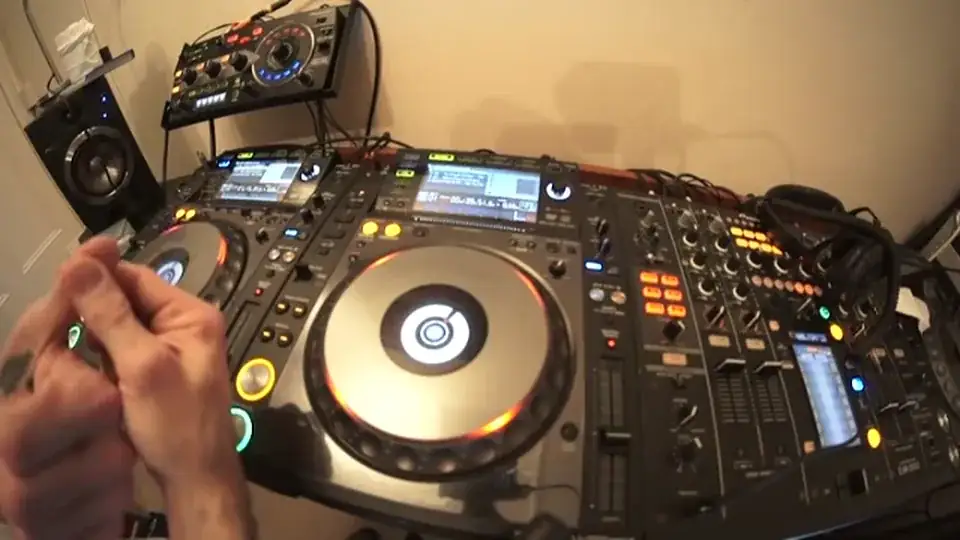
What I would do, I would start to count from the end of that hand clap and work out exactly how many bars were left to the end of the track. What I would do then, I'd listen to the beginning of the track I'm mixing in and work out how many bars there were till we started to get some form of change. Now it's all about timing. If you can count one two three four That's correct. 1, 2, 3, 4. 1, 2, 3, 4. 1, 2, 3, 4. 1, 2, 3, 4. 1, 2, 3, 4. Then you should... That was... I said French. That was Welsh, by the way. Come right, sorry. You can do this. Alright, so let's have a listen to the beginning of Tectonic Bridge. 2, 3, 4. 1, 2, 3, 4. 2, 3, 4. 1, 2, 3, 4. We had a break there after 16 bars, so what I'm going to do, hopefully we should have around about 16 bars at the end of that track there because we've got roughly 40 seconds left. Let's have a listen. Right, is that the beat? Yeah, so we'll start from there.
Yes, well we did. We had that 16 bars and then we had that sort of... Okay. So what I'm going to do now is we're going to go back to that point which is here. So again, I'm looking now, I haven't got my headphones on so if I move that back, oh where was it again? It was about, yeah, one, yeah, one and a half, sort of 38 or so. So I'm going to bring it back to there, start this one off here, get it ready. Back from sub bass, but what do we do on the mixer? Right, now I'm going to bring the volume down on the tectonic bridge. I'm also going to bring the bass down completely on tectonic bridge as well. Now, what I would normally do is I would maybe beatmatch the track, this one here, for say one bar or half a bar. Try and be as quick as I can.
10:26 How you bring the volume up is your choice
And also I would make sure I've got the volume down on the up-fader, or if you're using the crossfade, you'd make sure of course the crossfade is on the side of the track back from sub bass that's playing. What I do then is at that point where we reach the point where the 16th bar starts, I would then bring in... This track here, I'd make sure it's beatmatched and then I'd start to bring the volume up. Now how you bring the volume up is your choice. You can slowly bring it up or you can just slam it straight up. Of course don't slam too hard, you don't want a knacky mixer. And then if you want to, you can start to slowly bring the bass up on the track that's coming in. Leave the two there if you want to and then maybe bring the bass...
There you go. Right, I hope that I got that right, but... The idea behind this video is for you to get the idea of what to do. Now what I've done here isn't gospel. You don't have to think that's precisely, that's exactly how I've got to do it. Hopefully this will make you think, ah, I sort of get it now. There will be lots more videos like this to come. Once again, thank you very much to CK. Check out the info in the description for these tunes and others from him. Practice and enjoy. Thank you.
This transcript was produced automatically from the audio of the video and may contain mistakes.