 13:00
Mixing tech house and EDM
On YouTube this video is called DJ Lesson, Tutorial on Mixing Tech House, EDM, by Ellaskins the DJ Tutor
What this lesson teaches
He has some difficulty defining the genre, which is honest, and the definition he arrives at is by negation.
What it is not
Not bleepy. Not full-on electronic dance music. Not house with big moments in it.
Tech house builds, and then keeps going. It does not suddenly go bosh, and there is no section designed to put hands in the air.
What it is
Full-time house with less happening - close to minimal, close to progressive. A nice flow at a constant level, neither climbing nor falling much.
And one concrete observation worth having: more emphasis on the snare than ordinary house, with the kick still there underneath holding four to the floor.
Where you play it
His answer is the useful part: a club where the atmosphere needs to be chilled but constant - not up and down, not peaking. Early in a night, a back room, a long stretch where the job is to keep a level rather than build to something.
That is a real programming decision and it is why the genre exists. Not every hour of a night wants a peak.
How that changes the mixing
If the music has no big moments, you cannot use big moments as mix points - and you do not need to.
What you get instead is enormous freedom about where to mix, because almost any eight bars resembles almost any other eight bars. Long overlaps work. Two tracks can run together for a minute without either demanding attention.
The risk is the opposite one: a set where nothing ever changes. The flow is the appeal and it is also what makes a tech house set turn into wallpaper if nobody is paying attention to the long shape of it.
Contents of the video
0:01 This video we're going to be mixing a little bit of tech house
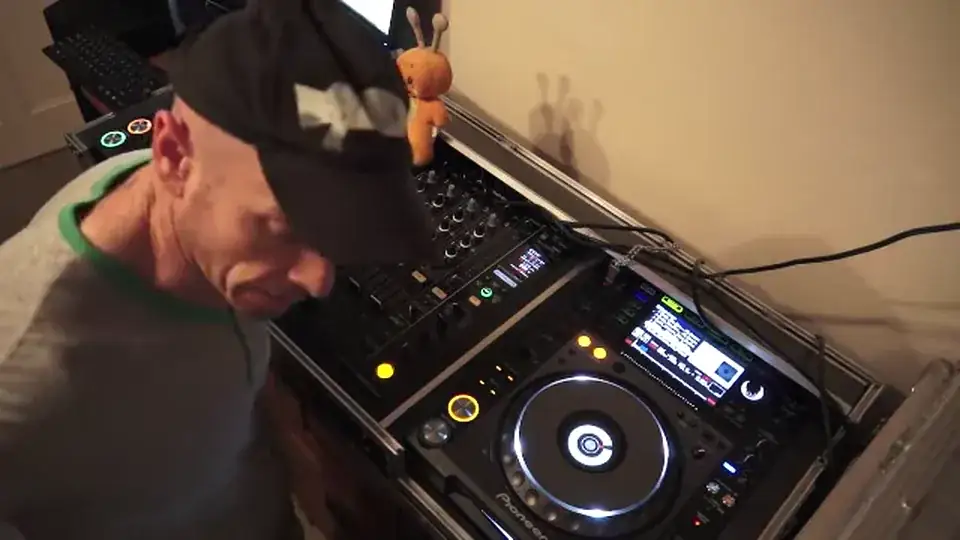
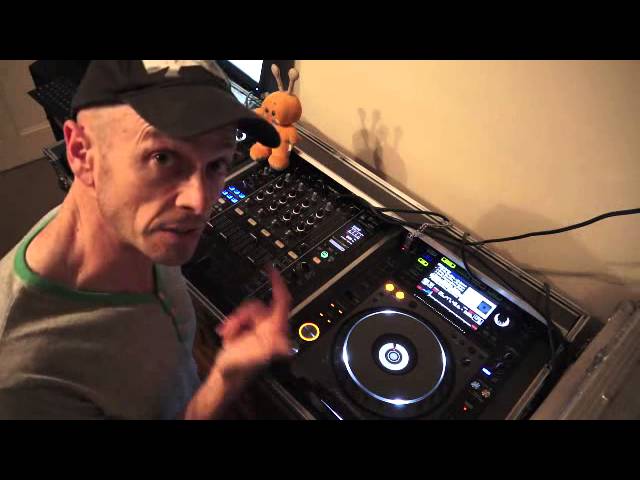
Alright ladies and gentlemen, this video we're going to be mixing a little bit of tech house. Now first of all, tech house, similar to minimal house tech. How do you describe it? It's not bleepy, it's not full on electronic dance music. It's sort of full full time house music. But there doesn't seem to be much going on. It seems to be very progressive, a little bit like Progressive House, also known as Prog. It's a bit like a frog but it doesn't jump around, it's definitely not green and if you kiss it, you'll just hear music. If you kiss a frog, you'll get the lurgies. But, OK, Tech House. What you find with Tech House is certain tracks will seem too... Build very nicely. As I said earlier, they don't all of a sudden go bosh and there isn't loads of hands in the air. So Tech House is the sort of stuff you would play, let's say, in a club where the atmosphere needs to be chilled out but still at a constant, not full on or down or up and down. It's just like this nice flow. Right, so two tracks we're using is Lifer, Enter Inside.
It's the original mix and this one over here is Crow, sorry Crowed, Crowed, Crowdkillers, Young Cats. So we'll play both tracks, have a listen. Just giving you an idea of beginning, middle and end kind of thing. This one here is Crowdkillers, not Crude Killers. They could be very crude if they kill the crowds. They could be Crude Crowdkillers caught on camera. Ah, hmm, see? Ah, that one. Oh, ooh, that up there. Oops.
2:42 The bass drum is still there, you still have that full time
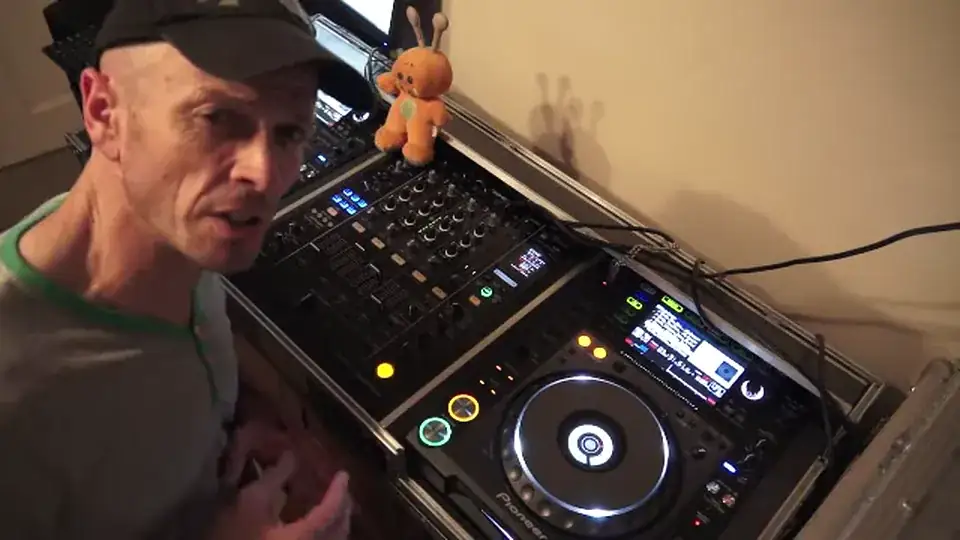
See also as well, there seems to be a little bit more emphasis on the snare of the bass drum. The bass drum is still there, you still have that full time. So what you do find with a lot of mixes, tech house mixes, is the DJs will do beginning and end, beginning and end mix. So you do tend to use a lot more of the track instead of chopping it all up. There's actually no need to chop the track up because the track itself is, there is a journey inside each track. So of course if you put all the tracks together you have a small journey in each track and that ends up being a very big journey when you put them all together. That's of course a good mix. Now what I'm going to do here, this particular track here, The Crowdkillers, we have a very slow, not slow sorry.
So all the BPM, same BPM all the way through. We have a mellow beginning and then after about sort of eight bars comes in with a bass beat. And then after about another eight or so bars we have some form of melody. What I'm going to do is I'm going to bring in the complete track, bass, mid and treble, as soon as that melody comes in. What I'm going to do as well is take away the bass because I don't want the bass to come in. I want that sort of snare. To be highlighted a lot more over the other track. So if we just play, and what I'm going to do now is I'm going to count the actual bars. So here we go. Now, what did I do there? Well, I was counting. Now, if you do it that fast, eventually you'll get to the stage where... Seriously, it works.
5:08 I still want the other track to be in the mix
32, I think it was. Bloody hope so. Right, so again, if I want to get that perfect mix, what I need to do is count back from the end of the last track. But I don't want to do that. Well, alright, do or don't. I could do that, but what that would mean is that track over there would finish as soon as that came in. But I don't want that to happen. I still want the other track to be in the mix. So, play it again. This is the lighter track. And again, we need to try and... Listen to the very, very subtle changes in the bass line in the background. To bring this one in, 32 bars. As soon as the melody finishes on this one, this one. What I'm going to try and do now, I may be able to do this, but I'm going to go backwards to 32 and bring that one in from the beginning. So what I've done... So that was a rough idea. What I tried to do there is count back, bring this one in.
10:07 Fader-y faders
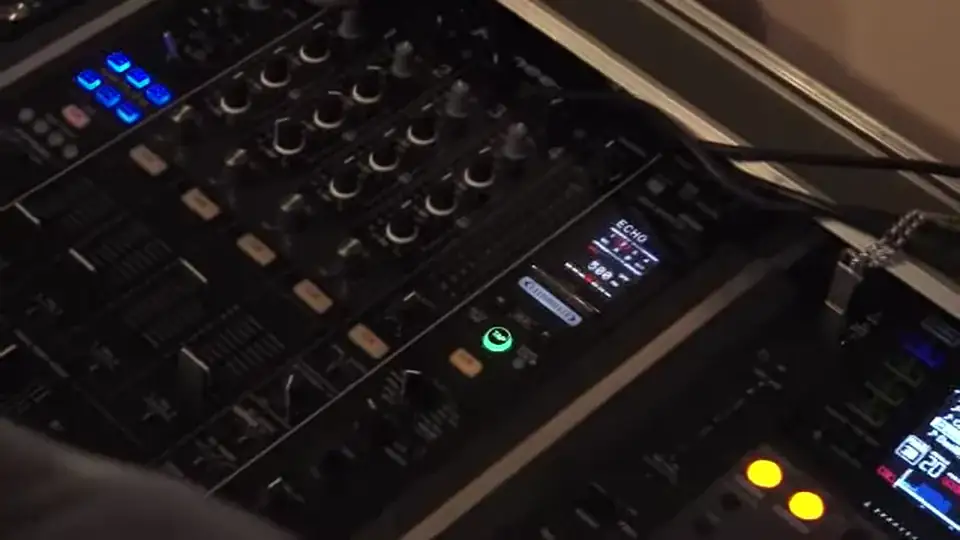
After I'd counted back 32 bars, and then of course as soon as the melody finishes on that one, it comes in here. Now again, this is a very basic rough, very big dog barky rough rough demonstration, stroke tutorial, but hopefully you'll get the idea. What we need to do really, I suppose, is have a look at the faders. So what I'm going to try and do is get a close-up of this lensy thing. If we go there, if we do that, we can have a look at the fader-y faders. Very difficult doing things backwards. Hold tight. Right, that's it. Okay, so what I'm going to do now is a little bit more light really, don't we? Hope it's darker. So again, as before, I'm going to take the bass out, there. Sounds like in the mix. Find with this sort of genre tech house, this is where the smooth
Very smooth transitions come in. You can change the lenses on it. Alright, I hope that's been a help. Practice and enjoy. Thank you. Watch this. See you.
This transcript was produced automatically from the audio of the video and may contain mistakes.