 7:02
DJ Mixing Lesson on Adding a Tune with Using bass and Filter BY Ellaskins DJ Tutor
Contents of the video
0:00 Mixing in key is one thing, mixing in time is another
All right guys, mixing in key is one thing, mixing in time is another. Making sure you have structure to your mix is another thing. Make sure it's in time, BPM, in phrase. There's so many factors, you wouldn't believe it. But let's imagine you're doing a mix on the fly and all of a sudden you listen to a sound in the middle of the track and you think I must bring this in now or I must bring it in very soon. How do you do it? Now we're not on about a transition where you slowly fade it in and slowly fade it out. I'm on about something that is just boom, it's in, it's there, it's volume straight up and away you go. Not slowly fade volume in, bring volume out. Now work with me here, you've got to think about this. If you've got two tracks that have got a kick or even if you've got one track with a kick and the other one is in the instrumental break, depending on which one you're bringing in.
For example, if the one that's playing is the one with the instrumental break, the one you're bringing in is the one with the kick, then first of all what I recommend is take the kick away or the bass away until you can hear, clearly hear that it definitely is in time. Then bring the kick in. Now why would you do that? Well, if you've got bass, mid and treble on at 12 o'clock, you bring it in straight away and it's slightly out. Then it's less likely that you will be able to hear that it is slightly out. If you take the kick away, then it's less likely. If on the other hand, you're bringing a track in with a lot of full sound, you know, you've got your drums, your percussion, your hi-hat, your snare, your melody vocals into another one with hi-hat melody vocals and whatnot.
2:30 This other track would work fantastically with that one over there
Then again, it's a good idea to make sure that the one you're bringing in has got maybe the bass turned down very slightly. Now again, you don't really want to overpower the mix. You don't want to overpower the transition. It's where you just want to bring something in there, bang, straight in. Now it's not for the faint-hearted at all. This is slightly more advanced. It's not for the beginner because you've got to make sure you're really good at beat matching otherwise it will sound pretty awful. Okay, so my first tip is of course to make sure that they're both beat matched. So for example, let's say, you know, we're in the mix. We're playing a track here on this side and all of a sudden we're playing a track here and we're skipping through other tracks.
And we think, do you know what? This other track would work fantastically with that one over there. And also it would work brilliantly at this point here or in sort of 16 bars. So you're rushing around getting the track ready. So that's the first thing you do. Make sure you get a cue point. And then also make sure that they're at the same tempo. Same BPM. And then, okay, depending on what I said earlier on, volume up, bass down and away we go. Now if I was to give these two tracks to a thousand DJs and say do a transition at this point, I would pretty much guarantee that every single DJ would do a slightly different transition. They'd move the pitch a little bit maybe. They'd move the filter maybe slightly faster.
They'd move the bass a little bit slower. So there's always going to be some form of difference. No two DJs will ever be the same. I can guarantee that. So what I'm going to do with this transition here, I've got a cue point here. Now I really like that sound. That's full on in your face. This is a track entitled Better Than Anybody and we're bringing it into bass power. It's the original mix. So if I put the bass up on better than anyone have a listen to it.
4:00 My move for this transition is filter on
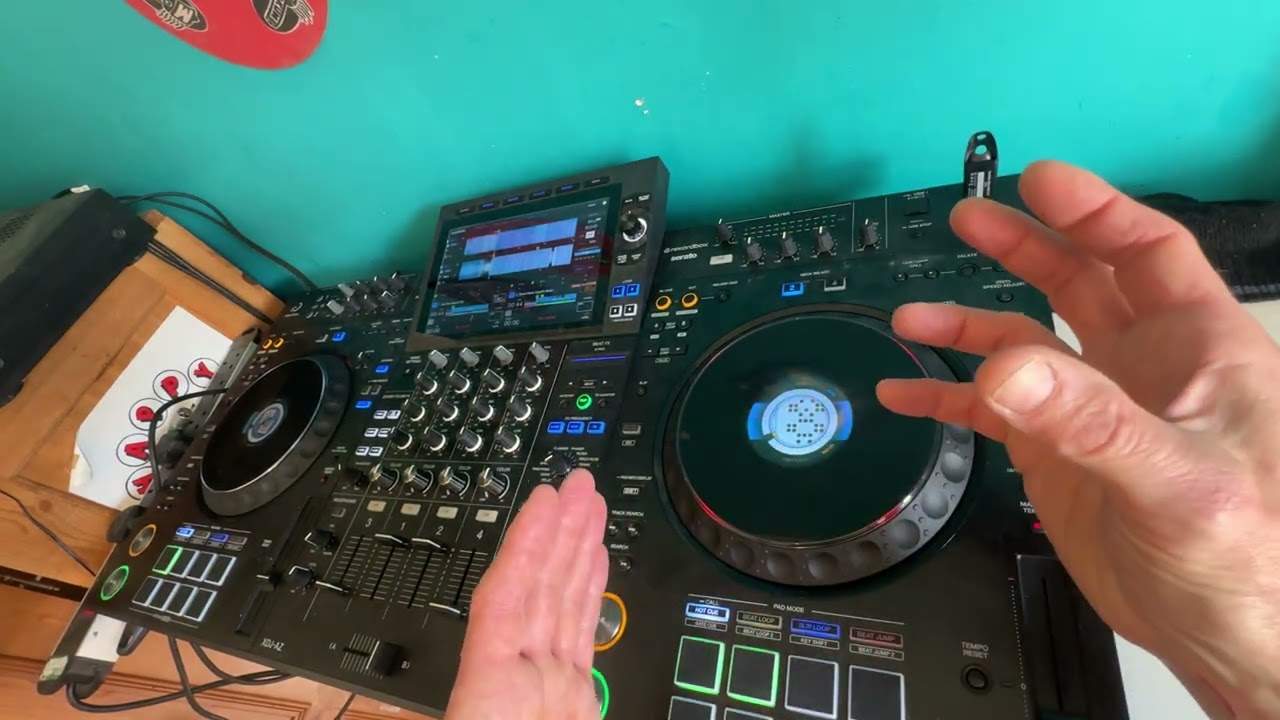
Okay. I'm going to use the headphones with this transition simply because I need to do as I say. So I'm going to reduce the low here. So my move for this transition is filter on. Now while I filter out the bass power, I'm going to be bringing the bass in on the other track, but I'm going to let them ride together for a while with the low out. I'm also going to bring better than anyone in in the break, in one of the breaks on bass power. So just press play, have a listen to this. By the way, if you want to I'll be quiet for a little bit and let you Shazam this. That means get your phone, Shazam it so you get the name title artist and then you can try this yourself. Okay, pause that. I'll now let you do exactly the same thing.
Shazam Better Than Anybody. Here we go. Okay. Cue that up. That is my cue point low down. So I want to go through here. I want to go through to sort of roughly this point here where I get not the next break, but the break after that one. All right. I edited the video because when I did the first take you couldn't see the moves on the RX. So what I'm going to do now is take the bass out on the track that is coming in Better Than Anybody. I've got the levels pretty much the same so my moves are going to be bass up and filter down on the bass power. Here we go. And I'm going to do that move towards the end of the break. Halfway through the break, coming towards the end of the break. Hopefully that's been a help.
This transcript was produced automatically from the audio of the video and may contain mistakes.