 8:31
DJ Mixing Lesson on the Best Loop for the Job at Hand
Contents of the video
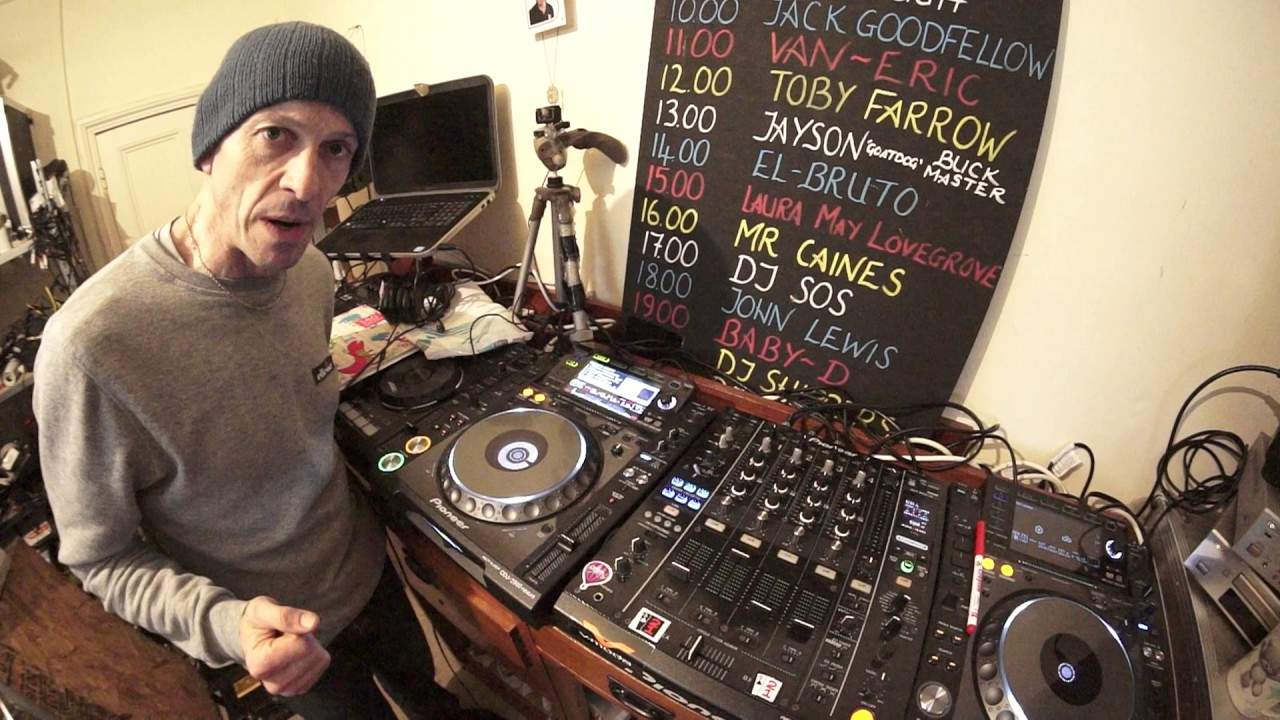
0:00 Hi guys, Jonathan here, The DJ Tutor
Hi guys, Jonathan here, The DJ Tutor. I'm going to show you now in this video how a loop can be a great thing for one part of mixing and also a really crap thing for one part of mixing and then it can be really great for another part of mixing. So, it's actually that way and that way. First of all, the bad way of using a loop in your set. Now, let's forget about loops for a minute. If you don't know what a loop is, then have a look at a circle and just put your finger on the top of a circle and carry on going until you reach the end. That should keep you occupied for a while. Okay, so first of all, the loop. Why should you make sure that you have a correct loop? Let's say if you want to have a smooth transition. So, you want to go smoothly into another track.
Well, what we need to do first is we need to listen to the structure of the track that you want to form the loop in. Now, this is very important. You may think, yeah, but a loop's like one beat or two beats or four and a half thirds of an eighth of a beat. No, it's not actually. Because let's imagine now you're playing a track here and you're mixing in a track on the other side. You're slowly running out of time or you found a great part in this track and you want to form a loop to mix the other side in. Do you just press four and you get one bar loop? Maybe. Do you press eight and get two bar loop? Maybe. Do you press 16 and get four bar loop? Maybe. It's actually about the structure of the track itself.
To any track, there are beats, there's bars, there's bassline, melody, vocals and godness knows what. And washing machines even as well sometimes. Even frogs. Just kidding about the washing machines. But you'll also notice that you have structure in the music. The music. I like that. The music. Can you imagine going into a field and seeing a load of cows? Music. Sorry. That would be very bizarre, wouldn't it? Just going into and then they're all going. You do not want to know how my mind works. No, seriously. You don't. It's ridiculously silly and insane. Even I wonder sometimes what the hell's going on inside there. I try and get out many a time. But I just get sucked back into it. Baby. Yeah. Right. So. Ow, that hurt.
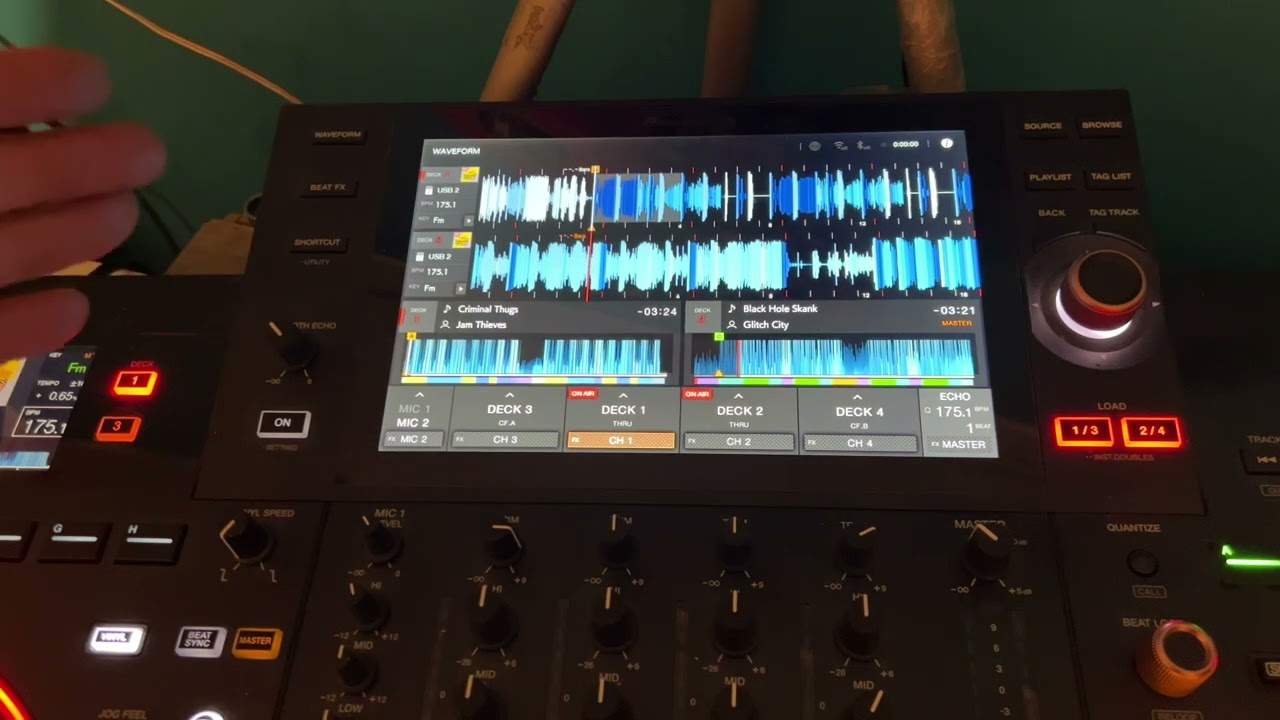
Okay. We're going to listen to the music. Now, I've got a track here by T.C. Storm and it is taken from We Are 21, the LP from Hospital Records. There will be a bit of info down there. So if you're into drum and bass, this will wash your face. Boy. See, I can rhyme. Also know my ABCs. A, B, D, Y, F, G, W, X, K, L, M, N, O, P, T, T.
3:21 Three four, four three, beginning track
N. Anyway, so what I'm going to do now, I'm going to play the beginning of this track and know that when you fall. And I want to listen to the structure of the music first. Here we go. Okay. I'm just going to listen to listen to it until we get to the break. Okay. Now there was, if I was going to really rip this apart, there is a definite change in the structure. So I listened to one, two, three, four, one, two, three, four, one, two, three, four, one, two, three, four. Okay. I listened to eight bars and then we got to the break, but there did seem to be a nice kind of round figure of four where there was structure. The beginning of that. The beginning of the track. Now let's imagine again, if I wanted to bring in another track on the other side, a drum and bass tune, and I just did a one bar loop, listen.
4:45 Nothing wrong with it
Now this sounds great.
Nothing wrong with it.
Absolutely nothing wrong with it at all. But if I was going to do. A 16 bar mix, this would get very, very repetitive. People would be like, come on, this is boring. So this is when using a loop in a mix is wrong because it sounds repetitive. It actually does sound as though that is a loop. And if you played that for too long, anyone, even if people didn't know what a DJ did. They'd soon start to look at you as if to say, has the needle jumped? Which is what they used to do many years ago. But there was a slight difference because it wasn't a real loop. It was like something like this. This is like old school needle jumping.
That is old school needle jumping big time. All right. So, all right. So what I'm going to do this time is I'm going to form a correct loop that is the sort of loop you would use. If you find a. Great part in the track and you think, that's what I want. That little section, that block of the music of the track. That's just what I want to bring in the next tune into. So listen, I'm not going to use the loop mode, so maybe off slightly, but I'm just doing this manually there. Now if we listen to that.
Okay, it is very slightly off. But then this is a demonstration you see now, if that was quantized, it was perfect. I could quite happily play that two or three times and very, very few people would notice that that is a loop. This is the right sort of loop to use if you're doing some form of a mix. But then again, let's say you want to use a loser, loser, loser, loser, yoop. You want to lose it? You. For. An effect. Now the best way, and again this needs practice. I may get this wrong, but hopefully you'll get the idea is where we go maybe into a two bar loop. Then we do one. Then we do maybe two beats, one beat half quarter eight sixteenth and so on, or maybe not the sixteenth, but the eighth. So we're like bam, bam, bam, bam, bam, bam, bam, bam, bam, bam, bam, bam, bam, bam, bam, bam, bam, bam, bam, bam, bam, bam.
So for example. So.
So.
So she's seeing that something like that.
But again, it needs more practice now that kind of loop,
That kind of, have you ever seen my frog?
That's my frog. See completely round number. It's good fun all right by a kind of loop if done correctly. is great for an effect the other one is a must when in the mix practice and enjoy thank you very much
This transcript was produced automatically from the audio of the video and may contain mistakes.