 13:34
DJ Mixing tutorial
Contents of the video
0:01 First of all, another demonstration stroke tutorial for you on aspects
Right guys, first of all, another demonstration stroke tutorial for you on aspects of mixing. The main reason for this video is someone said how long do I keep one track in the mix? Well, here's the answer. How long is a piece of string? How long would it take me to walk from here to London? If I managed to In other words, who knows? The answer though is very simple. In fact the answer is there. It's exactly how long you want it to be. Now, one main principle is timing of the bars. 1, 2, 3, 4. So for example, you could keep a track or two tracks in the mix for one bar. Half a bar, a quarter of a bar, or even just chop. Alternatively, 2, 4, 8, 16, 32, 32 and a half, 32 and one beat. Anything. It really doesn't matter. It is up to what you want to do. Now, if you feel as though you have to be like all the other DJs, Oh, they mix in for free bars, so I've got to do it like for free, otherwise I'm not going to be the same! Be different. So in other words...
If they all mix it in for three bars, why don't you do it for three and a half? Right. Now again, as I have said many times before, you have two tracks. Let's imagine, and I've said this before, but it's so important. Don't be like everyone else. If Joe Bloggs down the road has the same tracks as you and he or she always mixes... Oh, do you know what? You've got to mix it in at the eighth bar. Yeah, man! Then... You feel as though you have to mix it in at the 8th bar, because if you don't, you're not going to be the same! Oh no, and you'll die a hideous death and blood will come out your ears! No. What you need to do is possibly mix it in at the 5th, 7th, 8th... Not 8th, sorry. 5th, 19th, 128th. Just be different. Now, again, completely random video. What I'll do, I'll put lickable clink's description so you can see the names of the tracks. Now this one here, this particular tune...
2:52 Stretch and Vern, I'm Alive Remix
Stretch and Vern, I'm Alive Remix. This guy here, same sort of feel, nice keys work well with each other. This one here is... Tunes to random tracks and guess what? They work well together but a good way of explaining this sort of demonstration tutorial. Now this guy here is... Chugs along, it's almost like a progressive house kind of tune. A little bit twisted, you know, a bit electric around the edges, but it's a very good track. So, notice there, I just brought it in anywhere. Right, straight away we had a bit of a lift with this one and a lift there. Now we're into this tune. Alright, now sometimes, right, there's too many people out there who have to get it perfect. They have to feel as though their particular mix
He's so pristine and crystal clear, and like, you know, if you had nothing on your arse, and you could just slide across it like that. That's sort of right, a little bit right. But also, I personally think it's very, very wrong. Now, I'm going to delve here into the likes of VirtualDJ, and certain DJs who will press the beat sync, and they think, fantastic, do you know what, I've got a really nice clean mix. And it may be a nice clean mix. But just comment on this please. I personally think sometimes, if it's slightly off, if it goes off a little bit, even though it's going off and it's sort of, in inverted commas, wrong, it's actually right because it shows that it's a real mix and it shows that you're doing that mix and it's almost organic in feel as opposed to just a dum-de-dum-de-dum-de-dum-de-dum-de-dum-de-dum like this.
That's a great mix if it's nice and smooth, but it's an even better mix if it's got you doing the mix. So if you do have the likes of VirtualDJ and you're doing these fantastic mixes because you know what, you've got that beatmatch thing on, then that's fair enough. That is your choice. You are the only person that's cheating. But take that off. And if it does go off-beat slightly, then at least when you play that mix to a few people and they'll go, oh, it's going off-beat, it sounds really shit. Sod them, because you can say, well, excuse me, that's me doing the mix, not the machine. Hmm, think about that. Right, so that was one point of me bringing that track in. Now let's have a listen to this one again. This is the veteran strewn. Stretch and burn. Right.
7:13 Beat, you know, dum-dum-dum
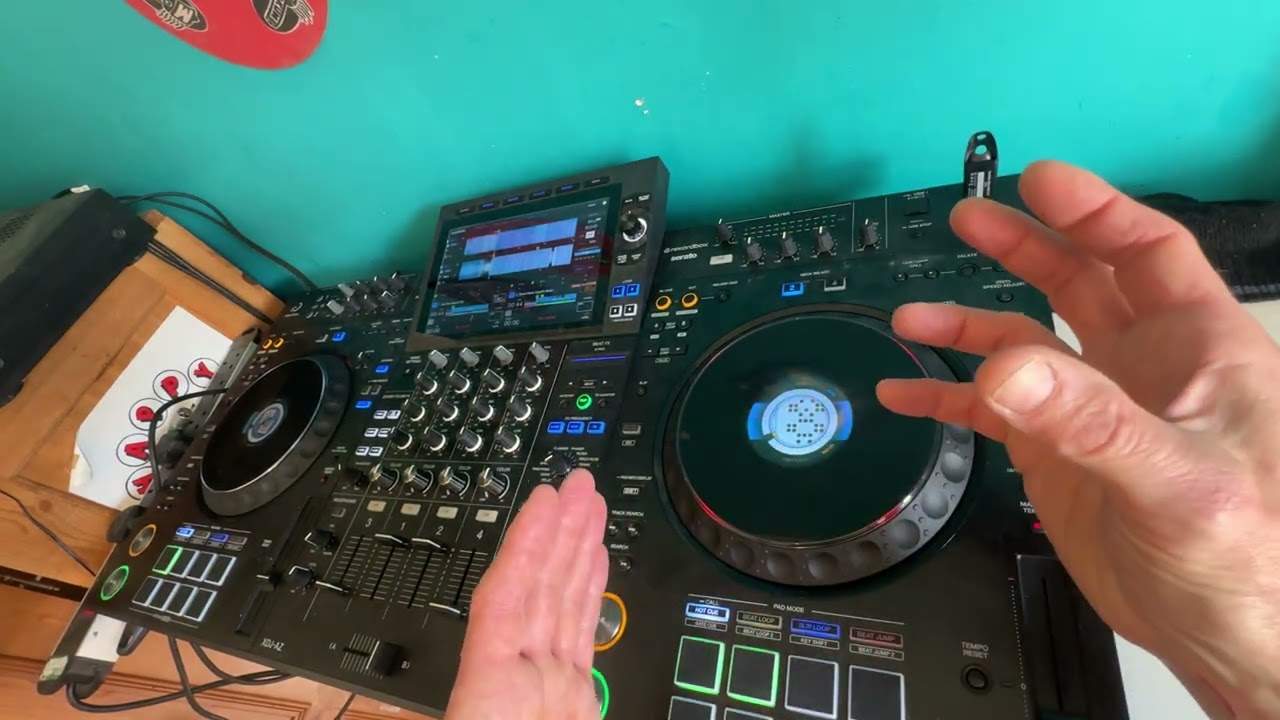
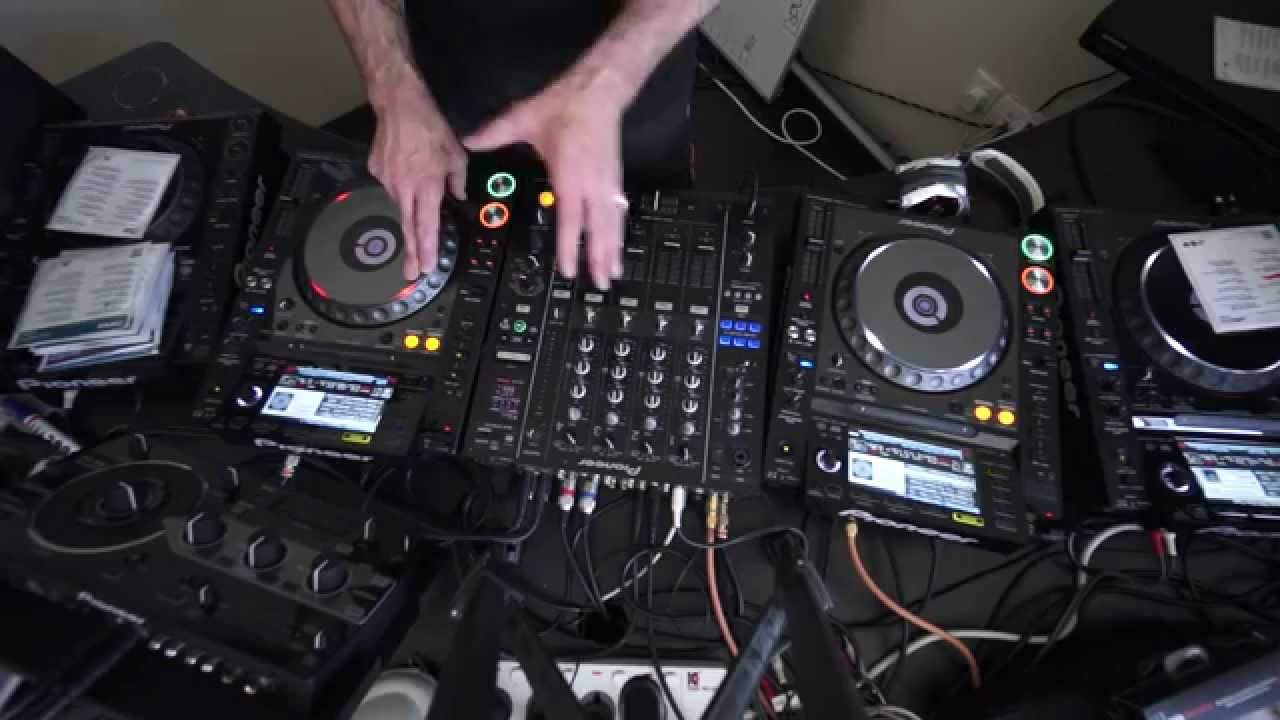
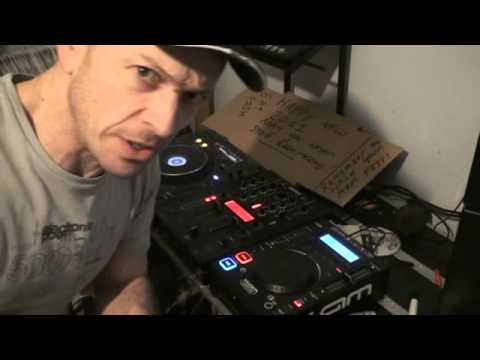
See, I like that bit. Bit of a bounce there. So, we'll put this one back on. Beat, you know, dum-dum-dum. I went dum-dum-dim instead of the dum-dum. I hope you understand. Listen. On beat and off beat. On beat, off beat. By the way, the kit I'm using, this guy here is the Cam... KCD 450 USB, the mixer is the Redo IQ 2 and this is the CDJ 1000 Mark 3. You see what I'm doing here now is I've got my finger on the cue. So I'm mixing the two tracks but I'm not letting that one play and then bringing it in. What I'm doing, finger on the cue, letting that part of the track play, taking my finger off the cue and then going right back to the beginning of where I had the finger on the cue to that precise point.
The main emphasis of this particular video is don't think you have to follow, when I say a certain structure, of course you do have to follow many structures. BPM, key, the way the tracks work together, I suppose, again right, Here's a quick one as well. If you just mix, and I have said this again before, but if you just mix techno, that's all you do, it's like techno, techno, you wake up in the morning, excuse me, can I have some techno on my toast please? Then try, actually no, try hard dance on your toast, it's much better. Mind you, it gets in your teeth. Right, so why don't you maybe get a techno track and think, do you know what, today I'm going to put a funky house tune in with my techno.
11:50 Alternatively, maybe just do R&B
Alternatively, maybe just do R&B. R&B, R&B, R&B, R&B. You know, you're lying in bed going... Bumping and grinding. By the way, I don't do drugs. In fact... No, it's not good for you. No, seriously, I don't. Right, so, R&B. Maybe think, well, you know what? I'm going to maybe put in like a hardcore hip-hop tune in there. Or maybe even a drum and bass tune because of course... If you get the timing right, R&B, drum and bass, again very quickly people say, oh how come I can't mix one tune into the other? One major philosophy you have to learn with beatmixing. 120 BPM, 120 BPM, that's fine. 120 BPM, 60 BPM, well that's fine because it's half time. So let's say for example you have got a hip hop R&B tune of 90. Well of course then you can mix in...
We'll see you next time. DJ for food. Practice and enjoy. Hiya.
This transcript was produced automatically from the audio of the video and may contain mistakes.