A basic mix, demonstrated
On YouTube this video is called DJ Mixing Tutorial/ Advise, Demo on a basic mix
What this lesson teaches
He is asked constantly how to get the perfect mix, and this video answers by declining the premise.
Start rough
His instruction to anybody who has just started: step back and stop expecting the perfect mix from day one. Be rough and ready.
The analogy is a painter. Nobody begins as a great artist and very few arrive at a recognisable style by aiming at one. They start, they work, they mature, and the style turns out to be what was left after years of doing it.
The same applies here, and the practical consequence is that the mixes you are embarrassed by now are the exercise, not a failure of it.
Why this matters more than it sounds
Because the alternative is the thing that stops most people.
A beginner who has decided they will not play anything until it is flawless does not practise - they rehearse the same safe transition between the same two records, because that is the only one they can get right. The hours go in and nothing new gets learned.
Somebody willing to sound rough tries things, breaks things, and finds out what happens. That is where the information is.
The equipment, in passing
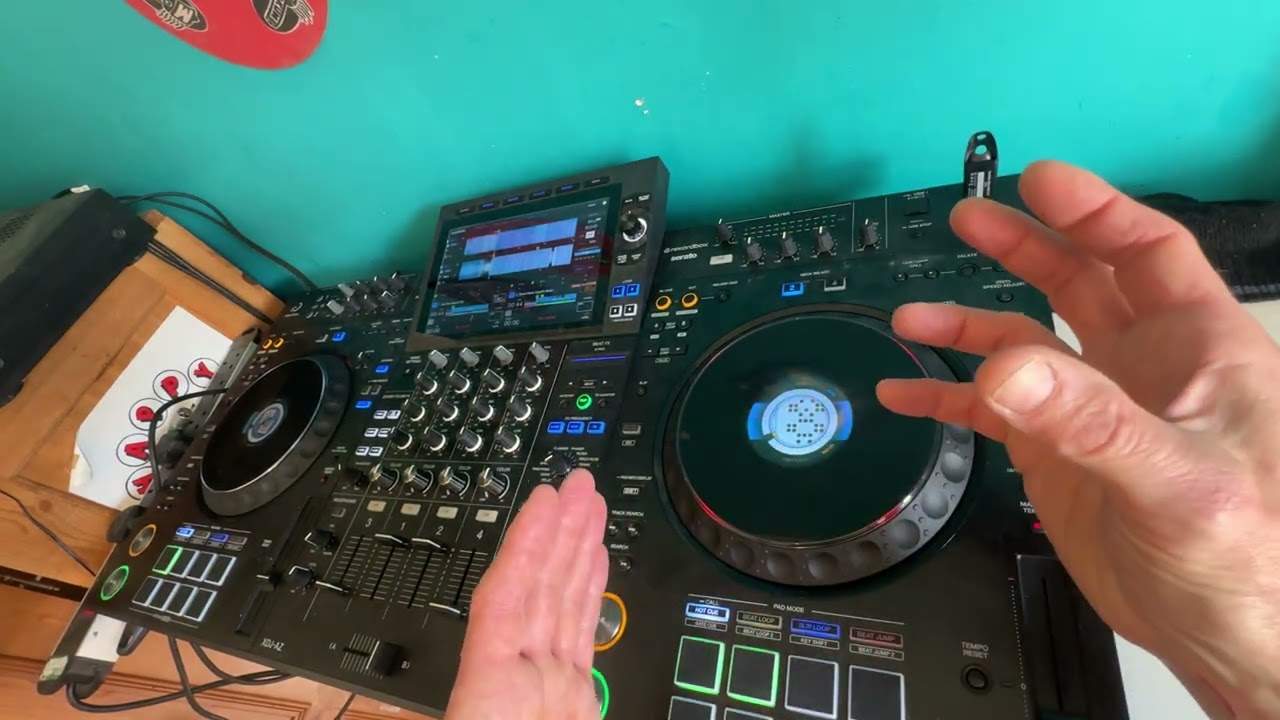
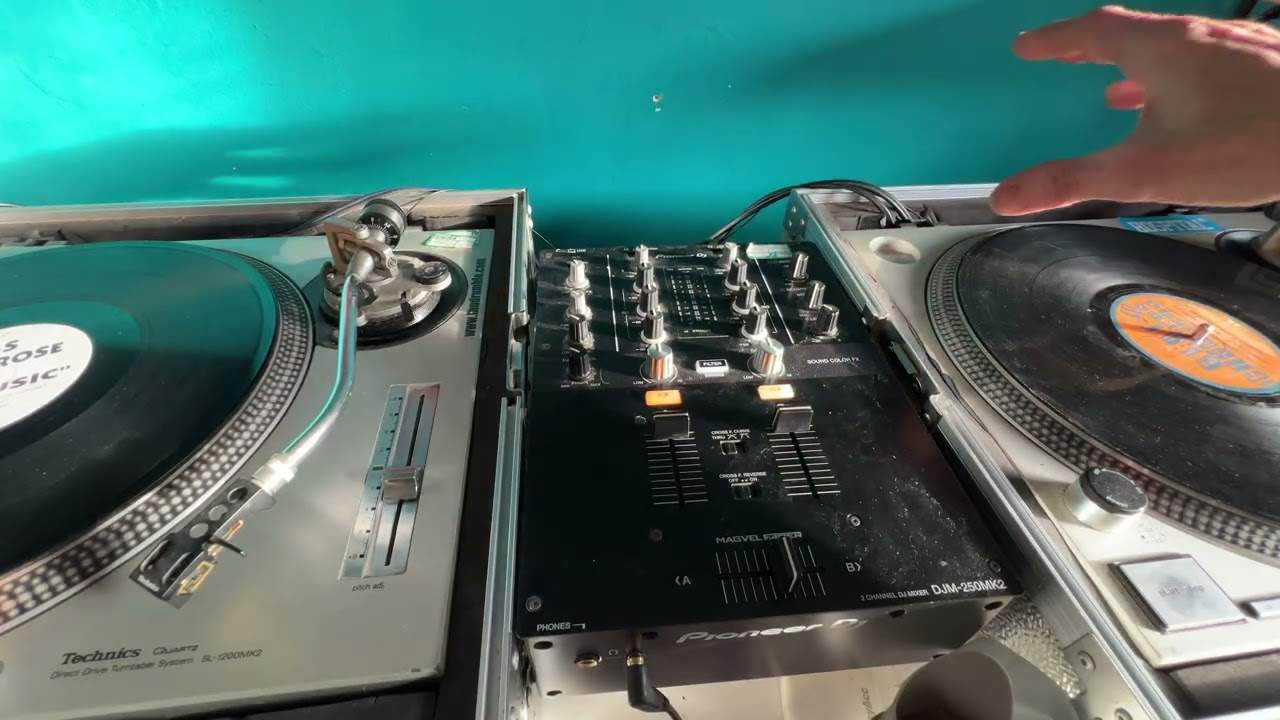
A DJM-400 and two SL-1200s, with bass, mid and treble per channel and the gains above them.
And a detail worth catching: he asks you to listen for the opposite of the bass beat - the offbeat - which is where a great deal of what makes dance music move actually lives. The kick is the easy part to hear; the thing between the kicks is what gives a record its feel, and noticing it is a step up in listening.
The takeaway
There is no perfect mix to be copied. There is only the one you make tonight, which will be slightly better than last week's.
He is not lowering the bar. He is pointing out that the bar moves, and that you get to it by walking.
Contents of the video
0:00 What I'm going to do here is talk you through a quick mix
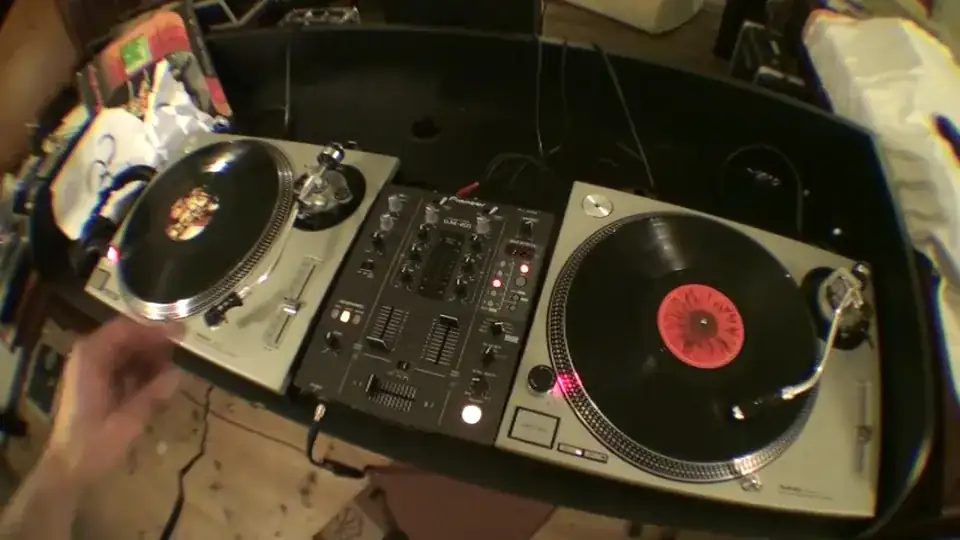
Alright folks, what I'm going to do here is talk you through a quick mix. Now on this mixer here we've got bass, we've got mid and we've got treble. These guys here are the gains. Just to let you know as well, this is the Pioneer DJM400. We've got a couple of Technics SL1200 turntables. By the way, look in the description to the side of the video for all relevant information and of course the names of the tracks. Again, people are always asking me, you know, how do you get the perfect mix? What do you need? What do I do? You know, do I move the bass mid, treble, this kind of stuff? Well, in a sense, this particular video is all about roughness. What do I mean? Now, maybe if you've just started DJing, what you need to do is just move back a little bit and not think that you have to have the perfect mix from day one. What you've got to start doing is start rough.
Rough and ready. Now, it's like anything in life. You know, an artist, all of a sudden, maybe they're perfect and they will all of a sudden be the most wonderfulest artist in the entire world, but quite often a good artist will start and they'll grow and mature and eventually they will get their own style. This is exactly the same philosophy you need to take. You need to start, you need to mature and eventually you will find your way. You will find your niche and eventually you'll have your trademark. So instead of starting to become a DJ and all of a sudden you think, hold on, I want to be the best DJ in the world, Hopefully, you will become pretty good. Now, alright, alright, I suppose this particular video is lots of different things, but now let's just have a listen to this particular track here. What I want you to listen to is that basically the opposite of the bass beat. We've got, we've got, you know, have a listen. Right, that's that one. By the way, when you look in the description, that will be track number one.
2:24 This guy here will be track number two
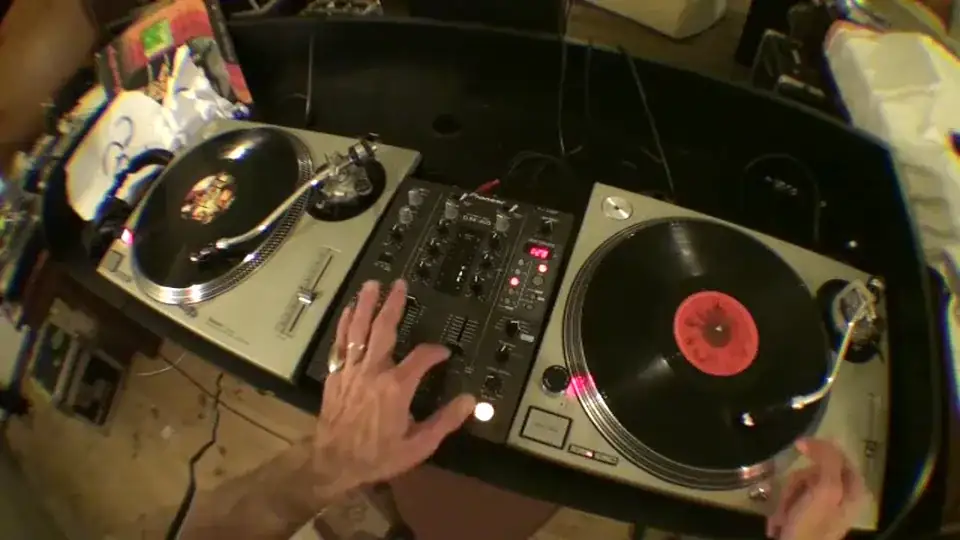
This guy here will be track number two. Let's have a listen to track number two now, here we go. Now I don't know if you can notice but there's a lot of emphasis on the high. Now that's the point where I want to try and bring a lot of emphasis into the mix. Now again, very quickly as well, when you're starting to mix, here's a good idea. People say, you know, should I move the bass, the mid, the treble, what should I do? Well... You know, the basic rule of thumb for a beginner is this. Let's say that track is playing, you want to bring that one in. What you need to do is on your headphones, you know, make sure all the EQ is at 12 o'clock. Don't start wanging it up to like 3, 4, 5 because all you're going to have is distortion. So, all at 12 o'clock, cue it up, get it beatmatched at 12 o'clock. Then, imagine this one's playing, all of these are 12 o'clock.
Is it is sorry at first again at seven o'clock okay so let's say we've got this volume up this one's playing and we've got that one over there because we're ready to move the crossfade over so what we're doing when we start to mix when we're in the mix what we can do then is we can increase the bass on the one coming in and slowly decrease the bass on the one going out now when you are a new dj and you're starting out Just do that to begin with because what happens then is you don't get loads of bass through your speakers and you can hear the mid and the treble a lot better which is what you need for the new DJ. So what I'm going to do now, we'll do a quick mix. Let's put that one over there, we'll wang that one here and we'll do this and we'll go and have a cup of tea later. Hold on.
4:37 It says, I'm so funking tired of you
It says, I'm so funking tired of you. Remember the bars? I admit it... No, I'm upside down there. Hold on. Bloody hell, this is awkward actually. That's better. I can see myself now. I was upside down then. Alright, admittedly, it did slightly go off but then again, I suppose my only excuse is this is a tutorial and I did have a camera and a tripod right in front of me. But, I suppose, in a sense, the main emphasis of this particular video is... If you're a new DJ, the best thing to do is just start from the basics. Don't think you've got to be fantastic from stage one. Try this. 1, 2, 3, 4, 5, 6, 7, 8, 9, 10. Practice and enjoy. Thank you.
This transcript was produced automatically from the audio of the video and may contain mistakes.