 13:29
DJ Mixing tutorial on how to Mix Hardstyle, hardcore Music
Contents of the video
0:01 Nowadays, modern day house music is around about 130, 135 maybe
Alright guys, as requested, a demonstration tutorial on learning how to mix a genre known as hardstyle. Also, this is really about talking about the style as well and giving you a little bit of an insight into what it's all about. Now, if we go back to the mid-80s, there was a new sort of music known as house music and that was 120 BPM. Nowadays, modern day house music is around about 130, 135 maybe. It's quite a lot faster. First of all as well, BPM is beats per minute. In other words, if you start a stopwatch when you hear a kick on your particular track and after one minute, during the course of that one minute, you count those kicks. That will give you the BPM, beats per minute. So, hardstyle is more like around about the 150 BPM. Now, if we look at where hardstyle originated, which was around about sort of the early 90s with the likes of happy hardcore, hardcore, techno, gabba techno, etc.
Some of the genres, sub-genres were quite a lot faster. Not many were slower because the whole emphasis of hardcore was just a little bit more oomph. You know, the DJs and performers were a little bit more slow. The producers of the time wanted to express themselves by making the dance floor go a little bit more wild. And the only way of doing that, or one of the ways of doing that, was to make them dance faster. If you want a person to dance faster, all you do, you increase the speed of a track. Very simple. But again, drum and bass. A drum and bass track, for example, I don't know, 140 BPM. If you have it, then you're on the realms of hip-hop. So, if you watch people dancing to drum and bass, they can either be doing normal time, which is...
Or, you know, halftime, which is going into the realms of, you know, a nice reggae booty move, man. Right, okay, so, sorry, hardstyle. Now, believe it or not, but any DJs out there who mix hardstyle, you're about that close from Tchaikovsky or Beethoven.
Yeah, true. Because a lot of the tracks in hardstyle, they're very tuneful. There's a lot of melody going on, a lot of crescendos. There's a lot. More emphasis on the melody, as opposed to, let's say, quite a few of the other harder-edge styles. So, if you think about it, when you put together your set, you're not only keeping in mind the BPM and making sure it flows. You're actually listening to the keys and the sounds of the tracks, and you're putting them together. So, let's say, for example, you have a tune. And in that tune, it has a beginning, middle, and end, and there's all giggly bits in between the middle and end and whatnot.
2:45 The second track you may only play for 8 bars, 16
A good DJ will be able to get that track and think, I know, instead of that track being by itself. In other words, I listen to the beginning, and I listen to the end, and that's it. I walk away. What I'm going to do, I'm going to listen to the beginning of that track, and I'm maybe going to mix in another track halfway through. But when I mix that track in halfway through, it will take the part where I mix it in, and it will take the first track to the next level. And the next level will be... And the next level will be... The second track. So, the second track you may only play for 8 bars, 16 bars, 32. You may even play it to the end. And then you bring in a third track. But what you're doing is you're taking, let's say, one track.
It does start and finish. What you're doing with, say, 10 tracks is you're going to start and moving up and a nice smooth transition. So, what you're doing is you're taking 1, 2, 3, 4, 7, 10 tracks from individual tracks into a complete symphony, which is precisely what the likes of Basque, Tchaikovsky and Beethoven did years ago. So, you're no different at all. Right. Now, these tracks here... Let's have a look at this one.
Right. This one here is Blade Masters' One Blade. Now, first of all, have a listen to the beginning of this.
5:18 It's that anthem feel
Right. Now, do you see what I mean? It's almost like... Now, if someone listened to this, they think... You know, if you imagine your grandma listening to this. She'd say... Dear, this is a really lovely track. Can I have this and listen to it tomorrow? Well, that's fine. But then, maybe if she started listening to it halfway through, she'd go... Oh, maybe not. There you go. But you see, if we listen to the beginning of that, it was very... It was mellow. It was lovely. It was floaty. And all of a sudden, we had that... We had that full-on bit come in. Now, this particular track here... If I play it again, let's have a listen. Right, I'm just going to set a cue point there. Now, to me, this track would be, let's say, ideal for the beginning of a set.
Because it's got a really nice intro. And... It's got a really nice intro, yeah. And not until I think about sort of here... It comes in.
There you go. It comes in. Now, also...
This track here... I'm going to set another cue point. What this track tells me as well is it's one of those tunes that you could play, let's say, at the end of a set as well. Because it's just got that emphasis of, yeah, hands in the air. Dun-dun-dun-dun-dun-dun. Trust me, if you listen to certain tracks, quite often you can maybe suss out... This is a track that I'm going to put at the beginning of the set. And this one is more like in the middle of the set. And this one... It's that anthem feel. It's like hands in the air feel. I want this at the end of the set. So straight away, what you're doing, even before you've played anything... You're thinking, hmm... Beginning, beginning, that one middle, middle...
That one... End, end... Finger hurts. Painkiller soon. And then you carry on like that. Of course, you have to consider as well the keys of the tracks and the BPM. But if you do have the likes of Master Tempo or Key Lock... Of course, if one track is slightly faster or slower... You engage Key Lock or Master Tempo and that will keep the track at the same key. Right, so I've got that one there which is Blademaster's One Blade... And we've got one over here, which is the Alpha Twins, The Dark Side. So we'll listen to this one now. Just bring it in a little bit. Now, this is the beginning. Now straight away, we can hear the beat. I'll bang it forward a bit. My fault, sorry. Difficult without your Kiwi finger. And that's my picky nose finger as well.
And me whiteboard. I'm going to bite your bum finger.
7:35 Again with this hard style
No! Don't go there! Alright, again with this hard style... It's very formatted and you do have to listen to the beginning of bars, the phrases etc. So don't forget a bar is a count of four. One, two, three, four. It's not five. It's not seven. It's one, two, three, four. So if I then go back to that cue point and I start from there. I start counting. And I want you to count with me, alright? Well, you'd have to count very loud, wouldn't you? Here we go. One, two, three, four. One, two, three, four. One, two, three, four. One, two, three, four. One, two, three, four. One, two, three, four. One, two, three, four. One, two, three, four. One, two, three, four. One, two, three, four. One, two, three, four. One, two, three, four.
One, two, three, four. So straight away, I've got here a track that could possibly be a really good track to start off the set. So if we play this one again. play this one again now i don't have to bring that track in at the end of this one i could if i wanted to alternatively if i try and construct my set before i even go out there and play it i could be at home and i could just have a look have a listen uh maybe take cue points maybe think yeah you know what at this track at 1 minute and 42 that's when i need to bring this one in so in other words straight away what i'm doing i'm starting to think about constructing a set i'm just going to pause that one there how do we do that let's imagine you have got no software nothing at all how do you construct a set well
If you can see the reader in other words the timeline of your particular track try this track 1 so you write down track 1 and you put track 1 mix in track 2 at 1 minute 30 seconds so you know then that as soon as track 1 gets to 1 minute 30 seconds you can bring in track 2. and then you put track 1 into track 2 and then you put track 1 into track 2 and then you do exactly the same with track 2 3 4. so you've got a rundown on a piece of paper and you know exactly when to bring the tracks in it's very very simple very very old school but you know what it works and your piece of paper will not crash no right so carry on playing this
All right so at this point here if we listen there's not much going on we've just got that huge sort of hardcore style beat now what i'm going to do is i'm going to start to mix this one in at that point now i'm looking there that there is it one minute and two seconds so i know near enough to start this one at one minute two seconds so i'm going to bring that back a bit
Pause that i said pause that
Right okay see a hard style
Otherwise right go on off you go no
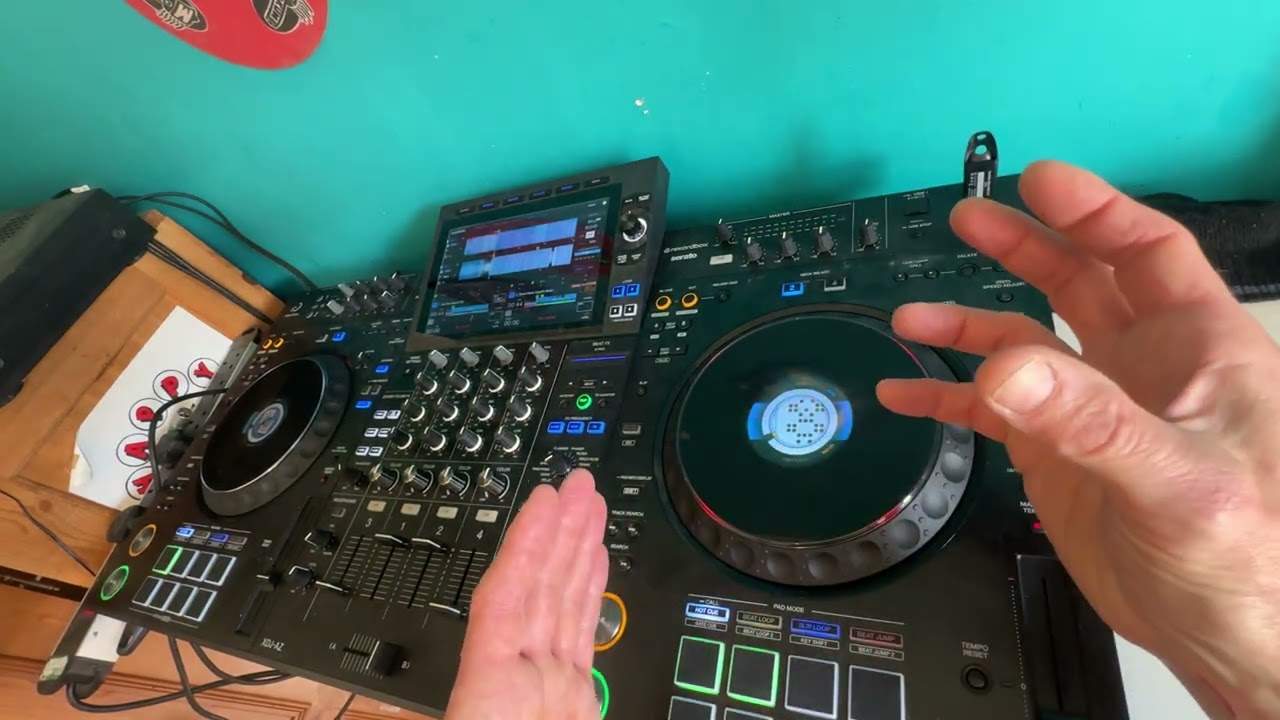
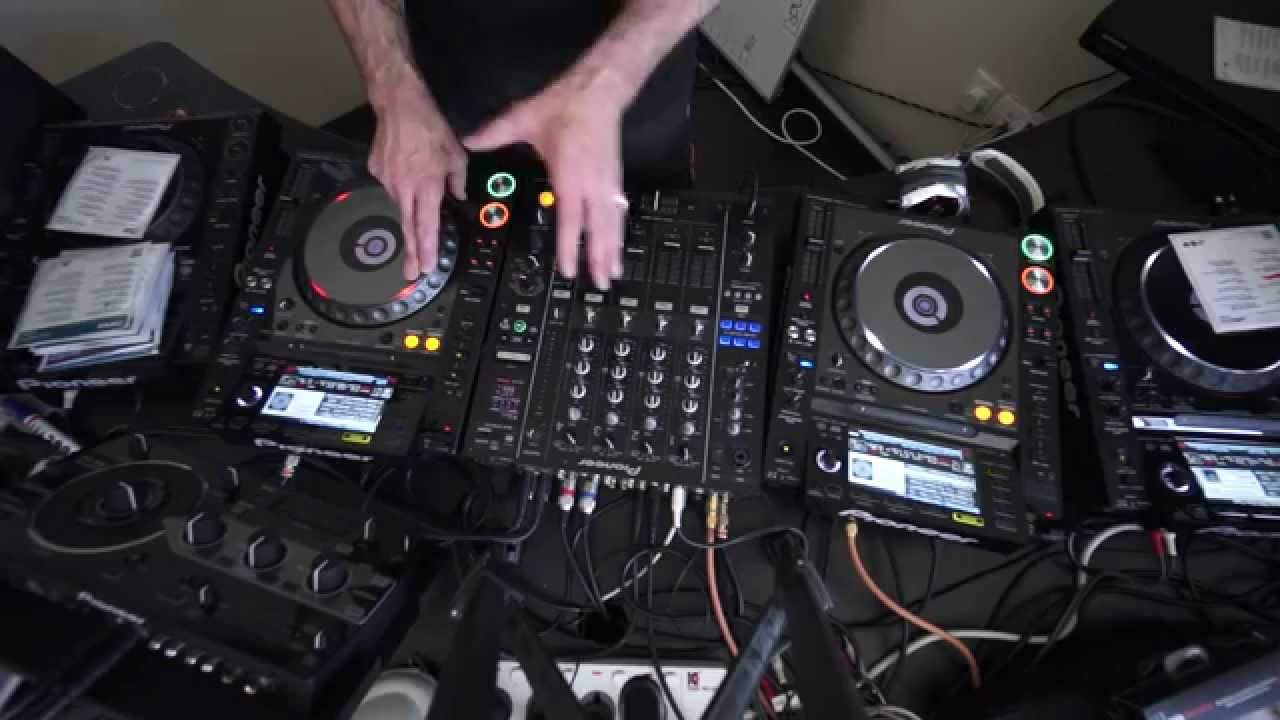
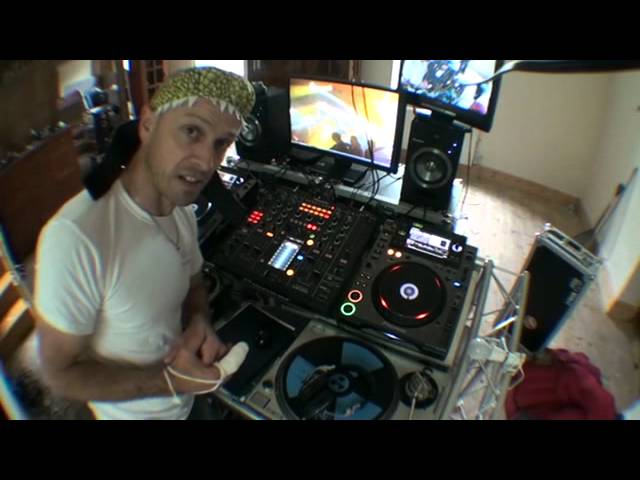
Sorry uh right okay so we'll put that there that there that there i'm going to be using the crossfade as well very quickly let's have a look at this guy here just a small point i don't know if you can see that but at the top i've got fish eyes so i do apologize uh trim high mid and low the trim should not be used as a volume control the trim should be used for that channel to get to the same level as the other channel the master is your volume control and the slider is your volume control just bear that in mind so make sure we've got this all ready right here we go on that side all right now that was a very basic and very simple mix but again if you look at any modern day genre of dance music it is relatively formatted in bars
And phrases if you stick to a prince the principle of keys trying to keep uh make what again the melody and the key is the same thing so try and keep the sort of continuity and flow there also i'm going to be using a little bit more of this one over here so i'm just going to have a listen to each track before you construct your set now at the moment there is a big competition going on for the bpm show and it might be a good idea to take a little bit of advice like this and put it towards your set uh it is 2011 now so you may be watching this video in a year's time and it'll be too late suckers but if you're not then there's still time to enter as well all right so a tiny bit of an insight i will put the names of the two tracks i used in the description
And if you've got any more information chuck it under there also if you do have let's say a hard style set then put it as a video response any questions i will try to answer practice and enjoy
This transcript was produced automatically from the audio of the video and may contain mistakes.