 24:21
DJ Take Time in Getting the Best Tunes for the Mix Dance CD Pool February 2017
Contents of the video
0:00 Time for some more new releases
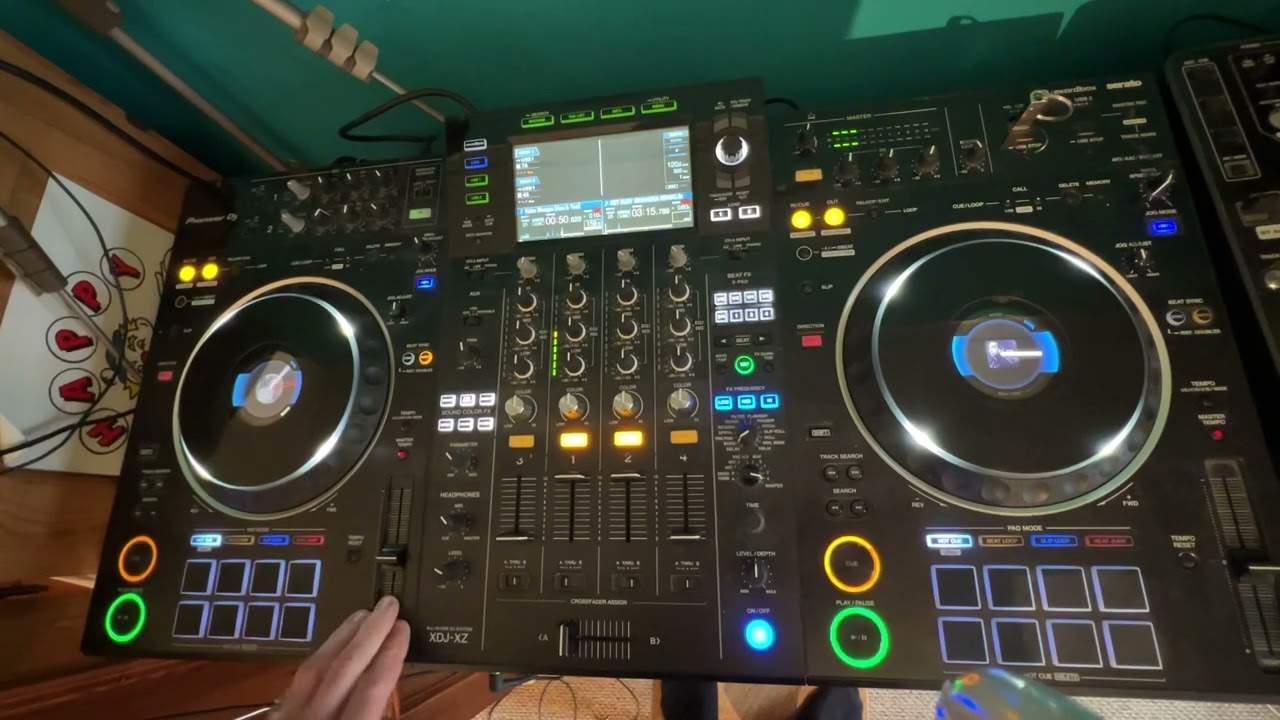
Alright guys, time for some more new releases. It's the dance releases from February 2017. Now in this video I'm going to be doing a few different kinds of transitions. So we're going to be picking tunes and let's see what happens. So what I'm going to try and do here is not just do a beginning and end kind of mix. They're really... they're not boring, but they're not exciting. You need to make your transitions exciting. Do something that the crowd aren't expecting, like... Take your clothes off in the middle of a set. They wouldn't be expecting that, would they? Might be quite interesting actually. Right, so track number one from disc number one for dance releases. Don't forget, check out the clickable link. Also the lickable clink in the description to cdpool.com. Right, let's find something over here. Coming in track one and I'm not going to play the break in track one, I'm going to play the break in track two. Here we go.
1:57 In other words, one track finishes, the other one takes over
In the red there. Right, okay. So, all I did, I took the break from one track, very quick transition, pretty much up-faders, bang, one out, one in, into track number two from disc number two. Now also the different BPM, I'm looking at track one, 127.5, track two, 128.7 BPM, beats per minute. So, they wouldn't have mixed, they would not have beatmatched, but because I'm dropping it in on the one... In other words, one track finishes, the other one takes over. The beats aren't going to collide. So, that worked. It worked. Okay, track 2 from disc number 2. Okay, I've got track 11 from disc number 1 here. I'll explain it in a bit, hold on. Don't go away. I didn't press play quick enough. I hit the cue but then I tried to press play and I took my finger off the cue and I didn't...
4:28 Press play quick enough
Press play quick enough. Go and do something else. Okay, so I'm going to bring track 11 into there, so... Let's just check how many bars there are from that point there. One, one, two, three, two. One, two, three, three. One, two, three, four. One, two, three, five. One, two, three, six. One, two, three, seven. That is weird. There's like six bars. That never... It doesn't happen. It shouldn't happen. You naughty, naughty, naughty Track 11. This is Giorgio Morda featuring Karen Harding. She's actually a really good singer. Okay, what I'm going to try and do here, again very experimental. I'm going to form a loop there for four bars and then I'm going to bring that over the end of Callum Scott's track entitled Rhythm Inside and then towards the end of the track come out of the loop and let's see what happens. Now this is very experimental but again if you want to be a beginning and end mix DJ then that's fine. I mean it works.
7:22 Listen to the two-bar loop
So long as you stick to in time, in phrase and in key, blah, blah, blah. But then if you want to just make it a little bit different, then experiment by adding tracks somewhere in the middle, not just end, finish, beginning, end, beginning, end. That's boring. That's old school. This is new school. This sort of stuff gets you noticed or thrown out really. So one, two, oh, I don't have to press the start button. Now also, again, when forming a loop, don't you notice there, I made a mistake but then it was actually a good mistake because I can talk about that. Now the structure of this track There's a phrase inside that kind of vocal loop, if you listen to it. If I just do a two-bar loop on that, the actual original vocal loop, how the track was made, doesn't complete its loop. It sounds off. Listen to the two-bar loop. Listen. It's obvious that that's a loop, but listen. There. See? So much better. OK, so that's what I'm going to do. I'm going to use that loop over that track.
9:18 A couple of things are happening here
And then let them play together. Now, again, the beat's slightly off there, but again, what I want to do, I want to make sure that when I start that loop, the loop is in straight away at the point where we get the new phrase in that track. So one good way of doing it is to start the loop before the phrase even starts and have that on your headphones in the background. As soon as the phrase starts, bring the loop straight in. So a couple of things are happening here. One is you have time to make sure it's beatmatched and the other one, it snaps in at exactly the right time you want it to snap in. But very important, this loop here is a four bar loop so I need to make sure I come out of that loop inside those four bars. If I don't, this will happen. As soon as I start the loop in the mix we have
Bar 1 on this side and bar 1 of the loop. Then bar 2 and bar 2 of the loop. Then bar 3 and bar 3 of the loop. Then bar 4, bar 4 of the loop. Then bar 5 and bar 1 of the loop again. Bar 6, bar 2 of the loop. You see, so this will carry on looping and that will carry on playing. So you need to make sure you get out of that loop any time from when it starts to before it finishes. Very important. So let's go back a little bit here. Okay, two, sort of there. I'll be honest with you, not the best transition in the world at all, but I think, I don't think, I know, sometimes you get two tracks and you think, yeah, beginning and end, that'll work. But it's about taking the time. It may take you half an hour to get that perfect transition with two tracks, but it's well, well worth the effort. Okay, track 11.
11:41 This is track four, Naughty Boy featuring Kyla and Pocan
Ah, now this could be interesting. This actually could be very interesting. Right, this is track four, Naughty Boy featuring Kyla and Pocan. Should've bee, bee, bee, bee, bee, it's called bee, bee, not a buzzy bee. Right, should've been me, the KC Lights remix. That's track four from disc number two. Right, let's have a listen to the beginning. Now we're not going to do a beginning and end, we're going to be doing a beginning into a break. So let's have a listen, there's a bit of vocals going on here as well. I just got a feeling that this mix is going to be far better than the other one. Now with the other track, there was too much, I'll be honest with you, much too much going on. It was like loads, loads, loads and loads is too much. Also, there were a few vocals overlapping each other so that didn't work either.
14:26 There will be a change and that's the beginning of a new phrase
I'm not going to edit this video because everyone gets it wrong, sometimes. Not all the time, hopefully. Let's have a listen to beginning of Naughty Boy, so one. Okay, so we've got that, oh, bit of vocals. Okay, so that, now let's have a listen over here to track 11, Giorgio Morda. Do a set of cue points here at the end of the break. See, that's really interesting because where is the end of the break there? Is it where I set it, which is here? Or is it... There! What I'm going to do, I'm going to count from that point my second cue point. Let's hear how many bars we've got before the track kicks again. And that kicks in again. 1, 1, 2, 3, 2, 1, 2, 3, 3, 1, 2, 3, 4, 1, 2, 3, 5, 6, 1, 2, 3, 7, 1, 2, 3, 8, 1, 2, 3, 9, 1, 2, 3, 10.
The track plays and all of a sudden you don't have a big boom, bash or vocal start or finish or whatever. You may have just a very subtle change like, you know, a click or maybe a different change in the drum pattern. That is highly likely. Thank you for watching. There will be a change and that's the beginning of a new phrase. So, from here... Okay, let's experiment and see what happens here. Vocals, vocals, much better. Change it slightly. That's where I want that track to come in. So... I'm going to go to my point where I heard the different drum pattern. There. That's my click. So that is the point where I'm going to start. that track over there now again if i wanted to if i wanted to just really do something special i could form a loop of say four bars and just let that play and of course like i did in the previous mix it was not very good at all come out of that loop at that point and then of course we'd have that playing all the way through the break but we would only then have that playing from the beginning
From that point there, so I'm going to go back a little bit because that's where I'm going to bring it in. So let me go from the original point where I set the beginning of the break and I'm going to wait eight bars then start that track. It sounds very intricate but it's not. Trust me, it's not at all. It's your fours, your eights, your sixteens. That's it.
19:06 To get the perfect mix
Getting to that point. Here we go. Okay, yeah, you know, it was average, it wasn't brilliant because you had like, sort of like, and you know, that kind of bit of percussion there, a bit of snare leading up to something that's a little bit like low but then, you know, this is where the time taken in thinking about transition points is worth it to begin with. To get the perfect mix. So this is track 4 from disc number 2, yeah. Trying to find some point now, track number 13, disc number 1, where I can bring it into track number 4 again. So, let's have a look. Okay, I've got an idea, so... The end of the track here, coming to the end of the track, and now I'm at the beginning of the track. So what I did there... Now, don't take these...
22:14 You can do given some time
Transitions as though this is what you've got to do. The idea behind this video is to show you what you can do given some time. So I went to the end of the track, formed a transition with sort of the last third of track four from disc number two. And then what I did, well prior to that I set a cue point at the beginning of the track. So even though I'm playing the end of this track in with pretty much the end of that track, 30 or 60 seconds left to then bring another track in on the other side. So long as I've set another cue point at the beginning of the other track, this one here, then I can just flick to it. But again, it's about timing and phrasing. Listen, I'll do it again. There. So the first one is a cue point, second one. Second one is right at the beginning and the first one is right at the end, close to the end. There.
Alright, today what I've done with the CD4 releases is something completely different. I've tried to put them in and go, right, let's see what we can come up with. And it's been an absolute nightmare, but then that's what it is sometimes. You know, you may be racking your brain going, why? Oh no, what have I done? It's about the fun and enjoyment. So you may have 10 tracks and you may be able to mix 1, 2, 2 to 3 and so on. You may do the whole mix in like an hour. It could take you 45 minutes to do the first mix. Track 13, CD pool, practice and enjoy. And don't forget the clickable link in the description right down there. Right, can I go home now? Thank you. Oh, finished.
This transcript was produced automatically from the audio of the video and may contain mistakes.