 9:51
Mixing old school funk
On YouTube this video is called DJ Tutorial, How to Mix Old School Funk.
What this lesson teaches
A lesson that doubles as a piece of history, and the history is useful rather than decorative.
Where the funk in funky house comes from
If you know funky house, you know the feeling: vibrant, uplifting, and unmistakably funky. He asks what that feeling actually is and answers it precisely.
It is the bassline. The bassline is the underlying feel, the vibrant happiness, the thing that makes the genre what it is.
And it did not come from nowhere. It filtered through from funk - sixties and more properly seventies - where the bassline was doing exactly that job first.
So funky house is a drum machine playing a funk bassline, and knowing that tells you what to listen for in both.
The one major difference
Machines. Funky house has a drum machine keeping the time; funk had a drummer.
Which makes mixing funk more technical, for all the reasons in the soul and disco lesson: the tempo moves, there is no setting to find, and you ride it rather than set it.
Why learn to mix it
Two reasons beyond the music being superb.
It makes you better at the modern version. Once you have heard where the funk bassline came from, you hear funky house differently - you start noticing which records have a genuine bassline doing the work and which have a rhythmic pattern pretending to.
It is scarce. Most DJs cannot mix this material, because most have only ever played records that hold a tempo. Being able to is one of the few things in this trade that money and software cannot supply.
And the tracks he uses
Level 42 and The Brothers Johnson, which tells you he means proper funk with real players rather than anything revivalist - and both are worth hearing whether or not you ever mix them.
Contents of the video
0:00 In this video we're mixing two funk tracks
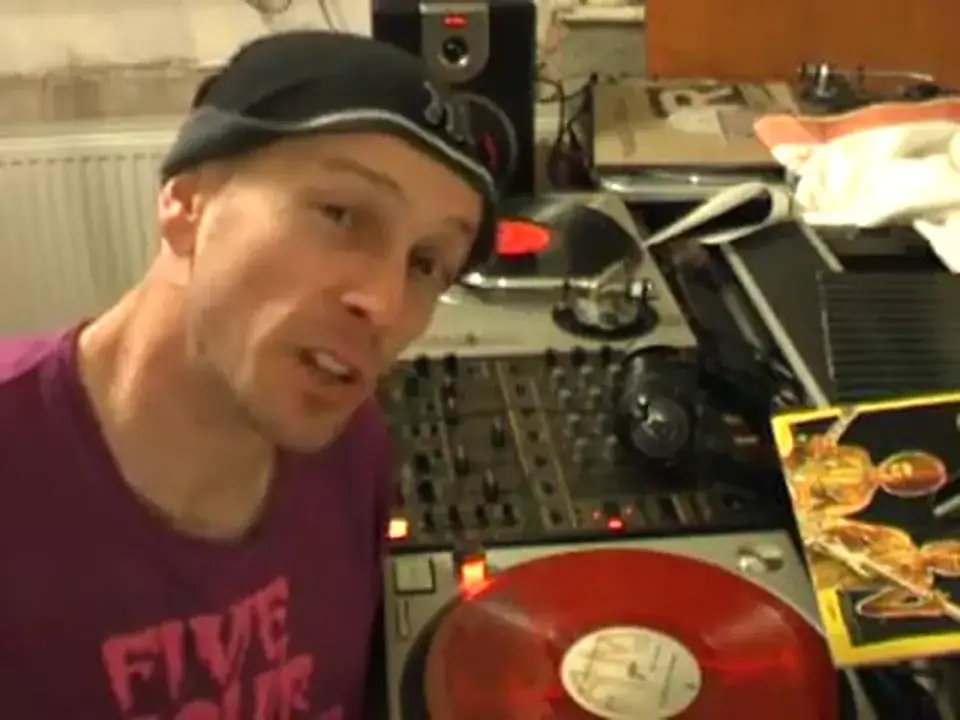
Alright folks, in this video we're mixing two funk tracks. A lot of you are possibly scratching your heads thinking, what on earth is funk? Now if you know house music, you may have heard of the terminology or the music style called funky house. So, what is funky house all about? Well if you haven't listened to it, it's quite a vibrant, uplifting sort of music. But you have an undisputed funky feel to it. Now that feel, even though maybe you don't know what it is, it's actually the bass line. The bass line is the underlying feel of the funk, the vibrant happiness in that particular music. Where did it come from? Okay, it may have filtered through other kinds of house music, but it originated from a music known as funk. Now, funk maybe started, people are going to say, oh, it started then and wherever, but in my eyes, maybe we're looking 60s, 70s.
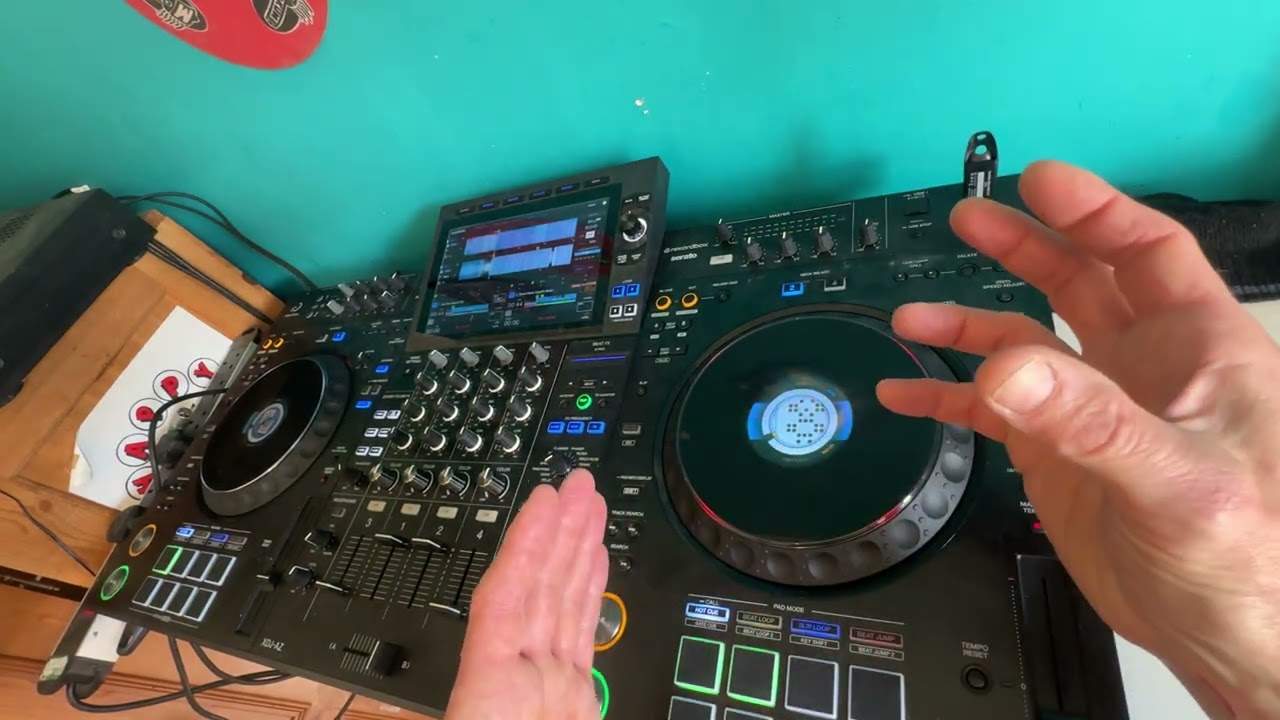
Or more so 70s when it actually came out and people thought yeah this is funk, this is cool. The difference between funk as we knew it then and funky house as we know it now is one major factor. The stuff we hear now is made using drum machines so there's a machine keeping the time. Years ago there was no drum machine, it was a drummer. Now this is why this particular tutorial is slightly more intricate. I've got two tracks here that are both fantastic. We've got Level 42 and Love Games and we've got this one here. It's called Get the Funk Out of My Face by The Brothers Johnson. Now the reason I'm saying this is slightly more technical is because you cannot set the pitch, throw it in and let it ride.
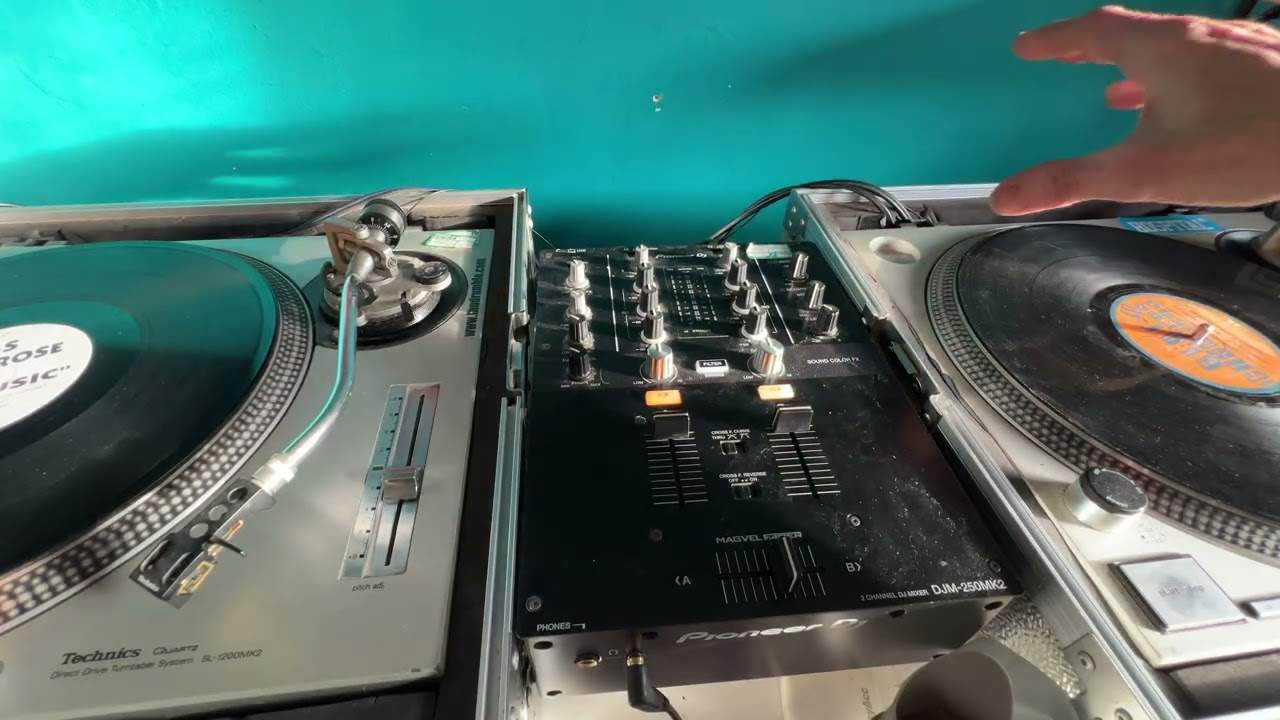
Over that period of time when this track, get the funk out of my face, Brothers Johnson will be mixing in 2, that one over there, level 42, even though it may only be mixing for 2, 4, 6 bars, maybe even less, 2, 3 bars, 4 bars, the actual speed will change. So you do not have time... To throw it in and mess around and try and speed it up and slow it down, you've actually got to memorise and remember where the particular pitch was at a certain point, wang it down a certain point, bring it back up, because you haven't really got time to think about what you're doing. Now again, you can try this if you just started to learn how to mix, that's fair enough, but if you do try something like this, please don't be disheartened if you can't mix it.
2:35 It from this point of view
And don't start banging around against the brick wall because this is, well when I say very advanced it's slightly more advanced. Look at it from this point of view. This is one mix. Imagine doing 10 or 20 mixes like this. Now a lot of DJs what they would do, they would listen to the tune, listen to the feel, the tone and as soon as this one is at a certain point they would move the crossfade bang straight over and this one would come in. They would have this track They would have this track playing, they would be listening to this through the actual headphones and then at the precise point, they'd knock it over. But even while they're listening to it through the headphones, they would have to keep their finger on the pitch control because like I said...
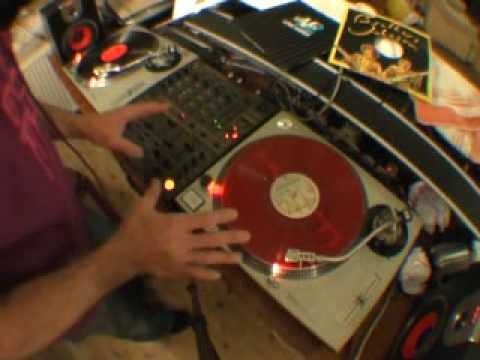
This particular track could be maybe at 110 BPM, it'll go to 112, back to 110, maybe 109. It'll be doing this all the time as opposed to Funky House which is just like that. It's always going to be, again 99% of the time, sometimes you do get slight fluctuation, but it's 99% of the time always going to be at the original BPM. If it started at 120 it will finish at 120. If this guy here started at 110... It may finish at 110, but it's going to be all higgledy-piggledy all the way through. So I'm going to pause the camera and what we'll do, I'll get the fisheye on here so you can get a better idea of what I'm actually doing. Right, first off, let's actually have a listen to a tiny piece of each individual track. The first one you're going to listen to is Level 42 and it's entitled Love Games. Here we go. Hear that bass? Bum, bum, bum.
4:25 There's level 42 and here is the Brothers Johnson
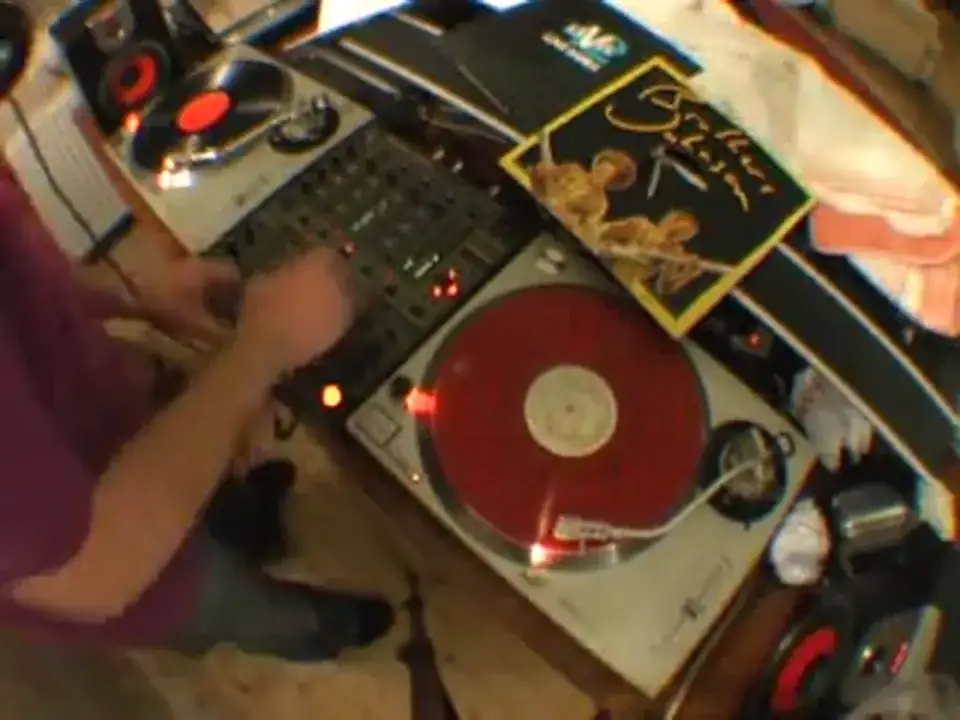
Okay, there's level 42 and here is the Brothers Johnson. There you go. Alright, let's just pause the camera a second. I don't know if I actually mentioned but one very important factor and that is the difference between this stuff and house techno or trance is you have to study the actual music. You've got to study each individual track because there may only be certain windows. Now, what are windows? Yeah, you look through them and they let the sun in. What I'm on about here, there are only certain areas in that specific track where you will be able to mix the next track in to make it sound perfect. Now again this is a demonstration. Now what I will possibly do, I'm going to mix it in at a certain point that I think is near enough perfect and then I'm also going to mix it in at another point where it may be alright but it's not as good as the first time. So we'll pause the camera again, hold on. Right, what I'll do, I will play you the level 42 track
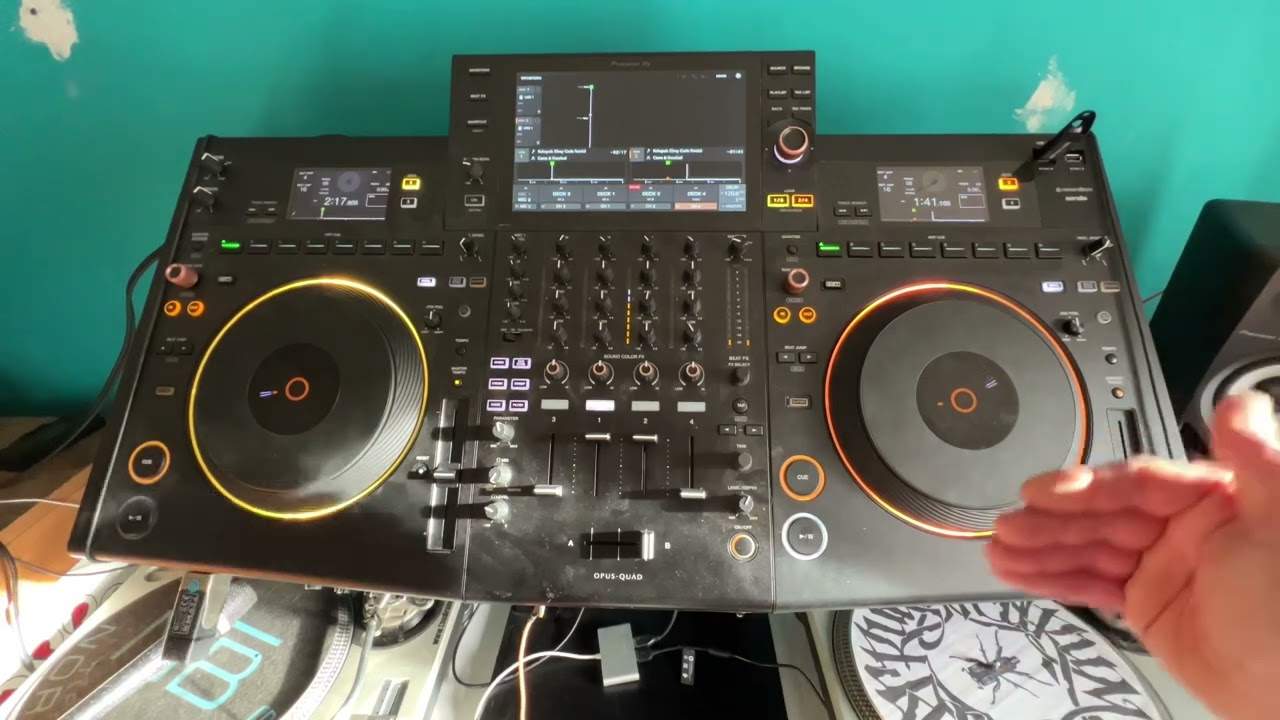
Point at which I'm going to bring this track in. So we'll play this one for you. OK, there. Then you will have onsen over this area here. It'll be following through. Bearing in mind the BPM is changing very slightly, very slightly. And then just before we get the vocals... Just before that point, I'm going to wang that straight out. Now this is the beginning of the track that we're going to mix in. So what I've got to do now, you should know this anyway, we're going to have the volume up on that side. I'm going to be using the two sliders, I'm not going to be using the crossfade, we're going to disengage the actual crossfade. So while this one's playing and we're getting up to that point, I'm now going to get this one ready. Here we go.
7:23 In other words, one, two, three, four, out
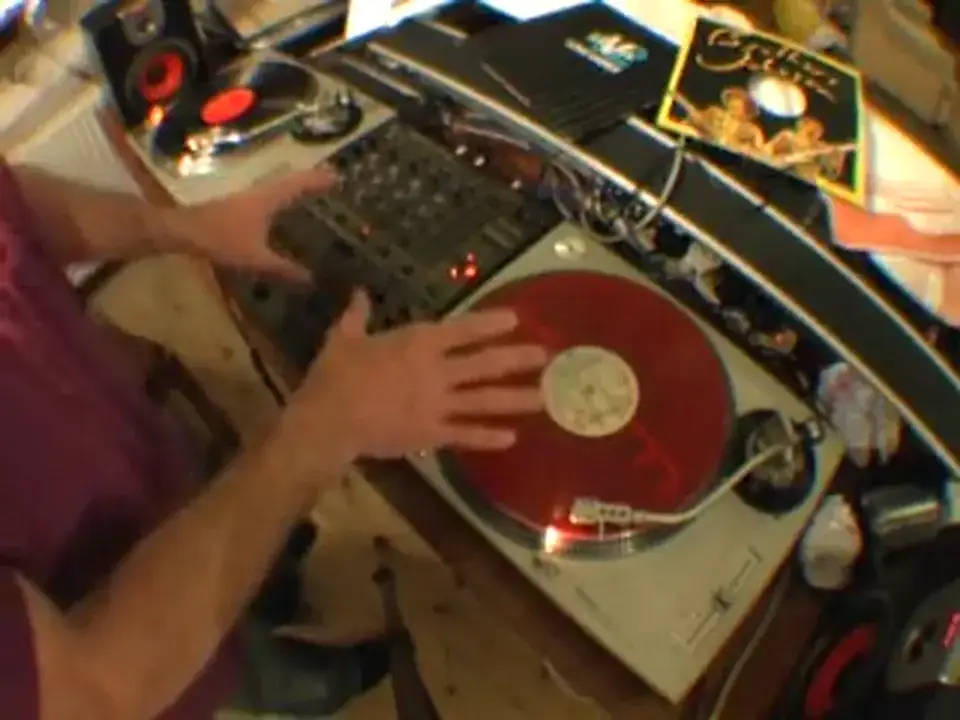
I would have, if this let's say had been techno or trance, and I, so I'll start again. If this say was techno or trance, I could have brought that particular track out at precisely the right point on the bars. In other words, one, two, three, four, out. But because the vocals came slightly in before the end of the bar, I had to actually bring the vocals out slightly beforehand. Now what I'm going to do, I'm going to quickly do that again, quickly, but this time I'm going to bring it out On the bar, and you will actually hear the beginning of the vocals which doesn't quite fit in. Here we go. Okay, yeah, alright, admittedly there it was a bit off, but did you notice there was a tiny bit of vocals in there? Right, what I'll do now, I'll pause the camera and we'll now do a third mix and I'll show you maybe a place that perhaps isn't as good as the first mix we did. Hold tight. Okay, here we go, let's have a listen to this particular part first.
That's where I'm going to bring it in. Why didn't I mix it in there? The reason being, two main reasons. One is that it didn't really sound that good, but also it's like I said earlier, dodgy hat, and that is that this music is produced and made by real musicians. They are not machines. Therefore, their time is always going to be slightly a little bit out. And at that particular point... Thank you for watching.
This transcript was produced automatically from the audio of the video and may contain mistakes.