 12:06
DJ Tutorial How to Mix Soca Caribbean Music
Contents of the video
0:01 Originates from the Caribbean, Trinidad and Tobago
Alright ladies and gentlemen, demonstration stroke tutorial on how to mix or one way how to mix a style of music called Soca. It's spelt S-O-C-A. Originates from the Caribbean, Trinidad and Tobago. And one way of describing this music is vibrant and uplifting. Alright, two words there. But it is, it is just buzzing. It's the sort of music, if you haven't heard it before go and check it out. If your dance floor is like dead, put this style on and I promise you it will buzz. There's just an uplifting vibe to it. First and foremost though, it is quite difficult to mix. Quite often it's very fast but also there's a lot going on. There's a lot of music involved, there's a lot of vocals. Quite often with the tracks there's not much of an intro, there's not much of an outro.
2:19 This one here is I Never Whine by Mr Chucky
The only real way of mixing it is to chop it, to cut it. One track in, the other one out. So you don't have to beatmatch continually. Now also, when we count this music, most of the time it's still counted in bars. 1, 2, 3, 4. 1, 2. For someone who's maybe not brilliant at counting bars, It can sound as though it's a little bit all over the place, but there is still timing. Now, if you're not familiar with counting bars, try any style of music. Most styles, of course, some styles of music do not have countings. You can't count 1-2-3-4. For example, waltzing. 1-2-3-4, 1-2-3-4, no. 1, 2, 3, 1, 2, 3, 1, 2, 3, 1, 2, 3. Soccer? 1, 2, 3, 4, 1, 2, 3, 4. No. 1, 2, 3, 4, 1, 2, 3, 4. Right, I've got a few tunes here. This one here is I Never Whine by Mr Chucky. Have a listen. I'll count with you.
4:09 We've got four bars
One, two, three, four. One, two, three, four. One, two, three, four. One, two, three, four. One, two, three, four. One, two, three, four. One, two, three, four. Okay. And then over here we have Little Rick featuring Benjia. I think it's called See Ya. Have a listen. So right, if we have a listen to this particular track, we could start it off three, four. So the counting, very simple. One, two, three, four. One, two, three, four. So let's go to the end of this track. Okay so we could if we wanted to, we could start it at that point there so we'll go back to the first track. Now you have to be more musically minded here because the actual feel of the track, the keys sometimes do change. Again there is a lot more vocals so you have to be a lot more aware to where you're going to chop the next track in. So if I was to count here, volume up, 1, 2, 3, 4, 1, 2, 3, 4, 1, 2, 3, 4, 1, 2, 3, 4.
So we've got four bars. So think about it, if I find a point in the vocals here where we have four bars left and I start that track off where we have four bars left in the vocals here and then the vocals finish here, it should work. Should, if it's in key and of course in time. So if we're going to mix it like that, we have to make sure it's at the same BPM. We have to make sure it's the same key, and we have to make sure that when this track stops the vocals, that one comes in. We do not want vocals over vocals because it will sound shit. So... Just going to check the beat here. OK, we've pretty much had a mix there. Alright, we'll try and find another track now. Just pause that a second. Let's have a listen to the first beat. Two, three. Now, believe it or not, but there was...
A sound right at the beginning there, but it's really quiet. So do we want to bring it in there? Well, the question is yes and no. Of course, it depends on where you bring it in. For example, you may want to bring it in at a certain point where that first beat will play over this particular track. Alternatively, I would not personally bring that first beat in if I was to take this particular track straight out because all of a sudden there'd be a dip in the music Maybe they would, maybe they wouldn't. It depends on where the dip is. If the dip is at the right point people will feel that it's almost like it's in, it's part of the mix. This is where a DJ is very, very clever. A lot of people think DJs just put tracks on. We do, we just put tracks on. But we put them on at the right time and the right place. If you're not a DJ and you think DJs just put tracks on, you try and do it.
7:39 One, two, three, four
It's very, very difficult. So let's have a listen. Two, three, four. So one, two, three, four. Now if I was to count one on the first sound, this is what the timing would be like. It would be off, but this is what the timing would be like. One, two, three, four. One, two, three, four. One, two, three, four. One, two, three, four. One. Now it's actually on, but it's off. We're missing a beat. Have a listen if I count correctly. This one again, slightly more difficult because was it in the right time the first time or was it in the right time the second time? So let's have a listen. Let's play this one. Go towards the end. Alright, that was a bit of a chop. Alright, let's try another one. Alright, straight away. That's very fast. In fact, if I put that at the centre point, we just pause that. Let's have a listen.
9:35 Can you imagine playing a cut like this when your dance floor is dead?
Remember what I said earlier on in this video about this sort of style being very vibrant and uplifting? Can you imagine playing a cut like this when your dance floor is dead? Two things will happen. One is people will walk out and leave, which is highly unlikely. The other one is people will go, oh my god, this is just different, it's exciting. And once they've had a few bevvies... They'll just want to get up and party. Have a listen, alright? Let's turn it up a bit. This one here is Fura Empress and Frey Anne. Alright, looking at it now, that's 160 BPM. That's on the verge of drum and bass. So, how could we mix this particular track in? Well again, you don't really want to beatmatch it unless you've got a track that's at the same speed. But what I would do with this particular track, if I felt my night was just going like shit,
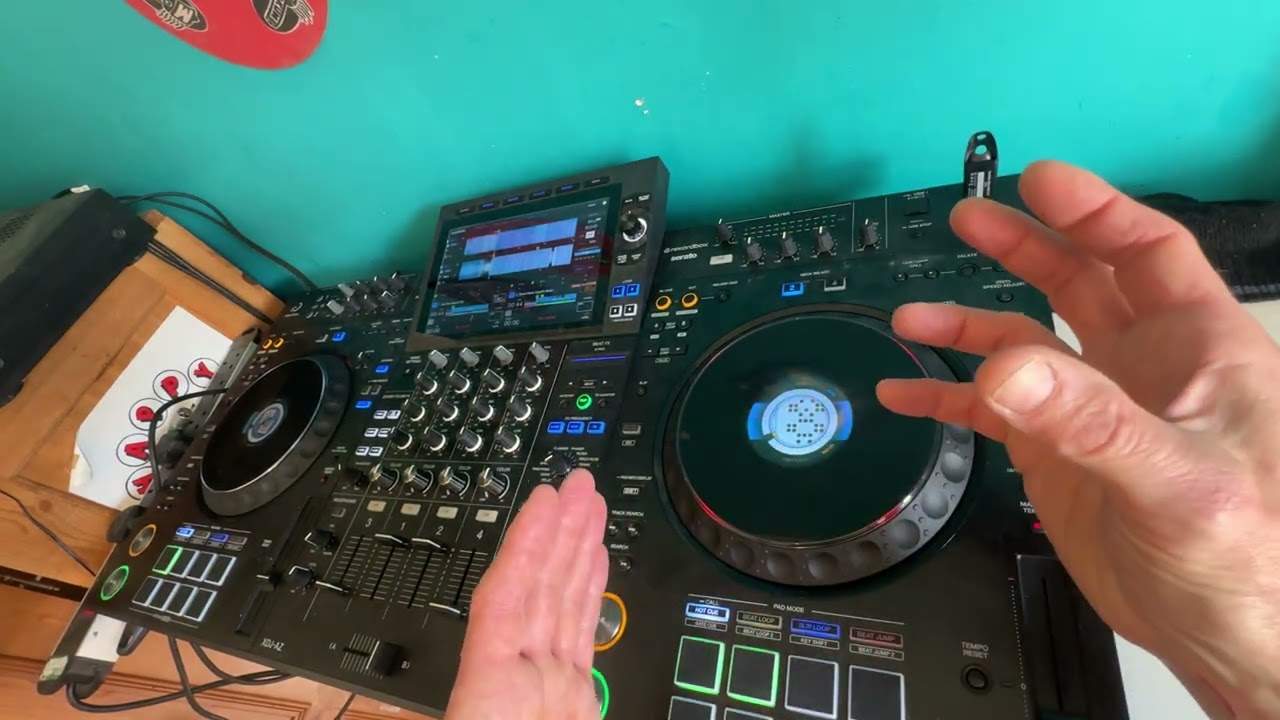
I just drop the track that's making the night shit and just bung this one in. Alternatively, if I'm keeping a sort of flow, maybe a spin back or a spin forward and bung it in. Maybe bring the volume down, talk on the microphone, ladies and gentlemen, it's time to party. Press play, walk away, grab yourself a drink because you're pretty damn sure you know when you get back the floor is going to be full. So let's try the spin back. Again with a spin back, look at the jog adjust. You don't really want it on heavy. If you have it on heavy, if you try the spin back, it's going to go... Not much of a spin back. If you start to move this anti-clockwise to the light position, you're going to get more of a spin back, more vibe, bung the next one in. And the bridge. Alright, wrong sort of time, but it hopefully gives you the right idea. So I hope that's been a help.
I'll give you a bit more information about this style of music in the description, and I will say practice and enjoy. Thank you.
This transcript was produced automatically from the audio of the video and may contain mistakes.