 8:04
DJ Tutorial, Keeping the volume at a constant in the mix.
Contents of the video
0:00 How you can keep the volume
Folks, hopefully this video will help you to understand how to set levels while you're in the mix. But more importantly, it will show you how you can keep the volume at a constant while you're in the mix. Okay, what do I mean by that? Now imagine we have track one, track number two. Track one over this side is playing. We're going to be bringing track two in. Track one's level, let's say... We've set that so we know exactly how it sounds because we can hear it through the speakers. Because we've looked at these guys here, the LEDs, and we've set everything accordingly, what we've done, we've looked at that, and then we've carbon copied this track here on the LEDs, so theoretically we know because this side and this side are identical up here, theoretically we should know this side
All of this should be the same level when we bring the volume up and we take this one out and we bring this one in. So, if this guy here on the speakers is say at this level, theoretically then this one here should be at this level as well. But why is it that while they're in the mix, the level seems to go higher? Now hopefully in this particular demonstration stroke tutorial I'll explain why and also how we can reduce that from happening. We've got these guys here which are known as the bass or low. These are mid, these are high, sometimes known as treble. Now if you can see everything is set at 12 o'clock. Now ideally what you need to do is this. This track's playing, we've got the bass up. This track we're going to bring in. Just before we bring it in we turn the bass down there is roughly 7 o'clock. We're going to turn it to about 8 o'clock. While we bring the bass in here
2:24 Exactly what's going
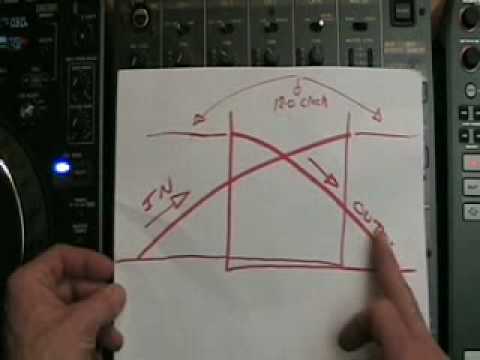
The track is being mixed in this side, we need to increase the bass and while we increase the bass in the mix, this is while the two tracks are together, we need to reduce the bass on this side. So, up at 12 o'clock again, we've got this one beatmatched, it's running in conjunction with that side but we're only listening to this one through the headphones. So, bass down, as we're in the mix we bring the bass up on this one. We reduce the bass on this one, so we're doing almost two things at the same time. We're doing that, like so. Alright, now hopefully I'll explain exactly what's going on. Now let's imagine now that track over there is playing quite happily and we're not doing anything with this one. This here is our timeline. One, two, three, four. One, two, three, four. At this point here, the bass is on full. What's happening
Is, while we're in the mix, we're going to reduce the bass on that track over there. Now the opposite applies here. Again, here's our timeline. 1, 2, 3, 4, 1, 2, 3, 4. So while we're in the mix now, on this side, we're going to increase the bass like so. So if we put these two together, we've got tune coming in like so. And tune going out. But how does this look? Because you can't really see, can you? So if we put it like that, we can see here, tune coming in and tune going out. Now what we've got in essence, instead of having the bass up, now also very briefly as well, as you get more into mixing you'll realise you can start to mess around with the mid. And the treble as well. But basically this is showing you and helping you how to keep the levels at a constant. So what we're doing here is the track that's coming in, we're increasing the bass, the track that's going out, we're taking out the bass. But we're trying to do them exactly the same time to keep that level. So let's imagine this as well. Before you mix, this, let's say for example, is the track that we're going to bring into the mix.
Again, this is our timeline. We can class these as bars, 1-2-3-4, 1-2-3-4, 1-2-3-4, 1-2-3-4, or just beats, 1-2-3-4, 1-2-3-4. This track over here, that one over there, we've got the bass on full, also we'd have the mid and the top. When I say full, I do mean at 12 o'clock, not wanged all the way up. So, we've got this playing quite happily, we know it's beatmatched and it's ready to go. Then, before we're ready to bring it in, what we need to do is we need to take out the bass. And at this time, we're still mixing it in. At this area here, we could have it beatmatched in our headphones. At this point here, when we're just ready to start to mix it in, we need to reduce the bass. Now at this point here, we could quite possibly have this guy over here in the background ready to mix in.
5:17 These guys here, we've got
And then at this point here, we can start to increase the bass. So in other words, if we look at these guys here, we've got that track over there. Now let's say for example, we've got headphones on, volume down. We've got the bass, mid, treble up. We've got this guy playing through the main PA, bass, mid and treble. What we're going to do now is we've got the headphones on, we've got it beatmatched perfectly. What we can do then, we can start to bring the volume up. And we can take the bass out. Okay, they're both in the mix and then at this point then we need to start to increase the bass for the track coming in and take away the bass for the track that's going out. We're still in the mix and then we can just slowly reduce that one down. Now exactly the same applies if we're going to use the crossfade. So in other words you saw me use the up-faders like so. Exactly the same applies with the crossfade.
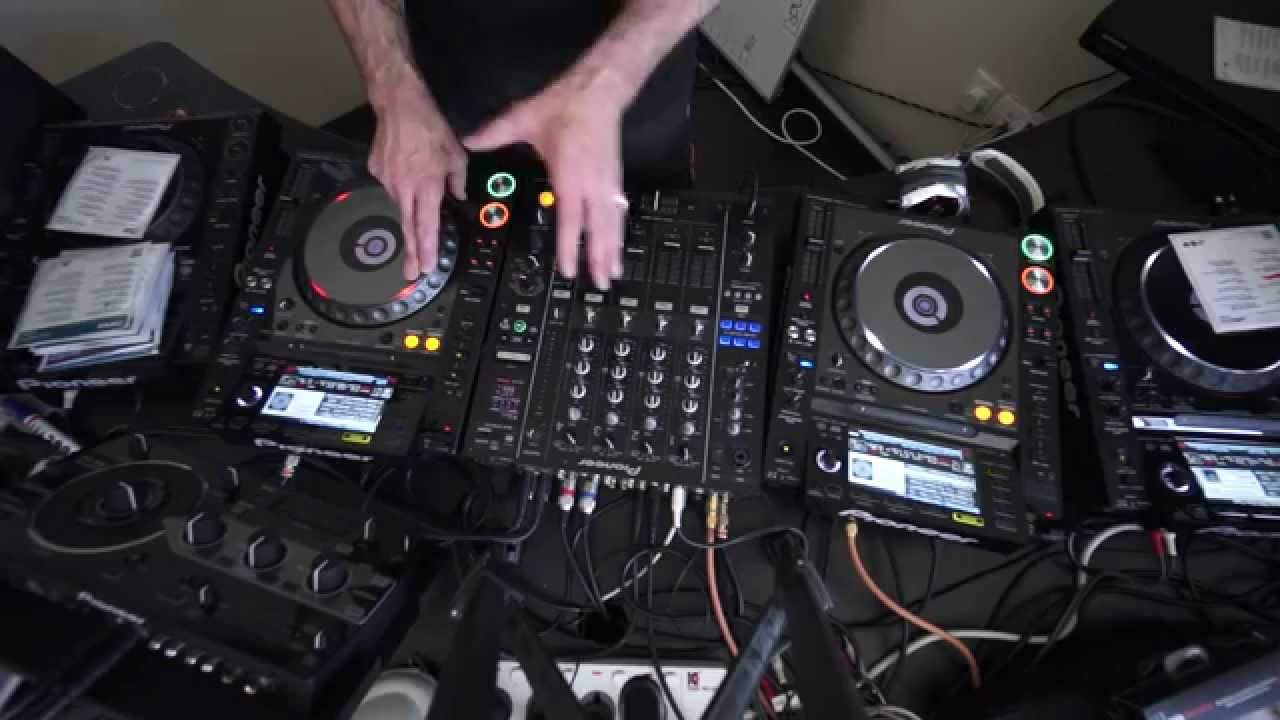
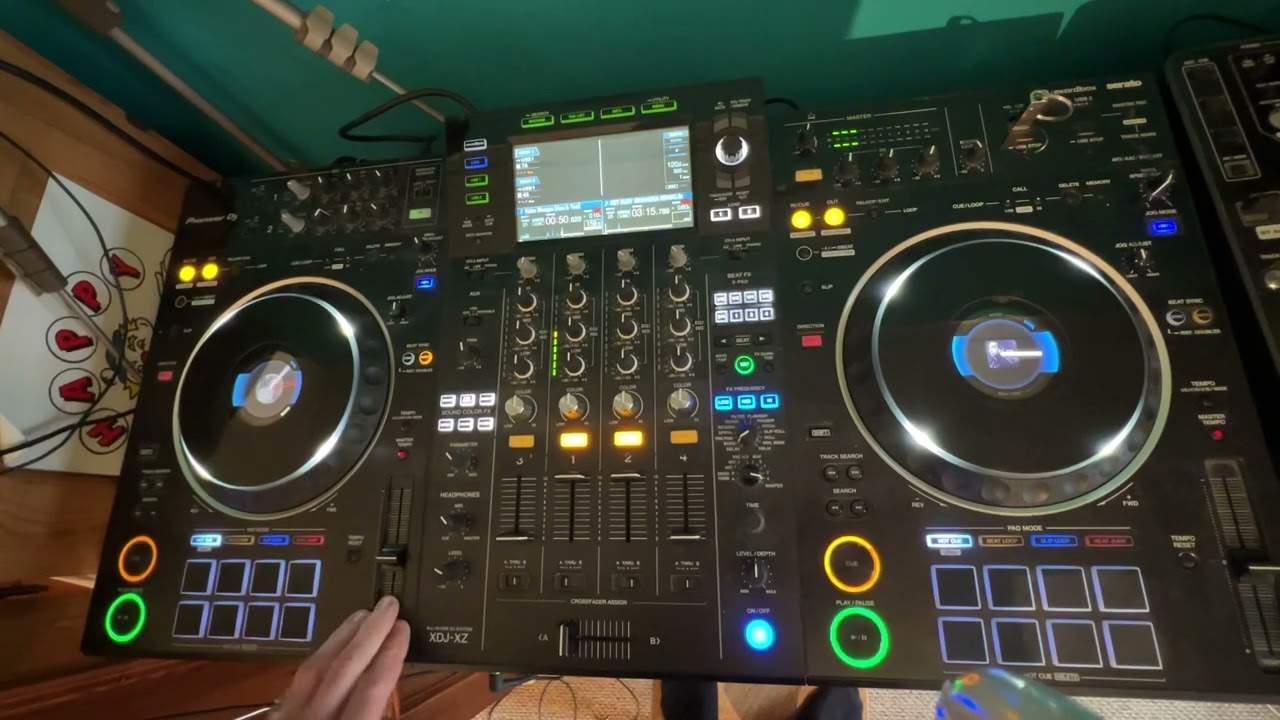
Crossfade over from one track, in the mix, bass, there we go. We've got this guy, we're slowly going to take this one away and we're slowly going to bring this one up like so. Alright now I hope that's been a help. By the way I'll give you a bit of a quick demonstration and bearing in mind this isn't going to be perfectly beatmatched because I haven't got any headphones on. Also, people are always asking about the names of the tracks, so look in the description. And the gear I'm using, that guy there, is the CDJ-1000 Mark III. Mixer is the DJM600. And that guy over there is the American Audio Radius 1000. And that guy over there is a cold cup of coffee. Right, okay, so we'll set that like that and let's give it a go. Hope that's been a help. Any questions or anything like that?
Bung it in a comment, practice and enjoy.
This transcript was produced automatically from the audio of the video and may contain mistakes.