 17:31
Mixing eighties music
On YouTube this video is called DJ Tutorial on Mixing 80's Music
What this lesson teaches
He points out that he could answer this in two ways. An eighties mix is very simple - play one record after another. Or it is a nightmare - so many styles, genres, speeds and keys in one decade that nothing fits anything.
Both are true, and the resolution is where the work goes.
The problem
Modern dance music is almost entirely drum-machine made and holds its tempo. From the late eighties backwards, much of it was played by people, so the BPM moves - and that is before you deal with the fact that the decade contains disco, electro, funk, soul, new wave, synth-pop and hi-NRG, at wildly different speeds and in unrelated keys.
You cannot approach that the way you approach a house set, where almost any two records within a few BPM will work.
Mess around time
His term for the solution, and it is the most useful thing in the lesson.
Before you mix anything, you spend hours choosing and ordering. Trying pairs, finding which records sit next to which, discovering that two things you assumed would work do not and two you would never have put together do.
His estimate for a one-hour mix: five or six hours constructing it.
That ratio is worth sitting with, because it relocates the skill. For this material the DJing is largely done before you start - it is in the selection and the sequence. The mixing is the easy part and the short part.
Why that is encouraging
Because it means a set like this is within reach of somebody whose beatmatching is still rough.
What it requires is time, a lot of listening, and a willingness to throw out combinations that do not work. None of that is a skill you have to acquire over years - it is just hours, and you can start tonight.
And it applies beyond the eighties
Any set drawn from material that was not made to be mixed - a wedding, a birthday, anything across eras - works the same way. The preparation is the job.
Contents of the video
0:01 It in like, well an 80s
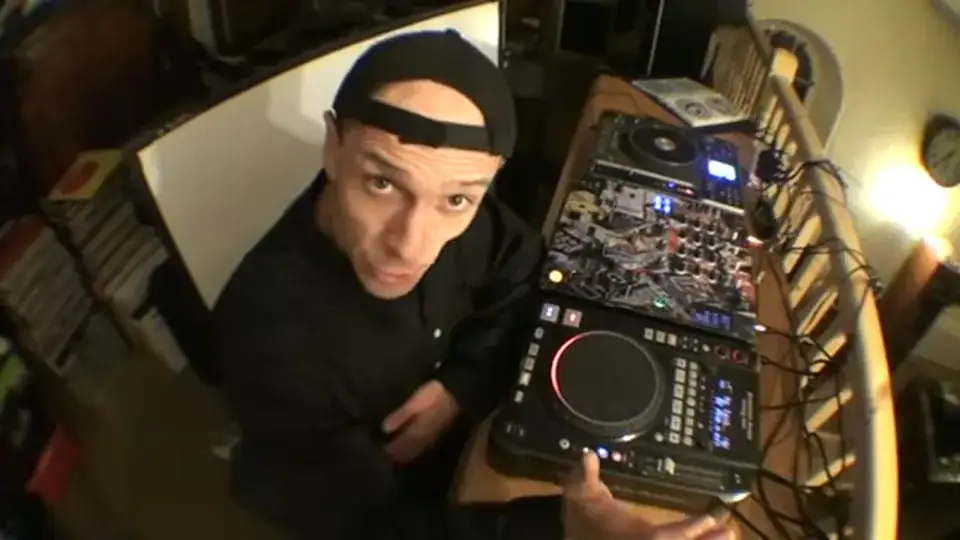
Right guys, now someone's requested that I do a bit of an 80s mix for you and I'm going to do that but what I'm going to do is sort of incorporate it into a bit of a tutorial as well. Now, how can I explain? Because this could be, I could just explain it in like, well an 80s mix is very simple because all you have to do is mix one tune into the other. Alternatively, I could say that it's very, very intricate and difficult because There's so many different styles, genres, speeds, keys. It's like a nightmare. So, 80s mix, where do you start? Well, let's look at modern day dance music first off. Now, modern day dance music, I would say near enough 99.9% of it is made with a drum machine and it's all in beat perfectly all the way through.
From let's say the late 80s into the mid and early 80s and then back into the 70s, quite a lot of the dance music then was not made by a drum machine. It was made by real people. It was still very dancey and hip-hoppy and like pretty neat but it wasn't made by a computer. So the BPM is all over the place. BPM beats per minute. So what you have to do first of all if you want to get a relatively good mix together, you've got to start choosing your tracks first. So, the first thing to do is what I would class as the mess around time. Now let's say for example, hypothetically you're doing a mix of an hour, say. In a sense, if you want to get a good mix together of an hour, you may have to take five or six hours, I don't know, constructing that mix because you could be there thinking, oh it'll go with this, that'll go with that, yeah that'll go with this, that'll go with that, and you could chop and change that, no I don't like that one with that one,
Then you have to look at it to the next level. Right, I like that one with that one but I don't like it at that point. I want to bring this one in at another point or maybe, you know, this one's playing, I want to bring this one maybe halfway through that one or maybe I want to bring this one in right at the end of that one or maybe I want to beatmix it in at the instrumental break or maybe I just want to press play, knock the crossfade straight over. So there's that to consider as well and also This is the difficulty. The BPM of this one could be, let's say the start, for example 120 BPM. Halfway through it could be 120.3 BPM. And then maybe towards the end of the track it could be 121 BPM and right at the end it could be 119 BPM. It's a nightmare but trust me that's how old school dance music was. There was never, when I say all, all of it...
2:55 Crowd, maybe change, eight maybe
Some of it, most of it, to a certain degree, quite a bit of it was all over the place because like I said earlier, it was made with real instruments, real people. So, I've got a few tracks, I've got four tunes and my first thought about this particular mix is it's going to be dancey, a bit soul-y, okay? And again, with reference to 80s, 90s, 70s, 60s, there's loads you can do. This sort of set, I could let's say play in an 80s set And this could be like a bit of a dancey section. And all of a sudden, after let's say there's four tracks here, let's say I played five, six, seven, eight, maybe after eight, I could maybe start to change the genre slightly. Doesn't matter. But again, what we're looking at there is looking at the crowd and how the crowd are reacting with your set. If the crowd like it, carry on. If they don't like it, maybe change it. But again, take it to a new level.
Maybe you don't want to play it continually. Alright, start again. Maybe the crowd are enjoying it, carrying on, they love it, they love it. But maybe then it's up to you to think, I want to change them now. Alright, in other words, they love the set, all of a sudden the crowd start to disappear, you change. You start changing the genre of music. Alternatively, the crowd are dancing, they love what you're doing, the dance floor is full, but maybe then you think you need to change it slightly. It's up to you. Remember, you're in control of what they do, but just the same. They're sort of, in a way, in control of what you do as well. It's a two-way thing. Right, so... Right, yeah. Now this one here, Heatwave Boogie Nights. Classic track. So, let's have a look. Now again, this one here, it's a real band, alright? So I bet you if we listen to the BPM, it's possibly moving slightly up from... What are we on? From... Yeah, 114.6 BPM.
4:53 I doubt very much if it'll stay there, it could fluctuate very slightl
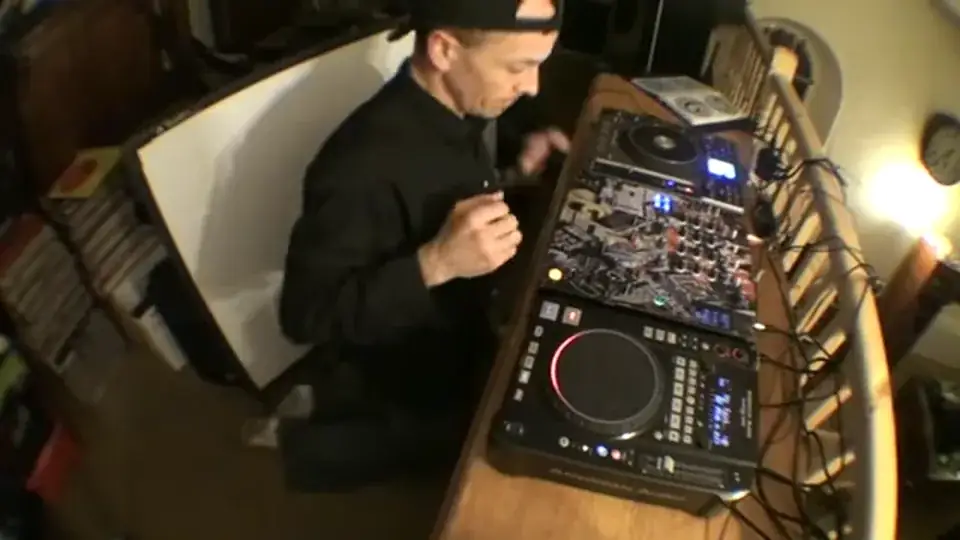
I doubt very much if it'll stay there, it could fluctuate very slightly. The tune I'm going to bring in is the Fatback band, I Found Loving. Classic track. So, bearing in mind as well, you know, this is the sort of thing you'd be doing prior to doing it live. Constructing your set, finding the right place, also making sure you don't bring it in at the wrong place as well. Now... At that point there, always the best in tact. Let's have a look, hold on. I'll tell you what I'll do, I'll wind it forward a little bit. Okay, now, it was sort of alright, but maybe, excuse me, what I should have done there, or what I could have done, is where we have the intro here. I could have brought this in slightly before it says...
Always the best in town, got to keep on dancing. So what we're doing here... Okay, don't laugh. We're always making a bit of a mini-mix, alright? But it's like I said right at the beginning of the video. It's about listening to each tune and constructing it and finding the right place to bring it in and bearing in mind there could be 30 or 40 or 100 right places. But then again, there could be 30 or 40 or 100 wrong places as well. So, we've gone from... to... Backback bands, okay? So let's take this one out. Rhythm of the Night. Bear in mind as well, I've got any headphones, okay? With reference to the likes of this sort of music, if you're using the 7-inch versions, which generally, you know, three and a half minutes, you can, if you want to, by all means, use some effects, etc.
7:23 Iphone love, stuff
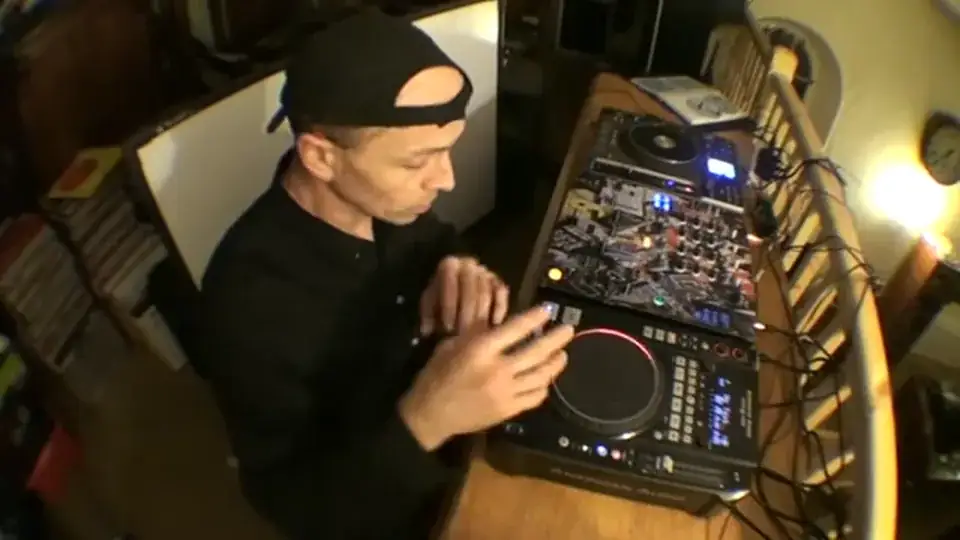
But I would personally stay clear of using rolls, not reverb, sorry, rolls and loops and that kind of stuff. In a sense, this is my own personal opinion, maybe you want to just let the track play itself because it's almost like you need to keep it how it was, how it used to be. What I'm trying to say here is modern day dance music, of course, great, chuck in a loop here, there and everywhere. Stuff like this, by all means, a bit of phasing, a bit of flanger, a bit of filter, that kind of stuff. In other words, you can change the sound of the track, but a lot of people who are listening to the track, listening to an old 80s style mix, do not want to start hearing, you know, iPhone love it, iPhone love it, they don't want to hear the track as it was. So we've got this guy here, now again...
What I need to do before I bring this one in is make sure that logically this one is going to be relatively the same BPM. So we're on, we're at 118 and 125. Now of course, again, what you would be doing, headphones and like I said earlier, you'd be listening. Again, like I said earlier, earlier, earlier, right at the beginning, when you're constructing this set to begin with at home, wherever, you need to maybe find places where you know the tracks will come in and will work well, okay? Straight in, okay? Now again, I'll explain something here. We've got an introduction. Now, again, if you're not familiar with bringing tracks like this in, and when I say tracks like this, for example, tracks that don't necessarily start at the count of one. For example, this one does. Have a listen.
9:52 Bringing count
This one, let's have a listen. 1, 2, 3, see it's not, it's not on the count of 1. 1, 2, right. 1, 2, 3, 4. What you need to do is you need to listen to that or listen to the beginning before you get that count of 1, mesmerise that in your brain and try and picture that while the track's playing. I'll explain. One, two, three. Do you see what I mean? So what that means is that you can actually bring this one in not on the count of one. Right, so I'll explain again. What I'm going to do now is play this one and just bring this guy in right at the beginning but of course I'm not going to be bringing this on the count of one. I'm going to be bringing this on the count of when it should be coming in. Right, here we go. So straight away we've gone into another track.
And with this one, we haven't beatmixed it, we've just brought it in precisely at the right time and we've brought it in in time with reference to the bars. Right, so let's get rid of this one. I think this one's near enough the same as well. Yeah. Right, Luther Vandross, classic. Right, okay. Right, now what I'm doing at the moment, I'm just having a mess around. And like I said at the beginning, just rewind and you'll see where I'm coming from. It's about just listening to the track and working out right place, wrong place. In other words... Be a mad scientist and experiment. Okay. So again, what we need to do logically is, let's say for example, this one's playing. You want to beatmatch this one, so on your headphones, just try beatmatching. Again, you see I'm looking at this one here. It's gone from 114, it's 115.5, 115.6.
12:33 Sorry, I'll start again
It's going all over the place. That's because it was made by original... Sorry, I'll start again. Sorry, that's because it was made by real people playing real instruments. So they are not machines. They cannot keep that BPM at a constant. They're going to be slightly off and on. So one major, major tip for you. If you are listening to this particular track, and let's say, for example, this one is two minutes of the way through, And you beatmatch this one perfectly at two minutes of the way through on this guy. And you think, brilliant, sorted. Guess what? By the time this one's got up to three minutes, this one might not be in beat because that one could be, say, half a BPM faster, half a BPM slower. So this is where you're almost taking it to the next level. Two things you can do. One is you can have your fingers on the pitch.
And you can try and be as precise as possible, and when you press play, you need to keep your fingers on the pitch and try and beatmatch it while you're mixing it in. The other one is just, you know, so... The other one is bomb, bang, chop it straight in, which quite often is very good for older styles of music because you haven't really got that, like I said earlier, that 1, 2, 3, 4, 1. In other words, the tracks don't necessarily always start at the count of 1. And we can listen to that with this guy here. Right, let's have a listen. Now I'm going to count one. One, two, three, four. Right, start again. One, two, three, four. One, two, three, four. All over the place, isn't it? But check this out. Start again. You try doing this and not editing it. It's mad.
Okay, what I'm going to do now with this one exactly the same as I did with the other one. I'm going to, as soon as I hear the first count of one, I'm going to try and imagine that. So, right. See what I mean? Okay, so, alright, it's finished, right. Sorry about that. Okay, right. Look, don't you forget about me, please, thank you.
15:30 Let's try and wang this one forward a bit
Right, so what I'm going to do now is I'm going to bring this one in, okay, but use a kind of thing. Crazy. That was slightly off from a sound point of view, but hopefully you'll get a general idea. Let's try and wang this one forward a bit. Sort of alright, but hopefully you get the general idea, okay? Now, the main things to remember from this particular video is the likes of mixing 80s, 70s, 60s... Forget about trying to beatmatch them right at the beginning of the track. You have to listen to the part where you want to bring it in and that's where you have to start beatmatching it. In other words, without trying to confuse you, no point listening to this track here, okay, say one minute through the track and beatmatching this one at the beginning of the track with one minute through on this track. What you need to do is like I said earlier, earlier, earlier, you need to construct your set to begin with. So for example,
When this track is, say, three minutes through, at that point, that's the time you need to concentrate on the BPM of this one in relation to this one. Now, it's mind-boggling, seriously, but somewhere down the line you'll have this eureka moment and you'll go... He makes no sense at all! Thank you. Practice and enjoy.
This transcript was produced automatically from the audio of the video and may contain mistakes.