 10:50
DJ Tutorial on mixing Breaks
Contents of the video
0:01 First of all I'm going to put brakes in
Alright guys and welcome to the first video of 2012. And in this one we're going to be looking at a genre known as brakes. It's winter time, you're walking along the road or the path, footpath really, because if you're walking along the road you could get hit by a bus and blood would be squirting everywhere and it'd be horrible. But you need to walk along the pavement. Of course if you're walking along the pavement when it's very, very wintry and cold you could slip over and you could break your leg boy. Is that dirt? No it's snot. Right, first of all I'm going to put brakes in... I'm going to put an angle here at the moment now, look at that, see I'm straight. Right, let's have a look at three categories first of all.
Hip hop Cleaning my nails. Brakes, drum and bass. Very simple. If we imagine hip hop as Brakes is a little bit more Drum and bass Now please read into this and you'll see that this is... This is quite right. Hip hop is almost a beat that is quite, quite simple in its structure to a certain degree. Brakes is a little bit more intense and drum and bass is... there's a lot more going on. And you can if you get the right tempo you can mix in a hip hop track with a brakes track and you can mix a hip hop track in with a drum and bass track. You can mix a brakes track in with a hip hop and vice versa. But of course you have to consider one major aspect which is the BPM, very important. Now the two tunes I'm using is Suspender, Rosario and also here we've got Cut and Run, Gangsters Paradise.
So let's first of all have a listen to a brakes tune.
Now if we listen to that tempo, can we imagine hip hop over that? We're going to put some hip hop over it. Here we go... Down, down, down, down Right, now let's have some drum and bass.
2:52 We've got one time signature
OK, so there we go. We've got one time signature... Oh sorry, we've got one BPM but we've got three different ways of putting that time structure together. Right, so we've got this one over here which is a very straightforward sort of brake intro... Brakes intro, sorry.
Again, notice the difference between a brake intro and brakes. If I said a brake intro I would be maybe talking about bringing in a break of a track into another one. Brakes is a known genre so when you talk about a brake and you're on about this sort of genre people won't know what you're on about really. You'll be going, oh have you listened to that new brake tune?
Brakes tune, yes. Here we go... And then this one over here...
Listen to the time structure. The way the beat is made, it's not dissimilar to that one. There's more going on here but it's still brake isn't it?
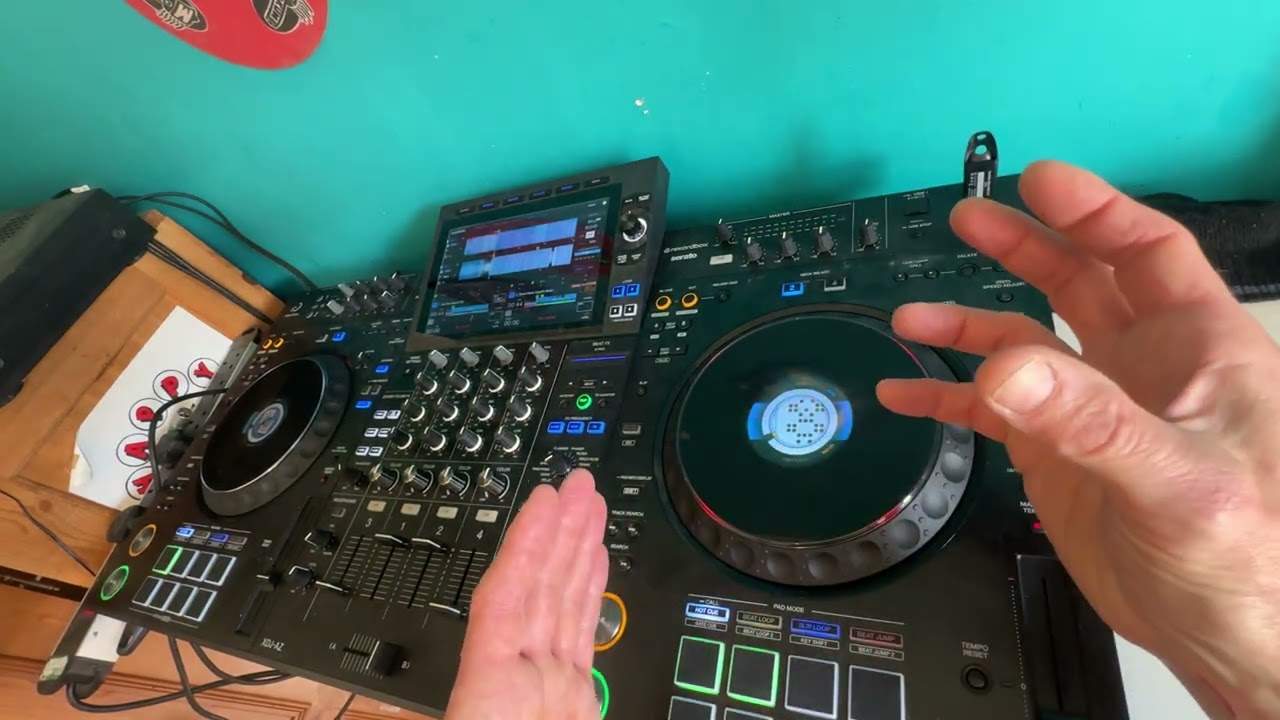
Again, timing... 1 2 3 4 1 2 3 4 1 2 3 4 1 2 3 4 1 2 3 4 1 2 3 4 1 2 3 4 1 2 3 4 1 2 3 4 1 2 3 4 1 2 3 4 1 2 3 4 1 2 3 4 1 2 3 4 Alright, I'm just going to sort of cue it up at that point. Now the first thing I would do of course on the headphones I would make sure this one's in beat so I'm going to do that now... You're going to listen to this one here and I'm going to get this one on beep. So I'll put the crossfade over this side volume up there, cue on this guy here so I can hear this one. You can't but you can hear that one playing.
5:10 Cross fade, fader, crossfade
What I need to do is make sure by looking at the LEDs... both levels are the same because if the LEDs are too low on this one and too high on this one when I bring this one up people aren't going to hear this correctly so of course to do that all I need to do what I'm going to do this time though is I want more personally emphasis on the mid so I'm going to completely knock out the bass and I'm going to increase the mid very slightly now this is when we have to be a bit of an octopus and do about five things at once including scratching your testicle actually not a good idea don't do that it's rude well actually no you can if you want to but of course if you buy yourself and of course if the decks are there no one can see you give a good old
Scratch anyway digressing so have a listen to this track now with the bass off let's listen to this one right this one by itself what I'm going to do I'm just going to turn the volume up a little bit here so I can hear myself think oh right so that guy down now bearing in mind as well very important don't follow this to a T or even to a W or a V or an S or Y or the whole alphabet just take some tips and tricks from this and just mash it up how you like so what I'm going to do I'm gonna put me phone heads on and we're gonna have the volume down here and have the crossfade over half when I'm going to use the up fader so I'm just gonna use the up fader if the crossfade was over there I'd have to put that up and then use a cross fade over
7:37 This time I'm going to do it correctly
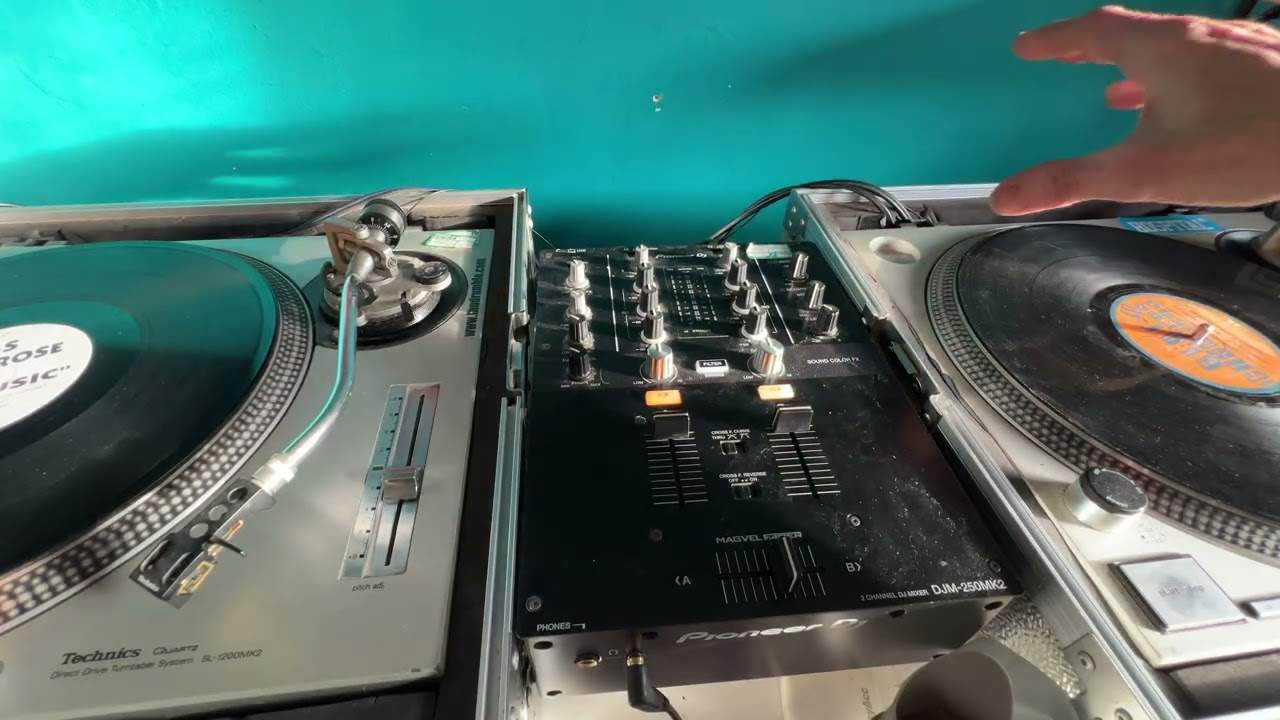
Like so in this instance I'm gonna have my up fader down cross fade in the middle and then I can use the up fader by itself alternatively I could have the cross fade where ever I wanted just so long as I've got the through set on my mixer not all mixers have that through is there for one reason one reason only it means that when these little knobbly bits here are set to through it means you're not using the crossfade at all I'll do that again. I didn't do what I was going to say I was told to do because I told you what I was going to do and I didn't do it. Right, so this time I'm going to do it correctly. I have the crossfade in the middle and the upfader up there. I hope you're paying attention here because if you're not I'm gonna go
Around your house and smack your bottom very hard with a sledgehammer. Right, so press play. That was a very very simple kind of transition from one track to the other. One important factor with mixing like this, well when I say mixing like this, one important factor to take into consideration is timing your bars. Very important to mix in the right time scale, the right part of the song. There's no point just chucking it in anywhere. A lot of people ask me all the time how do you know where to bring it in? Where is the best point to bring it in? Where should I bring it in? What I'm going to do, I want you to listen to some of your tracks and like just squiggle halfway through. Squiggle, squiggle! In other words, right this one here.
Maybe not that one. Hold on, we'll go back to... Alright what I'm going to do, I'm just going to go through it. Sorry by the way, people always say what tune is it? Right, this is Syncopix 8-Bit Blues Original Mix. What I'm going to do, I'm just going to find a point in it. Have a listen. Can you hear it? A very, very slight change but that told me that there was a change in the music. Therefore at that precise point where there's a change I'm going to start counting 1, 2, 3, 4. 1, 2, 3, 4. 1, 2, 3, 4. 1, 2, 3, 4. 1, 2, 3, 4. Practice and enjoy, thank you.
This transcript was produced automatically from the audio of the video and may contain mistakes.