 17:56
DJ Tutorial on Mixing Multiple Acapella's over a House Tune
Contents of the video
0:00 The major difference is the tempo, the speed, the BPM
Right, ladies and gentlemen, we're going to do a tutorial on learning how to mix acapellas in with stuff, with house music. Exactly the same philosophy if you're mixing, let's say, with hip-hop or with techno, with trance. The major difference is the tempo, the speed, the BPM. For example, if it's hip-hop, it's going to be a lot lower. If it's the likes of, say, fast techno, of course the BPM is going to be a lot faster. Acapellas. Acapellas are, if you imagine you take a track and you rip the track apart, you have beat, bassline, synth, vocals, etc. The vocals is almost like the acapella but the term for acapella is when we take everything else away and we're left with the vocals, that's it, nothing else. So it's pretty easy, sort of.
To put an acapella over a track, so long as it's in time, it'll sound very good. But for a lot of people, it's very difficult to count the timing in an acapella because there isn't any beat, because the beat has been taken away. So first of all, how do you count time in an acapella? Secondly, how do you then add the acapella to a track? And thirdly, which is what we'll be doing in this tutorial, is adding three acapellas to a track Chopping them up and making them sound completely different. If you think about it, if I say for example said, hello my name is Jonathan, and that was in one acapella, and then in another one let's say a completely different song, hello my name is Daphne. Well I could, if I wanted to, I could say hello my name is from the one acapella and then quickly bung in Daphne.
So, hello my name is Daphne. Hello my name is Jonathan. Hello my name is Daphne. So it would be, hello my name is Jonathan from that entire acapella. I play all of that acapella and then where the Jonathan comes in, I bring in the Daphne. So first of all how would you do that? Well if you can, most kit these days whether it be a CD player or A PC program, you will be able to set cue points. So of course all you'll do is you'll set a cue point just before the word Daphne. So hello my name is Jonathan, played all the way through. Hello my name is, volume down, cue point, Daphne. Think about it. So in this tutorial I'm going to do near enough that. Also what I'm going to do is mix in one acapella that is a completely different time signature.
2:45 The track I'm going to be using is Badman Rhythm
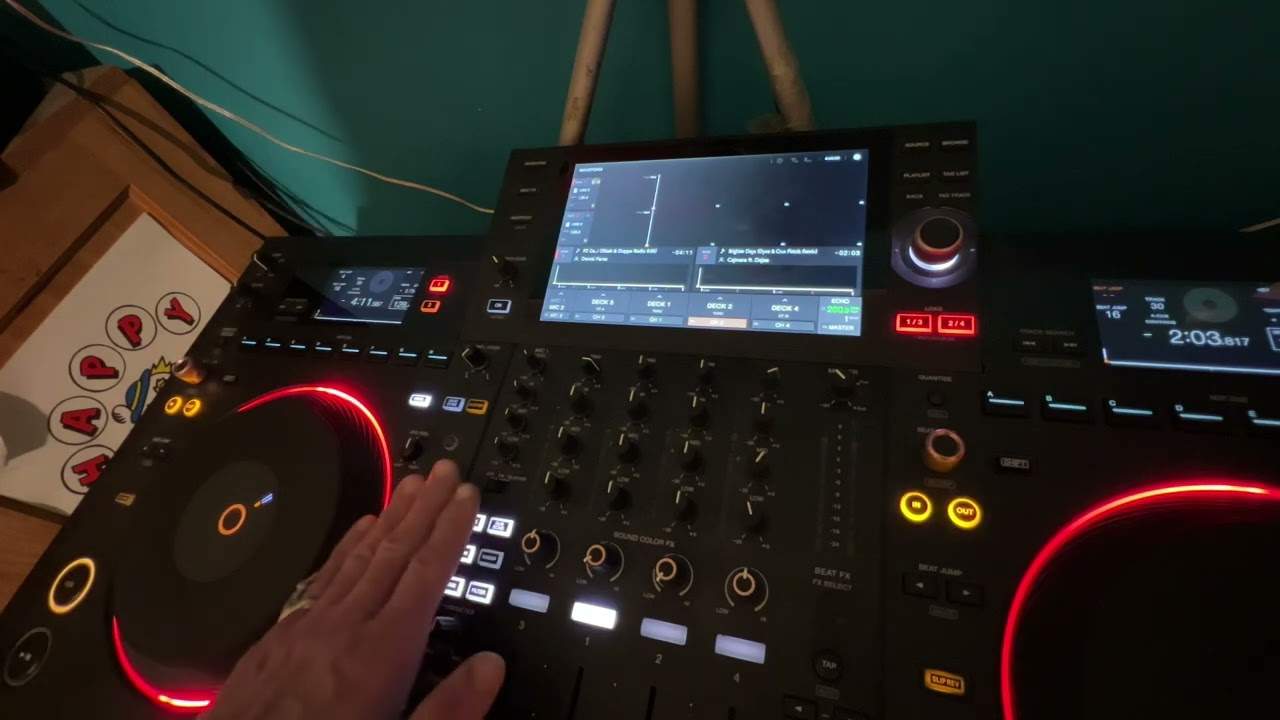
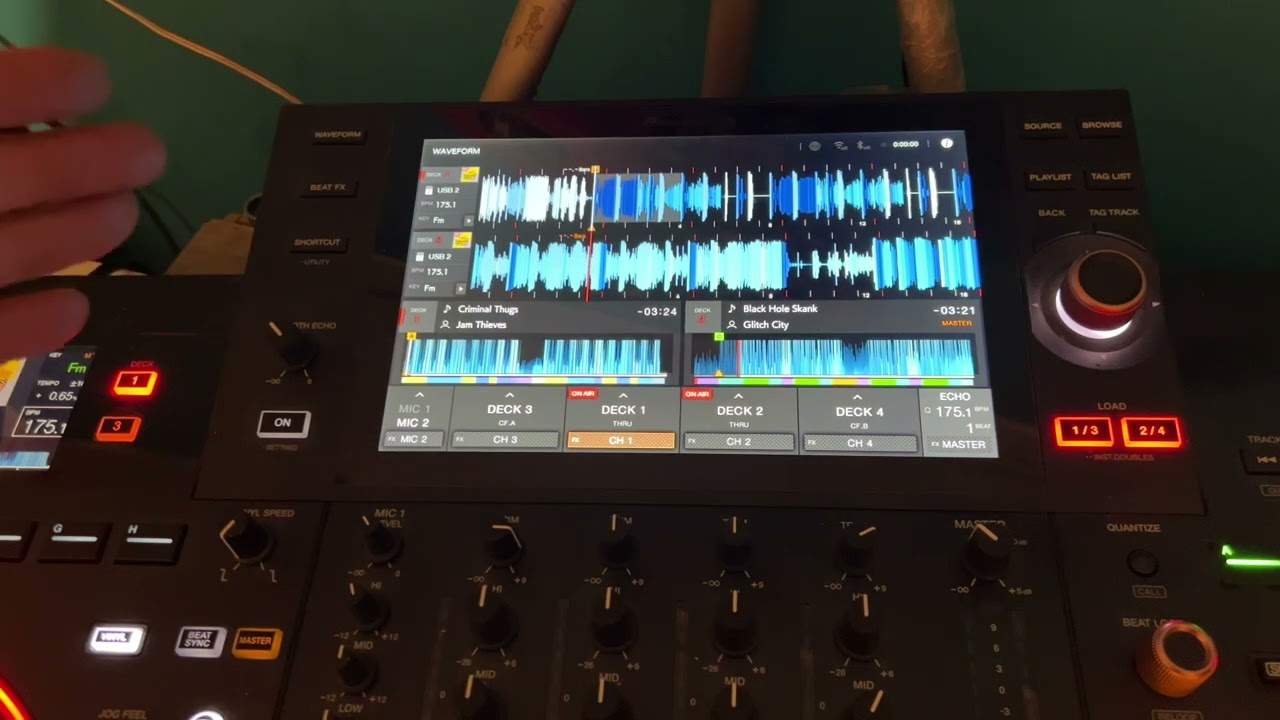
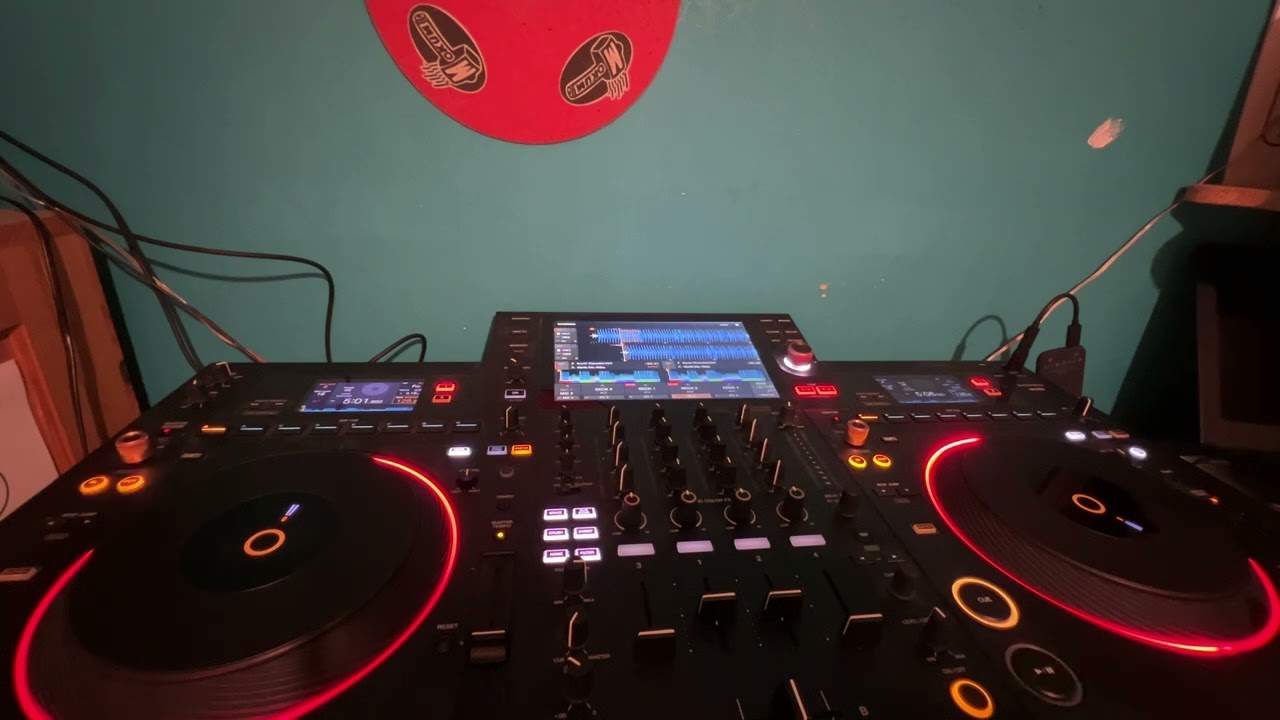
So the three I've got. What we'll do is if we put the camera there, then we should have a good idea of... Let me just have a look. I need to put it so it's not in the way as well. If I put it there like so. Now the track I'm going to be using is Badman Rhythm. So what I'll do, I will play that and I'm going to just form like a loop. Okay, so we've got a loop going. Got three acapellas. We've got Awesome Three Don't Go, we've got Danny Tangia, Music is the Answer, and we've got Two in a Room, Wiggle It, just a little bit. This one here by the way, the tune here, Bad Man Rhythm. Now, pitch, at the moment if we put that in the centre point, and I play the wiggle it, let's listen and see what happens, more so let's listen
At the timing, okay? Now straight away you can hear it's completely off time. So first of all what we're going to do in this particular tutorial, we're going to do loads of stuff so you may be able to take tiny tips or lots of tips or even just a small tip from this tutorial. So what I'm going to do now, I'm going to play this acapella, two in a room, wiggle it with no beat and I'm going to count... Time. I'm going to count the bars, count the beats in this acapella and hopefully you'll be able to work out the timing as well. What I want you to do, I want you to count the timing as well with me and then I'm going to stop counting. You should carry on counting and then I'm going to then carry on counting halfway through and let's see if our counting is at the same...
4:55 Tiny amount
Time signature. If it is, it means you've done it correctly. So... 1, 2, 3, 4. 1, 2, 3, 4. 1, 2, 3, 4. 1, 2, 3, 4. 1, 2, 3, 4. Carry on. 2, 3, 4. 1, 2... 2, 3, 4. 2, 3, 4. Now, if your timing and the numbers you were saying were in time with mine, then you were counting in the correct time signature. You'll notice that where the pitch was in the centre point, it was completely off time. It was going too fast, which means we're going to have to reduce the pitch. Now, if we chop up the acapella and we chop it up relatively quickly, there's probably no need to mess around with the pitch that much because if we're only using a tiny segment of this acapella over that track, even though it may slowly or very... a tiny amount, it may tight...
7:20 Move pitch, slower, speed
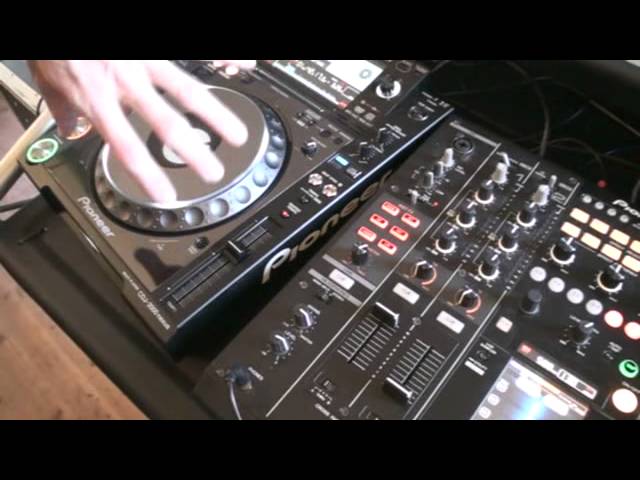
Start again. It might only a tiny amount go off beat because we're only using a tiny bit of the acapella, it won't matter. If I was to use a lot of this acapella over that beat, I would need to make sure I slowed this one down. So we're going to do just that now. Let's press play. It's still a bit too fast. Notice it turned the platter anti-clockwise and then reduced the pitch. For the time of the acapella to catch up, or catch down as the case may be, but then I had to move the pitch down as well. If I'd have only moved the platter, it would have, to begin with, caught up and kept up in time. It would have stayed in time, but it would have slowly gone out of time again because I still would have needed to move the pitch down. You know, I can move the platter as much as I want and it will go slower and slower and slower,
Carry on going slower, should I say. But as soon as I stopped doing that, it would just get back up to its original speed. I would have had to move, which I did, the pitch down for it to stay at the slower speed I wanted it to go. Therefore, keeping in time with the track. So that's the one tune. Alright, so if we look at where the pitch is, it's roughly sort of there on the pitch. For the people who maybe are partially sighted, I would say it's around about a third of the way down from the centre point on the player. So that's the Tuna Room acapella. What we'll do now, I'll set it to the centre point and we'll try the Danny Tanglia. No, that's awesome three. So that's the dancing and prancing. So play the track again. Here we go.
9:57 I've done near enough the opposite
Right, opposite now. This one is too slow. So I'm going to speed it up to about, we'll try it there and we'll start all over again. Right, I did the opposite there. I had to speed this one up. So I did a couple of things. As you saw, if you didn't see should I say, I had to move the outside of the platter clockwise to speed it up and then increase the pitch. Now, I've done near enough the opposite. I've moved the pitch roughly about a third of the way towards me from the centre point which is increasing the speed. So, right, as well, let me just do that. I just want to talk a little bit about acapellas because sometimes if you listen to rap artists when they rap, sometimes or maybe, I don't know, it could be like 10%, 20%, 100%, I don't know. No, it's probably not 100%. But, excuse me, sometimes when they rap,
They don't rap exactly in time. It's very laid back and chilled out kind of rapping. And while they're doing this really, oh I was sitting on the street, I was tapping my feet, looking for some food to eat because I've got smelly feet. What it is, is quite often you need to find the words that are on time. Now, with that particular acapella from Danny Tanglia, you know, dancing and prancing. If you think they hit the floor. So there were words that were hit right bang on the beat but there were others that were slightly off. Now these are the sorts of acapellas that are very difficult for some people to mix because it's very difficult to find the time signature but it is in there because if it wasn't...
Then that, you know, that acapella is, was taken away from the original track so there has to be a time signature in there somewhere. Right, so that's that one. Right, if we go back over here and yeah what I will say as well is in March of this year and we're at the moment because people watch these videos all the time we're in 2013 In March of this year, I'm going to be working in Switzerland again, teaching. So I will put a link in the description if you're interested in having some lessons in Switzerland. And it's not just the Swiss, anyone from Germany, France or anything like that. Go and participate. Just get involved if you want to. It's always good fun and we have a laugh, believe me. Right, so that is... Where are we now? That's Danny Tanglia. Then the other one, which is this one, is Awesome 3.
12:47 We've sussed out The time signature
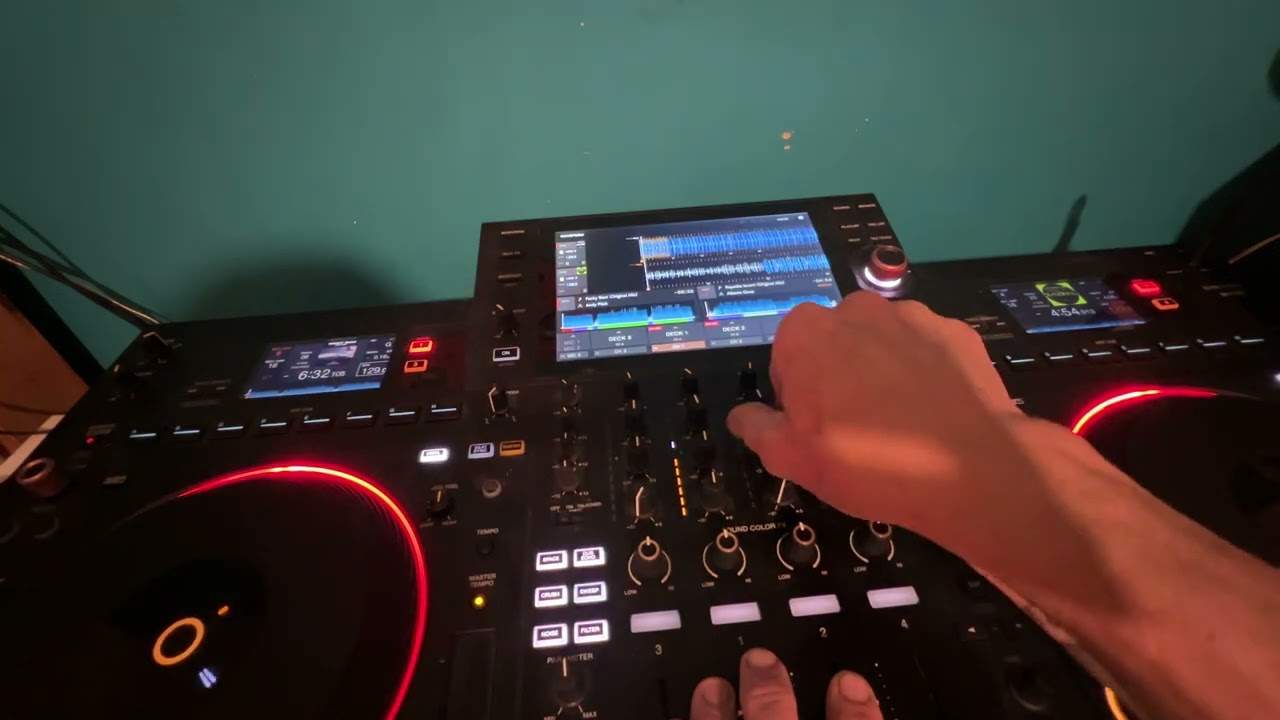
Straight away, there is something about the I cannot bear. And the major part about that is it doesn't start on the count of one. So if I count 1, 2, 3, 4, 1, 2, 3, 4, 1, I cannot bear to see. So it's 1, I cannot bear. I'm going to count. I'm going to press play on C, which is the first cue point, and I'm going to count the correct time signature over this acapella. Right, so we've sussed out The time signature. What we need to do now is make sure that if we do want to play this entire acapella, we know roughly where it should be on the pitch. So let's press play again on the tune. This time we'll play it in time. Okay, so what have we done? We've looped a track, we've got three acapellas, we've set three cue points. We've got this one. No.
15:25 It's great, it's good fun
Again, what I've tried to do, I've tried to choose three acapellas that I can have a bit of fun with. I cannot bear to see you dance. I cannot bear to see you wiggle it. Think about it. This is where the fun comes in, but also this is where you having a lot of practice and having some fun with it. Alright, there is an element of making mistakes, but if you can chop it up correctly... It's great, it's good fun. Now also as well if you can do this on the likes of hardware or even with your PC program maybe also your controller and do this in real time with no sync button or anything like that then it proves that you are utilizing your equipment to its best and your best ability and it shows that you can do this. I don't disagree about people using the sync button
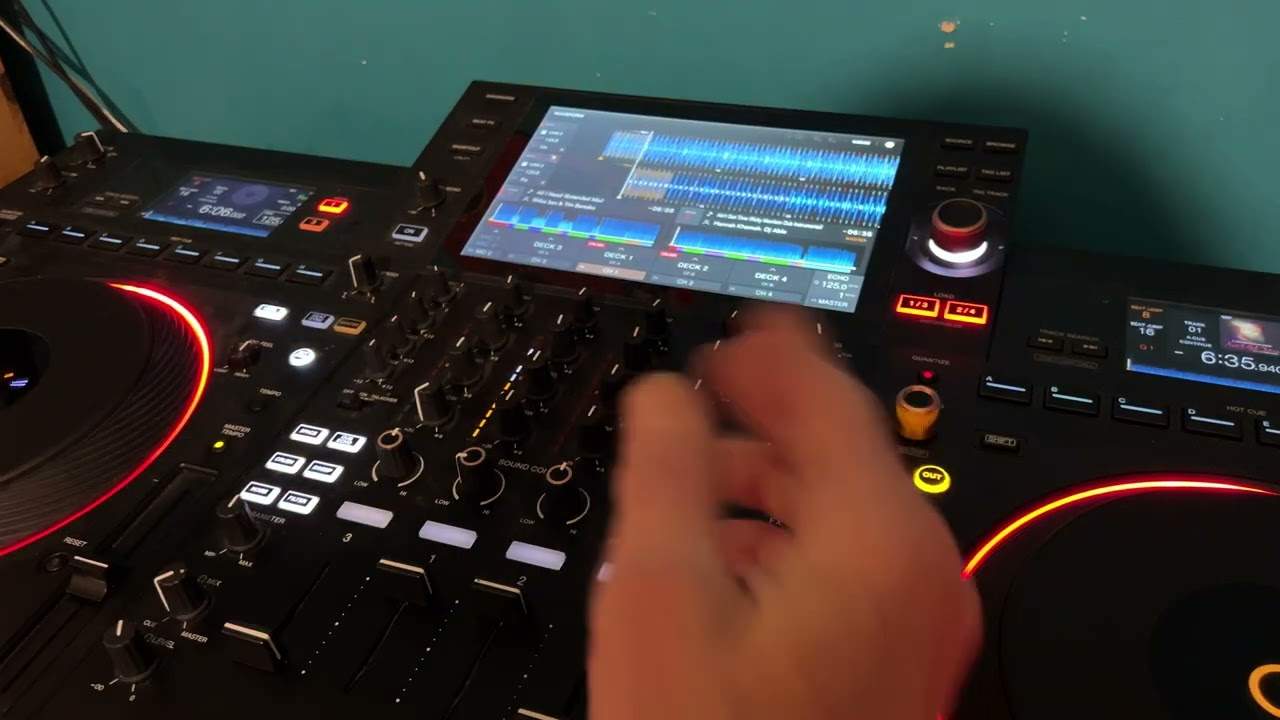
But if you've got to do it, you've got to do it. But doing something like this live shows that you are working. Right, so let's put that there and let's press play. Alright, hopefully that gives you a good idea. Now again, it's about practice. When I... Set the other cue point, it was slightly off. So if I was doing this live, I would have made sure on my headphones that that cue point was precisely at the right point. Otherwise, it would have been a lot of work to try and get it in time continually. Alright, hope this has been a help. Don't forget, if you do want to participate in me teaching you in Switzerland in March 2013, then go and check out the link in the description. Have some fun! And I will say practice and enjoy. I do.
This transcript was produced automatically from the audio of the video and may contain mistakes.