 9:10
DJ Tutorial on Mixing Old School Disco Music BY Ellaskins the Original DJ Tutor
Contents of the video
0:00 Mixing old school disco music
Alright guys, mixing old school disco music. On this side we have a beautiful track by Mr. Carl Carton entitled She's a Bad Mama Jammer. This is just the bomb. Beautiful tune. Excuse me a second. Tap to do that. Yeah. Tap to do it man. Tunes just sometimes just tell you to do stuff. That's why I never play any dark metal. Right, on this side here we have Chic Le Freak.
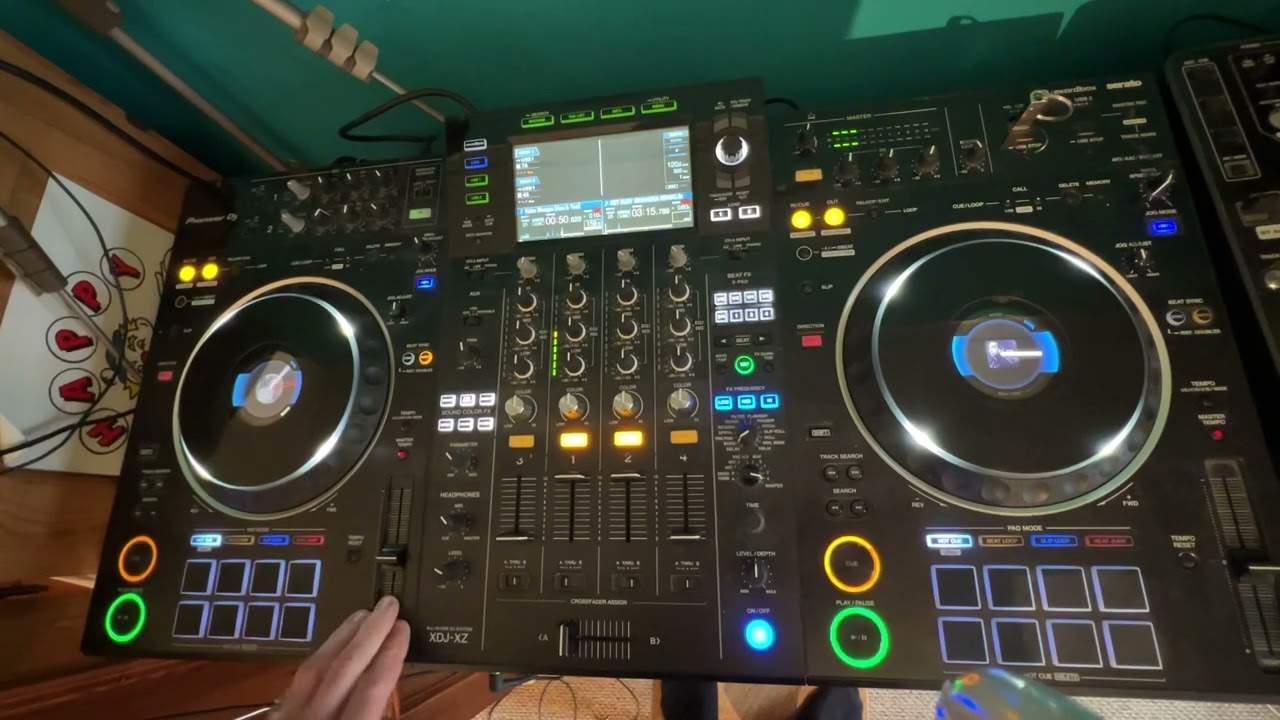
Okay, so mixing old school disco is not easy because different BPMs or... I'll start again. The BPMs may fluctuate. There's a lot going on. They're made with real people, not machines. And you have to choose the points where you want to bring the next track in. Now again, with today's technology we can start the end at the beginning, the beginning at the end. We can go straight to the middle. We can play the middle and play it over and over again by forming loops. So really what we need to do here is we need to find a good point in one track to mix the next one in. Carl Carton. Let's have a listen to... Okay, so... Alright, this would be a quick mix. In other words if I just wanted to chop one track into the other, I would do something like this.
So let's get...
2:20 I'd start it there and let's go back to Mr Carl Carton
Something like that. I'd start it there and let's go back to Mr Carl Carton.
Okay, but let's imagine now I wanted to form some kind of mix where the two were working together.
What I need to do is make sure that they match musically, which these two tracks kind of do. I also need to make sure we don't have vocals over vocals. I need to make sure there's lots of melodies that aren't clashing. And I need to make sure that it's in phrase. So really I need to find a point in Mr Carl Carton's tune here... He's a bad man, he's a bad man... Well... I'll compliment Chic La Freak, so...
So I'm flicking through the track now. Yeah, maybe that. Gonna form a loop.
4:11 What I've done there as well, this is for this slightly more advanced
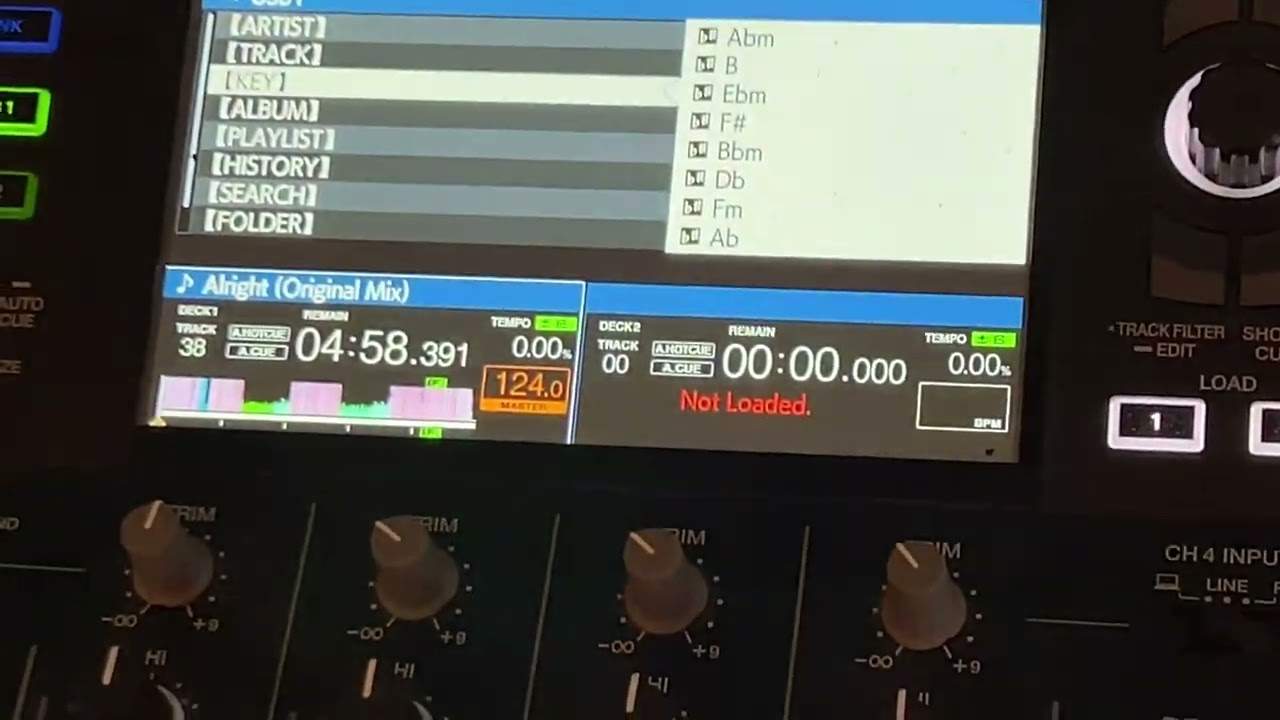
What I've done there as well, this is for this slightly more advanced DJ. The loop I formed was not on the count of one. It was on the count of one and I brought it in on the and because... A small tip for you. When you're looping tracks like... For that matter, any track. If you're doing a manual loop on the fly that you cannot get wrong... If you hit it on the one... There is a good chance or there is a possibility of there being a slight hiccup inside that beat that can be heard by anyone. On the other hand... If you start the loop just after that beat then again let's get a bit technical here. If you're looking at a wave format on the screen Serato Tractor, but I don't know... Jam jars or anything like that.
You will see that line going up like that. That's your beat. But directly after that it's a lot smaller. That means there's less volume, there's less going on. So if you form the loop there then there's less of a chance of there being a kind of a hiccup. So have a listen again. This is the loop I made.
And... I'm going to wave my hand where I did the loop. There. Can't hear it. Put that in hot cue. Let's do another loop on the one this time.
Two, three... If you watch probably getting good as well. Four, one, two, three, four, one, two, three.
Yeah, it probably will be. Oh well. It's about practice and enjoy. It's not just as good. Oh, whatever. Well, yeah. Again, it's about the time and when you do it. I mean for... Why is there a scratch there? Oh no, it's okay. I'm talking to myself. No, you're not. Stop it. Right, okay. So right, I've got two loops there. I'm just going to use one of them. And in between the one and two, you have to make sure that when you do bring that loop in, you bring it in at the correct time while the track's playing. The correct time signature on how you made the loop. If you don't, then you're going to get a jump. I'll give you an example there. Listen. Oh, let's get out of that loop.
Sorry. Let's bring in the wrong time signature. One, two, three, four. Two, three, four. See? It was off. It sort of jumped. Now I'm going to bring in the correct time signature how the loop is made to begin with. Oh, at the loop. Come on. Just pressing this in. There. See what I mean?
7:12 Let's go towards the end of the track
Okay. So let's go towards the end of the track. Just make sure it's in beat. Okay.
So, now this is one way of mixing these two tracks. And there's many, many ways of mixing these two tunes. But what you've really got to get, what you've got to capture from this video, from this tutorial is, you know, this kind of old school mixing is not easy. And this is what we had to do many years ago. But not only that, we couldn't even do loops. We had to find points in old school tracks and just either know or hope for the best that it worked. All right? Don't forget, the key to a good mix is the key. Practice and enjoy. Thank you. Classic June.
This transcript was produced automatically from the audio of the video and may contain mistakes.