 5:55
Setting up a large PA
On YouTube this video is called DJ Tutorial. Setting up a Large PA
What this lesson teaches
A short walk round a working system, and the interest is in the small things he does without making a point of them.
XLR for long runs
First thing he mentions. Going from the mixer to amplification across any distance, use XLR.
His explanation is deliberately non-technical - XLRs are shielded from outside noise and giggly bits, so forget the jargon and trust him. The real mechanism is that an XLR run is balanced: the signal travels on two conductors in opposite polarity, and interference picked up equally by both is cancelled at the far end.
Which is why a 20-metre XLR run is quiet and a 20-metre unbalanced jack run hums. For anything more than a couple of metres between mixer and amp rack, it is the correct cable.
Volumes down before switch-on
Said in passing and worth more than its airtime: never turn amplifiers on with the volumes up.
Amplifiers thump when they power up. With the levels down the thump goes nowhere; with them up it arrives at the drivers as a large transient, and the drivers that mind most are the expensive ones.
Same in reverse at the end of the night. Levels down, then off.
Setting the amps
With the volumes down he switches on, then brings the bass amp to around 3 o'clock and the mid-top to about 1 o'clock.
So: amps set once, high but not maxed, with the mid-top deliberately lower than the bass - and all the control for the rest of the night happening at the mixer. The same structure as the powered-speaker lesson, on a bigger rig.
The rig
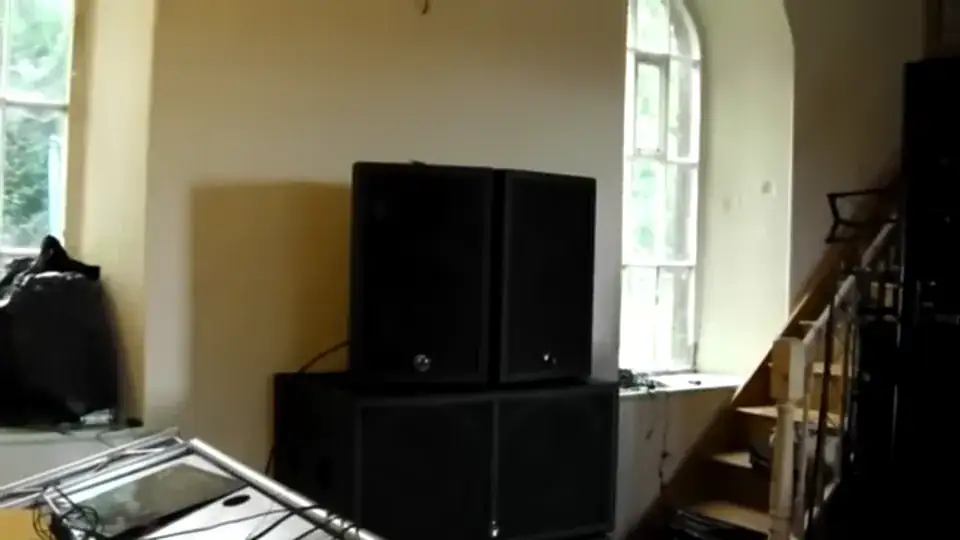
Crossover into two amps rated around 1400 watts RMS at 4 ohms. Bass amp's two channels to the two bass cabs. Mid-top cabinets - 15-inch with a 2-inch compression driver, 500 watts RMS continuous, 8 ohms each - daisy-chained in pairs so each channel of the top amp sees two cabinets.
That is the two-cabinets-per-channel arrangement from the ohms lesson, built for real.
What headroom looks like
The demonstration worth taking away. With the system filling the room comfortably, he looks at the meters: below 0 dB, barely registering, and the amps have loads of headroom left.
That is what a correctly specified system looks like in use - not meters slammed and everything working flat out, but a lot of volume produced by equipment that is hardly trying.
If your meters are in the red to fill a room, the system is too small for the room. The fix is more amplifier and more cabinet, not more gain.
And the crossover
Two in, four out: two to the bass amp, two to the mid-high amp. Stereo two-way, or mono three-way if you want bass, mid and top from one side.
Simple and straightforward, as he says - and once the cable map from the earlier lesson is in your head, it is.
Contents of the video
0:02 You're listening to a remix of Off The Wall
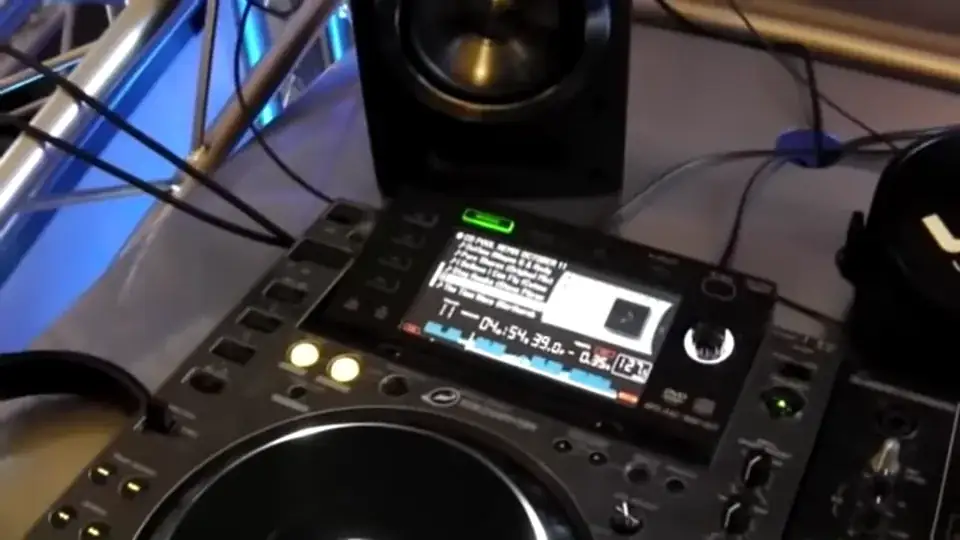
Alright guys, you're listening to a remix of Off The Wall. I'm going to turn that down a little bit. A lot of people ask me about big sound systems and how to set them up etc. So first of all, we're going at the mixer using XLR cables. Very good idea if you're, let's say you're going from a mixer to your amplification and there's quite a distance in between the amplification and the mixer. The reason is that XLRs are shielded from outside noise and giggly bits. So forget the sort of the technical jargon but just trust me it's a lot better to use XLR if you've got a long distance from your mixer, from your music source into the amplification. We have, I've got a cam crossover there and I've got Wharfedale Pro MP2800s, 2800s, 2 amps. The bottom one is running the bass and the top one there is running the mid-top so I'm going to click these on. Now, I don't know if you've noticed but the volumes are down so click on. By the way, never turn them on when the volumes are up. Make sure volumes are down first so on and on.
2:13 I've gone directly out of there into the right of the bass bottom amp
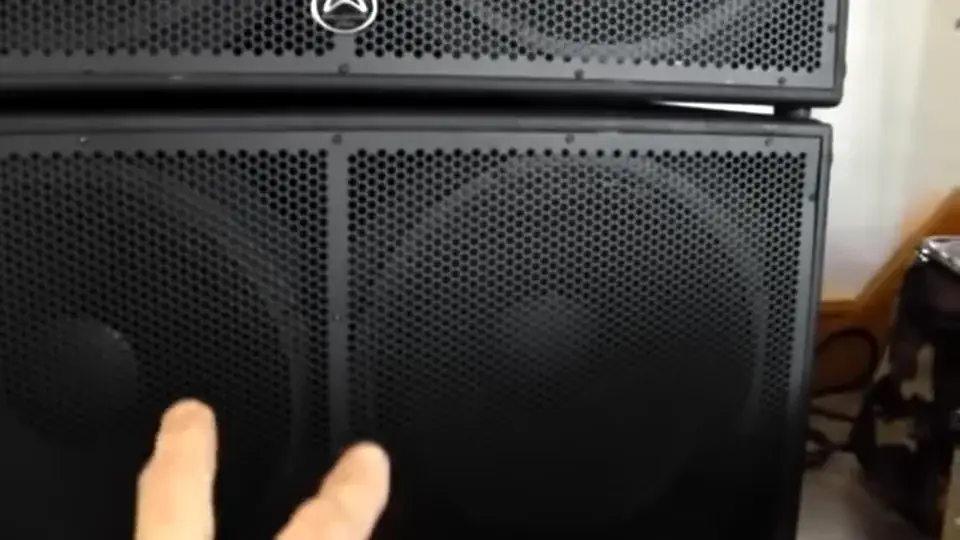
Alright, what I'm going to do now is I'm going to turn them up. And I'm going to turn them to around about sort of 3 o'clock. Like so. And I'm going to turn that one to the base around about 3 o'clock. And just for now the mid-top round about sort of 1 o'clock-ish. Right. Now then, each one of these runs at, I believe it's 1400 watts RMS at 4 ohms. So, that one We'll be able to run, or I'll start again, the one side of the bass amp will be able to run that speaker and the other side of the bass amp will be able to run that speaker. So I've gone directly out of there into the right of the bass bottom amp. I've gone out of there into the bottom amp, into the left of the bottom amp. Hope you follow. Now these are 15 & Horn 2-inch compression driver.
Pretty sure 500 watts RMS continual, 15 inch and a 2 inch compression driver. Same again, each one of those is 8 ohms but what I've done, I've gone out of that speaker, into that one, out of that one, into one side of the top amp and then if we have a look over there, I've gone out of that one, into that one and then out of that one, you can see the cable running along there, into the other side of the top amp. Now this is going to be the fun bit. Because what we're going to do now, we're going to turn those off. We don't need those on and I'm going to get that back to the start again. We don't really need that sort of volume but just to give you a bit of an insight as well, I'm going to be doing a DJ Academy here and it's taking place right now. I will put a link in the description that will take you to the information on the DJ Tutor website. So the whole idea is
4:14 I should stop shouting now!
For people to not only get demonstrations, tutorials, etc. in gear, how to mix, that kind of thing, but all being well, what I plan to do is during the day we do the tutorials, but then in the evening we're going to be doing some live streaming on the web and we're going to be using a proper sound system. So in other words, you'll be able to have music and lights and we'll be able to turn it up and get drunk. Of course, if you're over the age of 18, that is. I should stop shouting now! Sorry, I stopped shouting. So as you can see, it's not that loud. Well, it's not that high up. I mean, that's below 0 dB. That's not even doing anything. That's like minus 5 million and we've still got a lot of volume. Also, there's loads of headroom on the amps as well. My God! Right, OK. So there you go. Quick, let's have a look at the crossover. All right, what we've got with this is two-way crossover, stereo or three-way mono.
These two here are in, so we have two out going to the bass amp down there and two out going to the mid-high amp. Very simple, very straightforward, alright? I have done videos on this kind of thing before. If you want any more information then stick it in a comment. If you do look at the comments guys, maybe someone's asking a question, please answer it. Alright, so there you go. We're doing tutorials here at my place and if you want any more information on that Follow the link in the description, practice and enjoy. That one.
This transcript was produced automatically from the audio of the video and may contain mistakes.