 8:57
The crossfader and the EQ together
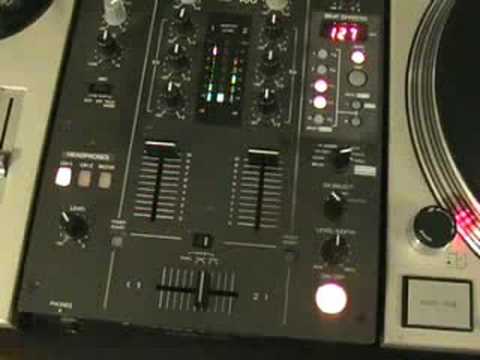
On YouTube this video is called DJ Tutorial, Working with the X fade and EQ in the mix. Pioneer DJM-400
What this lesson teaches
This is him messing about with two records rather than demonstrating a method, and he says so. Two things come out of it.
The rule
It arrives almost as an aside and it is the most important sentence in the video: never turn an EQ band all the way up.
What you get is a lot of lights on the meter and a distorted sound. A boost is added gain, and a band pushed to maximum is adding a great deal of it to a signal that was already at a sensible level - so the channel clips, and no amount of pulling the fader down afterwards will clean it up.
His phrasing is the right way to remember it: it is better to work this way rather than that way - downwards rather than upwards. If you want more bass relative to everything else, take the mids and tops down. If you want to feature the mid, pull the others back. You end up with the same balance and none of the distortion.
A small boost, used deliberately, is fine. The knob at maximum is never the answer.
What to actually practise
The exercise underneath the mucking about: take two tracks that work together, beatmatch them, and then spend time listening to what each band contributes while both are playing.
Pull the bass out of one and hear what happens. Bring it back. Take the mids off and listen to what is left. You are building a map of which part of the sound lives where, and you cannot get that from a diagram - only from hearing the thing disappear.
He also plays with bringing a track in on the offbeat rather than on the one, which is the same idea as the exercise in the old-school lesson, and it is worth trying early rather than late.
One instruction he gives and does not follow himself, cheerfully: wear headphones.
The part about learning
The philosophy half is better than it first sounds, and it is aimed at a specific kind of beginner - the one who is frustrated that their mixes are not seamless yet.
His position: sometimes rough is good. Before trying to be professional and smooth, have some fun with it. You might stay rough and ready for twenty years and be perfectly happy, or you might gradually find your way to the smoothest mixes anyone has heard. Either is a real outcome.
And the warning underneath: do not try to be a copy of a particular DJ. Aim precisely at somebody else's style and you hit a wall, because their style grew out of their taste and their hands. Go your own way and the wall turns out to be small enough to step over.
That is worth hearing early, because the period where everything you do sounds worse than what you listen to is the period most people quit in.
Contents of the video
0:00 We've got a bit of a demonstration tutorial for you here
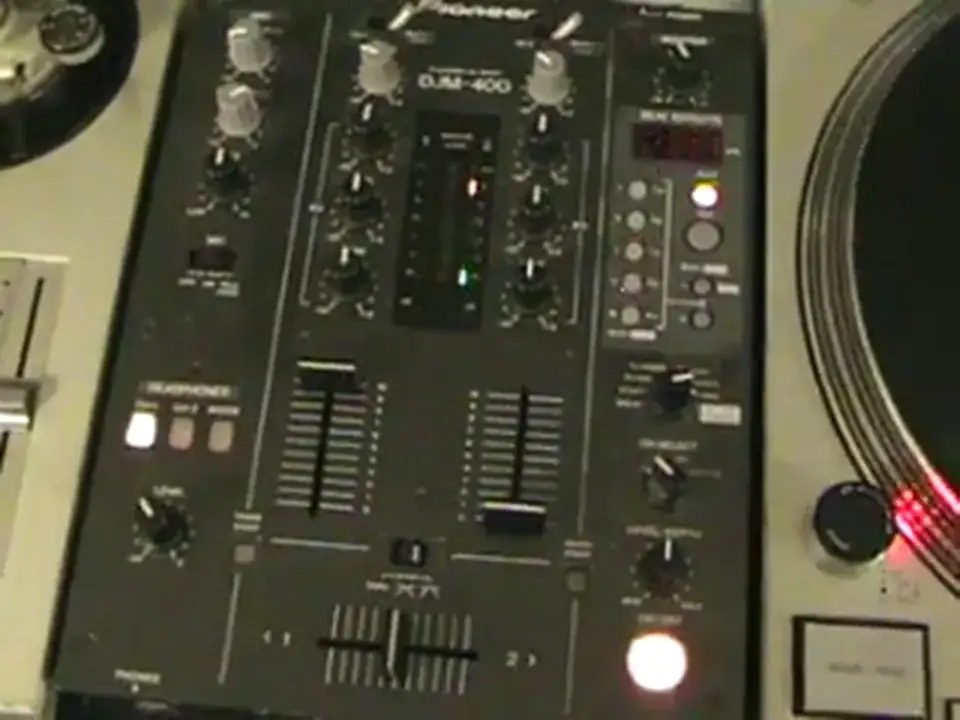
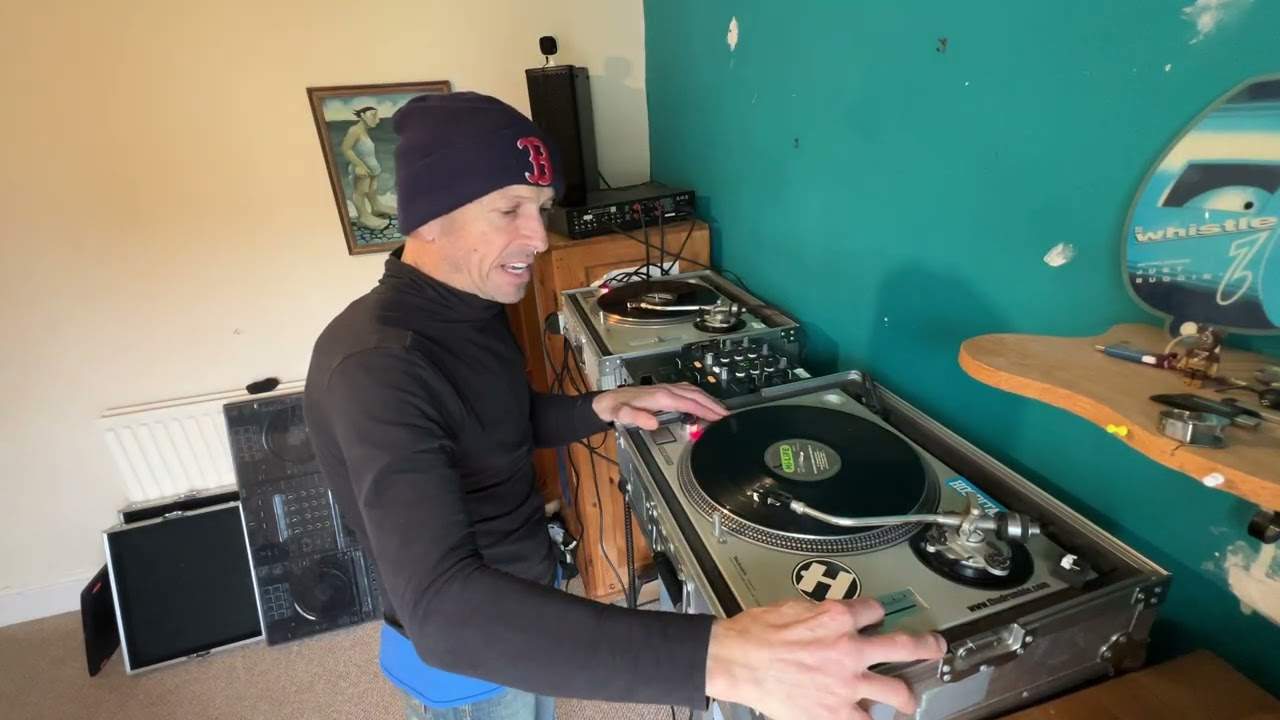
Alright folks, we've got a bit of a demonstration tutorial for you here. Right, I've got a track on that turntable, I've got a track on that turntable. What I'm going to do is have a bit of a mess around with the crossfade, two sliders, up-sliders, the bass mid and the treble. Right, give you an idea of the tracks. The one on the left hand side from this 12 inch EP. And what side have we got? We've got side A. Indie Strut, I think that's how you pronounce it. And then this bit of tunage here is the Creamsicle EP. If you can see that, there's all the relevant information for you. Right, OK. What we're going to do is have a listen to this one first by itself. Now what I've done, I beatmatched them already, theoretically. That's that side, crossfade like that up.
This is the other side. Right, now again, there's sort of a bit of a philosophy behind this particular video as well and it's quite simple. Sometimes rough is good. Sometimes, you know, if you think you've got to have the perfect smoothest mix in the world then maybe just step back a little bit and have some fun first. Before you start trying to be pro and super smooth, because then eventually you'll find your way. Now, you know, to be quite honest, your way could be rough and ready continually, you know, for the next 20 years, but guess what? That's possibly a good idea. Then again, you can be rough and ready to begin with, you know, slowly you can find your niche and eventually you will do the smoothest mixes known to man.
2:12 It's about you finding your style
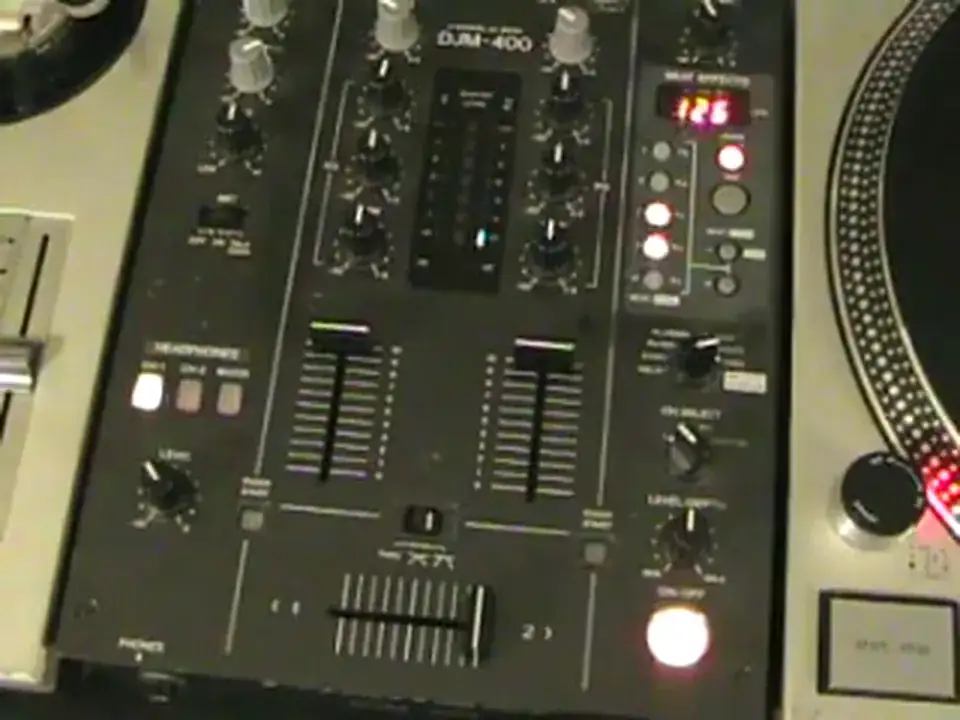
It's about you finding your style. It's not at all, I reiterate, it's not at all about you trying to be like someone else. In other words, you want to be exactly like them because theoretically you could be going down the wrong way. If you try too hard to be like someone else then you could hit a brick wall, come back from that wall, start again Find your own way and guess what? You may find that wall is really tiny, you can jump over it and you're on your way to becoming a bloody good DJ because you're doing what you want to do inside as opposed to trying to copy or mimic other DJs. So, right, let's put this one on over here. Here we go. Right, we're going to count the bars and all that sort of stuff so I'll just get this one ready at the beginning. You hear lots of funny noises while we mix them in.
6:23 Sometimes you can bring them in on the offbeat
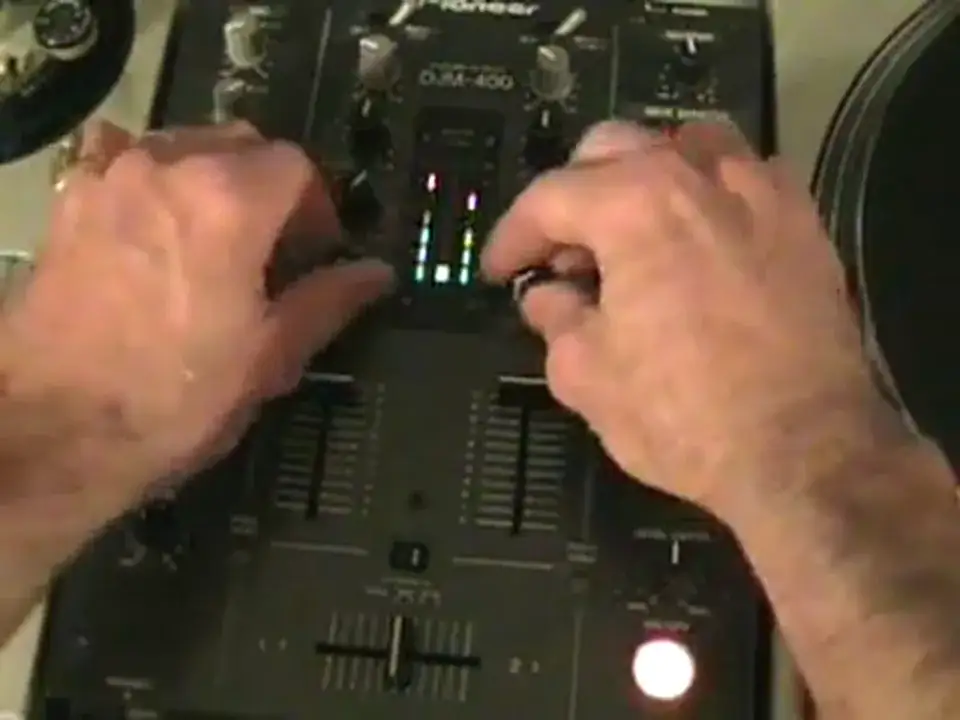
Right, it's offbeat. I've near enough set the pitch, so... Alright, let's have a little mess around. Here we go. In the middle. Sort of messing with the crossfade. I was listening to the parts of the music and thinking, yeah, we can like, you know... You know, just tiny bits. Read this one up a bit. Have a look at the bass, mid and treble. Turn it up a tiny bit. No bass at all. Have a listen to this. And together. Listen to the timing. You know, 1, 2, 3, 4. One, two, three. Sometimes you can bring them in on the offbeat. So if you're doing, you know... Going offbeat again. Offbeat now. Got no flinging headphones either. Mid-backup. Don't mess around. But it's about experimenting. I suppose what I can say about this video is find two tracks, one, you know, work relatively well together, try and beatmatch them, and like me, I suggest you put headphones on, and then have
If you think, yeah there's loads of mid going on here, maybe we want to highlight the mid, you know, turn it up a little bit. But a word of warning here, you can see these guys here at 12 o'clock. High, mid, low, sometimes known as bass, mid and treble. For crying out choir, never put this guy up all the way up to the top. Because all that will happen, you'll get loads of nice pretty pictures up here and a distorted sound. Alright, so maybe, maybe, maybe, tiny bit of bass. You know, you can highlight the mid a little bit more and the treble, but it's better to work this way as opposed to that way. Alright, hope it's been helpful. As ever, practice and enjoy.
This transcript was produced automatically from the audio of the video and may contain mistakes.
This video is part of
Related videos
-
Complete Beginner DJ Lessons Tags Key BPM Etc
A more advanced lesson folded in early, and worth doing once rather than putting off, because everything it sets up gets used for years…
-
Complete Beginner DJ Mixing Lessons Video 19 Getting Your Kit Ready for an Easy Mix
A whole lesson on getting ready, which is the right call - the exercise in the next video only teaches anything if the two decks are…