 6:32
Drum & Bass mix using the bass , mid and treble
Contents of the video
0:00 Got a couple of tunes, we'll stick them both in the green, okay?
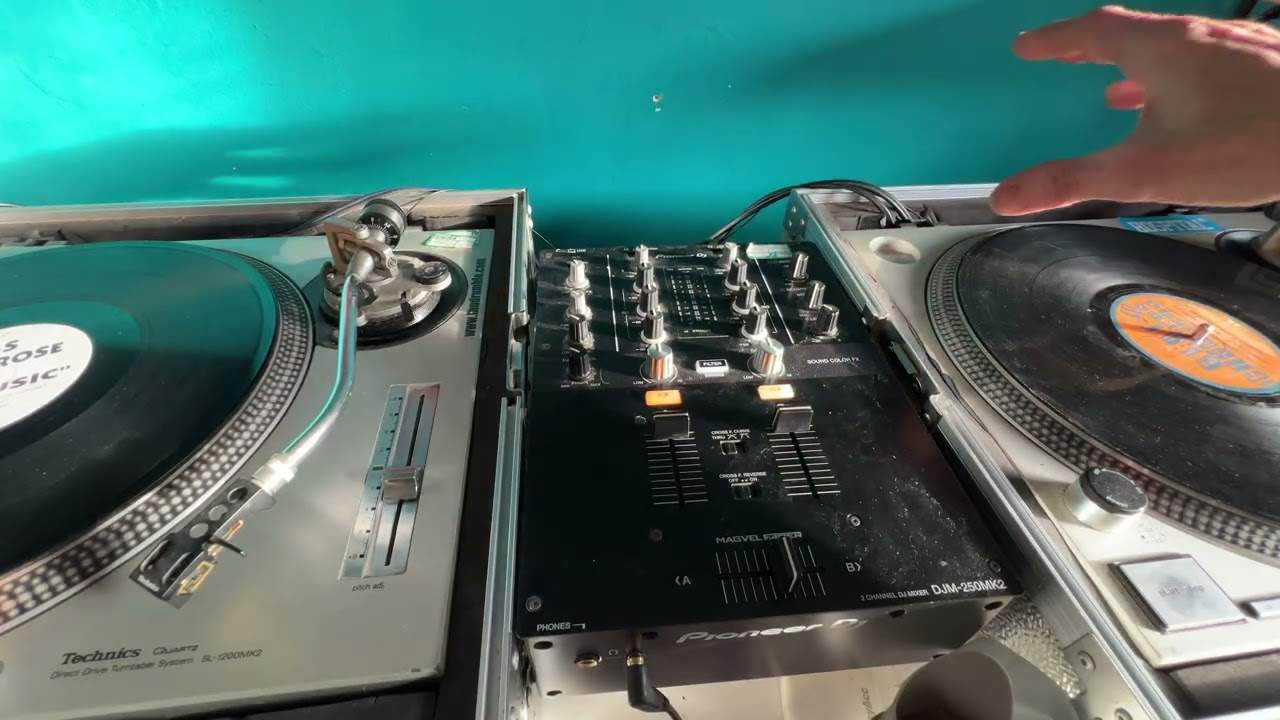
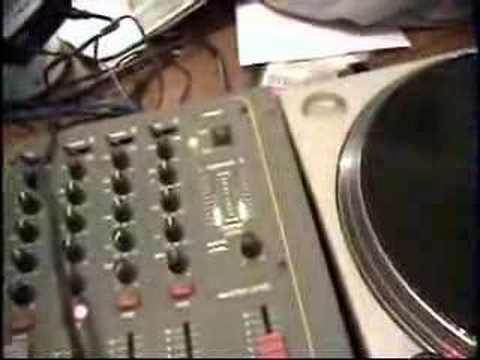
Alright, in this lesson ladies and gentlemen, we're going to be mixing, believe it or not, for the first time on my little old station, some drum and bass, okay? Right, got a couple of tunes, we'll stick them both in the green, okay? Now, the one on my right, which is your left, is just slightly close to the green. I have to speed this one up because it's a little bit slower. So, I'll put it in that position initially, but because in the SL1200 and the SL1210 Mark IIs, where you go close to that green little light, there's a very fine line between it... Being just above starting to go faster and actually at perfect RPM, 33 or 45. So it's quite often a good idea if you're in the mix and it's very close, the one track you're actually bringing in is very close to that point. It's always a good idea to actually speed up the other one, therefore you're further away from that point and then you get a finer mix. With the Mark 3s of course you don't have that click.
And then there's just a fine, smooth glide from plus to minus. It does hit the green, but you haven't got that little click, okay? I'm sure you understand what I mean if you've got the actual turntables. Right, so we'll start this one off. What we're actually going to do is we're going to mess around with El Balancio, which you should be able to hear now, that side, and the other side. The only thing with my monitor is my monitor's only mono, so when I go to that side... Listen to this. Listen to this. Listen to this.
Okay, we're going to bring that one in. Get it ready? Okay, there's the break, so we're nearly there. Okay, so what I'm going to do, take the bass away. Count, etc. Look, I haven't got headphones on, so I can't monitor it, okay? As you can see, this deck here is very close to the center point. Okay, so what I'm going to do, pitch me up and then I'm going to speed this one up. So I'm going to speed this one up.
3:02 Remix
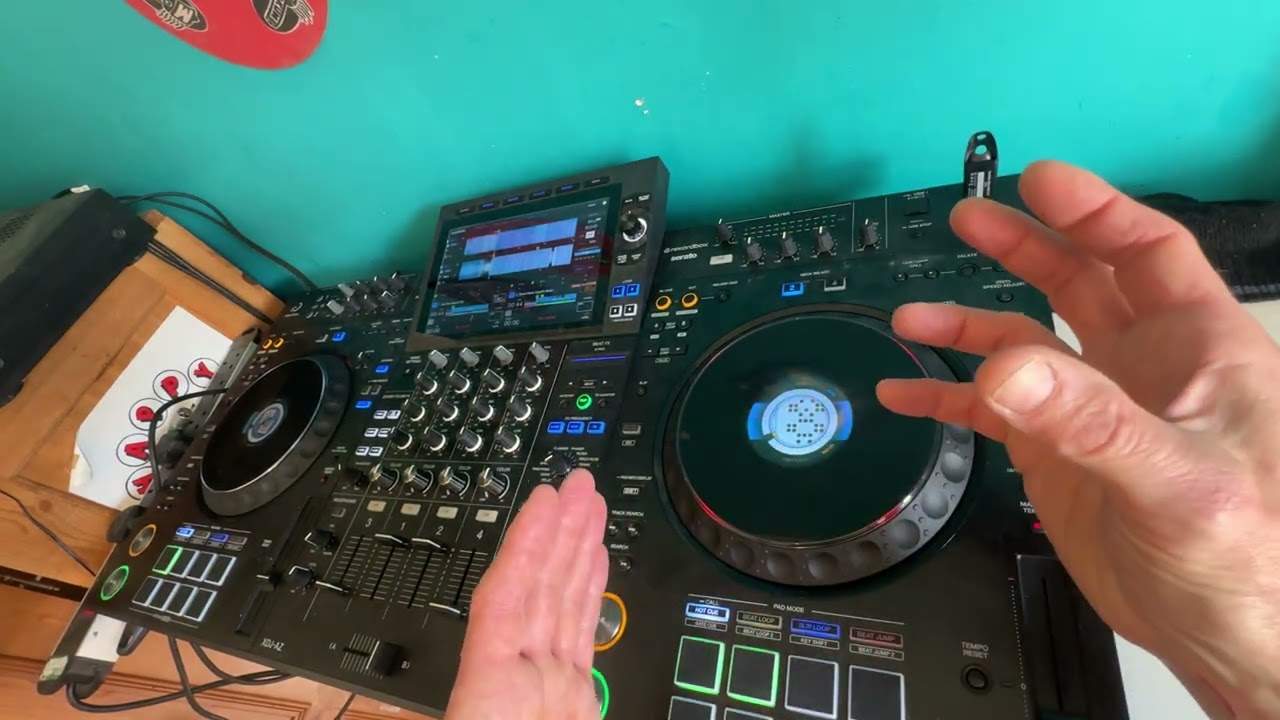
All right, check it out. Here we go. How are we doing that? Okay, now basically what happens is when a producer, DJ, remix or whatever, when they remix a song or they actually make a song, they make it with beat, bassline, melody, hi-hat cymbals, all that kind of stuff, okay? Now the DJ nowadays, he's got the technology on his mixer to actually remix a record. Now how does he do that? What he can actually do is mess around with the bass so he can get rid of the bass completely or a tiny bit in this case because it hasn't got actual kill switches. Kill switches completely get rid of the bass and it sounds a lot better. This one isn't so intricate. Mid, what is the mid? That's the vocals, the melody, etc. I can mess around, tweak around with the melody if I wanted to. I could get rid of the low and the high.
Keep the melody on, and I could wang the melody left and right, left and right, okay? Now if I was clever what I could do, I could have the balance, and I could actually have, if the tunes were very similar, I could have the left deck on the left side, the right deck on the right side, and swap them over. So they're going left, right, left, right, so it's always stereo. But either record is going opposite sides. So don't forget, it's a case of experimenting. At the end of the day, you are the judge. You will know what's good and bad, okay? Get a couple of records and practice, okay? Remember the beats, remember the fine-tuning that song, okay? Remember, very important, when you're actually mixing a song in, okay? And you know you need to slow that record down, okay? You slow the pitch down. What you've got to think of as well, okay? As soon as it gets into beat, don't just leave the pitch down at that point. You've then got to start to slowly bring it back up again, okay?
I will explain that precise point in the next video, okay? I'll speak to you soon. Thank you very much. Bye-bye.
This transcript was produced automatically from the audio of the video and may contain mistakes.