 13:25
Filter and Looping Fun for First Time DJ Mixing Demonstration
Contents of the video
0:00 Here is a couple of ways
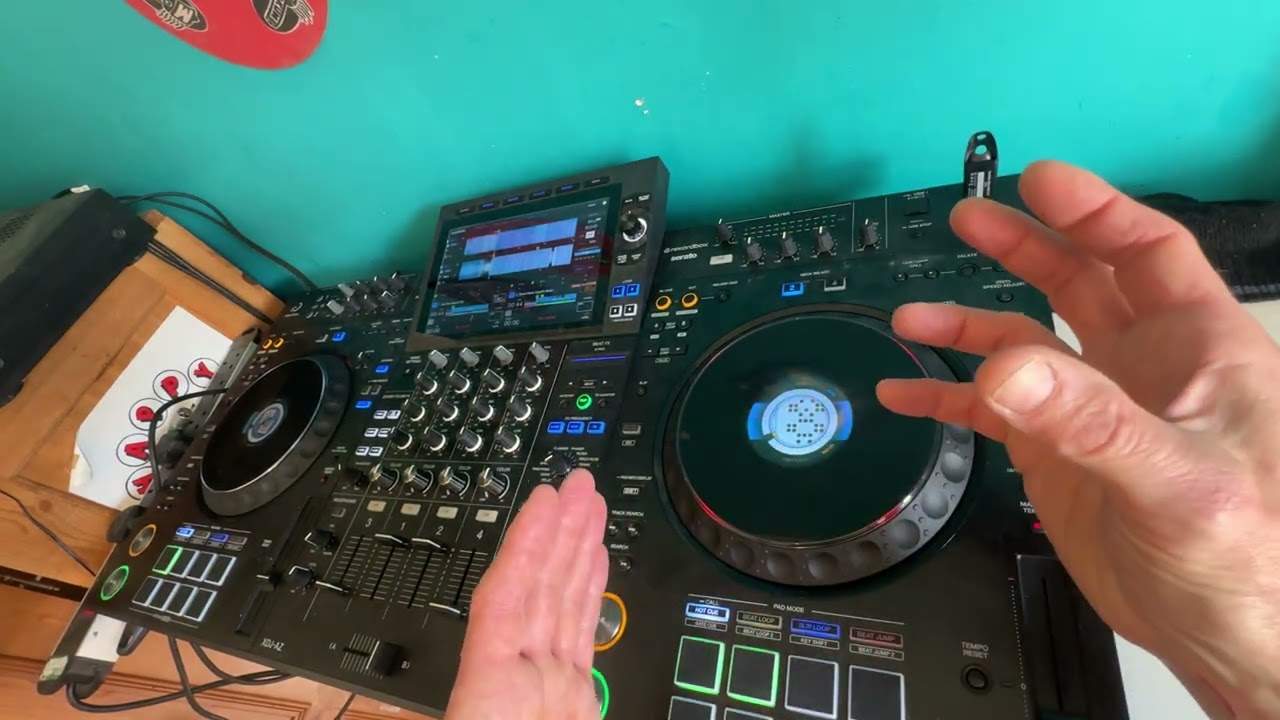
So there is indeed a million and one ways to form a transition, but there's also a million and one ways to practice. So what I'm going to show you here is a couple of ways how you can practice and also a great way of forming some kind of transition that seems to sort of the one track glides into the other. Now, again, you wouldn't necessarily be doing this in a live environment, but you definitely would be following this, let's say, if you were practicing at home and then maybe taking parts of it into your mix as such. So the tune I'm using is Glass Slipper, No One Above, the club mix from Mr Lenny Fontana from Karmic Power Records. So what I'm going to do first of all... I'm going to form a loop. So just make sure I'm on quantize, even though...
Ah! Actually, yeah, I haven't got these files through rekordbox, so I can't set quantize. I'm going to do a loop first of all. Here we go. Doesn't sound too bad. You can always see if that's snapping time because I'm going to do tempo reset. I've got the same track on the other side, so if I play it and that loop stays in time with that track, then the loop should be fine. No, it's not. Now, that actually... Okay. Sometimes these demos take another dimension. Now, did you hear when I played the track over that loop? It seemed... The sound seemed to almost change frequency and it changed twice. We heard a certain frequency and after that loop finished, it seemed to change sound. It stayed a similar sound, then it changed again.
Now, first of all, the reason it was one sound, then another, is because when I started the track on the right, I played it as best as I could in time with that loop. And the timings of the loop and the track on the right stayed in the same position. But because the loop was slightly out, maybe it jumped a little bit too long or too short by one or two milliseconds. That meant that the timing of the track on the right was out, but then that timing then stayed out, for the second rotation of the loop. Then, the same thing happened again. It went slightly out again and we had a different sound, but that sound stayed the same for the third rotation of the loop. Now this is something that you know, if you don't know what's happening
3:14 We can hear they're definitely off
And you don't listen for it, you don't even know it's happening. I'll do that again. So if we listen to this track here, this is the loop. Listen, play them both together. Sound. Change, change again. Now we can hear they're definitely off. Oh, I came out of the damn loop didn't I? Can you hear it changed then? See so it is slightly off and it's still slightly off there. Keeping the jog wheel slightly. No. You see what I'm trying to do, I'm trying to make it so when the loop finishes its first, second, third rotation, the sound I get of the track that's playing over the loop, doesn't change. If it doesn't change, I've got a perfect loop. If it does change, I haven't and again, this is one reason why if you've got the correct software,
It's great to use quantize because if you're a little bit too late to finish or like to start the loop, it snaps it in time for you. So let's try that again. Yeah, it is. It is slightly off. Okay. All right. So it doesn't, it doesn't matter. All right, doesn't really matter that much. Okay, because this is just a demonstration. So what I'm going to do? Is I'm going to use my loop for the track that sort of coming into the mix. So what I'm going to do, I'm going to turn my filter to about the sort of four o'clock position. Let's have a listen to that by itself filter at 4 o'clock.
5:40 Just got that nice high pitch
Just got that nice high pitch. So the moves I'm going to do on my filter is as I bring the filter up on the loops, I'm going to take the filter down on the track. That's playing like that. So hopefully you can see that. So basically my moves are from about four o'clock there. If I, if I actually, if I do that on there so you can see, so I'm going to left deck up and as I move the left deck up the opposite on the right deck like so let's do that. There you go. So what happened there? Is and I get this question asked so many times, you know, when do I take the bass in? When do I bring the bass out? When should I reduce increase the treble and so on. But if you if you listen to what's happening when you move the filter effect have a listen.
So there we just got treble. We've got no mid, no bass.
7:11 Five minutes, next, transition place
Now we're sort of we've now got sort of a sort of more lower treble, upper mid, now I've got mid and of course all the other higher frequencies as well. Now we're getting to sort of lower mid, now we're starting to get to high bass, mid-bass and now we have relatively sort of good complete spectrum of the sound. So by moving the filter from a high to 12 what you're doing is you are really doing the move on one dial as you would be doing if you were so, for example, you just had the treble up on your EQ. Then you're slowly bringing the mid up and then while you're just about finished bringing the mid up, you're slowly start to bring the bass. So you've got two hands on one set of EQ, whereas you can just do the same thing on the filter.
Now the reason I brought the loop in is very simple. And again, you're going to have to work with me here because I haven't got it quantized, but let's imagine now and again, you have to think about this. This is a sort of a transition. What would take place if we were indeed forming a mix? Track on the left is playing. Everyone's listening to that. Okay, then you want to of course bring in the track on the right. Now, if you want to form a nice long transition and let's say there is a part in the track on the left that is just ripe for that transition place, but it's not long enough. If you form a loop of that track, then you've got as long as you want to bring in the next track. So this plays, for example, it's playing,
You know 1 2 3 4 5 6 7 8 9 10 11 12, but after 12, you've got this fantastic area, but it only lasts for say 4 beats. Well, 13 14 15 16 13 14 15 16 13 14. You can just loop that part. So while that parts looping that gives you time to bring the other track in. I hope I hope that makes sense. Okay. Now a lot of this is experimenting. Okay. And again, you know with the loop, I didn't, I didn't intend to have that sort of demonstration earlier on, but as soon as I heard it, I thought what a great way of explaining loops. Now again, what was happening and I want to relate back to the beginning of this video. What was happening? So let me show you this the jog wheel isn't very easy explanation of what happened with that loop.
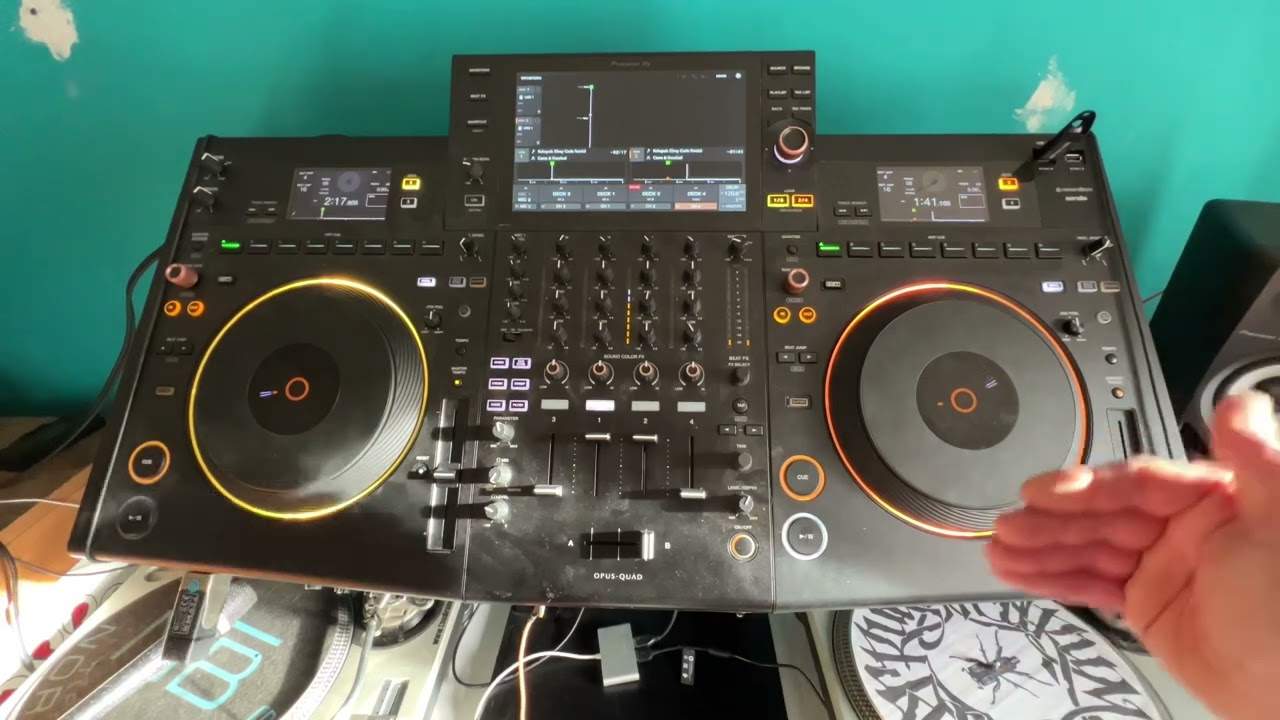
So if I was there, I just need to lock it in place there and there. Okay, so there we've got a circle. We've got a complete circle. So if you imagine from 12 o'clock all the way 1 2 3 4 5 6 7 8 9 10 11 12 now, let's imagine I form a circle but I go from 12 o'clock and I've got a piece of paper and I go from 12 o'clock all the way around to 1155. Now, I've got a gap of five minutes, but all I do is that piece of paper. I just forget about the gap of five minutes and just squidge it. So the five minutes now is bang on the 12. Well one rotation that's going to be out by five minutes. The next rotation it's going to be out by 10 minutes. The next one 15 and the next one 20. So even though that loop when you play it once may sound,
11:29 The number five isn't five minutes
As though it seems to be a loop, a perfect loop. Indeed, it won't be if you play that over a track that isn't looped and is just playing as it should. On the other hand, if let's say you start at 12 1 2 3 4 5 6 7 8 9 10 11 12 5 past 12, then you've added an extra five whether it be five milliseconds. So the number five isn't five minutes. Of course, you know, this could be one millisecond 5 5 milliseconds. It could be a very tiny amount. But what will happen is that of course every time you hear that it you get an extra five so it's 10 15 and 20. This is why when you form a loop if it's not bang on time then when you play that loop and you think what's going on? You know, I'm getting it in beat then it's going offbeat.
Then I get it in beats going offbeat is because your loop isn't a perfect loop. This is why the likes of software today is is paramount, you know, it's it's amazing technology if used correctly. Okay, so I hope that's been a help. Don't forget please like if you haven't already subscribe to the Ella skin channel and I am still giving the one-to-one private tuition. Okay? So if you're interested in getting lessons, personal lessons from myself, Jonathan Ellis skins the DJ tutor in the description of this video is an email. Send me your details again. All of the tuition is completely confidential. We normally go by Gmail sometimes Skype maybe Facebook Facebook Facebook private message. There is a fee involved but it is strictly confidential and I can help you with controllers
With CD with video. DJing with vinyl turntables and all sorts. So if you just up for some private tuition, give me a shot. Thanks for watching practice and enjoy. Thank you.
This transcript was produced automatically from the audio of the video and may contain mistakes.