 3:28
Bringing an old deck back
On YouTube this video is called Fixing an old Technics SL1200 mk 2
What this lesson teaches
He opens by comparing himself to someone who takes in a neglected horse, except the horse is a turntable. The lesson in it is a buying test.
The patient
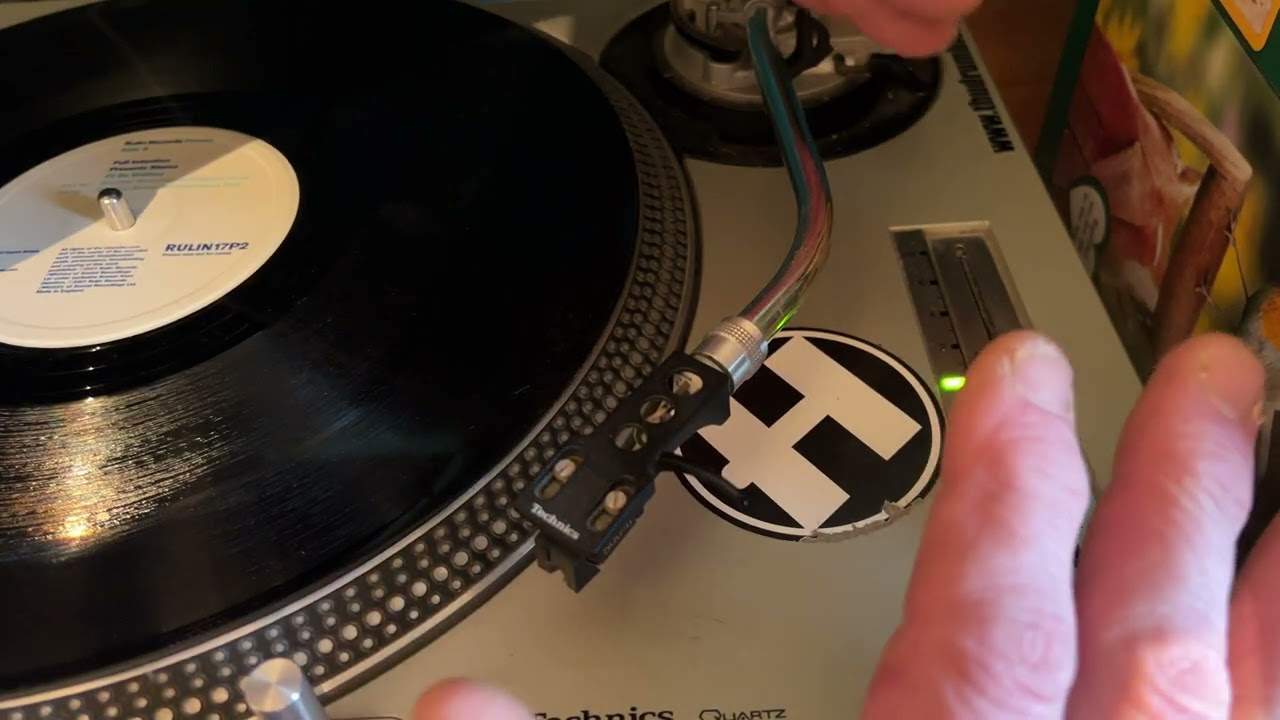
An old SL-1200 next to a good one. The light works. Beyond that: the top is gone, something has been taken to the plinth with what looks like a knife, and the armrest is broken - which he notes is common enough that he has seen it on a lot of decks.
So it looks terrible. The question is whether it is fixable, and the answer to that is not in the cosmetics.
The pitch feels fine
On first inspection the pitch fader is smooth to the touch, moving to minus and to plus without any roughness.
Which would normally be reassuring, and here it is wrong - and that is the point of the lesson.
The test
With the deck running and the strobe dots visible:
1. Pitch fader to centre, green light on. 2. Press play. 3. Move the fader slowly to minus, watching the dots. 4. Back to centre. 5. Move it slowly to plus, watching the dots.
The dots should drift one way throughout a move in one direction, and the other way throughout a move in the other. Smooth, continuous, consistent.
What the bad deck does
He moves the fader steadily in one direction and the dots drift one way - then, partway through the travel and with the fader still moving the same way, the dots reverse and start drifting the other way.
Why that is fatal
Because it means the fader's reading does not correspond to the platter's speed.
His own description is exact: you think you are speeding the turntable up when in essence, around about there, you are actually slowing it down, and then speeding it up.
For somebody trying to beatmatch, that is an impossible instrument. You hear the records drifting apart, you nudge the pitch in the direction that should fix it, and the gap gets worse - repeatedly, in one particular part of the fader's travel, for no reason you can see.
It is far worse than a stiff or noisy fader, because a stiff fader is obvious and this is invisible until you are mid-mix.
And the good deck
Same test: centre, down to minus, dots one way; up to plus, dots the other way. Clean.
That contrast is the whole video, and it is why he films both.
The buying rule
Before you pay for a second-hand Technics - or any turntable with a pitch fader - run this test. It needs no tools, no cables and no mixer, takes thirty seconds, and it tests the one component that is expensive to replace and that nothing else reveals.
Cosmetic damage is cosmetic. A reversing pitch fader means a pitch assembly to source and a strip-down to fit it, which is the job in the tone-arm lesson with extra steps.
What happens to this one
He lists the plan: change the pitch, change the armrest, find a replacement for the top, and see what else can be done. Which is a fair description of the economics of old Technics - they are worth rescuing because every part of them can be replaced, one at a time, by hand.
Contents of the video
0:00 Yes, I do need a bit of a shave

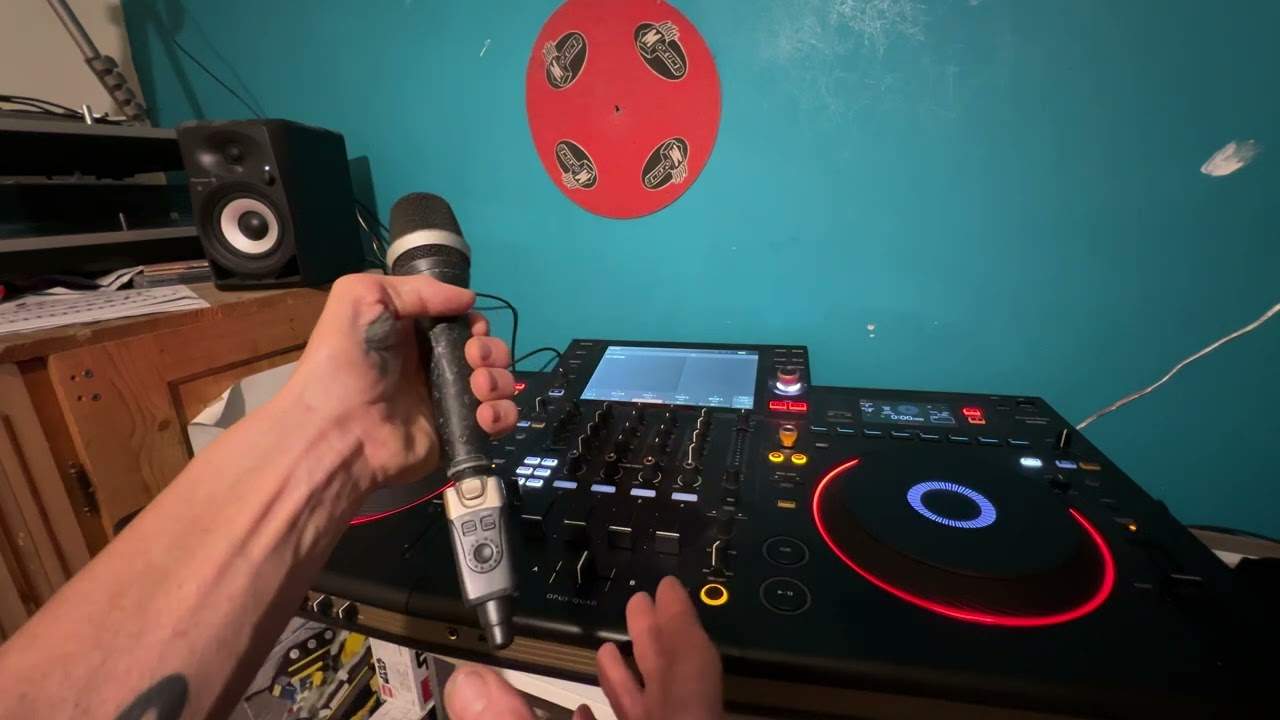
Right folks, yes, I do need a bit of a shave. Alright, now some people, you know, they're walking along the road, they'll see an old horse and they'll take pity on it, take it home and look after it. Me, on the other hand, I'll see an old turntable, take it home and look after it. I'll show you. Right, that there is an old SL1200. That one there is an old SL1200. The difference being, that one's in good condition. And that one is downright knackered. OK, the light works, but let's have a closer look. That's gone. The top. Also, I do not know what the heck has gone on here, but I think someone's had a knife to that. Probably tried to eat the dinner off it. But look at that, that's ridiculous. Also there, I want to say a common problem, but I've seen quite a few decks with the armrests broken.
1:34 I'm going to move the pitch now to the minus position
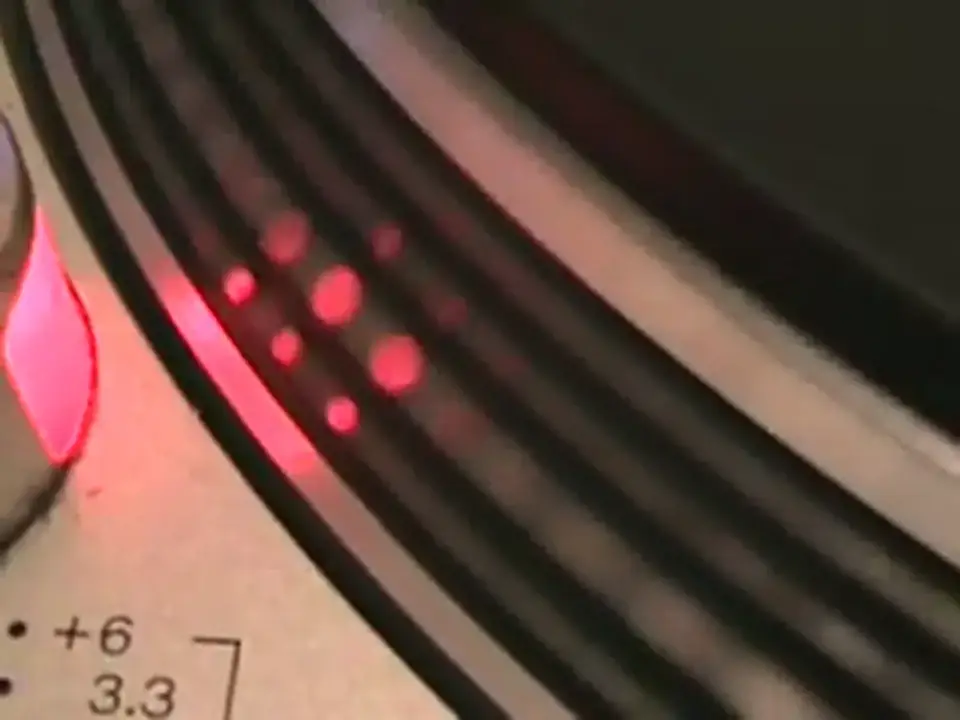
What I'm going to be doing is over a period of time when I fix this one up, I'll take you through the fixing process as well. But, one of the biggest problems with this, now on first inspection the actual pitch seems relatively smooth. It doesn't feel rough to the touch as you move the pitch to the minus and to the plus position. Now I'm going to put it dead centre where the green light is. Let's go over to here, let's press play. I'm going to move the pitch now to the minus position. Watch the centre dot. Right, it's going one way. Look. Minus. I'm going to bring it back to the green light. Now watch this. I'm going to start moving it towards me. Can you see it's moving almost? The dots are moving towards the camera very slowly. It's there. Now you watch this.
2:10 We'll have a look at the dots again
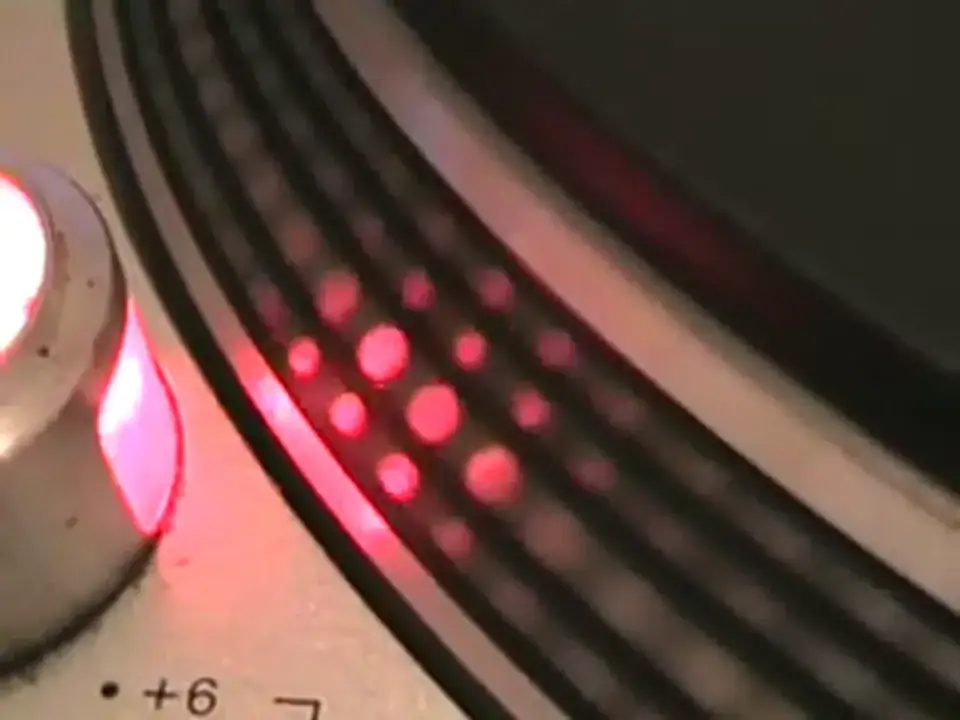
I'm still going to start bringing it towards me and now they're moving away from me. No, basically that means that this pitch needs changing because what will happen is you will think you're actually speeding the turntable up when in essence around about here you're actually slowing it down and then you're speeding it up. So for someone who's trying to beatmix perfectly that's going to be one heck of a problem. So that pitch needs changing as well. Right, let's have a look at this one that should be okay. Right, centre position. We'll have a look at the dots again. We're going to move down to the minus position. Slowly go minus. It's going one way. Back to the centre position. Plus. Moving to the plus position. And there you go. It's going the other way. So there is the difference. So always check that out. So there you go. Over a period of time now.
I'm going to be fixing this one. We're going to change the pitch, we're going to change the armrest, and we'll get the knobbly bit on the top there and see what else we can do. There you go. And I've got another one there as well to look at. Practice and enjoy.
This transcript was produced automatically from the audio of the video and may contain mistakes.