 13:54
Hip Hop DJ Mixing Lesson with Two Tracks from CD Pool Urban July 2016
Contents of the video
0:00 Another demonstration stroke tutorial
All right, ladies and gentlemen, another demonstration stroke tutorial. By the way, if you can hear kids in the background, one little girl especially screaming, it's because she's just having a hissy-fissy ab-dab, a whingy-wibbly what's-it. That's what happens. This is family life and there's kids just doing their stuff, which is just screaming and going, ah, ah, ah, ah, ah, ah, ah, even to it. Right, in this video we're using two tracks from the Urban releases from CDPool July 2016. We have from CD1 track number 11, Tiny Temper, Mamacita, I think that's how you pronounce it, do beg your pardon, and on CD number 2, track 3, Toxic Love Affair. Really good tunes. Okay, so mixing hip-hop or R&B stroke hip-hop is...
11:27 Town so the house DJ
Slightly different to house, but it's sort of the same. What is the same, of course, with any style of music, make sure it's in keys that work, make sure you're in phrase, you're in time, you're in beat, and to answer a question, you cannot mix something in that's 110 BPM with something that's 120. They just will not beat match. You can mix something that's, say, 60 with 120 because it's half-time, or you can mix something that's, say... 75 with something that's 150 because it's half-time, or 150 with 75. Do you see what I mean? So we're doing half-time. So for example, you could have a house track, like that, and your half-time is... So if you're clever, you could mix sort of a hip-hop tune with a house track, but you have got to be very clever.
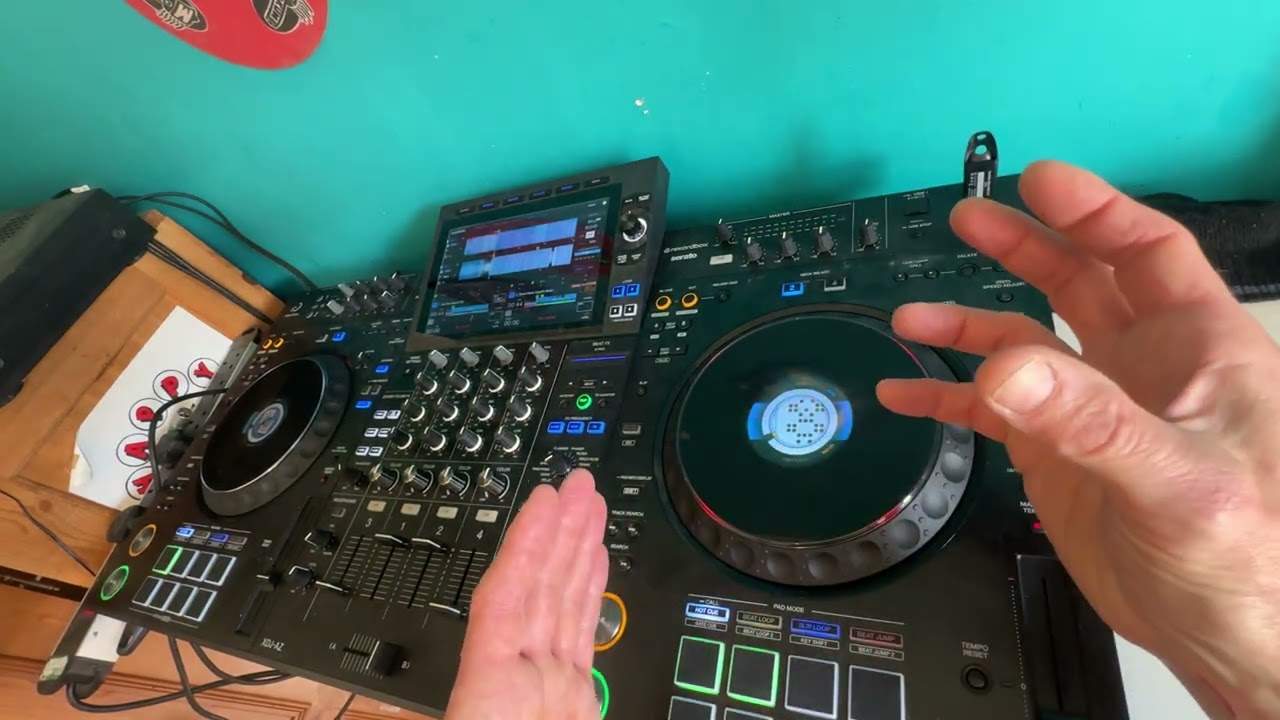
Okay, so what I'm going to do now is... What I'm going to do... This video, I haven't really planned this. This is gonna be very random. So, I have got a couple of cue points here on this track here. The Toxic Love.
2:02 Really nice bass line with this one
Really nice bass line with this one. And Mr. Temper Tiny. Mr. Tempo. Mr. Tempo. okay first of all we need to work out our phrasing now again phrasing in hip hop and R&B is very much similar to house music you have groups of phrases now a phrase may not be 8 bars it could be 16 it could be 32 but more often than not with hip hop the phrases are slightly smaller we've got more vocals there's more melody there's more going on so you might find more groups of 4 and 8 also with hip-hop especially radio versions of R&B tunes or pop R&B pop hip-hop there's very little time to mix tune in so what you may find is that if you're playing a lot of hip-hop music and you might find that you're playing a lot of R&B or hip-hop music and you're listening
To it and you're not really sure what you're playing it's very much the same thing as if you were playing a lot of hip-hop music and you just don't know your own style of music and you don't know what you're playing and you don't know how to play it and I think there are ways to make sure that you have those different styles of music but the key is that when you cut from one to the other could be the best plan of attack and also when you cut from one to the other you actually don't have to have them the same BPM you can have them completely different BPM but the key there is to make sure that the word cut is definitely in the forefront of your mind you're not doing a blend or a mix you're cutting from one to the other it's a little bit like having two pieces
4:38 Beginning of the track now again
Of paper putting them together there is a definite cut in the middle you're not overlapping them you are just putting the two pieces together like that so I've got my cue point there let's just pause it start again okay so we had a transition we had a mix all I did I set up a couple of cue points if we go to the beginning of the track now again sometimes when a tracks playing it could be any track it could be a random song you've just put on you may be thinking bloody hell I know a really good song that will go into this then find it dig it out and give it a go alternatively you're playing a track and you're thinking that oh you know what that's a good track the next one you want to bring in but you're not sure
About where the transition should be now again as I say many times do not follow what other DJs do and try and be like another DJ by all means admire them but what you should be doing is you should be yourself make it yourself be you don't be somebody else by all means take tips tricks and ideas what they do but then make it you again a good analogy it's a little bit like making a chocolate cake isn't it everyone uses butter sugar eggs and flour but it's the quantities you put in that makes it your own and chocolate of course chocolate cake with no chocolates you may want to have loads of chocolate you may want to add light chocolate dark chocolate you may want to add unrefined cocoa that is the beautiful stuff it's actually very good for you as well but make sure you
7:01 Something else
Get the unrefined stuff if you get the unrefined cocoa you're going to get the refined stuff it's just crap so you're making it your own now let's try something else I mean there so that was another mix right let's try right okay let's try something else let's go back to our cue points and we'll try something else okay maybe I shouldn't let that echo last a little bit longer so this was going over the echo but again it's another idea another kind of mix let's leave this one play and let's go to Mr. Tiny Temper try doing a loop it's not gonna work you see again this this proves a point a loop let's listen to the actual beginning of the track we're gonna count bars and from the first sound I'm going to start counting one but don't forget
Just because you hear the first sound in the track does not mean to say that that is the count of one in a bar happens to be in this though so here we go one two three four two three four there so we pretty much only got two bars and then we come in with some vocals so what I would do here I'd probably try and start mixing it in at the vocals just to be on the safe side okay so really in a nutshell um house music mixing house music yeah you can experiment you can have some fun you can chop and change you can like slam things in and goodness knows what but let's go back a few years now I have been a DJ for a very very long time and what I'm about to say is the truth if we go back many many years a house DJ
Would not do that or generally house DJs would not do that many tricks in the mix they would just do a mix and that would be pretty much it because house music just wanted to be mixed it needed to be blended just smoothly whereas many years ago the hip-hop DJ would have cut and gone from one to the other and they continue to do that the only difference is now they're a lot faster but also one big difference is today with modern day technology we can add loops and echoes and goodness knows what we can really go to town so the house DJ is becoming exactly like the hip-hop DJ nowadays the house DJ has got loads of effects loads of outside effects um you know Echo reverb flanger filter Loop my God backspins you can do whatever you want
So um the the transitions that the house DJ can do are not dissimilar in some ways to the transitions that the hip-hop DJ has always done so we're getting to the stage where it's both the same but again hip-hop is hip-hop House is house music so what I recommend and what I suggest you do is practice get a couple of tunes and just chop from one to the other this video could last for a day on just these two tracks I mean for example I could Loop part of that trap trap oh my Willie sorry why was I saying why would I think of having my William a trap silly isn't it so I could say Loop that track Loop this track and go from one to the other one bar now again if let's say for example you're mixing a hip-hop track or you're trying to and it's you know the transition points where there's
No vocals no Melody just a kick just a beat isn't that long then you need to think in advance and of course we can do this now so what you can do let's say for example you're playing a track on that deck this track here happens to have not much intro or outro and there's not many places where it will let you mix the third track in so prior to playing the second track live I would get a couple of loops going put them onto hot cues and play that track it's already hot queued you've already got the loops ready to go and then you get your third track in when you're ready to mix your third track in you go to one of the loops and you mix your third track in think in advance think outside the box check out cdpool.com the links
In the description down there we've had a couple of tunes from the Urban July 2016 practice and enjoy
This transcript was produced automatically from the audio of the video and may contain mistakes.