 7:23
Beat mixing on the speakers alone
On YouTube this video is called How to beat mix, using the speakers and no headphones
What this lesson teaches
This uses the same arrangement as the no-headphones lesson - right deck panned hard right, left deck hard left, speakers doing the work of headphones - but the exercise on top of it is different, and more demanding.
The drill
Both faders up from the start. No easing anything in.
Start one track, then throw the second one in cold, with your hands already on the pitch, and fix it in real time while both are audible.
It will be a mess for the first few seconds. That is the exercise.
He runs it three times, and the variations are the lesson:
1. Straight. Get them together from a cold start. 2. Both pitches down, then back up, trying to hold the match while the tempo moves under you. 3. Two different tracks, which removes the convenience of identical material.
Why this is better practice than it looks
Most beatmatching exercises train the setup: cue carefully, listen carefully, bring it in when ready. That is a real skill and it is not the one that fails you on a night.
What fails you is a mix that was fine thirty seconds ago and has drifted. This drill trains that directly - you spend the whole exercise in the state you normally panic in, with both tracks audible and something wrong, and you learn that it is recoverable.
His own description of the second variation makes the point: practise it, because there will be moments when it goes off, and this is what gets it back.
It is the same idea as the one from the old-school lesson - a mix that goes out and snaps back is evidence of a DJ who can hear. This is how you become that DJ.
The part about attention
His other observation is psychological, and it holds up.
Without headphones to put on and take off, without a cue button to press, without twiddling, more of your mind is on the beat. The equipment is a distraction as well as a tool, and taking it away for an hour concentrates you on the only thing that actually matters here.
Which is also why this works as a warm-up before a session, not just as a beginner's exercise.
Contents of the video
0:00 Here's another lesson on beatmatching
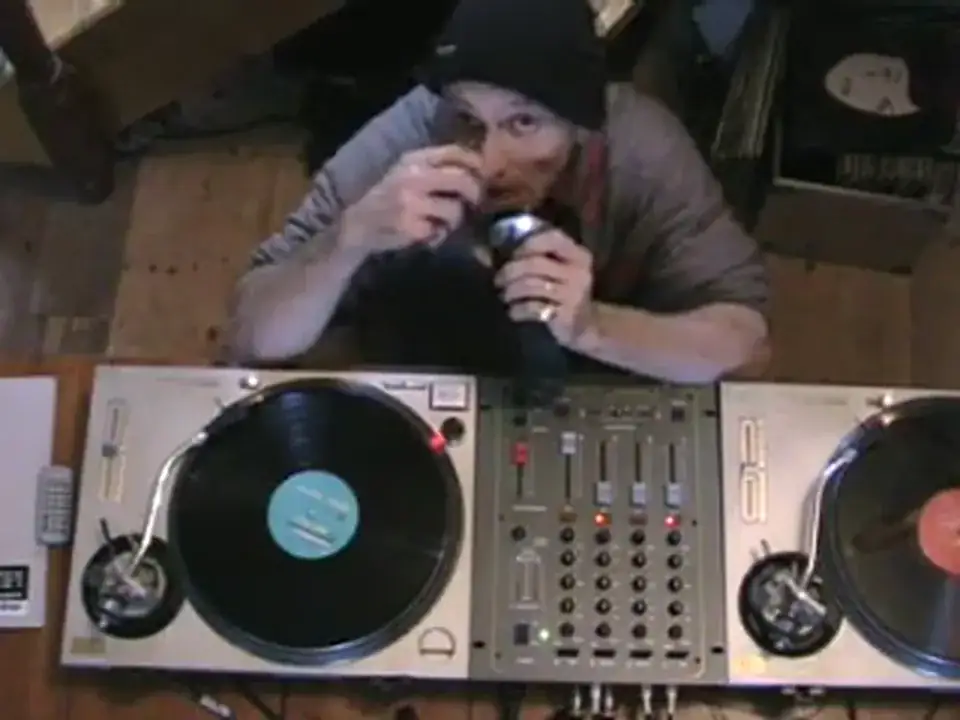
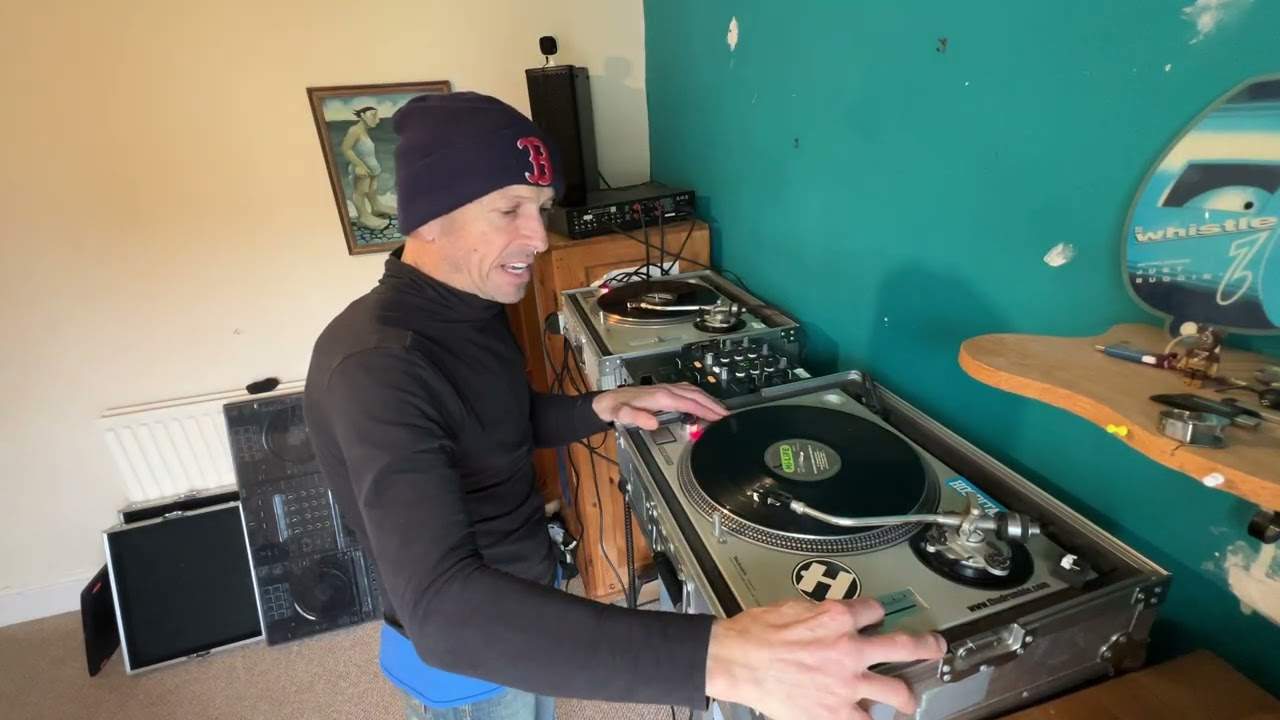
Alright folks, here's another lesson on beatmatching. I have done quite a few on beatmatching but then again some lessons aren't for some people and some lessons are for some people. Hopefully this lesson may help you if the others haven't. Now then, what I want you to do first of all, first and foremost is find two tunes that work really well together. I want you to find tunes and I want you to have them at the beginning, okay? We're just going to use the beginning of each tune. We're not going to go through it, just the beginning. Second thing you need is your mixer, which is this here. You need to have a balance control on it. Your balance control will basically be the button, the knob, the dial that has B-A-L above it, or it could have P-A-N. B-A-L is short for balance, P-A-N is short for pan. Right, what I want you to do is the right turntable, CD player or whatever you're using, have...
On that channel, the balance or the pan go to R. So now this side here, this turntable, this piece of music will only play on that speaker, the right speaker. And then I want you to do the opposite on this side. Have the balance for this turntable on L, for left. So now this turntable here will only play through the left side. And then you don't need any headphones. There's no need. Theoretically the idea, the principle behind this... is that now your speakers are acting as headphones. In other words, if I was to have my headphone on the right ear, listening to the right tune, then the left ear would be listening through the left speaker, which would be classed as the PA. Think about it logically. Okay, now then, what I want you to do is I want you to start one side off and then bring the other side in. Have both sliders up. Don't slowly mix it in.
2:21 Boom, boom, boom here
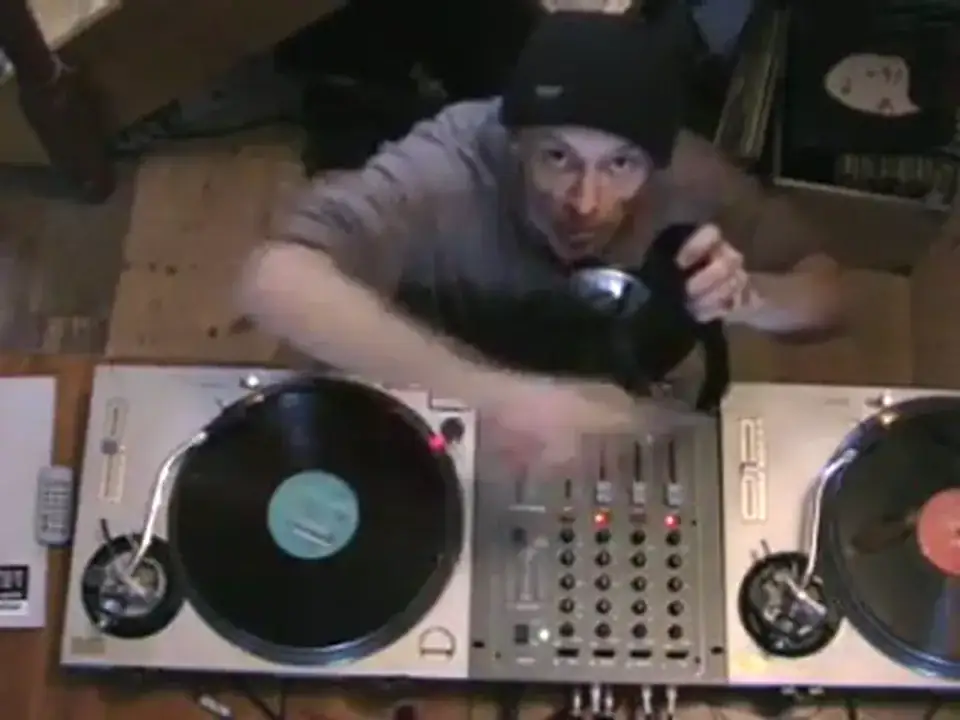
That's what we're not going to do, have them both up. It may go rrrr to begin with and you may go i-i-i-it wiki wiki to get it ready, but I want you to throw this one in and I want you to have your pitch, the hands on your pitch straight away. And I need you to work that pitch control and match them up, real time, live time, both speakers. The idea here, right deck, right speaker, left deck, left speaker. What you will find is when the beats sync, they will almost join in the middle. Boom, boom, boom here. Not boom, boom together. That's what you're looking for. You're looking for that boom, bass, bass in the middle. I'm not necessarily using bass. I've got hand claps. But I'm working out in my head where the hand claps should be. I'm going to do this particular type of mix three times. Here's the first one. Okay, basically what I found was this. When I got them synced in beat, what I was listening to is I could almost hear...
A join of the beats, it was almost they were together. And because I wasn't concentrating on headphones and messing around with headphones, twiddling about with knobs, psychologically more of your mind is concentrated solely on the beat and on the music, which is what it's all about. This time now, I'm going to slowly bring down both pitches, slowly bring them back up and try to keep them in beat. Practice this because there will come points when it will go offbeat. If you can practice this exercise, it will help you when it goes offbeat to get it back into beat. Here's the second one. Okay, third time now. What I'm going to do, by the way, the tracks you're listening to on this side is DJ Jaune and The Launch. This side is Future Breeze, Oceans of Eternity. Now then, what I'm going to do this time is something that's quite difficult. I'm going to play this song here and I'm going to bring this one in.
5:09 Practice and enjoy, and keep attacking, alright?
The DJ Tutor. Practice and enjoy, and keep attacking, alright? Don't forget, www.djtutor.com. Here we go.
This transcript was produced automatically from the audio of the video and may contain mistakes.
This video is part of
Related videos
-
Complete Beginner DJ Lessons Tags Key BPM Etc
A more advanced lesson folded in early, and worth doing once rather than putting off, because everything it sets up gets used for years…
-
Complete Beginner DJ Mixing Lessons Video 19 Getting Your Kit Ready for an Easy Mix
A whole lesson on getting ready, which is the right call - the exercise in the next video only teaches anything if the two decks are…