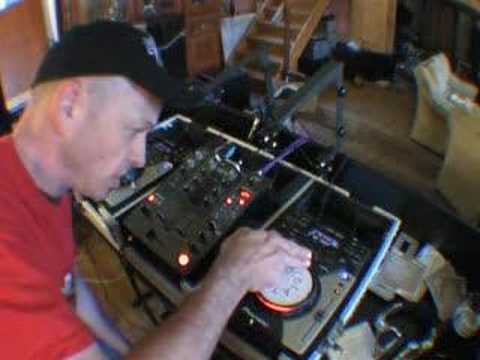
 7:10
The spin back
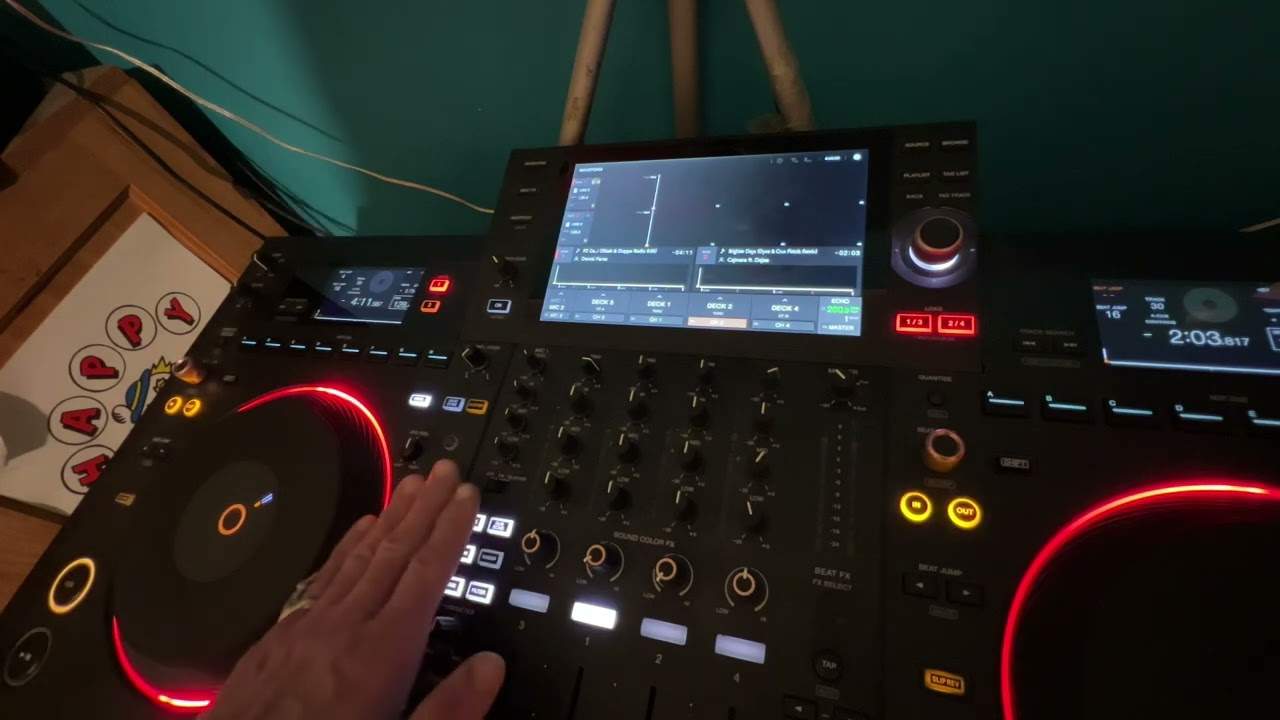
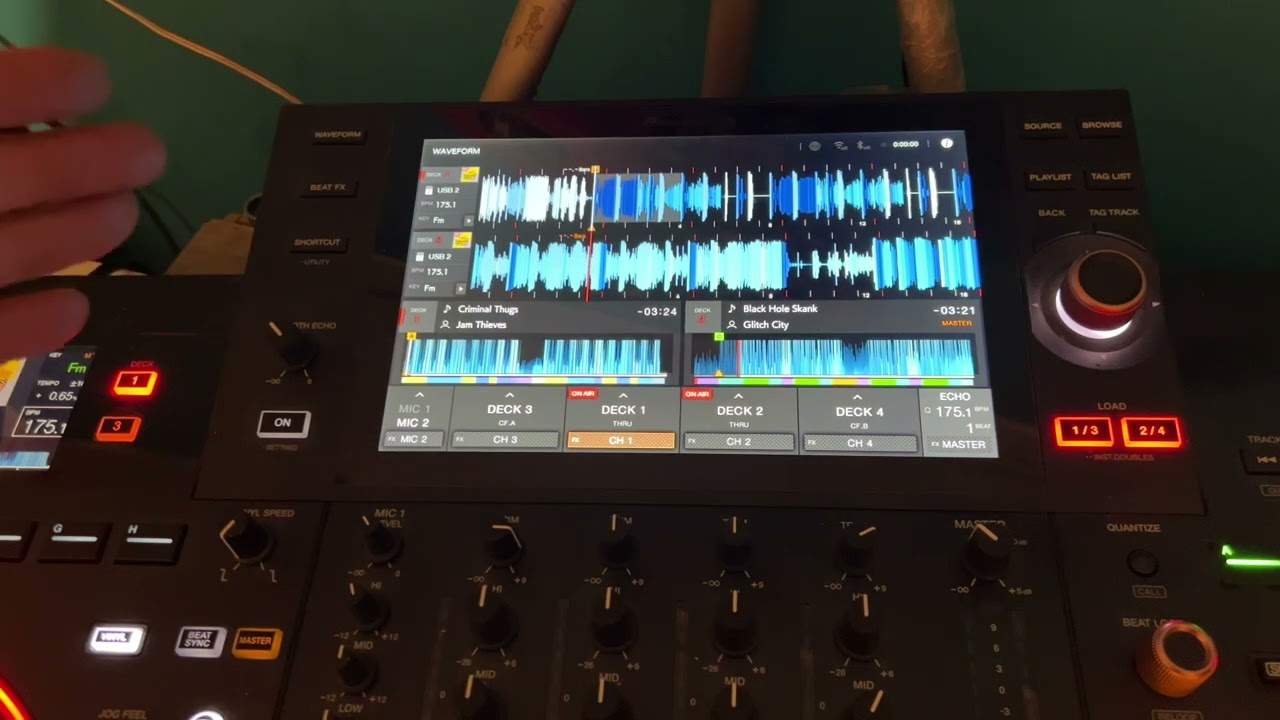
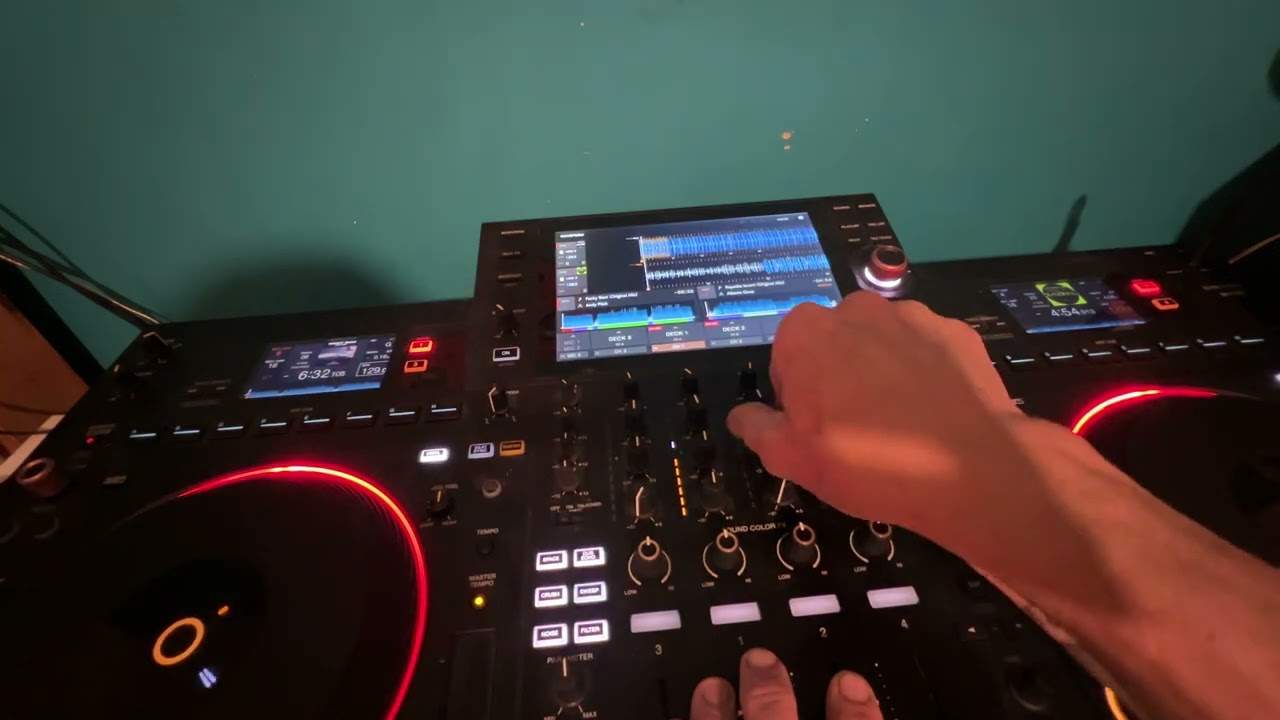
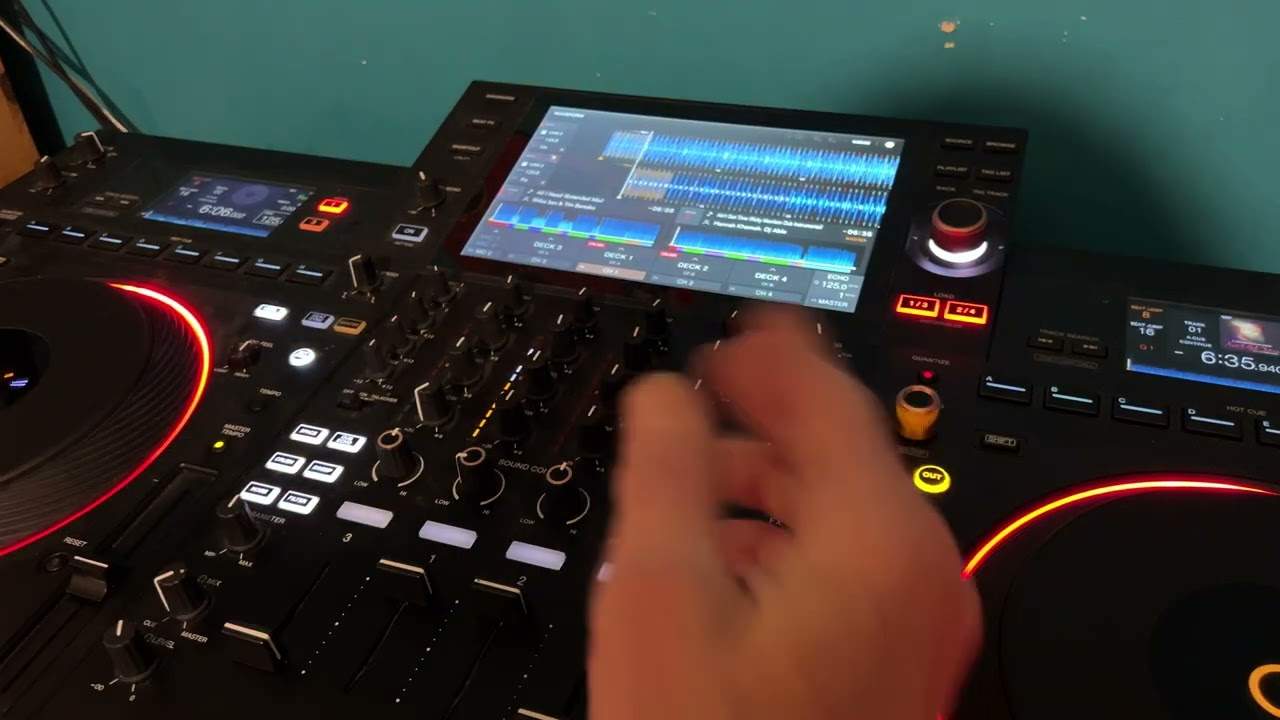
On YouTube this video is called How to do a spin back on a Pioneer CDJ-400 turntable video 1
What this lesson teaches
A proper explanation of a familiar sound, and it contains one piece of mechanics that separates a spinback from a mess.
What has to be on first
Vinyl mode - the jog-wheel setting that makes the top surface behave like a record.
With it on, a finger on the platter top stops the music. Pull back and it goes backwards. Push forward and it goes forwards, at the speed your hand is moving. Without it, the jog wheel only nudges the pitch and none of this works.
So: find that button before anything else. It is the usual reason somebody's CDJ "cannot do" this.
What a spinback is
His etymology is the explanation: spin back - backwards. You spin the platter backwards, hard, and the record is dragged back through itself with that rising reverse whoosh.
And the mirror image exists: a spin forward, which is the same gesture the other way, and which almost nobody uses.
The point he draws out is about control. While your hand is on the platter you are deciding the speed and direction of the music - speeding it up, slowing it down, running it backwards - rather than the machine deciding.
The step that makes it work
Now the important part, demonstrated by doing it wrong.
He spins back and presses cue. Clean, tight, and the track returns to the cue point ready to go.
Then he does exactly the same spin and does not press cue. His verdict: absolutely all over the place.
Why? Because without the cue press, the player simply resumes from wherever the platter happened to stop. Which is some arbitrary point a second or two back in the record, now completely out of phrase, and still playing.
Pressing cue sends it to the cue point - a known place. So the sequence is:
1. Spin the platter back. 2. Press cue immediately. 3. Start again from a place you chose.
That is one gesture with two halves, and the second half is the one everybody forgets.
And on vinyl
Worth noting that without the cue press the CD player behaves exactly as a turntable does - carrying on from wherever it ended up. The spinback came from vinyl, where the recovery was a hand on the record and a lot of practice.
The cue button is the modern safety net. Use it.
Contents of the video
0:00 We're talking about spinback terminology where DJing is concerned
Alright folks, this video is a bit of a demonstration, a bit of a tutorial and showing one small effect or something that you can do with something called a spinback. Now, we're talking about spinback terminology where DJing is concerned. It's got absolutely nothing to do with you turning on ice and falling on your back. Okay, let me show you. Let's play the music. Right, first of all, what we do need to have... Especially on a CDJ turntable is something called vinyl mode. You've got to have vinyl mode, jog wheel and the top. Watch. If I now move the jog wheel near enough we'll get exactly the same sort of feel as if we were using a vinyl turntable. I'll show you. Because if I put my finger on the top of the actual jog wheel and stop, the music stops. Finger on it and if I pull it back...
The music goes backwards. Finger on. Forwards. Music goes forwards. But did you notice, as I was actually moving... Let's just stop it. As I was moving it forwards, what was actually happening was the music was almost going the same speed as my finger was around the actual jog wheel. Have a listen. Now for... I'll pause that. Who has never heard of a spin back, who's never seen one, then that's very important because you need to understand the whole philosophy behind what's happening. So I'll do it again. Here we go. Stop. That's forwards. This is backwards. Alright, what is happening? Well, I am now in control of speeding the music up or slowing it down, speeding it forwards or slowing it down, speeding it...
2:47 First video on spinbacks, on CDJ turntables
Up or speeding it down backwards, whichever way you want to look at it really. So I'm actually in control of the music. I'm telling you what to do basically. So that's sort of what's going to happen with a spin back. The difference being is if you think about it, if we look at spin back, let's listen to the words spin back. What does it say? Spin back backwards. I'll show you. That's a spin back. Now in a sense this is a spin forward. Very little difference. Okay, so first video on spinbacks, on CDJ turntables. Here's a good bit of a tip for you, alright? This is a good idea. Alright, let's play the music on the left-hand side. Look in the description to the side of the video for the actual tracks. Here we go. Have a listen. Okay, what did I do? I span the platter backwards like so. Like that. But did you notice, as soon as I'd done that, I pressed Q.
Now, what I'm going to do, I'm going to do exactly the same procedure, but I'm not going to press cue. Let's have a listen. Here we go. Absolutely all over the place. The reason being is this will act exactly the same as a vinyl turntable if you don't press cue. So what's happening? Let's have a listen. What we'll do now, we'll just concentrate on this CDJ, not that one, and we'll have a listen. Spin back.
4:34 Why did I press cue?
Now what's happening is I'm moving that track backwards, but then as soon as the actual platter stops moving, it's just starting up again. So what's happening? Let's say it's here, it's going forward, spin back, and then it's just carrying on. Why did I press cue? I'll show you. Let's have a listen. Let's listen to the beginning of the track. Press cue, we're back to the beginning. Press play. That's the beginning. Cue, back to the beginning. Think about it. Press play. Now I'm going to spin back. Press Q. It's gone right back to the beginning of the track. There you go. That's why I pressed Q. So if I hadn't have pressed Q, then if I hadn't have knocked the crossfade over and I'd have left the crossfade dead centre, all that would have happened is the track would have carried on playing wherever it has, let's say, wherever it would have actually stopped when it's stopped spinning back. Losing the words, but I hope you get the general idea. Alright, so we'll put that...
Again into practice, now I've explained it. Here we go. Missed it. To the beginning. Tiny video on spinbacks on CDJ turntables. Practice, enjoy and have some fun. Thank you.
This transcript was produced automatically from the audio of the video and may contain mistakes.