 6:18
The stretch in between two tracks
On YouTube this video is called How to Mix the Music in Between Two Toons.
What this lesson teaches
Two arguments in one lesson, and the second is the one that matters even if you can beatmatch perfectly.
The DJ who could not beatmix
He knew somebody who tried for years and never got it. What that DJ could do was listen.
So he played each track in its entirety and then brought the next one in - judging by key, by tone, by feel, or by finding a break in the music to arrive at. No clashing beats, nothing all over the place, and the continuity of the music was there throughout.
That is a complete method, and it produced sets that worked. Worth remembering before writing anybody off.
The situation that gets everybody
Here is why this matters to people who can beatmatch.
You are playing techno at around 130. The DJ after you plays hip-hop at around 100. The handover has to happen somehow.
The obvious answer is for you to slow down and them to speed up until you meet in the middle. His verdict on that is correct: it could make both tracks sound dreadful. Techno pulled down to 115 loses its drive; hip-hop pushed up to 115 sounds like a novelty record. You have technically solved the tempo problem and ruined both pieces of music.
So you need a way across that does not involve dragging either record away from where it belongs - and that is what the rest of this stage is for. Cut on a phrase boundary. Use a break. Let one end and start the other. Carry the gap with an echo.
The general principle
Beatmatching solves one problem: two records that are close in tempo and need to overlap.
It is not the only problem, and reaching for it when it does not apply is how DJs end up playing everything at the same speed all night - which is a real and common failing, and audibly duller than it needs to be.
Contents of the video
0:00 This video is all about mixing the actual music
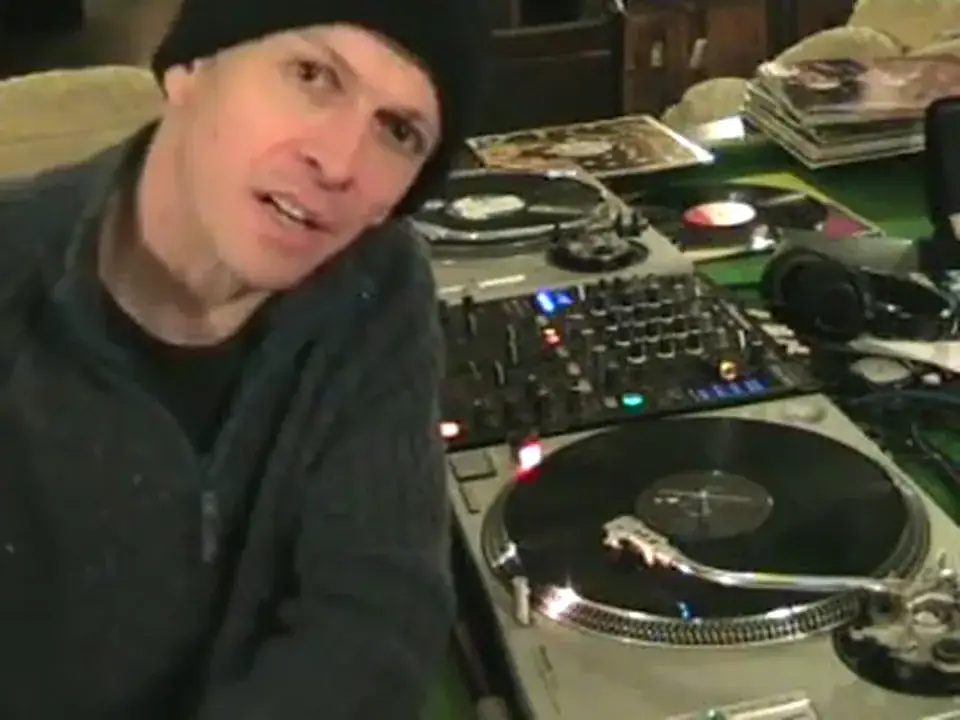
Alright folks, this video is all about mixing the actual music. Now first of all, most DJs want to learn how to beatmix but sadly there are some of us who will not be able to do it. That is the way of the world I'm afraid. Some things you can do, some things you can't and you've just got to put up with it. Now first of all, I used to know a DJ who could not beatmix to save his life. He tried and tried and tried. Now he didn't give up and think that's it because what he could do... He was very good at listening to the music. Now what he would do, he would play a track in its entirety and then he would slowly bring in the next track. But he would listen to the key, the tone, the feel of the track or if there was a break in the music halfway through, he'd bring another one in. There would never be any clashing of beats, it wouldn't be all over the place but the continuity of the music would be there. Now that's for the few people who can't beatmix.
But let's say the people who can beatmix. Why would you need to do this? Alright, here's the deal. Let's say you're in a nightclub and you've got a DJ playing after you and you'll say playing techno. Now techno, you know, around about sort of 130 BPM, maybe high, maybe slightly lower. The DJ after you, let's say is playing hip-hop and we're looking at beats per minute of say 100 give or take, up or down. So we've got quite a few things we can do. The one is the chap playing techno could reduce the speed, in other words slow down the actual track by moving the pitch control to the minus position and then the DJ who's playing hip hop would have to increase the speed, move the pitch control to the plus position but of course it could make the actual tracks sound dreadful. So how can you actually mix the two?
2:17 The same applies with this one, could be 160 BPM
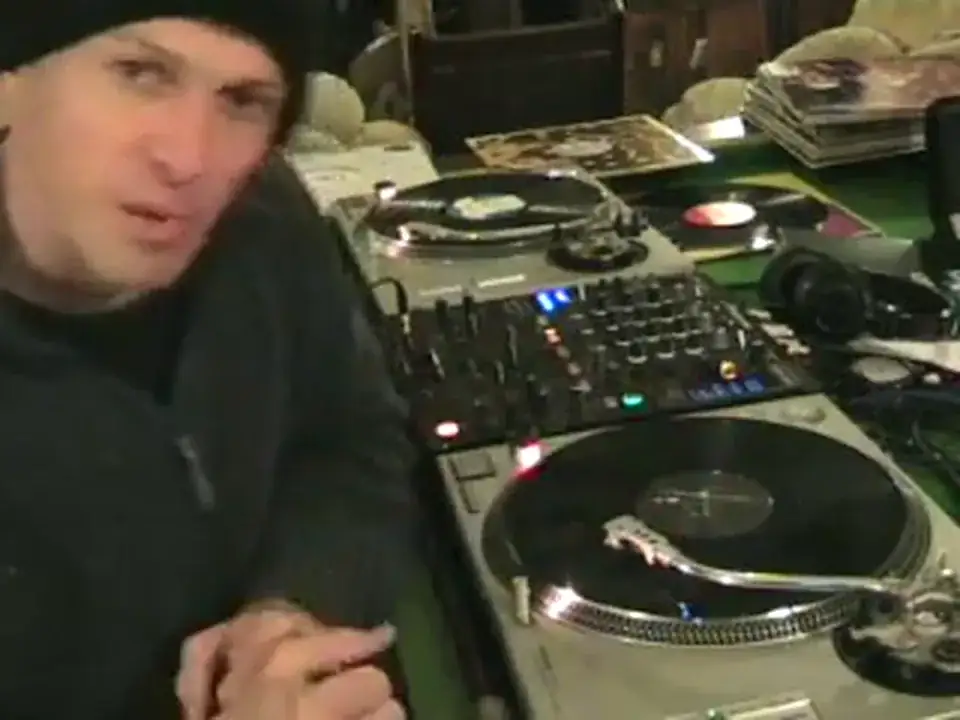
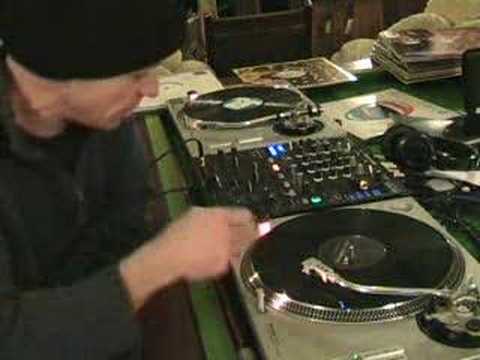
How can you keep the continuity of the music, which is the word here. And that is it, the continuity of the music. Well you can do it by matching the actual music, matching the sound, the key of one track in with another. And we can do this by, well basically we can do this anyway. We can have a track that's say 120 BPM, this one's 120 BPM. I don't have to beatmatch them, I've just got to match the actual tone. The same applies with this one, could be 160 BPM. That one could be 100 BPM. And if there are no beats, it's just the actual music and we match the music so they work well together, then the continuity will still be there in the mix. So what I'll do, first of all, I'll play this one. This is Mitchell & Dewberry, a track entitled Globetrotter. And then this one over here.
The track is Tee Coy, a track entitled Carneo. I think I've got that correct. And it's on an album. Put that over there. There you go. It's on that. Discotheca, which is pretty wicked. So first of all what I'm going to do, I'm going to play you this track here. Now this is what it's like during the course of the track.
I mean, it's got a bit of oomph this one, but listen to the actual end of the track. Alright, we've got no beats, nothing at all. We've got the music, that's it. So let's imagine this is our techno track. Now at the same time, let's imagine though that this is, say for example, our hip-hop track. Now we've got, alright, it's not a hip-hop track, alright? I'm just doing a comparison in between what I said earlier on. So let's just play it.
4:09 We haven't got any beat, we've just got the sound
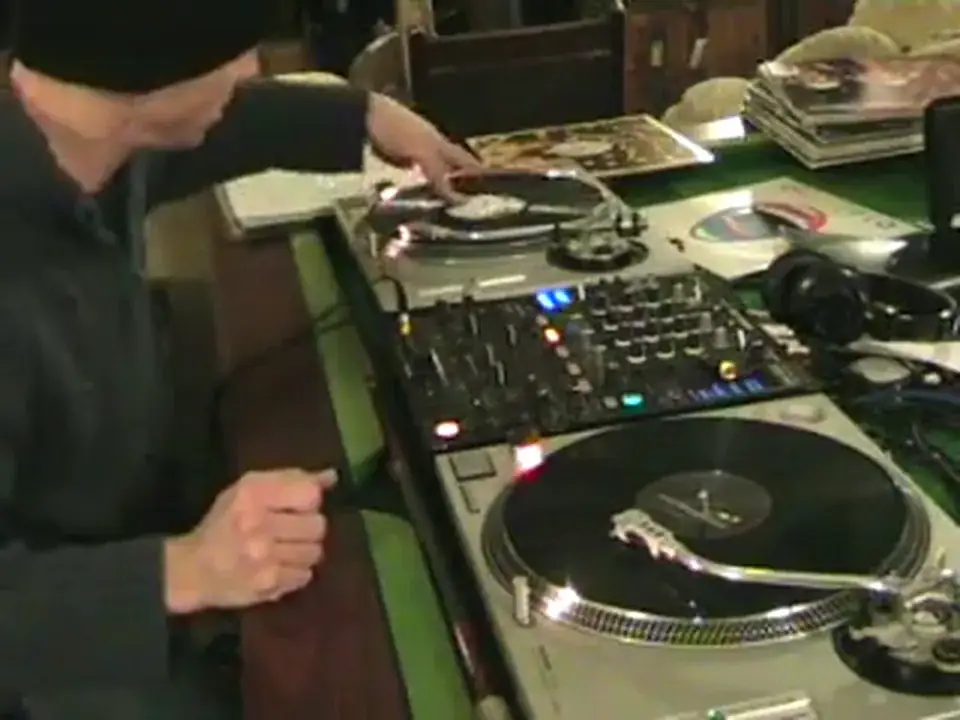
Alright, but the beginning of the track, have a listen. Here we go. Just whang it on a bit. Alright, we haven't got any beat, we've just got the sound. And there, we've got a beat coming in. Alright, so how can we match those two together? Well, the first and foremost important thing is to listen to the music. The music is very important. If the music doesn't match, it will sound atrocious. So what I'm going to do now, I'm going to play this one. With a tiny bit of the beat, and then we're going to have just the music. And then I'm going to try and listen, and I'm going to bring in the music on this one while the music on that one's playing, fade this one out, and then just leave this one play. So hopefully, we'll get a continuity, we'll have a nice feel where the music's concerned, we won't have any beat, but at the same time, we'll have a nice line from one track straight through to the other. So, right, let's put that on, here we go.
So basically all I did, I listened to the actual key, the sound of the track and by listening to it and concentrating on it, I was able to almost form a mix without having to beatmix. So I hope that's been a help. Practice and enjoy.
This transcript was produced automatically from the audio of the video and may contain mistakes.