 14:20
How to Nail the Baby Scratch Simple Lesson for the Beginner DJ
Contents of the video
0:00 Jonathan Ellaskins the DJ Tutor here
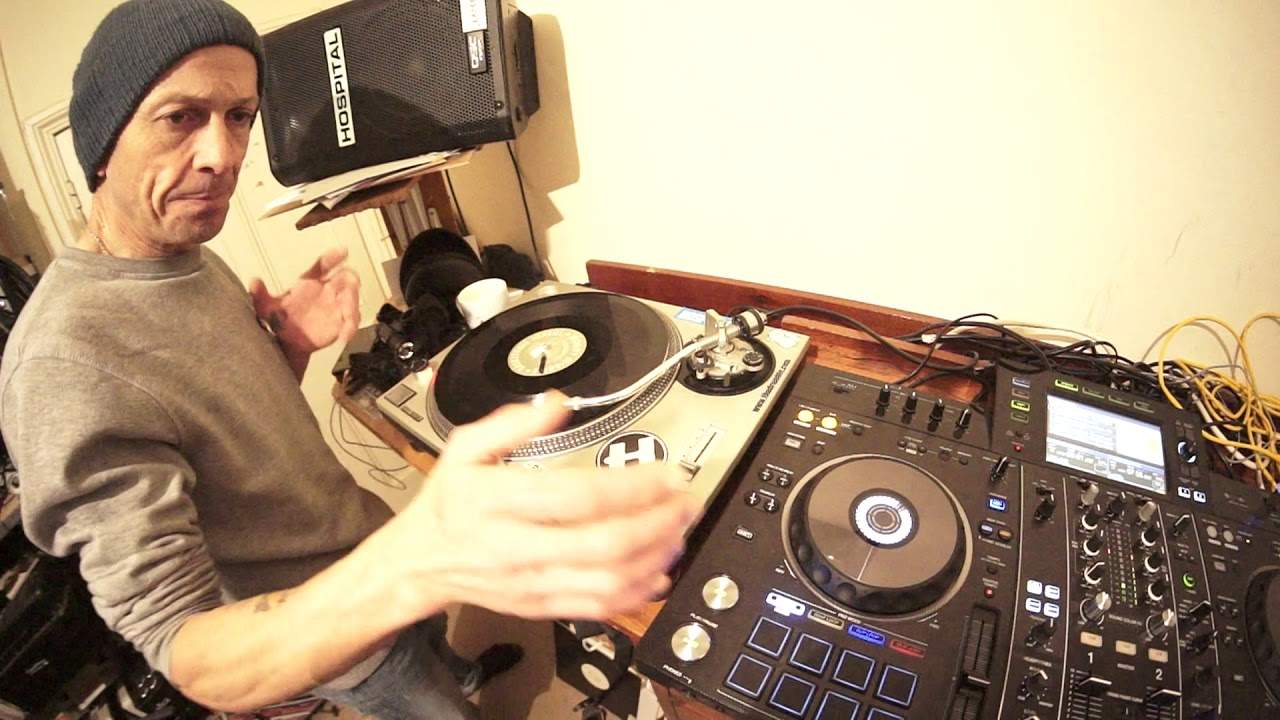
All right, Jonathan Ellaskins the DJ Tutor here. This is a very simple how to scratch tutorial. Now there are loads of scratch tutorials on the web but this believe it or not is unique because it's me and it's me showing you how to scratch in my nutty way. Take your hand put it in between your legs and give yourself a good old scratch. On the other hand you can scratch using a vinyl turntable so Many, many years ago, before CDs and MP3s, that's what people used to do. They used to use some vinyl, a turntable like this, and they would do a wiki-wiki sound to make it, I don't know, to make something strange come through the speakers. Today, though, you can do that with a controller. You can do it with a CD player. But more and more people want to go back to the old school,
Used to be. Now, again, you can use virtual vinyl, piece of virtual vinyl on there, grab a sample and away you go. But you're still not going back to the roots of real scratching, how it was. So what do you need? You need a direct drive turntable. Now, you can use belt drive if you want to, but you just lose maybe the torque and you lose that snappiness. Direct drive is the way to go. This here is the Grandmaster. This is the James Brown of... I think he said CD players then. This is the James Brown of turntables. It's the Technics SL1200 Mark II. It came in black or silver. There's no difference between the black and silver. Everyone's going with the black's this and the silver's that. No, the only difference is one's black and the other one's silver. That is it. End of.
2:27 Long as the Technics work
Now, whether you do or don't know, but Technics, I think in the year or so, past year, depending of course on when you watch this video, have brought out another Technics turntable that probably costs as much as a house. Now, is it worth getting? It's got a few more features, but to be quite honest, no, it isn't. Because what do you do? You want to play a record, you want to speed it up, slow it down, you want to do a bit of scratch wicky wicky, fine. Then do yourself a favour, if you've got some Technics in the loft somewhere collecting dust, bring them down because they're still worth pretty much what you paid for them. Alternatively, if you're interested in purchasing a set of turntables, you cannot go wrong, I promise you, you cannot go wrong if you buy a set of Technics SL1200M2. Even if you've got the option of buying a brand new set of turntables over there of some make.
Or Technics over here, second hand. So long as the Technics work. Get the Technics and don't bother with the new ones because the new ones will depreciate in value. The Technics SL1200 Mark II will only go up because they don't make that anymore. So it's just going to go up, up, up, up, up like that. If you agree with me, thumbs up. If you disagree with me, thumbs down. Right, so... I want to try and make this video as easy as possible. Now, very quickly, you need to make sure that your turntable is set up correctly. I'm not going to spend time doing that now because it will take time. Let's imagine you have got your turntable set up correctly. I'm going to put the needle on the record, make the drum beat go like this. Not like that. That's just a loop.
4:16 Their mixer because quite often
With this kind of demonstration and for you to practice at home by yourself in your little shed with the covers over your head and the curtains drawn and in a soundproof room so no one can hear you and make you go, oh that was really shit. No, sorry. What you need is you need some form of loop and that loop is your timing. That's your metronome. That's your tick, tick, tick, tick for you to scratch too. This is known as the baby scratch. Yep, you can get your child to do this because it's... Subtitles by the Amara.org community A sound, something to scratch with. Now I would suggest you use mid and high sounds not low sounds. If you watch any scratch turntablist look at their mixer because quite often on their mixer bass, mid and treble have the bass turned down.
Down. That, A, stops rumble and B, most of the sounds they scratch are mid and high anyway so there's no need for bass. So turn the bass off you're not going to really make much difference in the clarity and quality of the sound anyway. So let's find where I want to do the scratch which is around about sort of there. Do I get it right? Oh pretty much. And that's another reason why a lot of old school turntables and scratch DJs can just put the needle on the record and find it because they're so used to pinpointing that area, that little space, that one tiny groove. Question for you, how many grooves does a 12-inch single have? What do you think? Say it's both sides, there's music on both sides. So how many grooves? 500, 2,000, 20,000? There's a lot of grooves there. Actually, it's two.
Because there's one groove that just goes all the way to the middle, and on the other side, if it's double-sided, yeah, it goes all the way to the middle. So there's two grooves on a normal 12-inch single. You didn't know that, did you? You do now. Right, so I have got a sound there now, if we have a listen. Bring it back to the start. Now then, what I'm going to do now is I'm going to reduce the bass. So I've got the bass now, I can turn it all the way off, but I've got it to about like 8.30, 8 o'clock. So it's sort of there, but... What it's done, it's taken away a little bit of that rumble. Also, with the bass on, there's more chance of feedback. I don't want to go into that at the moment, but the people who know, know. The people who don't know, don't worry about it. This is just a practice. Alright, Baby Scratch, what is it? You see me as well, quite often I will...
7:41 In time, forward one and back two
Let's get started. And this. Listen. One, two. One, two. One, two. Forward, back. Forward, back. Forward, back. Forward, back. Forward, back. So in time, forward one and back two. So one, two. One, two. Now you may think that's repetitive and very simple but there's many ways of doing this. Two. One, two. One, two. All the information you can. Now that's a house beat. That's around about 121 BPM. So how can we make it easier? Let's imagine you're finding it difficult to go forward, back, forward, back, one, two, one, two. All you've got to do, I'm going to go to my master, the tempo select, and I'm going to go wide. So listen. Now I've got it to 90 BPM. So I can now do it at 90 BPM. I can't control the vinyl at 120 or faster, just slow the beat down. Now listen. Right, let's put it back up to the original speed. All I'm going to do now is double time. Listen. Now half time. Alright, so let's take this video to the next level. It's simple. In a way, anything is simple in life, so long as you know what you're doing. But let's take this baby scratch to the next level. Now listen.
One, two, three, four. One, two, three, four. One, two, three, four. One, two, three, four. Four bars. Right, listen. Okay, so what I did there was half time, four bars, double time, four bars, half time, four bars, double time, four bars. Now that is an excellent way of practicing because not only are you practicing to learn the baby scratch in time, but you're also practicing to learn the baby scratch in phrase. Now, this is bad. Listen, listen. This is the wrong way to do it. See, it's out of time, out of phrase, out of everything. Out of life, out of everything. Sorry. You need to keep it in time. Did you hear that? Listen. Practice, have practice. Have fun and practice. But very simply, baby scratch. Forward, back, forward, back. Forward, back, forward, back. Forward, back.
Forward, back then double time all right now this is probably stage one in the baby scratch but even without moving the volume there are so many other ways you can move that piece of vinyl to make it sound wacky excuse me a second stop bloody jumping right if you one more time one more time and you're going to bed early i don't i don't care what you say you are gonna go to bed no tea no drink And you are definitely not having sex. That's it. Last chance. OK. Sorry about that. Practice and enjoy. I do. By the way, don't forget if you do want some private lessons by myself, Jonathan, aka Ellaskins, The DJ Tutor, there is an email address right down there. I give private lessons one hour. You can book one hour or you can book a block booking of five. The lessons are done through the medium of either Skype or Facebook.
Funky hats, disco, soul, R&B, techno, drum and bass, classical on vinyl controllers or CDJ. Practice and enjoy. Thank you very much.
This transcript was produced automatically from the audio of the video and may contain mistakes.