 9:18
Setting up mobile DJ lighting
On YouTube this video is called How to Set up Mobile DJ Lighting with a Twist
What this lesson teaches
A lighting lesson that starts from an observation rather than a product.
The observation
DJs like lots of lights pointing at the crowd. Which means that, from the floor, you cannot see the DJ at all - just a dark shape behind a wall of beams.
His proposal: put something behind you. A screen, a couple of lights on it, and suddenly there is a lot more going on where you are standing, and more people look at you.
Why that matters
Because the DJ is, to a degree, the centre of attention - and a centre of attention nobody can see is a wasted one.
This is not vanity. A room reads a performer. If there is visibly a person doing something, the night has a focus; if there is a silhouette behind a laptop, the music is coming from nowhere in particular.
What he uses
A cloth screen behind the booth.
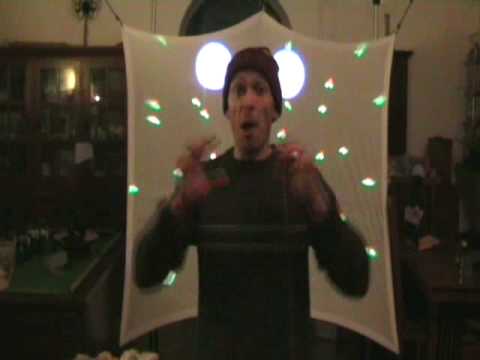
Two LED pin spots aimed at it - and the geometry note: the closer the pin spot is to the screen, the smaller and tighter the pool of light; the further away, the bigger. With no room behind the screen, mount them at an angle instead of straight on.
A bright multi-colour unit on the floor behind him.
A strobe behind the screen.
A smoke machine.
Gels
Worth having the word. A gel is a thin coloured sheet - almost like plastic - that goes in front of a light so that instead of white you get green, orange, yellow or blue.
So two small pin spots with gels, aimed at you, mean people can see you, in colour, without blinding anybody.
The three dimensions
His framing, and it is the useful way to think about a rig:
1. Lights on the crowd - the T-bars and tripods pointing at the floor. What everybody already has. 2. Lights on the DJ - small, gelled, so there is a visible person. 3. Lights behind the DJ - the screen, the strobe, the backlight.
Three layers at three depths, which is why it reads as a show rather than a row of fixtures.
The idea he has mid-video
And this is the good bit, because you can hear him work it out.
The backlight hitting the screen makes him a silhouette. Move the light further back and the beams spread wider than the screen - so instead of being contained, they come around him.
Add smoke, and the beams are visible in the air. Now you are standing in the middle of an array of light that radiates outward past you into the room.
His own instruction is the point of the whole lesson: try not to think like that - try to think like this. Open your mind, take the lights off the tripods, and point them somewhere else and see what happens.
Mystery as a choice
He makes a fair case for the silhouette as well.
Sometimes you want people to hear you and see that you are there, but not see your eyes or your face. If you want a bit of mystery about you, a strong backlight and nothing in front is exactly how to get it.
So the choice is deliberate either way. What is not a choice is being invisible by accident.
And his disclaimer
If you are expecting professional quality and editing, this is punk TV and you should watch something else.
Fair warning, and it is part of why the channel works: the lesson is a man in a room with four lights showing you what happens, which is exactly what you will be doing.
Contents of the video
0:00 Now this particular video is all about lighting effects for the DJ
Alright folks, now this particular video is all about lighting effects for the DJ. Now I'm not trying to sort of contradict myself here because I haven't done much of this anyway but I'm going to try and do a bit more in the future. Now as you do or maybe you don't know, a DJ likes to have loads of lights shining at the crowd but quite often because the lights are shining at the crowd it's very difficult to see the DJ. Now I suppose to a certain degree, using this sort of feature, it's still going to be difficult to see the DJ because the lights are going to be from behind the DJ. So of course you can always have lights facing you. But let's read between the lines here. Now let's imagine loads of lights facing the crowd, so there's a lot going on. Now put it this way, the DJ to a certain degree is the centre of attention. Of course the music is as well, lights flashing all over the place.
2:22 This guy here is the tri-phase and again, everything will be in the de
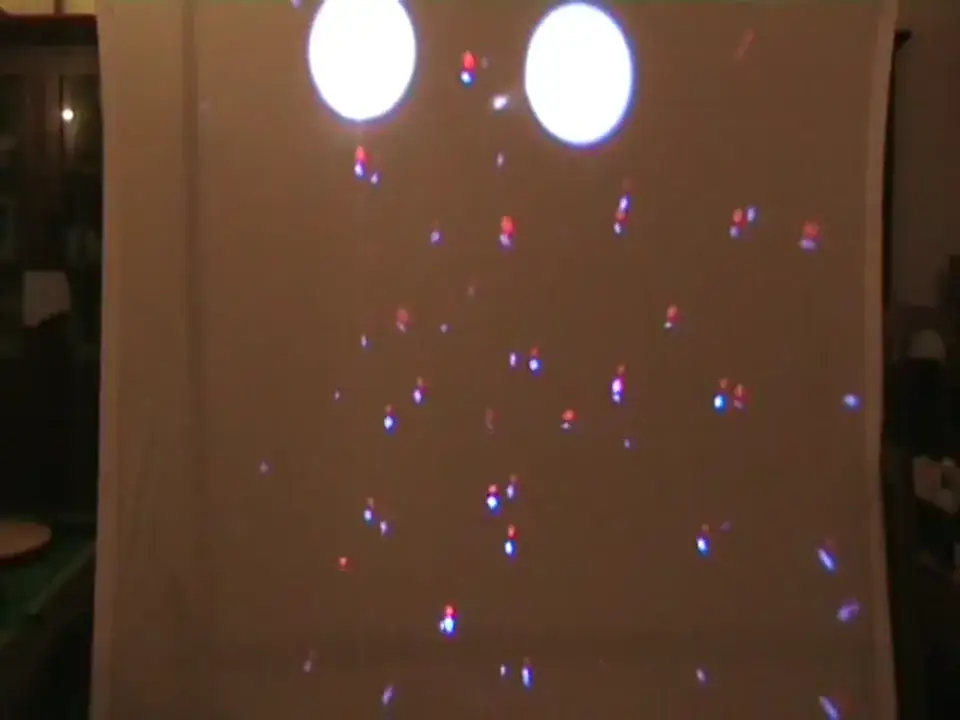
But if you've got something behind the DJ flashing, you know, jiggering about a little bit, then you never know, you could have loads more people looking at the DJ, looking at you, because there's a lot more going on. So this video is about showing you what to do, how to do it, what to use, etc. Hold on. Right now at the moment, all I've got is I've got a couple of LED pin spots directed onto the DJ screen. Now, what I will do is in the description I'll put all the names of the items I'm using. Now again, the actual pin spots are quite close to the screen and of course the further you move them away, the bigger the lights will get.
3:50 I've brought the camera back a little bit because I just thought of so
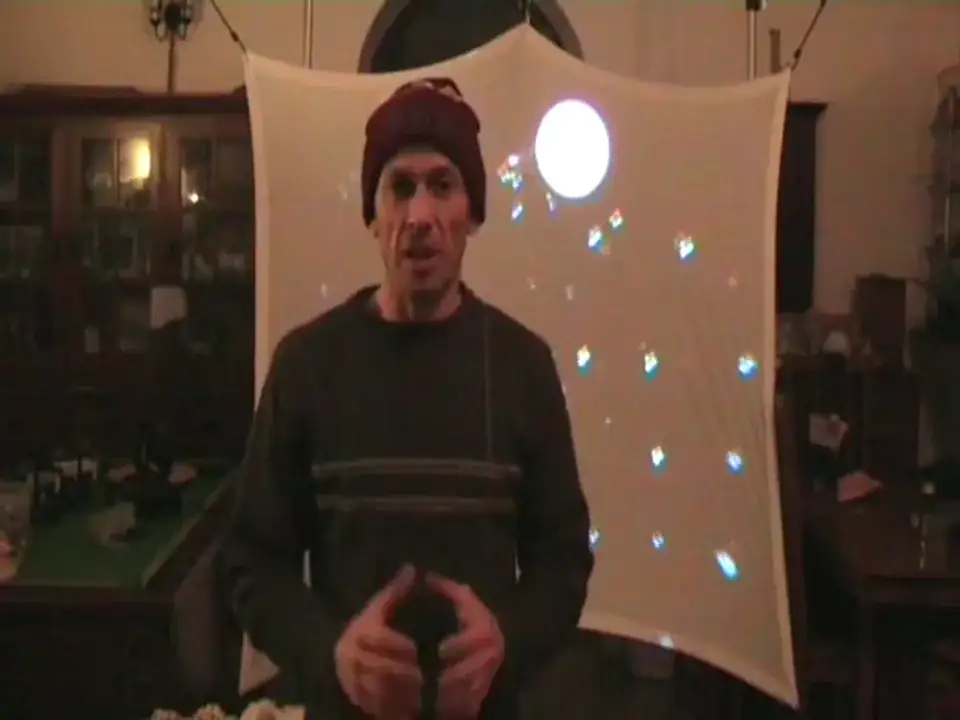
Now let's say for example you have not got much room in between the screen and the wall. Well all you need to do is put them at angles. So if you imagine, pin spot behind there at the moment, pin spot behind there. This light here could be shining, let's say To me, it looks fantastic. This guy here is the tri-phase and again, everything will be in the description. So, if I move around like that and hopefully it won't go blurred, all of a sudden, I've got this weird effect behind me. Now bear in mind as well, the lights are on in here so what I'm going to do, pause the camera, turn the lights off and we'll see what it's like. Now that looks pretty cool.
And again, if I stand here, at the moment you can just see me as a silhouette. But again, if you think about it logically, if I had a couple of just small pin spots against me with some gels in and very quickly the terminology we use for gels is basically thin pieces. It's almost like plastic but they're coloured. And of course instead of white light you'll get green, orange, yellow, blue. So straight away think about it now. If you have a couple of lights facing you, people can see you.
You've got lights behind you and they're not obtrusive enough to go straight into the crowd. There's no need because you'll have a load of lights on T-bars, tripods, etc. facing down at the crowd. So in a sense we've almost already got a three dimensional light show. Right let's pause the camera again. Right there you go. There are the two pin spots like so and down there is the light and there you go. Right, I've brought the camera back a little bit because I just thought of something. Now again, this is the way my mind works and it's the way, in a sense, your mind should work as well. In other words, try not to think like that. Try to think like that. Now, what I just thought of, really bizarre, but I'm sure it'd be fantastic. I'm standing here. I've got the light behind me and it's hitting this screen. The further I move the light away,
The more the lights from the unit are going to disperse. So think about it now. Again, so logical could be fantastic. Light is hitting the screen, making me a bit of a silhouette. The further it moves away, the more the light will travel around the screen. So if you've got smoke in the room as well, all of a sudden you've got an area with no pins of light coming out from behind you. But think about it, this is brilliant. All of a sudden you've got all these pins of lights coming around you, so you're in the centre of the pins of light. So in other words, if you've got light, like I said earlier, shining at you, talking about that third dimension, in other words, people will see you, they'll see the screen behind you, they'll have loads of lights on them, let's say from the tripods, the T-bars etc., but also they've got this huge array of lights going all the way around. Now what we're going to try and do is put a bit of smoke out and see if we can make it look cool. Let's have a go.
Now, I'm going to try and get this in good quality because what I've done now is I've got a strobe behind me and just picture this. Music pumping. Here you are like this. Now, I'll be honest with you, this looks cool. That does look cool. And in a sense, not meaning to contradict myself, but sometimes, alright, I'm talking and you can't see me. There's a reason. Like to have, I don't know, something about the DJ, you know, you can hear him or her, you can see him or her, but you can't see them properly. You can't see their eyes, you can't see their face. So in a sense, if you're the sort of person who wants to have a bit of mystery about you, then a setup like this. I mean that is absolutely awesome. I really do hope you get the full potential of this video. If you don't, let me know and I'll try and do it in better quality again.
I'll pause the camera and hopefully this time we'll have some smoke out. Right, I hope you're getting that. But, yep. That looks pretty neat. Absolutely fantastic. Tiny bit of smoke out and also, look, underneath as well. So you imagine those, say, going between your legs. Right, OK, don't go there. But, I mean, that is fantastic. What I'm going to do now, hopefully the camera won't go blurred. Now in fact, what I'm going to do is just pause the camera and move back a little bit further. Right, there you go. So if I stand here now... There you go. And again, by the way, if this is the first time you've watched any of my videos, this is punk TV, so if you expect pro quality and editing, I suggest you go and watch something else. Hold on. Right, what I've done now is I've got a strobe behind there as well, so that's pretty cool.
This piece of cloth here is from DJScreens.com I used a couple of those guys. It's the Pinspot LEDs from American DJ and the strobe was the Flash Shot DMX with 6,000 gazillion white LEDs in there. Don't look at that because it'll blind you. That was the smoke machine and this little baby here that's exceedingly bright. It's known as the Tri-Phase. Alright so there you go, video number one on different ways of using your lighting. I like to inspire, I like to teach and also occasionally I like to give people a good kick up the arse with a slipper. In other words, you know, get a move on, it's your life, just do stuff. So like I said earlier, don't think like that, just open your mind. So what I want you to do, I put it to you, get your lights and instead of putting them on tripods, facing them down at the crowd, try something different. You never know, you might like it.
Practice and enjoy. Thank you.
This transcript was produced automatically from the audio of the video and may contain mistakes.