 15:06
Intermediate DJ Lesson on Loops in the Mix to Add a New Feel to the Track
Contents of the video
0:00 Vocals, mixing, finish start
Alright guys, this is an intermediate DJ lesson on mixing garage, but there's a lot more to it than that. Now first of all, there aren't many given rules for mixing tracks or different genres, should I say? I'll start again.
There aren't many rules for mixing different kinds of genres, but the ones that are very important are make sure it's a crossfading key, make sure it's the same BPM, or half or double time, or four times, or like eight times the slow, but it's got to be in time. So in other words, if it's 1, 2, 3, 4, 1, 2, 3, 4, it's probably 1, 2, 3, 4, or 1, 2, 3, 4, 1, 2, 3, 4, yeah, okay. If you don't understand that, then go and check out the lessons for beginners. But, also when you're mixing tracks together, quite a few people say, when should I bring one in, when should I take it out? Here, the rules are slightly different, because you don't really want lots of bass lines chugging all over each other. You definitely don't want vocals over vocals, unless the vocals are talking to each other.
In other words, vocals here, finish, start, that's the end of the second one, finish, start and so on. That's fine. You don't want them like vocals and vocals, and it just sounds terrible. It's exactly the same as two people talking and a third person trying to understand two people what they're saying. It's like, shut up, carry on, finished? Right, now continue. Okay, so this video is about mixing some garage, some really good soulful garage. What I'm going to do is I'm going to not just mix. I'm going to try and add a part of one track, and bring that part of the track over the other one, to add character to the track that's really playing. So imagine first of all, played a track here, there, and we've mixed in this one here.
2:53 They have to be in time when you do this kind of mix
I now get a third track. Excuse me. On my headphones, I form a loop, cue point, and I bring that track in. Now the reason I'm doing this is because this track here is by Sheila Hill, and just make sure we've got the right name. It's entitled, I should know this anyway, but so you know, it's entitled Saved. It's the original mix. Now I'm going to play this one over Seb Aston all this time. I'll put the names of the tracks in the description. So what I want to do... is I want to add the character of this track over this track here to enlighten it, to make it feel a little bit more vibey. But at the same time, it's doing a lot of things. What it is doing is it's almost introducing the track that's going to be played, which is that track over there.
Now how you do this is entirely up to you. But again, you need to stick to certain principles. Like I said at the beginning of the video, when you mix, different genres, they've got to be in key. They have to be in time when you do this kind of mix. If you bring it in at the wrong place, it may sound okay, but it's not going to sound as good as if it was at the right time. For example, at the beginning of a bar, the beginning of a phrase. So I'll play you a little bit off Sheila Hill first.
Now you can hear that
4:59 The leds making sure one is not ove
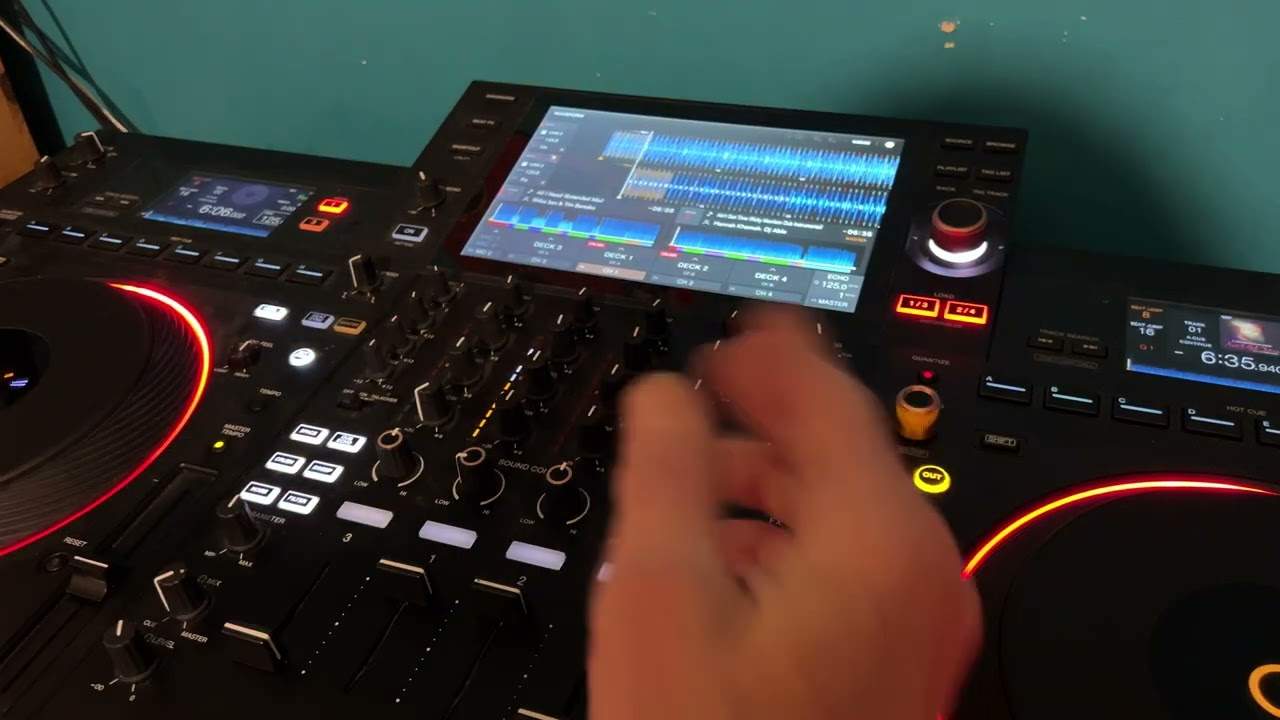
Wrong. Now that's what I like out of that track, or the beginning of. I like that vibe. I like that feel. But then we've got a bit more in the track. We've got that bass kick. I've got a bit of hi-hat. I'm not too fussed about the bass to begin with. I just like that. So what I can do is I can reduce the low. Just get rid of it completely. Completely kill it. On this mixer here, we have EQ curve and what we can do, we can set it to EQ, which means that I can reduce the either low mid high or either either or by 28 sorry 26 db. If I set that to isolator, it means it completely cuts it out. So this is what it will sound like if I start it again, get rid of the bass there. No, if I was to bring that over the mix, it may not be loud enough.
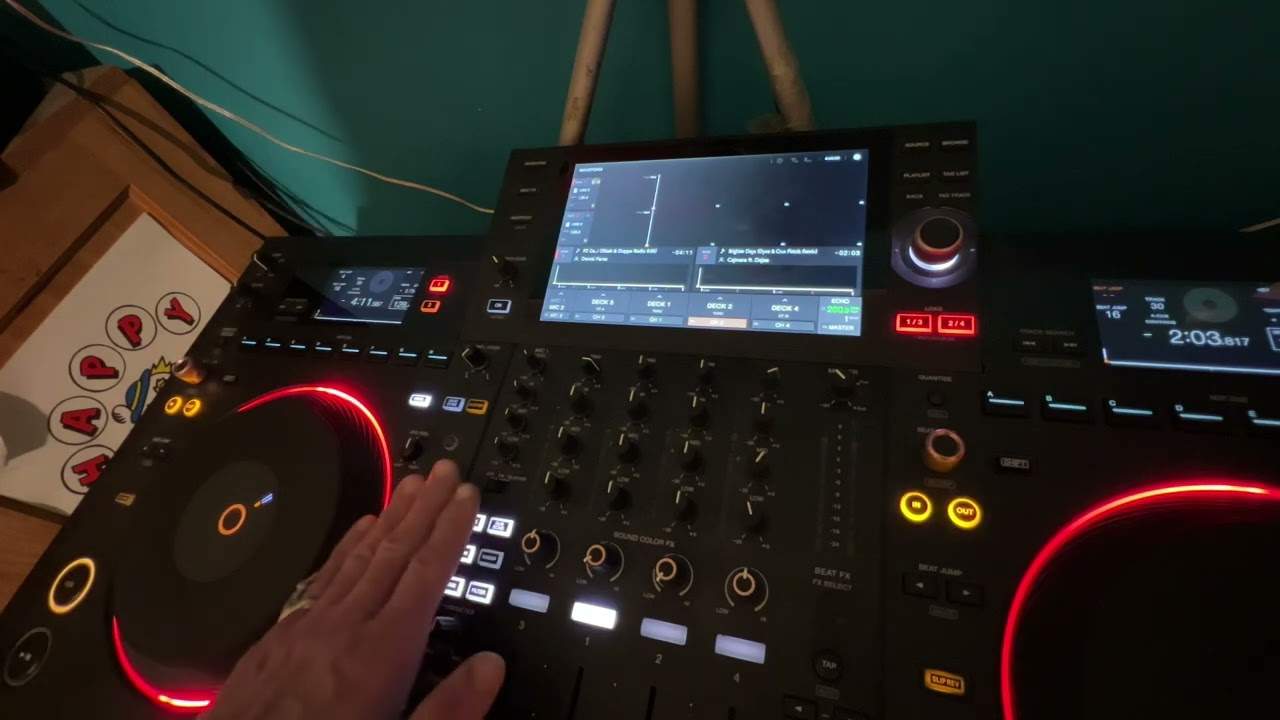
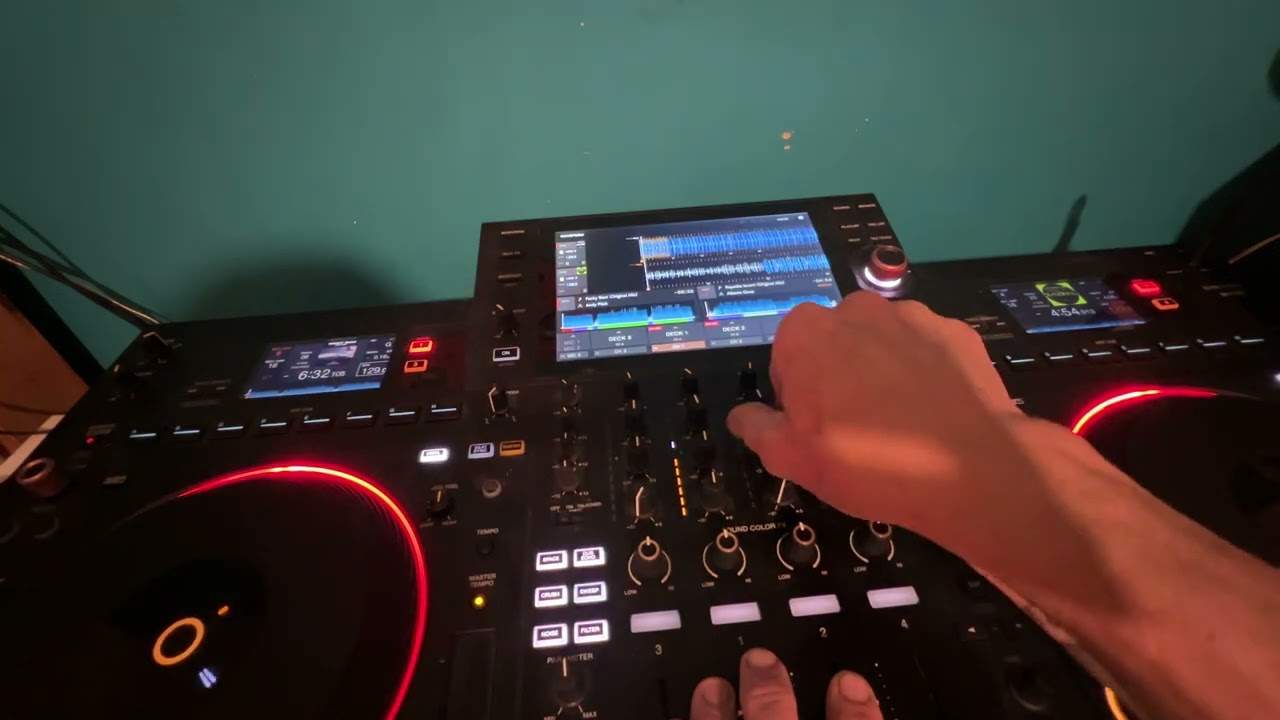
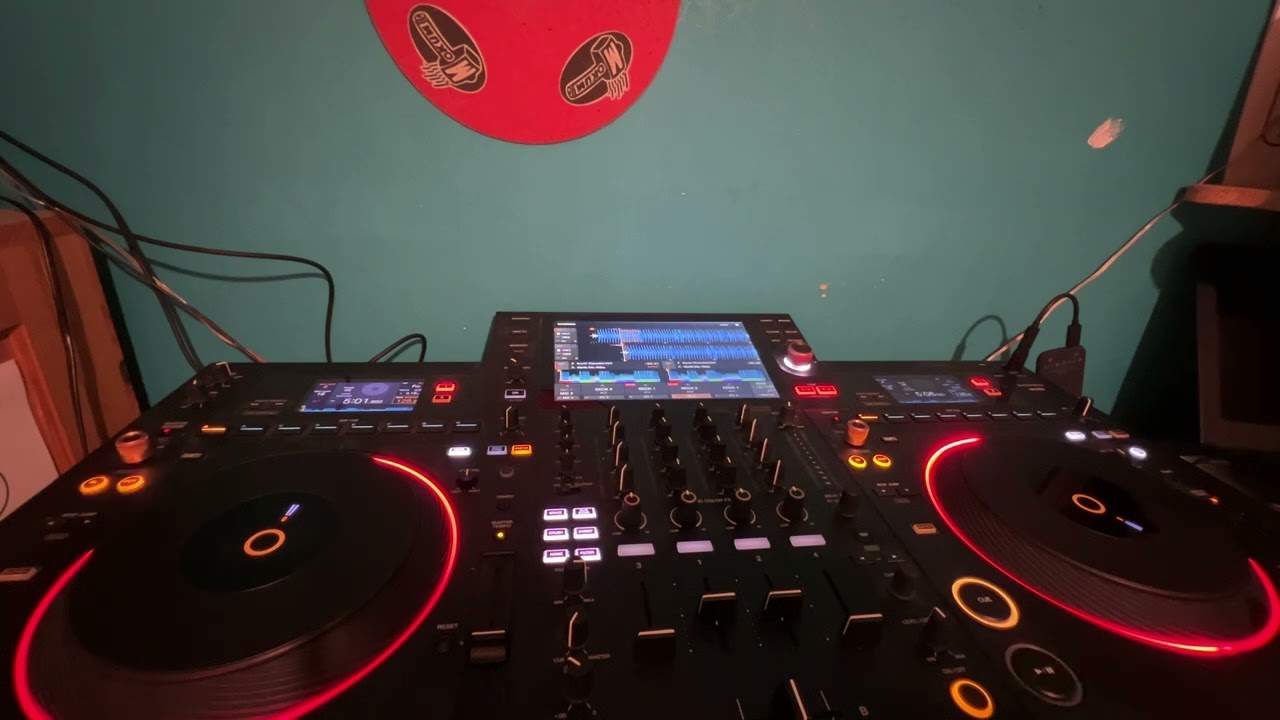
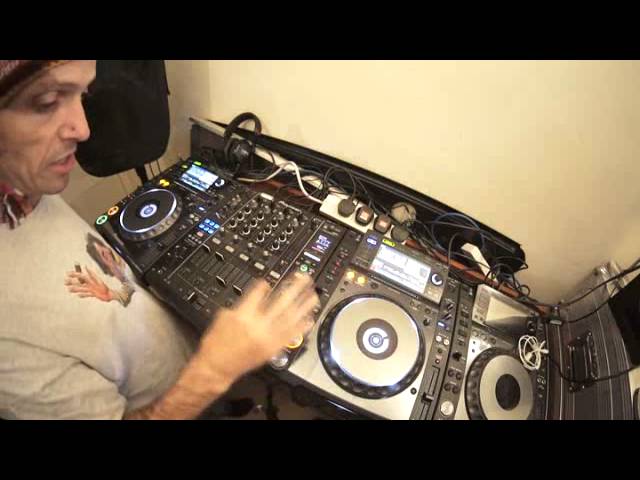
So because I need the mid, which is what that part of the track is emphasized, I can then turn this dial up here. You can see on the camera fish eye sorted and chips lovely had those in new key yesterday. Beautiful. Okay, there you go. Now, because I've increased that, I need again to watch my levels. I don't want to increase it too much. Because it may overpower the track that's playing. So this is where your ear comes in. And also, this is where you need to start looking more at the mixer. The leds making sure one is not overpowering the other, making sure that the one you're bringing in over this track is just enlightening it. It's not going bang here I am because again, I want to bring that track in later on during the course of this track.
So if I bring two, too much of it in I'm spoiling the mix. I'm spoiling that track when eventually I do bring it in. A lot of people say I talk too much, but there's no point just playing the tunes. You've got to explain it. You've got to explain exactly what's going on or exactly what should be happening. Now, if you are interested in having lessons like this, I will be in Dubai at the end of September for two weeks. I think I'm pretty sure I'm there on the 23rd of September at the Dubai DJ Academy. I'll put a link down there in the description and if you'd like to go and sign up to have some one-to-one lessons by me, here put a sod, then go and check them out because I will be there. So
This is such a this is an absolute slamming cut. So
This is Seb Aston all this time. Now I haven't got any headphones on either so if it does go slightly off beat, I do apologise. Because I want to, this video really is about more explanation. So we've got this track playing. This is the first sort of 16, 8-16 bars. So you would be in the mix anyway. Now slightly more advanced, but you could actually bring that in right at the beginning of this track if you'd have recorded it and put it on another channel and then brought it back. But it's just a bit. It's too up there at the moment, so we won't delve into that. Okay, so we're coming into the track now. At this point here, we're coming to a break. Now I'm going to pause it there because what we haven't done and what we would be
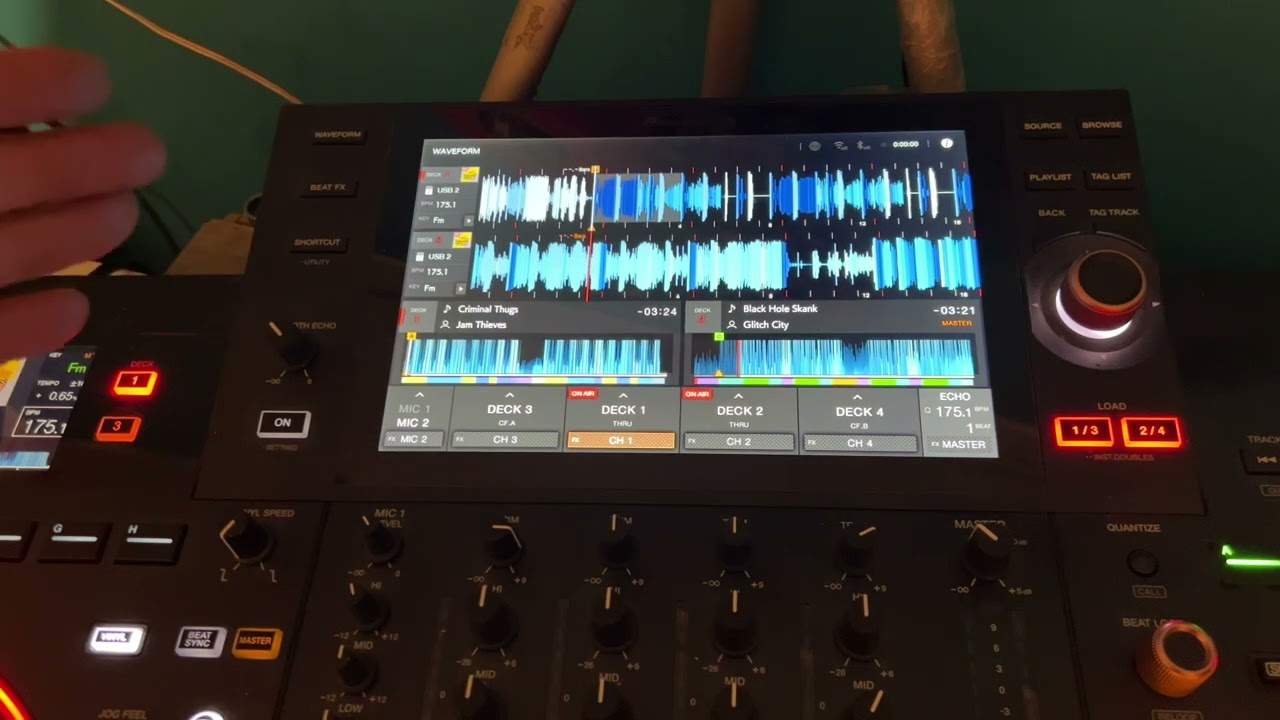
Doing as soon as we have finished our mix is go to this track and then start a loop. We need to loop or I want to loop a part of the track. So we'll go at the beginning and okay, so let's just put the camera like that. Now, so you can see exactly what's going on. So I'm going to press loop mode. I'm just going to do eight, which should be four bars one, two, three, four. One, two, three, four. One, two, three, four. One, two, three, four, two. Yeah, there was just a tiny where the loop finished and the loop started again. So that's my loop. So what I'm going to do now as well is I'm going to hit hot cue a while it's in red mode, which is record that goes to Amber. That tells me I have now stop that. I have now set a loop.
So if we want to, we can get out of the loop. It doesn't matter because that's ready anyway. What I'm also going to do now is I'm going to set a hot queue at the beginning of the track because I want to be able to start the beginning of the track just straight away. I don't want to start pressing Q twice and messing around and fiddling with my bits and going back and forwards and looking at buses and taking times of trains and all that. Why did I say that? Don't know. I'm going to hit B there. Okay, so if I get a recall, B is green, which is the beginning of the track and A is loop. Okay, so we're back here. I'm bearing in mind we have remember, we just sort of go back slightly. We have that track playing. We mix this one in as soon as the mix is finished.
10:06 You should be able to do that blindfolded anyway
We go to this track here and we then do exactly what I did just then, which is get our loop and put that into a hot queue and then go to the beginning of the track and set a hot queue for the beginning of the track as well. If you are quick, which when you're sort of intermediate to an advanced DJ that should be a walk in the park. You should be able to do that blindfolded anyway. So we're coming towards our break volume slightly down and low down. Now, at this point now I want to start bringing my loop in. We've got them both playing. But listen, what you're doing is you're doing a mash up, but you're not having the bass and you're using a loop. Okay, so let's bring that out. Let's just. Imagine we zip forward a bit of the track.
12:37 Do we want to do that usual beginning and end?
Now, again, if you're familiar with how a lot of tracks are constructed when you get to about the last minute, you're pretty much on the last 32 bars. So let's go to that last minute, zip it forward a bit. Okay, we're on 113, 112. Okay, so that's pretty much the end of the track now. Do we want to do that usual beginning and end? Well, no. So I'm going to go back a little bit more to the beginning of that break. So let's imagine still got a loop, what I did there at the beginning of that break. I hit B, which has gone straight to the beginning of the track, even while the loop's been going on. Hit B, bang, you're straight into the beginning of the track. The bass out now of the Seb track, filtering it up. Seb.
Zip it forward a bit. A lot of talking going on there, a lot of explanation, but I hope it's a help. Okay, I will put the names of these two tracks in the description. I'll also give you info on the Dubai DJ Academy and how you can get involved, practice and enjoy.
This transcript was produced automatically from the audio of the video and may contain mistakes.