 8:00
An introduction to the DJ mixer
On YouTube this video is called Introduction to a dj mixer part 1( for the total novice)
What this lesson teaches
He made this after teaching his son, who had seen mixers but had no idea what one did - and realised that every other video on the channel assumes knowledge nobody is born with. So this covers three controls and stops.
The line faders
Two vertical sliders, one per channel. Each governs one source: a turntable, a player, a laptop, anything plugged into that channel.
At the bottom, nothing is heard. Push it up and the sound increases until, at the top, it is as loud as the rest of the system will allow - which depends on the mixer, the amplifier and the speakers, not on the fader.
The crossfader
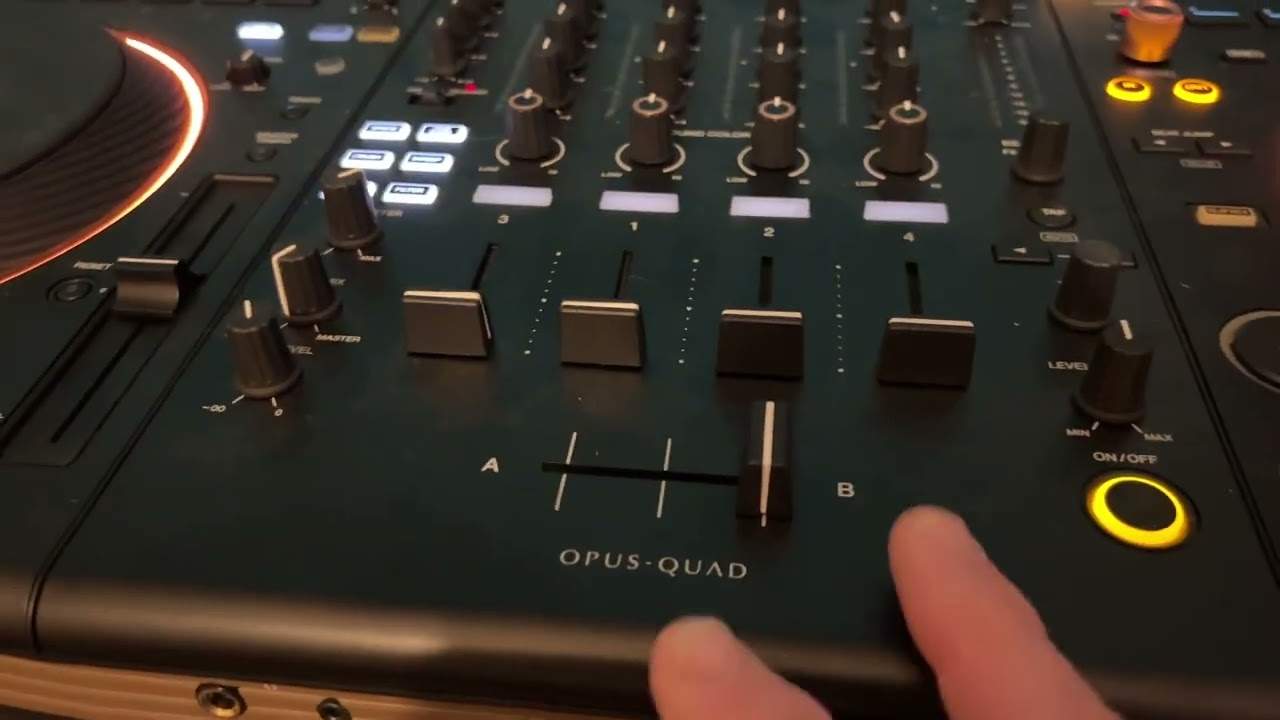
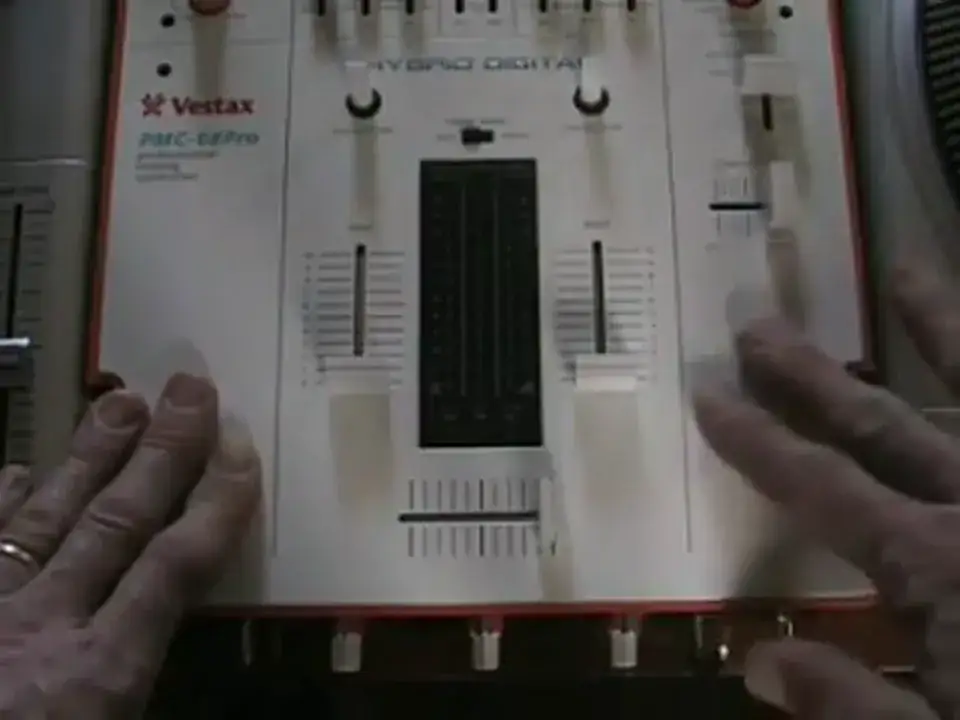
The horizontal slider at the bottom. Hard left and the room hears the left channel only; hard right and it hears the right only; in the middle, it hears both.
(Some mixers have a reverse switch that swaps those sides, and on many you can disconnect a channel from the crossfader altogether. Both are worth knowing about later and neither matters today.)
How they work together, which is the actual lesson
This is the part that confuses people, and it is simply that the two controls are in series. Sound reaches the room only if the channel's own fader is up and the crossfader is letting that side through.
So:
- Both line faders down: silence, wherever the crossfader is.
- Crossfader hard right, left fader up: still nothing from the left. You can move that fader all you like.
- Crossfader in the middle, both faders up: both tracks, at full.
- Crossfader travelling from left to right: the left fades out as the right fades in, and halfway across you have an even blend of the two.
He spends several minutes on this, which sounds excessive until you try explaining it to somebody and find out how many states there are.
Why two controls rather than one
Worth saying explicitly, because it is the reason the layout is like this everywhere.
The line fader sets how loud a track is. You set it once, when the track comes in, so that it sits at the same level as the one already playing.
The crossfader decides which one the room hears. That is the control you perform with.
Separating those two jobs means you can get the levels right in advance and then make the actual move without having to think about volume at the same time - which matters a great deal when the move has to happen on a particular beat.
Contents of the video
0:00 Player player, mixer, slider slider
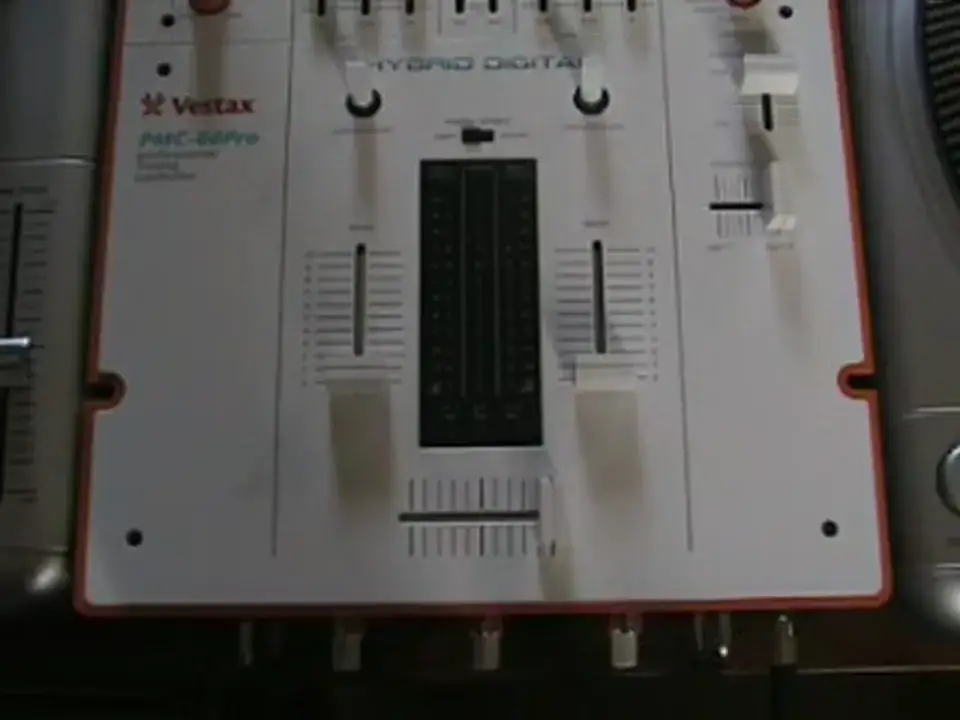
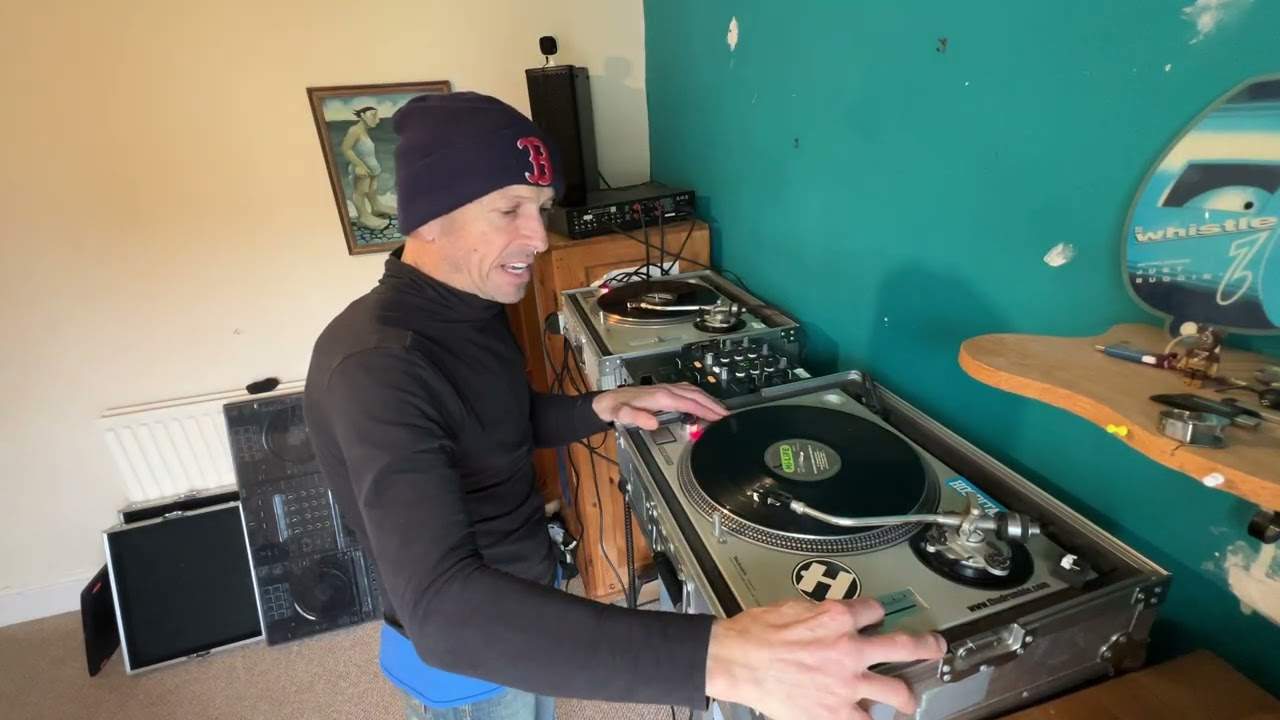
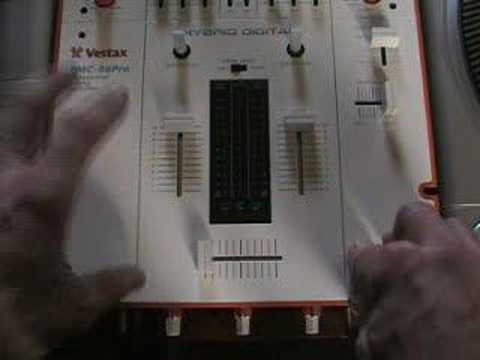
Alright folks, this video is an introduction into the use and what a mixer is for and how to use it. Now there's probably a lot of you wondering why on earth I'm doing this because you've been following the videos but this is basically for a total utter newbie. The reason I'm doing this is because over the weekend I showed my son how to mix. Can't do it yet, it'll take a few lessons but he didn't know how to use the mixer. He'd seen them before but he didn't know how to use them so I want you To imagine all the people, the DJs out there who can DJ, who knows, you know exactly what a mixer does. I want you to close your eyes and imagine that you are totally, utterly new to the idea of DJing and if someone put a mixer in front of you, you wouldn't know what it did to save your life. If you can take that on board then you'll understand where I'm coming from. Anyway, for the newbies, all we're going to do at the moment is concentrate on these three dials here.
Now these are known as sliders. Pots, they can come in all shapes and sizes, some big, some small, some different buttons, different knobs on the top, but these three will do exactly the same on virtually 99% of mixers worldwide. These two here are volume controls. This one here is a sort of a volume control, but it's more commonly known as a crossfade. When it's on the right hand side, it basically means that any audio signal over this side will be played and heard by the audience. When it's on this side, the left hand side, that means that anything on this side will be heard by the audience. Now before you start commenting, there are some mixers where there's a button where it will do the opposite way around but I'm just being very basic here.
On a two-channel mixer, which is this here, this is a two-channel, you have a slider, one slider. Now then, when the slider is closest to you at zero, that means that any audio signal, any sound from a turntable, a CD player, an MP3 player, a DAT player, a video player, anything, it doesn't matter, any signal that makes noise coming into this channel here where I have my finger now, when it's at zero, nothing will be heard. Nothing at all. As you increase and you push that dial up, slowly the sound will increase. It will get louder and louder and louder until a point whereby it will get exceedingly loud but that's dependent of course on a lot of things, how powerful your amplifier is, how much your amplifier is turned up, how much the mixer is turned up. Now then, we'll bring that one down and the same applies with the left hand side over here.
2:52 Let's imagine now both of the dials are at number ten
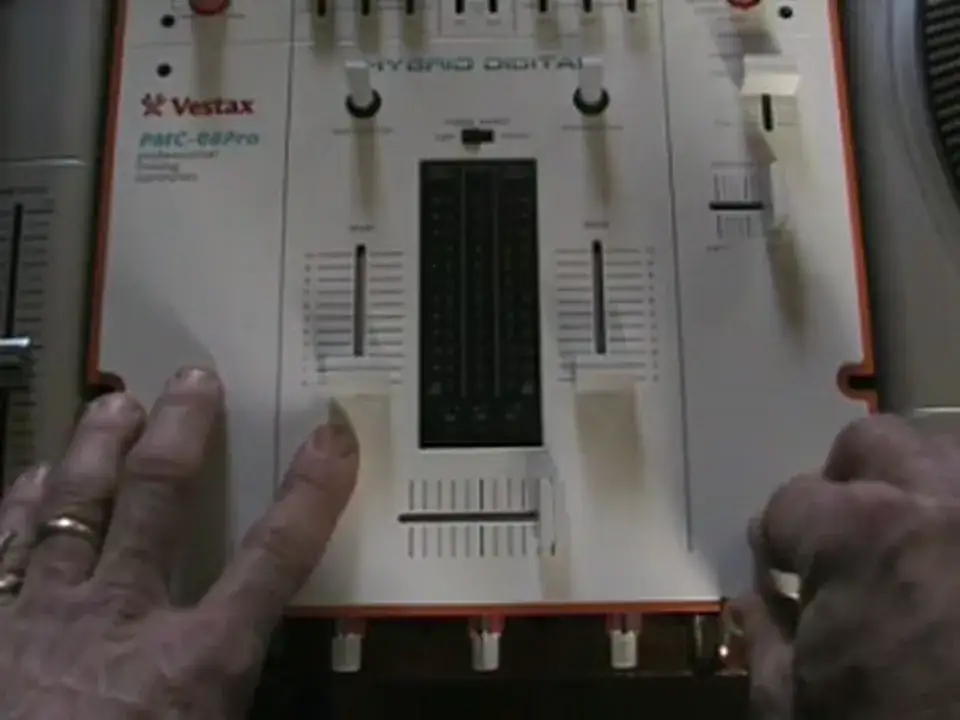
When this left hand side is on zero, nothing will be heard at all by the audience. But as you increase and you push up and you go higher from zero to one, two, three, four, five, the sound will start to get louder and louder and louder until when you get to number ten that's about as loud as it will be able to go. Now then, let's imagine now both of the dials are at number ten. Now then, what we're going to look at now is the crossfade. This guy here is now in charge of the volumes on the right side and on the left side. The reason he's in charge is simply because of this. Most box standard mixers will, like I say, they will have a crossfade. What will happen is the audio signal heard by you on your headphones if you've got them on and you're listening to the left hand side, what will happen is all of the volume will come out on the left hand side. Okay? All of the volume from the left hand audio will come out through the PA but nothing will come out from the right hand side. When you then move it across
To the right hand side, all of the volume that's coming out of the right hand side will come out through the PA system, but nothing will come from the left hand side. Now then, again as you decrease the volumes, if I start to decrease the volume on the right hand side with the crossfade on the right hand side, the volume will get quieter and quieter. But even though I'm decreasing the volume on the left hand side, we still won't hear anything at all. The audio signal through the main PA comes through, but nothing through the right hand side. When I start to decrease both volumes very slowly, the volume, the sound from the left hand side will get quieter and quieter through the main PA, but you still won't hear anything through the main PA on the right hand side.
5:18 Another quick pointer with regards to these three dials and that is si
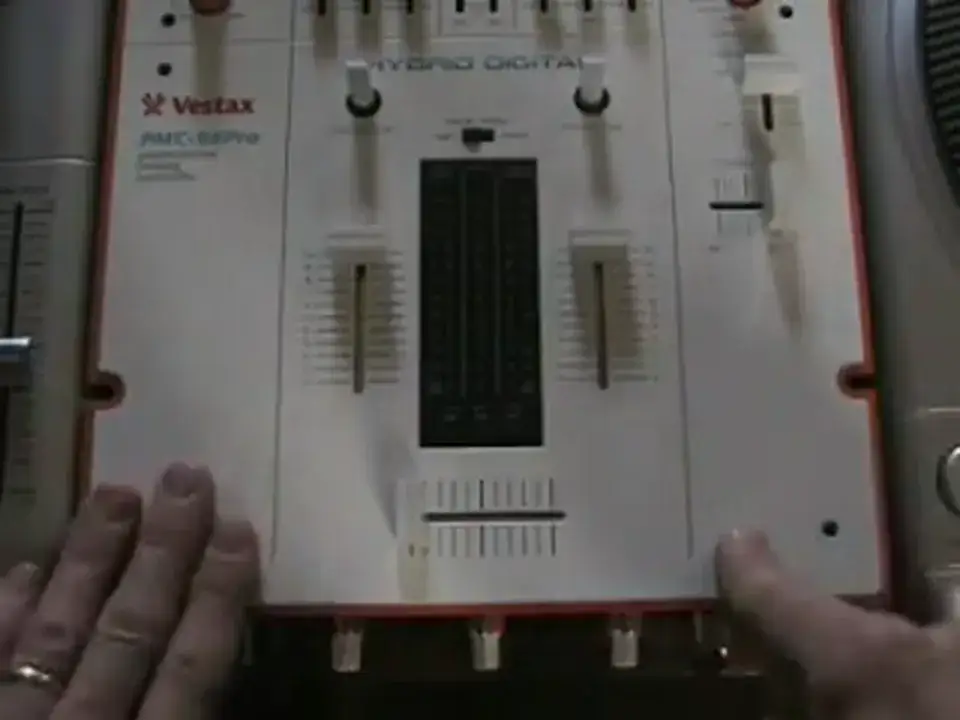
Now then, another quick pointer with regards to these three dials and that is simply this. And don't forget, this is the very basics on what these three dials do. There is a lot more to it. The crossfade, like I said, when both dials, both channels are all the way down to zero, no matter where that crossfade is, nothing will be heard through the main PA. But, this is the good part, if your crossfade is in the middle And you increase both volumes on the right side and the left side, you will start to hear all of the music played from the right and left side through the main PA until you get to the top when it'll be very loud again if the amplifier is loud, the mixer is on full and the speakers should be working perfectly. You will hear all of the audio signal from right hand and from left hand side.
As you then move the crossfade from one side to the other, what will happen is as you move it to the right hand side, slowly the volume from the left hand side will start to decrease and the volume on the right hand side will start to increase until when the crossfade is totally on the right hand side, the volume from the left hand side won't be there anymore. The volume on the right hand side will be there continually. Then if you move the crossfader again on the opposite way to the left-hand side, slowly as you go across, the left-hand channel sound will start to come in and you'll start to hear it through the speakers. Until you get to the middle when you have a proper mix, it'll be 50-50 of each one. And then again the opposite applies as soon as you start pushing it slowly closer to the left-hand side, the volume on the left-hand side will get louder and louder.
But the volume on the right hand side will get quieter and quieter until the crossfade is all the way to the left hand side and the volume then on the right hand side has gone. Now then, it is again quite difficult to explain this. I know it sounds as though it should be very easy but you try and do it. Now then, this is a basic first lesson on a mixer and what three dials do. And what we're talking about again is the crossfade and the two sliders for left and right channel. Okay, I hope you've enjoyed that and again, like I've said, this is for the complete and utter novice. First lesson in the basics of what a mixer does. Thank you for watching and practice and enjoy. Take it easy.
This transcript was produced automatically from the audio of the video and may contain mistakes.
This video is part of
Related videos
-
Complete Beginner DJ Lessons Tags Key BPM Etc
A more advanced lesson folded in early, and worth doing once rather than putting off, because everything it sets up gets used for years…
-
Complete Beginner DJ Mixing Lessons Video 19 Getting Your Kit Ready for an Easy Mix
A whole lesson on getting ready, which is the right call - the exercise in the next video only teaches anything if the two decks are…