 6:06
Mobile Disco set up, part 1, Setting up the Lighting.
Contents of the video
0:00 They asked for a chat, so here it is
Alright, they asked for a chat, so here it is. This video's going out to Stevie192. Alright folks, Jonathan here. Now this is video number two in a selection I'm doing on setting up a mobile DJ setup for a mobile DJ. In video number one, which was in two parts, we looked at actually setting up the PA... The actual speakers, the amplifier, the turntables etc. And that was in two parts because it was too long to put into one video. In the second part of the actual videos we're going to be looking at setting up the lighting. Now then, with a tiny bit of time spent in setting up your lighting you can make your light show... Look from a good light show to a bloody good light show by just positioning those lights slightly differently. In this particular video, I'm going to be showing you certain pitfalls about the wrong places to put maybe T-bars etc and also the right places making sure that you're not going to get sued or someone's not going to fall over something and do damage to themselves.
And possibly your gear as well. Right, now first of all, one of the box standard items that a DJ will use, if I just move the camera slightly out of the light, there's a light there as well on my mind, is something called a T-bar. Now here it is, this is a T-bar. The reason it's called a T-bar is because, guess what? It's shaped like a T, right? I'm going to pause the camera and I'm going to show you the right way of setting it up. Believe me, there is one. Hold on. Right, what I want you to do, I want you to look at the position of those two legs there. Now if we follow that up, now I want you to now look at the position of the actual arms of the T-bar. Now if I could actually just move the camera down like that, can you see that this here is almost in line with that leg down there?
1:43 All of a sudden, if I start putting weight on this particul
And this part here is in line with that leg down there. Now the reason being is because, if you think about it, those legs are almost taking the weight. That leg there is taking the weight of this particular part of the T-bar and then that leg down there is taking the weight of this particular arm of the T-bar. Now again, alright, it's only a small point but if I unscrew that and if I move that like that Now, if you look now, you can see that, yeah, that one's fine there, but this one across here now is in between those two legs. Now, all of a sudden, if I start putting weight on this particular arm of the T-bar, what's going to happen is that's going to fall, alright? So just bear that in mind. Right, I'll just pause the camera again. Hold tight. I'm back. Right now, as you can see, we've got our speaker set up and our speaker... Check out the first video of setting up your audio.
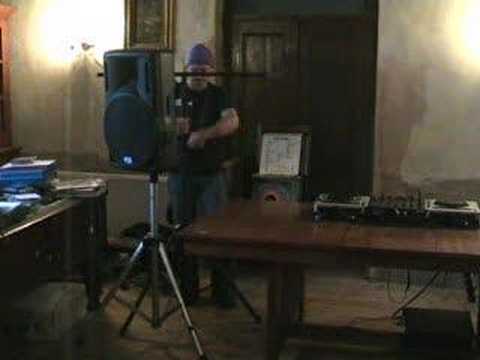
And you'll realise why we've actually got the speaker set up there. Now a lot of people, they'll start putting the lighting T-bars in front of the speaker. Not a good idea. The ideal place is actually behind. The reason being is because you've just got the legs out of the way, alright? Now like so, right? If you can see me, there it is. Now then, again what you need to do is you need to get... Right, I had to edit that part of that video because the last T-bar died on me. Right now then, as you can see there, I've actually got the T-bar Behind the speakers and the legs are quite close together. The reason being they're close together is of course, you know, at the end of the day, if you're going to have them strewn all over the place, there's more things to trip over. If they're nice and neatly together, then of course there's less things to trip over. Now then, as you can see there, the T-bar is quite high up. The reason being is because, right, if I just, if I put the camera there and move that so I can see what I'm doing. Right, now then, from an actual point of view of...
4:05 The same weight either side
With the way the light shines. Now if you imagine, I'm a punter, alright? I'm a punter. The terminology of a punter in the UK is just Joe Bloggs who's come along to be entertained. You are the entertainer, okay? Now this guy is dancing along here. Now what's happening is the light is shining from those particular lights and it's going over their heads. And the light is going to be able to reach... Quite a distance. If the lighting is really low down, in other words, if you put a whole bunch of lights on your table, it's not going to go anywhere. No one's going to see it. Yes, maybe a few people right in front of the setup, but the people way back aren't going to see diddly squat, OK? Now also, what you'll find is on that particular T-bar, you will see I've got a light.
The same weight either side. The reason being is because if I had two lights only on one side, a lot of people what they'll do, they'll have two lights on that side. They'll think it's fantastic. But of course the higher up it is, the more weight you've got, the more chance you've got of that light, the T-bar tipping over, which is not a good idea. Now some people what they'll have is a setup where they'll have some sort of framework that will go up and it will go across the actual decks and it will go down the other side. Now, that's a lot sturdier and of course then what you can do, you can put a lot of actual lighting above you. So if you imagine, if you look now, there's your setup. Now what you'll have around about this sort of point here, along here, you'll have a bar going across you and you can put some lighting on there as well. So there's the one T-bar there coming down, some lighting across.
And then you'll have another T-bar down here and maybe some lighting on there as well, okay? So a general idea with regards to lighting. Now in video one I mentioned of course about power, okay? Audio, okay, you have amplifier, your mixer and your CDJs go into one plug or into one multi socket going into the wall so of course you know all the audio is going to go into that particular socket. Try not to mess and put lighting in with that as well. Have your lighting A separate entity, so you know if there's a problem with the lighting, then it's just going to be the lighting. If there's a problem with the audio, the PA, it's just going to be a problem with the PA. The two of them aren't going to mess around with each other, OK? Right, I'm going to pause the camera and we'll look at a couple of other lights. Bear with me.
This transcript was produced automatically from the audio of the video and may contain mistakes.