 10:37
Powerd speakers, Are they any good, What do they do?
Contents of the video
0:00 There are pros and cons for all of them
Alright folks, Jonathan here. Now in this video what we're going to be talking about is powered speakers and non-powered speakers. There are pros and cons for all of them. I mean, we could go in depth here but basically, well the reason I'm doing this video, I had a chat with a YouTube user this morning and they were interested in buying some powered speakers. Hopefully I didn't put them off because they are good. I mean at the end of the day, you know, a powered speaker can save you lugging sort of, or carrying should I say, well lugging, same thing, carrying. Huge amplifiers in and out of rooms. Also, it saves a lot of time plugging things in because of course remember what you have to do. You have your CD player or your turntable. You have an output from there into your mixer. Out of your mixer then into your amplifier. Out of your amplifier then into your speakers. The beauty of course about powered speakers is that you don't need a separate amplifier so you will go from your CD player into your mixer.
Out of your mixer, straight into the speaker. Fantastic, isn't it? But, of course, think about it now. You've got an amplifier in that speaker. Now, over a period of time, the amplifier's going to get hot, cold, hot, cold, well, not over a period of time, every night. When you use that particular speaker, the amplifier or amplifiers, depending on how many speakers it's actually running, if it's a two-way, quite often there will actually be two amplifiers in there. But of course every night it gets hot and then it cools down again, hot, cold, hot, cold. So over a period of time it's going to start to wear away. Now then, what are the bad points, first of all I suppose in a sense about powered speakers? One bad point is this, let's say you're at a function, you've got your two speakers, you've got your mixer and your CD player like so. And all of a sudden one of those speakers stops working, the amplifier has blown in it. Now okay, fair enough, that would happen anyway with your amplifier let's say.
Your amp all of a sudden stops working. You've got to send that amp off, but then you can replace it with another amplifier. Now the trouble is with powered speakers, it's almost like the same sort of scenario. The difference is though, you've got to take the whole speaker away to get it fixed. You can't really just take the amplifier out unless of course there are companies now who maybe watch this because, ah, an idea for you. Think about this. Who has, if anyone, has anyone actually made a powered speaker? With an amplifier that can be removed, user-friendly. In other words, four screws take the actual amplifier out, send the amp away and then if you think about it, if you've still got the speaker, if you can then run it without an amplifier. In other words, maybe there are speakers out there, I'm not sure whereby, there's a switch. In other words, you click across to one side and then it's a powered speaker without the use of an amplifier. You do not need an external amplifier.
2:48 The benefits of powered speakers
You switch it the other way, then possibly you can run your amplifier into that speaker. Now, the benefits of powered speakers. Now then, when the manufacturers make a powered speaker, they make the amplifier to match the speaker perfectly. They're not really going to start putting a 1000 watt amplifier in that speaker and a 300 watt speaker because of course as soon as you turn it up, it'll blow it. It'll pop, it'll stop working. So they will make everything according to the actual specifications and of course basically how well that speaker, the 15 inch or 12 inch or whatever drive is in there. And also like I said a lot of powered speakers what you find is two amplifiers in there. There'll be one for the big speaker and one for the little speaker so they can work together but perfectly tuned of course inside there you've got a little crossover as well. Right now what I'm going to do now, I'm going to show you
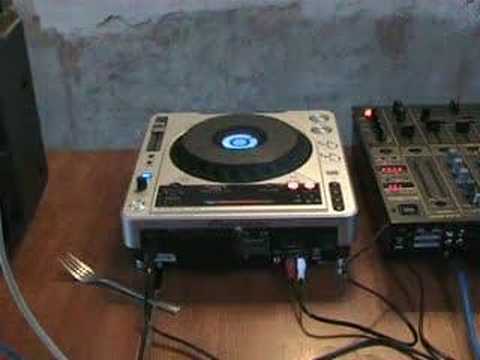
This guy here, this is a powered speaker. Now then, this guy here is not the best powered speaker in the world, alright? It works, it does its job. I take this to very, very small gigs and to be quite honest, the sound quality isn't brilliant but if it's a small function of say 10, 20, 30 people and they want a bit of background music, then it's fine. I'm just going to pause the camera a second, excuse me. Right, let's see exactly how powered speakers work. Now first of all... There's your music source. Then you go from there, you can see the lead goes into the back of the mixer. Now then, advance the output, that blue lead. Now if we follow that blue lead, it does that. No, it shouldn't go there, should it? It should go this way. You see, I've done my research here. Not. Right, OK, let's just hold the camera there and I'm going to plug that in to the back of the powered speaker. Right, so, start again.
We follow that lead and it goes into the back of that speaker there. Now also you can see a power socket, alright? There's a plug into the back of that speaker. Now the reason that's there is because like I said there's an amplifier in there and of course now the amplifier needs power. Now then, that is an external amplifier, OK? And you can see there this black lead here. That is the actual power lead. Now that is exactly the same. As that lead there. Now what I'm going to do, I'm going to play the music. I'll give you a general idea of what we're on about with regards to powered speaker. Here we go. Now that's it. I mean, you can hear it's not very... When I say it's not very good quality, I don't think this is working properly anyway. But we've got a volume control, like so. But that's fine for sort of moderately big gigs. Now then, of course, the difference is if I just bring the camera out again.
Put it about there. Now that is a non-powered speaker, that one there. It's quite a big one, but what we have to do then with non-powered speakers is we have to go as follows from our music source, which can be CD player, DAC, turntable, anything, into the mixer and then you can see then the lead coming out and of course the lead at the moment is into the back of that one. So what I'll do now, I'll pause, no I won't pause it actually, I'll just put that there like that. And there you go.
6:18 Bear with me a second
So now what we've got is we've got our power amplifier, it's now supplying the power for that speaker as opposed to the actual power amplifier in there supplying the power for that speaker. Bear with me a second. Right, very quickly, the person I spoke to this morning he said that there was a company that had manufactured some new powered speakers that were only out a couple of months. Should he buy them? Now then, my first thought on that is no. Simply because two reasons. One, they've only been out for a couple of months so they haven't been road tested. Now yes, fair enough, the technicians would have taken through all the tests in the world in studios and goodness knows where maybe they've been out on the road a little bit. But the real idea behind road testing is exactly as I said, road testing. Those speakers or new product needs to be out
With Joe Public for like six months, a year, two years. And then eventually we will find out if they're any good. Also another point and that is this. These companies that all of a sudden say right we're going to charge a thousand whatever euros, pounds, dollars for these speakers. And there are mugs out there that will buy them because it's a new product and it's fantastic and they're the only people who've got them. But guess what? You're an absolute mug because, as I said, there's a possibility three months down the line there could be problems you might have to send them back. And also, three months down the line, you may go to the shop and all of a sudden they're at 600, not 1,000 anymore because they've realised they actually didn't sell many at 1,000 so they've had to lower the price.
7:56 Again, we're digressing there slightly
But you paid the full amount, alright? Now again, we're digressing there slightly. What I want you to do is this. Have you got some powered speakers? If you have, then... Tell us about them. If you've got a video camera, post a video response underneath and just let us know. If you haven't got a video camera, then stick a comment underneath, describe the speakers you've got, what you think about them, if they're any good, maybe good points, bad points, maybe there's a certain aspect of those particular speakers that you think should be slightly better. And then hopefully the companies will look at these comments and think, yeah right, he or she, they've got a good point. If you've got a video camera, then video your speakers. Let's have a look at them. Let's see what they're like. Tell us what they sound like. Let's try and hear them. Let's even, if you can, go to a function and tell us about the kit you've got, alright? A little insight here, my own sort of mad as usual personal video about powered speakers, okay? My own opinion of them is this. Be wary, alright? Because at the end of the day, the last thing you want to do is travel 100 miles to a function
Set your gear up and all of a sudden you realise one of those speakers isn't working because the amp's gone in it. It's an absolute nightmare. And again, the trouble is there, maybe we are digressing, because that could happen with the normal power amplifier. Of course, it can happen with any, it can happen with your mixer, anything. What I will say is simply this, if you want to go into DJing, mobile DJing professionally, then it's always advisable to take... Extra little bits of kit. In other words, if your amplifier that you use continually costs a thousand whatever, alright? It's a fantastic amplifier and it's never gone wrong. I advise you to get a cheap and cheerful second-hand amplifier that'll cost you 50 or 100. Therefore, and don't use it, just have it to one side in case of that horrible night when your main amplifier stops working because yes, you may have 10 minutes of silence.
But it's better to have 10 minutes of silence while you're changing amps as opposed to the rest of the evening of embarrassment. And also, speakers. Maybe if you can, take an extra speaker with you because it's all about professionalism. There is nothing worse than turning up to a function and having three lights not working, your mixer's broken down or the amplifier stops halfway through the night. It's happened to me and I try and always make sure it never happens again, alright? A little insight here into powered speakers and also my certain philosophies and whatever. But anyway, thanks for watching and practice and enjoy.
This transcript was produced automatically from the audio of the video and may contain mistakes.