 5:24
Restoration of the DJ console from the 70's part 2
Contents of the video
0:05 Part two with the restoration of this deck
Alright guys, part two with the restoration of this deck. It's quite interesting, we were looking on the internet and this guy, Matt Mathias, Mass Amp, I think he was born in like 1923, died in 1989, and loads of stuff, go and check it out. Right, now I've got some tissue, and more tissue, I've got an old rag, I've got one of these guys here. Now what I'm doing, I'm using that side. It's damp. Damp. And I'm using some mild detergent, alright? The last thing you want to start doing in any sort of work like this is getting those sprays with insecticide and things that kill 99% of bacteria because it could be just full of shit really. If I can pause the camera, I'll have a look down here.
3:35 Where the internal workings is concerned
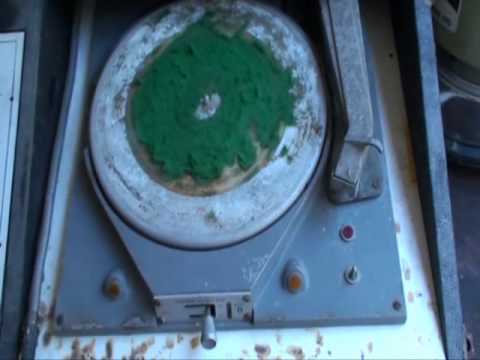
Right, if you have a look there, that is relatively clean. Second part, first hoover, just use the hoover. Second part is toothbrush, give it a bit of a scrub with the toothbrush while the hoover's over the toothbrush. And then of course giving it a wash down. Now I had to get rid of these. I've kept a little bit on because I want to try and get the original felt on there but to be quite honest it might be worth just putting slip mounts on. Now check these arms out. Now that is an absolute bloody monster. Now I want you to google A film called The Boat That Rocked. And you will see these decks on there. They're called Rusco, which is R-U-S-S-C-O, Studio Pro, and Rusco Electronics. It's M-F-G.
And apparently they use these in Radio 1 as well. Now, on some of the clips I've seen these original decks,
Whereas, on the actual film itself, they had different arms I believe. And that, I'm not sure, quote me if I'm wrong, but is wrong because those are the original arms for these decks. Now, I haven't been able to get the decks out yet because I don't know how to, but check this out. I mean, look at that. That is solid and have a listen. That is just one solid piece of metal. And, hold on, shall I pause the camera? No, hold on. Yeah, I will, hold on. Right, check this out. Down there is for 45. Presumably that's stop. And up there is for 33. Massive. So what I'm trying to do at the moment is just clean it cosmetically because I'm not really that knowledgeable. Where the internal workings is concerned. But we shall see. I don't think that's going to work somewhere. Again, you see, looking at this from an old school point of view, I would say that probably many years ago when people had items like this and then the new technology came out, they'd just chuck it, they'd bin it. What's the point in keeping that? It's a break, it's a waste of time.
There's a new item out that's belt-driven. And, no disrespect, and it's faster, and it's lighter, so let's chuck this. But of course, that is the wrong attitude because, well actually it's the right attitude to a certain degree because it means the ones that are left are worth an absolute fortune, but it means that people just chuck stuff away. You see, looking at this now, these feel absolutely fine. In fact, perfect. And that... Apparently Pink Floyd, I believe, were the first ones to use this sort of quad pan where the treble sort of went from one side of the room to the other, or one corner to the other corner. So I'm going to finish off this side and then try and maybe do something about these arms. And that is an original sticker from Radio 1. Not FM, it was a medium wave.
Practice and enjoy.
This transcript was produced automatically from the audio of the video and may contain mistakes.