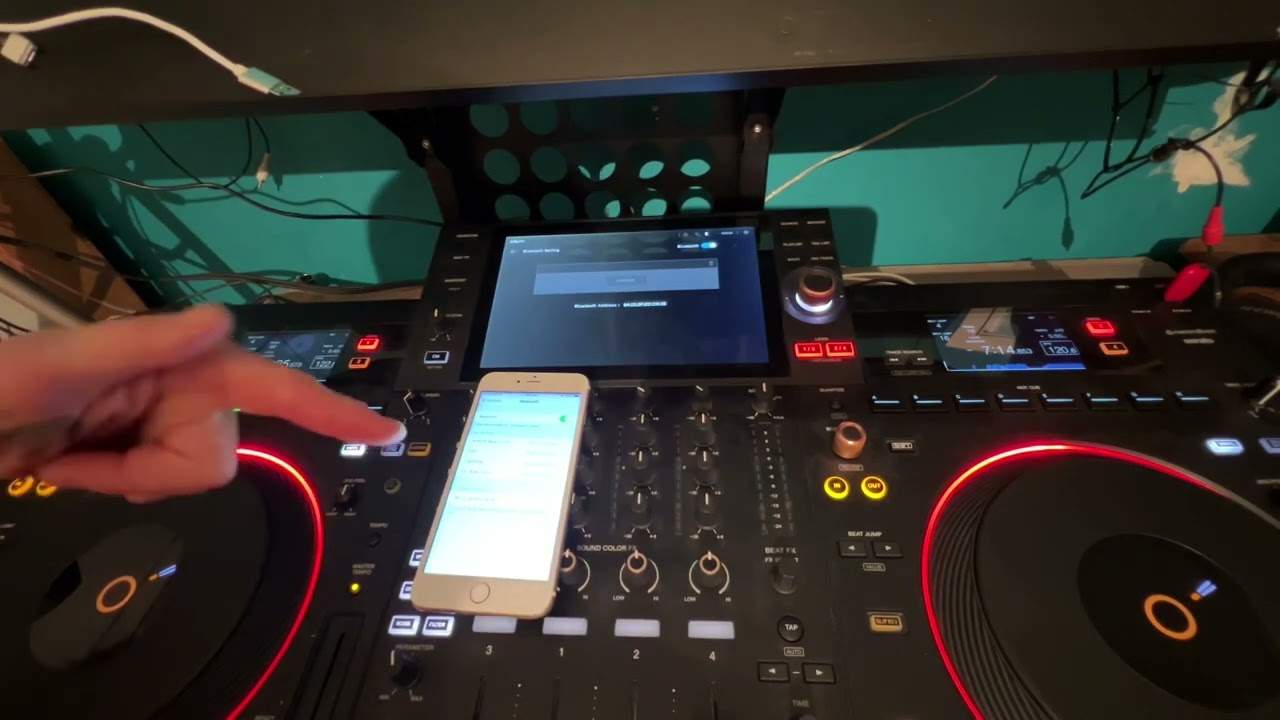
 3:54
Speakers, amps and Ohm's law
On YouTube this video is called Speakers, Amp's, Ohm Law, What Do You Realy Need!
What this lesson teaches
Prompted by an email - 100 watt amp, 300 watt speakers, is this enough for a mobile disco? - and the answer turns into a principle.
The short answer to the email
Yes and no. For fifty people in a small room it will just about do, because fifty people do not absorb much sound and may not want it loud.
The problem arrives when you turn it up. The amplifier is the weak link, and a 100 watt amp driven hard overheats and is being worked beyond what it was built for. So: adequate at low volume, and nothing in reserve.
The principle
His practice, and the line worth writing down: nine times out of ten he turns up with large speakers and a powerful amplifier, and people ask what on earth he brought those for.
Because you can turn a big sound system down, but you cannot turn a little sound system up.
Fifty people and a big rig: it ticks over, pristine and clear, and they love it. A thousand people and the same rig: turn it up, and it still works. Fifty people and a small rig: fine. A thousand people and a small rig: you have had it.
The asymmetry is the whole argument. Oversizing costs you a heavier van. Undersizing costs you the night, and possibly the speakers.
What the average mobile rig should be
His recommendation, as a baseline across the board:
- Two 15-inch cabinets with compression drivers, on tripods.
- A 600 watt per side amplifier - a 1.2 kilowatt amp.
That is the standard against which to judge what you have. Less than that and you are working at the edge; more and you have headroom.
Then the ohms problem
And here is the trap that makes the numbers on the box misleading.
An amplifier's power rating is quoted at a particular impedance. An amp rated 600 watts a side at 4 ohms does not deliver 600 watts into an 8 ohm speaker - it delivers considerably less. His estimate for the case in question is around 450.
So matching "600 watt speakers" to a "600 watt amp" proves nothing on its own. The ohms have to agree, and the specification you want is the amp's output at the impedance of the speaker you are actually connecting.
If your speakers are 8 ohms and you want one each side, you want an amp rated at its useful power into 8 ohms. If the amp is only rated at 4 ohms, you can reach that impedance by running two 8 ohm cabinets per side - at which point you have two speakers capable of 1200 watts being fed 600, which is a different kind of mismatch.
His own summary of all this: it is as clear as mud, eventually, once you know what to do. Fair. The short version is read the impedance, not just the watts, and buy the amp to match the speakers you own.
Contents of the video
0:00 Sound system, people, turn
Right folks, Jonathan here. Now I get this question asked so many times, okay, and it's about, you know, I've got 100 watt speakers, I've got 300 watt speakers, what amp do I need, etc., you know, is it enough? Should I get more, etc.? Well, quite often, yes. Now the reason, again, I'm doing this video is I had someone email me and they said, right, I've got 100 watt amp and 300 watt speakers, are they suitable for a mobile disco? Well in a sense, yes and no. Yes they're suitable for mobile disco if it's small function but what you have to remember is if it's say like for 50 people of course they're not going to absorb so much sound and maybe they want it loud, maybe they don't want it loud but I would say it's possibly compatible and you just about get away with it. The trouble as you see is that once you start cranking that sound system up okay
That amplifier is going to start to overheat and you're going to be working it too hard. So, in a sense, a 100 watt amp isn't good enough. Now, I work on the principle when I go to functions right, I will take 9 times out of 10 these huge whopping great big speakers and a really, really powerful amp and people will think what the hell have you brought those for? And the truth of the matter is simply this. You can turn a big sound system down But you can't turn a little sound system up. Just think about that logically. So I can turn up to a venue that's got 50 people in, and I can have it ticking over nicely with a pure, pristine, crystal clear sound, and they'll love it. But then if I turn up, let's say, to 1,000 people, I can have the same sound system, and I can turn it up, alright, maybe 1,000 people, we're stretching it a bit, but it will still be relatively good.
1:47 What I would recommend for the box standard mobile disco, alright?

But if I've got a really low system and I turn up to that small function, yes, I can crank it up to a certain degree. If I've got a small system and I turn up to 1,000 people, I've basically had it, alright? So what I would recommend for the box standard mobile disco, alright? Now, I would say across the board, OK, if we took all of the mobile systems and we just looked at what is the average, that would be two 15-inch speakers with small compression drivers. On tripods and say a 600 watt side amplifier. So you're looking at a 1.2 kilowatt side amp, 600 watts a side. Now also we've got ohms law to consider and that is this. It's all well and good having 600 watt speakers and your amp is 600 watt but if your speakers are 8 ohms and your amplifier is 4 ohms you will be not sorry be pushing out 600 watts in each speaker.
2:42 In other words, one amplifier, 600 watts a side at 8 ohms
So ideally if you can, you need to get an amplifier that is 8 ohms a side if you only want one speaker each side. In other words, one amplifier, 600 watts a side at 8 ohms. You will need two speakers, 600 watts a side at 8 ohms. If you have an amplifier that's 4 ohms a side and you have the amp running at 600 a side You're going to knock out 600 watts. You're not actually. You may be only going to chuck out about sort of 450. So then, of course, you think, right, we need two more speakers. So then, yes, you'll be chucking out 600 watts aside, but then your speakers can actually handle 1,200 watts. It's outrageous, I know, but it's as clear as mud eventually when you know what to do. Now, I've been featured again. Check this out. Right, what do you think about that then? That's not bad, is it?
While I've been talking to you, check that out. That's one cool cat, isn't it? That's Madagascar. Thanks for watching. Practice and enjoy.
This transcript was produced automatically from the audio of the video and may contain mistakes.