 11:25
Step BY Step Way to Turn on Your Kit and WHY MR MRS DJ
Contents of the video
0:00 Believe me, there are many ways on turning your kit on
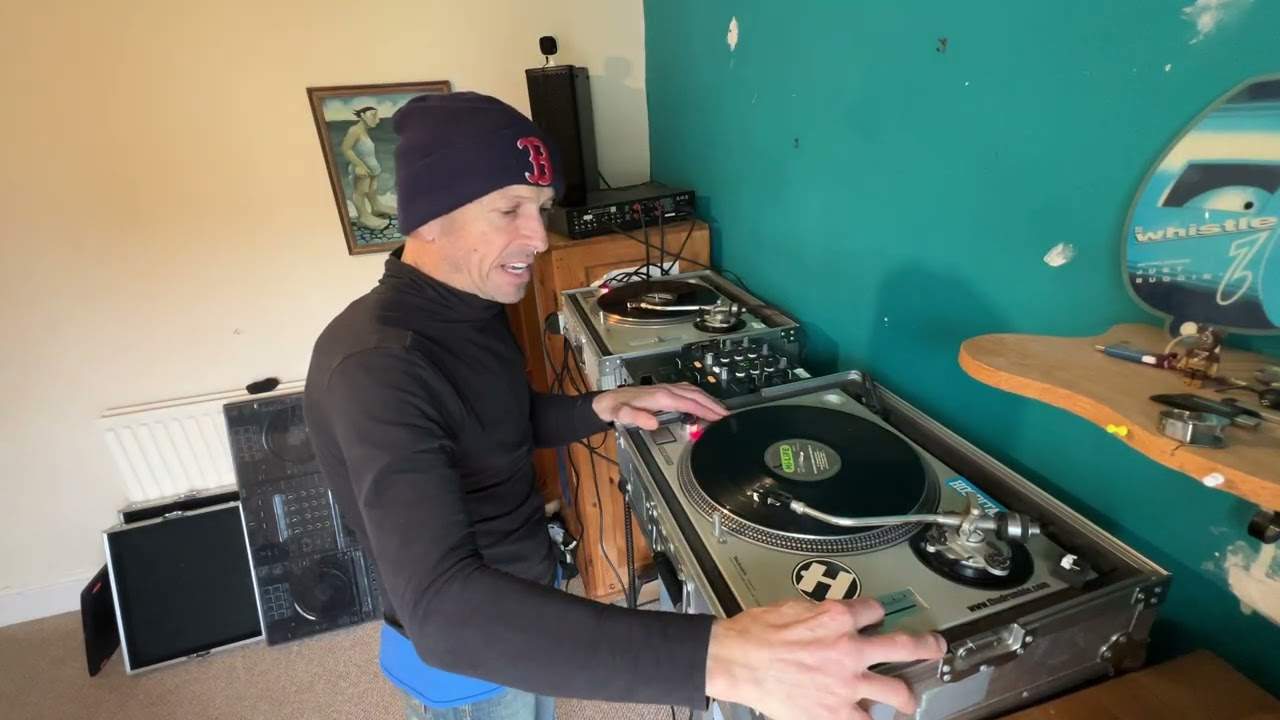
Right, believe me, there are many ways on turning your kit on. This is one of them. Oh you're so sexy. It's a little bit like, I suppose a good analogy for you, like trying to drive a car. You imagine you get in your car and you put your foot on the accelerator, you put it into gear and you're going to get nowhere because you haven't followed CERN protocol, you haven't followed steps to make sure that you can actually move. It's sort of similar with your kit because if you turn things on at the wrong time, one thing before the other or whatever and so on, you may start to get nasty sounds, pops and crackles that potentially could, in a nightclub environment, ruin your sound system. And I will demonstrate that even by using these three items here.
6:35 High, head, space expand
I have the Formula Sound FF 2.2L two-channel mixer. I have the daddy of all turntables, the Technics SL1200 Mark II. And I have QSC K8 powered monitor. So first of all, what we need to make sure we don't get is that nasty click sound through the speaker. Now we could get that, we could get that if I turn the speaker on first and then turn the volume up and then turn the mixer on. So what will happen is there could be like a bit of a power surge inside the mixer and then that may then shift. So we can shoot through and we get some kind of audio signal through the speaker. Now, we don't want that. And I'm going to demonstrate that when I start turning things off in the incorrect way. So what I'm going to do first of all is I'm going to turn the power supply on to the mixer there.
2:14 Of course volumes down, master volume down trims down as well
Now that's on. Now also, I have got the trims down and actually I should have had even the master volume down as well. So that's an added precaution just in case. The last thing you want is trims all the way up, master all the way up and then if you forgot to turn the speaker system off in your last set then there is less chance let's say of having any noises coming through the speaker. So of course volumes down, master volume down trims down as well. Now what I'm going to do is I'm now going to turn my speaker on but before I do that I need to make sure also that the volume control the attenuator the dial at the back that will give me the sound is at the zero position as well. So check, that is turn it on and now I can turn the speaker up.
OK so I've followed the correct procedure I can now turn the turntable on and that's pretty much it. So if I just press play I'm not going to play much of this music simply because of copyright issues. Now if I put the volume all the way up on the mixer we can't hear anything. No, we can't because the trim is all the way down and also the master volume is all the way down. Now there's something I can do here to make sure I get the optimum sound from my mixer first before I have the sound through my speaker without even getting any sound. How do you do that? Let me show you. I'm going to turn the volume down on my speaker and if we have a closer look at the mixer what I want you to do I want you to make note of
Of the LEDs Now, I'm now going to turn the trim up and what you should see is the LEDs now go from one or two green we're getting to minus three to around about zero dB and one. Now, if I have that around about the zero dB flashing there now that's fantastic that is exactly what I want because I'm getting the optimum signal from the turntable into this channel and also the volume the slider on that channel is all the way up so I know that if I accidentally put that all the way to the top that is the signal that's going to go through then into the master that I haven't turned up yet from the master into the main PA so now let's turn the master up and we should start to see exactly the same there Now, of course you can't actually you can only see
5:18 Away
One of the LEDs side shining that's because I've only got the left channel in at the back of the mixer I don't have the right channel in simply because I've only got one monitor Now I'm going to do exactly the same thing here I'm now going to turn that master volume up so it's around about you know minus one to zero dB Now I've done that I can now turn the speaker up There you go OK, so that's all I'm going to do volume wise and audio wise So why do we do that? Right, well It's actually very simple If I'd have said I'd have turned the speaker on first and had that quite loud or very quiet and then started to mess around with the trim and the master volume on the mixer I may then have increased that too much to compensate for the fact
That the speaker is quite low On the other hand by setting your mixer correctly first means then that when you then turn your speaker up you're going to get the correct optimum sound from the mixer Now there's something in the music industry we call headroom Now above me is the ceiling and this is a really good way of explaining headroom And if I just put the camera back there and if I demonstrate So In fact Don't go away No, seriously Don't go away Don't Go Away Right Right So You know what My dad made this Right Now Let's imagine OK This is a really good analogy Let's imagine now that the floor is the amplification The floor is the mixer at no volume at all And my head here now is the beginning of 0dB So above me now I've got all this headroom I've got loads
Of space like that Like that I'm going to jump up quite high And I'm not going to hit my head on the ceiling Because I've got loads of headroom I've got space to expand Which is exactly what the audio's got in the mixer It's got room to expand On the other hand If See This is how cool it is If I now turn the music up I've actually got less space to expand So if all of a sudden I jump up now I'm going to hit my head on that ceiling And it's going to hurt my head Now that's pretty much exactly what will happen with a mixer If it's too high and you start getting more peaks in there and big bass kicks The sound's got nowhere to go So it's going to sound very compressed and rough And I can demonstrate that So If I just What I'm going to do as well
I've got the volume down I'm going to turn that speaker off on the turntable And let's have a close look at the mixer Right Now bearing in mind as well The high The mid-high mid-low and low are all set to 12 o'clock What I'm going to do now is I'm going to turn now the trim up So we're now in the red Okay So we've got the high mid-low and bass up We're not only getting a clip but we we're not getting any extra believe it or not out of the mixer You may feel as though and it may sound like it But you're straining the overall sound and fidelity of what you're putting into the mixer Alternatively now if I turn that back to its original zero dB and now if I start to use my EQ I will definitely get an increase in those frequencies maybe not too much bass but you will be able
To hear those frequencies So this analogy is back to my first position standing on the floor and up here is my analogy of me standing on the chair which is not a good idea Now let's just take a look at this I'm going to make sure the volume is up and also what I'm going to do which is what you do not do but I'll demonstrate is I'm now going to turn the speaker on and turn it up OK so turn that up Alright So now no audio I'm going to turn the the signal from the mixer Now I don't know the exact terminology or the exact physics behind it I do apologise but all that's happening is you're getting some form of signal or sound that's going through into the speaker On the other hand if we do that the correct way so I'm going to turn the speaker down and now off I'm now going
To turn the mixer on and off So this is the correct way of doing it So let's rewind I'm now going to turn the speaker volume down I'm going to turn the speaker off Now listen when I turn the mixer off Absolutely bugger all sound through there So there you go Believe me there is a right way and a wrong way on how to turn the mixer on So that's it I hope you've found this helpful If you want any info on the FF2.2L from Formula Sound then check out on the web ie if
This transcript was produced automatically from the audio of the video and may contain mistakes.
Related videos
-
Complete Beginner DJ Lessons Tags Key BPM Etc
A more advanced lesson folded in early, and worth doing once rather than putting off, because everything it sets up gets used for years…
-
Complete Beginner DJ Mixing Lessons Video 19 Getting Your Kit Ready for an Easy Mix
A whole lesson on getting ready, which is the right call - the exercise in the next video only teaches anything if the two decks are…