 12:55
The Vinyl DJ Is Back to Stay DJ Mixing Lesson BY Ellaskins the DJ Tutor
Contents of the video
0:00 Hopefully this video will inspire you to become a vinyl DJ
Alright guys, hopefully this video will inspire you to become a vinyl DJ. Yes, we need more real vinyl DJs. Now let's go back 40 years when pretty much it was all only vinyl. If you were lucky enough to have a cassette player in the middle of your double vinyl garage turntable with elastic bands that bounced all over the place, then you were like really hip. And the only time really you ever used it was for that odd occasion where you had some dodgy jingle or let's say you managed to record one of the tracks from the top 40. But of course what you had to do then is make sure you didn't play the intro and the outro. Because quite often the intro and outro was overdubbed by some dodgy DJ explaining what the track was.
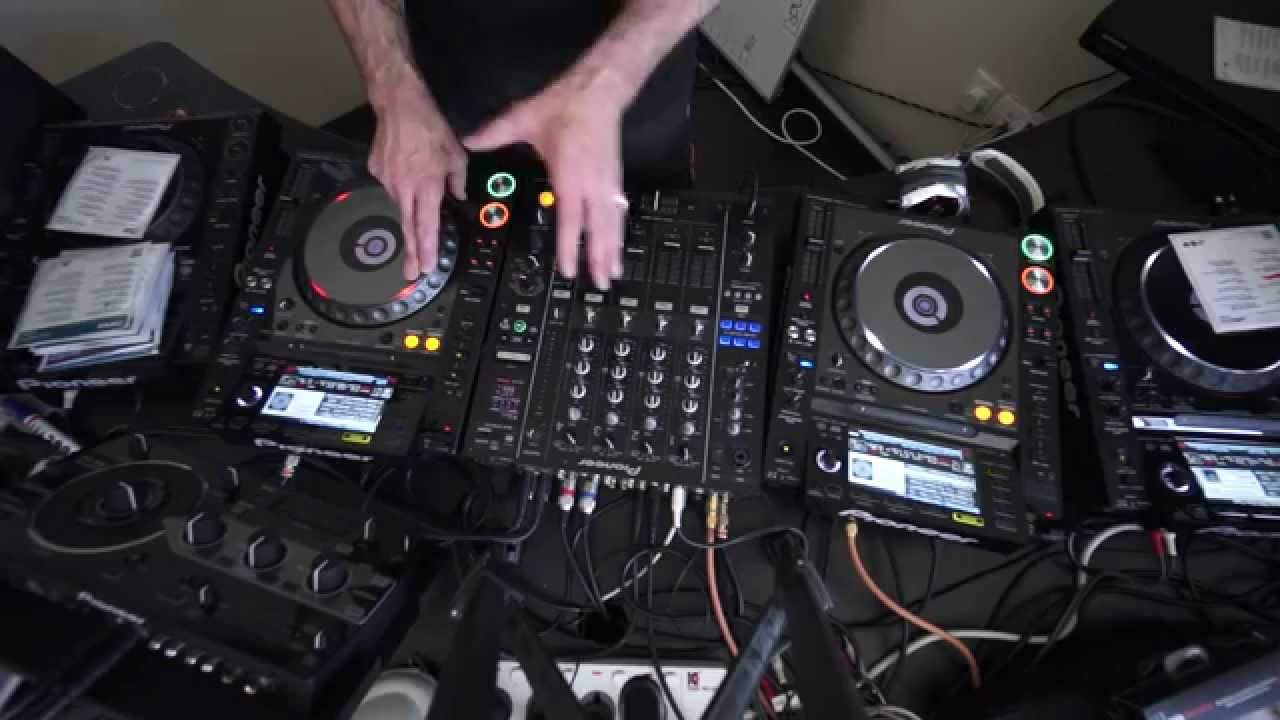
And if you managed to clip a little bit of that in, people would look at you as though they're thinking you're a bit of a cheapskate. But little did they know that where you lived there was virtually no post, a small record shop with about three records in it. And on the odd occasion they would bring a top 40 tune in. And if you weren't there at half past eight in the morning, tough titties because someone would have bought it before you. So you had to pretty much do with what you had. So here we go, Real Vinyl. So 20, sorry, 20, 40 years ago, vinyl and we went to CDs, we had MP3, we had CDJs, we had washing machines, tumble drives and DAT players that what a DAT, what on earth it anyway, never mind.
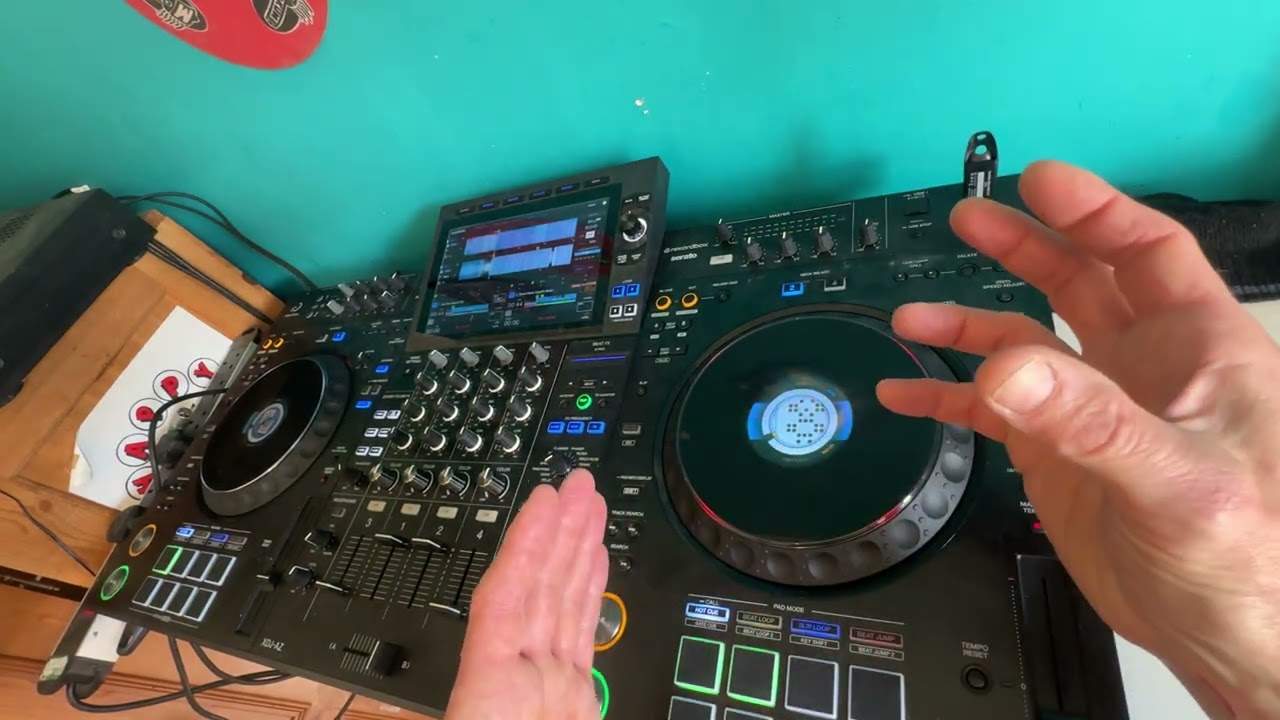
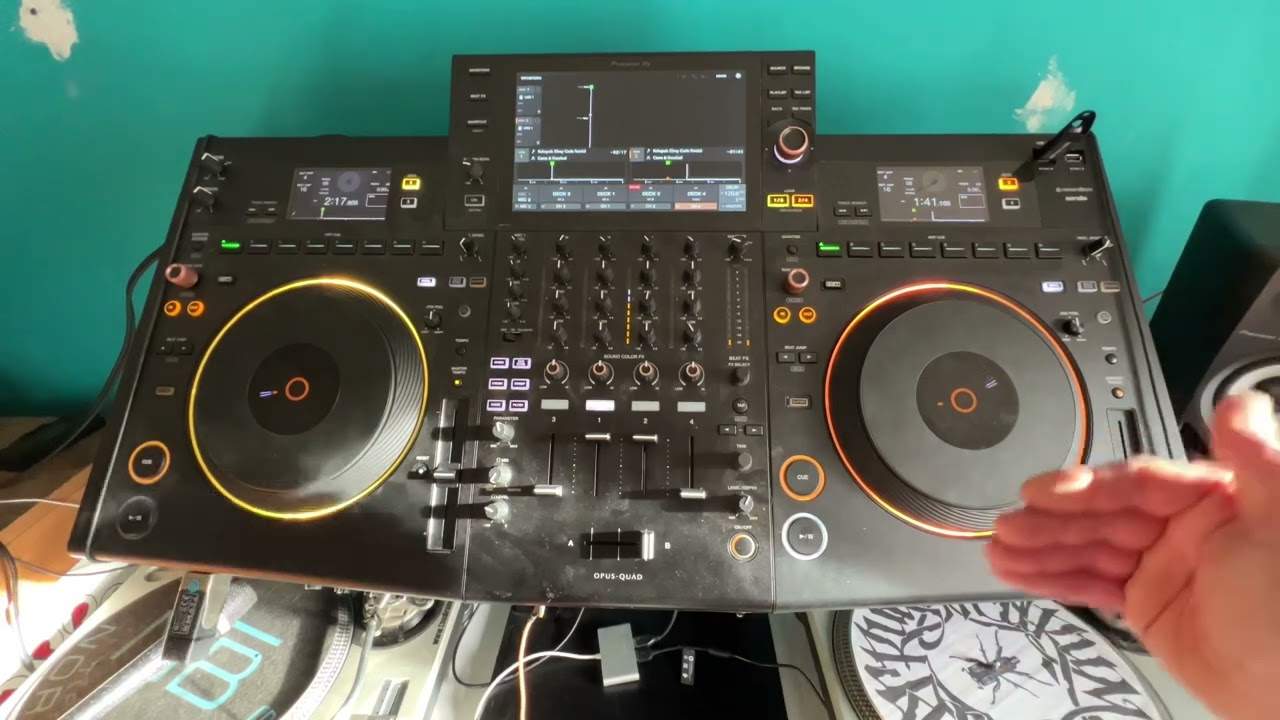
So of course virtual vinyl. Now this video also is explaining what the difference is between real and virtual vinyl. Now if you are a virtual vinyl DJ and all of a sudden you think I'm going to ditch the virtual vinyl. And I want to start playing real vinyl because I know how to play virtual vinyl. Well, I'm going to play real stuff. You're wrong. It's you can't just swap. You've got to have a very good ear and also you've got to realize that you're going from something that is pretty easy to something that's downright difficult. So virtual vinyl, you put your needle on if the needle jumps, it'll carry on playing if you slow the track down by about 20%. Doesn't matter because it will stay. Being key and if all of a sudden you think, oh my goodness, the vinyl is finishing.
You could just form a loop. You can form a hot cue and you can just pretty much take the needle off and go and have a cigarette and it'll carry on playing. You can't with real vinyl. If you take the needle off, it stops. If the needle bounces, the record bounces, it jumps. And if you reduce the pitch by any more than 3% or increase it by any more than 3%, it will get out of key. So I'll give you an example. Let's say that the track over there on that vinyl turntable is running it at 120 BPM and you put the needle on the record and you put the pitch into the center and you find by some magical moment because unless you have a stopwatch, of course, this track is 135 BPM, which is of course 15 BPM faster.
So you think will they sound okay? They sound perfect. They work well together. But this one's too fast. So then, of course, what you have to do is reduce the speed.
3:22 They end up getting out of key
Even if you could reduce the speed down to 120 or for that matter, reduce that one slightly and bring that one up. They would then be out of key because what's happened is you've had to slow the one down so much and speed the other one up. They end up getting out of key. So, of course, you don't have that problem with virtual vinyl. So it's really difficult actually. Now I'll give you a demonstration. This one here, by the way, is reel-to-reel track entitled Go On Move. It's the Eric Moore 94 Club Mix. So I just put that on there. Have a listen. That's the center point. Listen.
Can you hear it dip? Speed up.
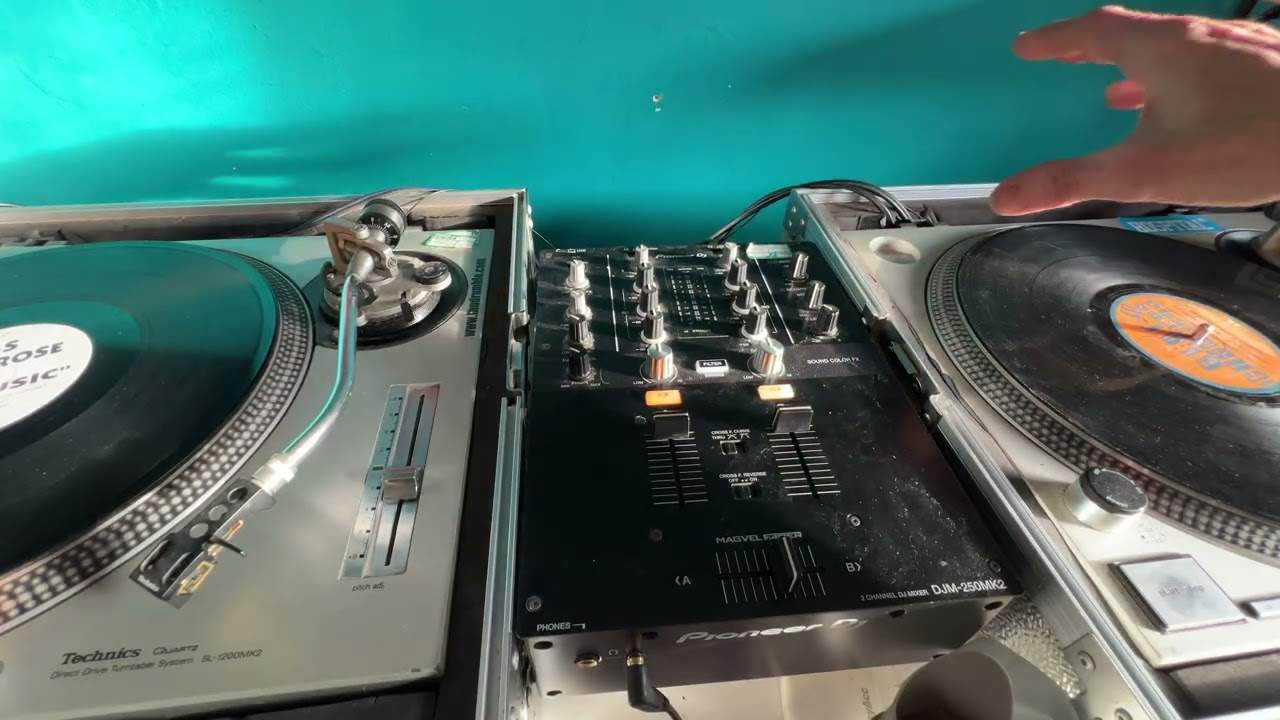
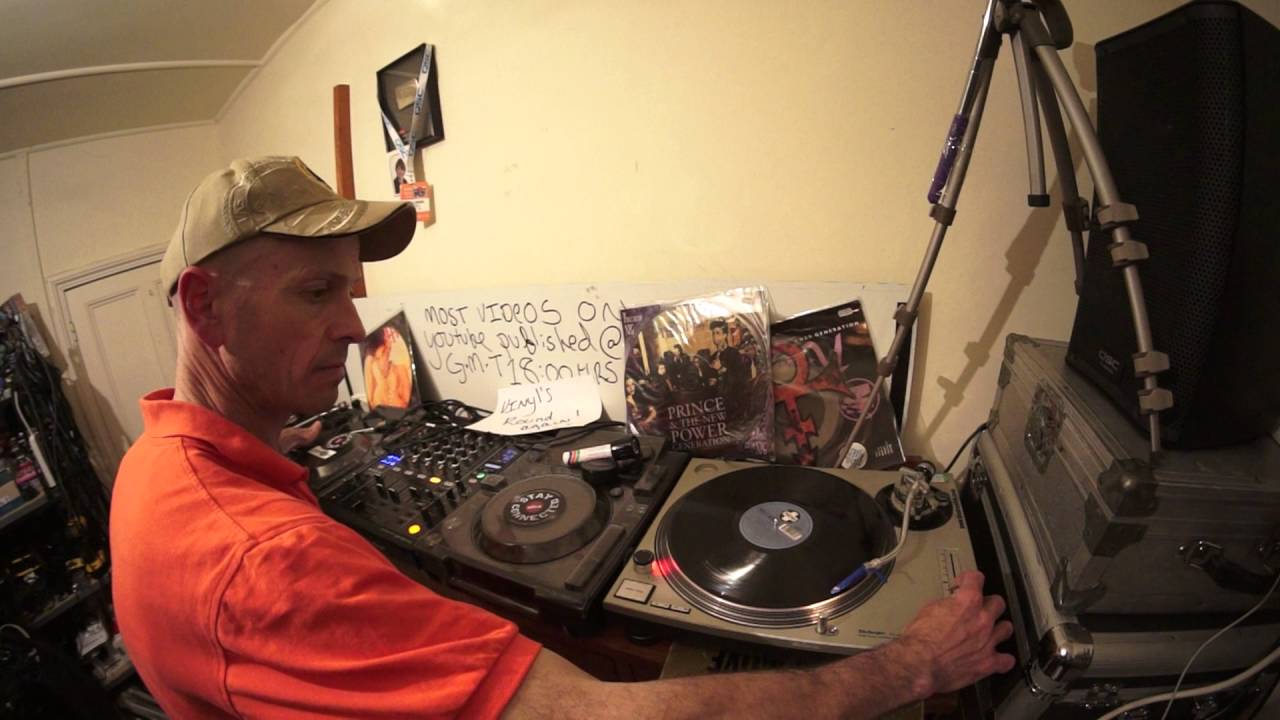
Now this is a Technics SL 1200 Mark II. This is the like the Holy Grail. Of DJ kit. In fact, in a thousand years if we're still around in caves or maybe we're walking around with light bulbs sticking out of our bottoms. Funny place to put a bottom isn't it? Then someone asks you well DJ what is DJ about? It'd be like that. It wouldn't be all like or sort of CD will always be that vinyl. Vinyl is all about DJ. So
You know, you've really got to know what you're doing with vinyl. Now if we go back to years ago when DJ started using vinyl they would have boxes of course all their seven-inch singles and a lot of DJs would know where the singles were and be able to just pull them out. If we go down back to the beginning of like the Ibiza scene the DJ with the box of vinyl records would have pretty much they'd have their set in an entire box. They'd know how this track sounded. They may write the BPM beats per minute on them. But generally they know the tracks inside and out and they'd just be able to go play that one crowd needs lifting a little bit. We'll bring that one in then the crowd needs lifting a bit more.
We won't choose that one. We'll choose that one because that will lift me more or we need to drop them down. So we'll go back over here and bring that one out. That's pretty much how it was. So I'm going to do a bit of a mix now, there's no difference between phrase mixing with vinyl mp3. CDs, spatulas, dishwashers and bananas. It's all the same. Phrase mixing is the key. So I have a track here by Mr. JT Braithwaite, a track entitled Love Me Tonight. So let's just get these in beat. Get rid of those. Did you hear that?
Did you hear also that when I increased the speed of that track? The key increased. Now, let's imagine that these two tracks are within sort of 1% BPM of each other or when they're in beat, you know that the pitches are around about 1% away from each other. If I increase the key of that one, I will also then have or sorry if I increase the pitch of the one on the left hand side, I will also then have to increase the pitch on the track on the right hand side. So it doesn't matter how much I increase or decrease them because they're already quite close to the BPM. So long as excuse me, I make sure that they're in beat. The key will always stay the same because I've got to increase or decrease them the same if you follow me.
So and again to make sure no one thinks this is all set up.
Get them in beat.
7:53 I think it was right about here there two three four
Okay, so
Alright, so what we need to do now, we need to phrase mix them. So I checked earlier on and we've got 16 bars and then we've got that sort of baseline. So what we need to do, of course, is we need to find a point in this track where we have 16 bars and some kind of break. So I'm going to go to here.
I think it was right about here there two three four.
That's why I want my baseline to come in. So I think it was about there when you start to bring that way.
Now again, phrase mixing with vinyl.
You only got one chance pretty much and if you mess it up during a set then you won't be able to phrase mix it. So you've got to try and try and do something else. Now this one here was jumping earlier on. So if I bring it forward
Not too bad now. Now again, this becomes an art. It is actually an art to I wouldn't class throw the track in. I'd class it more as just nudging. Now, you've got to remember the final turntable the platter that is of course that rather large round object like a big plate that's that's moving all the time or it should be moving all the time and in between your vinyl and the platter is what's known as a slip mat. Now what that will do that will reduce the friction of the vinyl against the platter letting the vinyl glide easily over the platter itself. Now there are different kinds of slip mats. Some people will even use a piece of paper and I have been known to use paper you get an eight four piece of paper
You fold it into a small piece. You fold it in half and half again, you rip the corners off and you got the like and then you've got a really really cheap slip mat not advisable though. But if they proverbial hits the fan we're in Wales the khaki hits the fan or fan in it boy. Very good, very good. Then that's all you need to do or you can do right? So I'm going to go back there. So did you hear that tiny sound? That is one of the worst sounds you can hear as a DJ. If you got your headphones on but no it is when you were DJing and you heard that click you knew the needle had jumped and if that happened just before you wanted to bring the track in you cried. You absolutely cried. Well not really but Okay, so
It's my cue. Come on.
Stop doing that to me. Take the bass out.
So there you go.
Right once again final mixing is not easy. It's an art. You get it right. It's perfect. You get it wrong and it's wrong. Hope this has been a help. It's been maybe a little bit inspiring and may make you think about getting vinyl. Also, you have to consider that you're going to be moving around two rather large turntables a mixer and boxes and boxes of records. Records are expensive now. I don't know what they're going to be like in 10 years time or 20 years time. It could be really cheap or even more expensive but go on eBay. You could get some good collections and I'll finish off with them practice and enjoy. Nice one.
That was a talk over by the way.
This transcript was produced automatically from the audio of the video and may contain mistakes.