 5:06
Video 2 a look at the inside of a Dj/club light
Contents of the video
0:00 This is known as the circuit board
Alright folks, this is a video looking at the very basics and the basic components of a DJ light. Now these particular types of lights can be used for mobile purposes or small to medium nightclubs. If they're used in nightclubs generally you'll find them hanging on what is known as a light trussing rig that will be situated nine times out of ten above the actual dance floor, above your heads. Now this area here, you can just about see it if I move it slightly over to an angle You can see this compartment here, this area. This is known as the circuit board. This is like the brains of the light. Basically what happens, this is the area in which the components on this circuit board tell the light what to do. This part here, you can just about see the bottom of it, that's the actual bulb. This particular bulb is a discharge bulb. This area here is a similar sort of thing to let's say a car headlight.
And then a car headlight and the actual inside of the car headlight is almost silvery colour and what happens here, the bulb shines inside here and this forces the light, it points the light up through the little hole here up to the mirror that you'll see very shortly. This thing underneath the actual light is known as the transformer. What the transformer does, it changes the power. And what I mean by that is that generally the power coming into this unit in the UK will be 240 volts. What will happen is the transformer will reduce that power down to around about anything from 12, 24 to 36 volts or thereabouts. These things here are known as capacitors and what they will do, they're almost areas, they're a bit like a battery in a sense. They will house a certain amount of power ready for when it's needed.
1:49 That very shortly
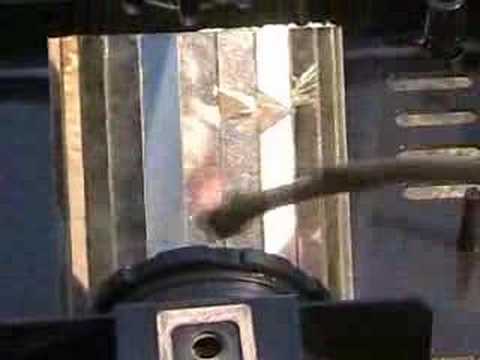
Here is another small transformer. Now then this area here, the circle area, if you can see small tiny shapes, if I just pan a little bit closer, now then that is run by a stepper motor. I'll explain that very shortly. Now I don't know if you've ever noticed on the walls of nightclubs and in discos you can see these shapes flying about everywhere. What happens is the light shines from here, it shines in here, The light then will pass up through one of these, through the little hole there, continue up through an actual hole here, through a couple of lenses, hit this guy here which is a mirror, or lots of mirrors, and then of course then the light travels then whichever direction the mirrors will take it, up against the walls or on the floor etc. Now I'm just going to tilt this a little bit forward. OK, what else have we got here now then?
A couple of lenses here, there's one there and one at the top there. Now what these will do is they'll basically increase the actual power, increase the light intensity coming from that bulb and you can, if I just go a bit closer, there's the actual bulb there. Now these guys here are stepper motors. Now then what they will do is one of them will move, they'll actually move different parts of the light Now if you can see here, you've got like a paddle. Now one of them will move this, so as this travels across over that hole and then away from it, it will actually start what's known as a strobing effect. So when it's across over that hole, the light will stop coming through here. When it's away from that hole, the light will shine through. So of course, you get a strobing effect. And then what happens then, like I said, the light travels from here through all of these areas.
3:53 Hope that's been a help
Up through this last lens, hit the mirror and shine across onto the dance floor. And then the plastic area you can see is basically the housing but there is another plastic area in front of this covering all of the internal organs, workings, whatever you want to call it. So there you go, there's a very sort of brief description of the ins and outs and the workings of a, when I say basic, this is slightly above a basic light. But it'll hopefully give you a general idea of how they work. Hope that's been a help. Thank you very much for watching, practice and enjoy. Actually I did very quickly, I forgot to mention this area here is a fan. Now then basically what the fan is for is to cool the actual unit down because the bulb will get exceedingly hot and without a fan
Basically what would happen, the bulb would explode, everything would overheat and within less than one or two minutes this particular unit would stop working. So what happens is this fan will suck air in from one end, blow it out the other, causing a continual flow of cool air cooling the entire unit down. Thanks for watching.
This transcript was produced automatically from the audio of the video and may contain mistakes.