 9:40
Why a DJ uses headphones at all
On YouTube this video is called Why does a DJ, Video 1, Use headphones?
What this lesson teaches
He made this because people kept emailing to ask it, and it is a completely reasonable question. You watch a DJ with one cup pressed to an ear, nodding, doing something - and there is no way to know what they are listening to.
Two sources, two destinations
A DJ has at least two things that make sound: two turntables, two players, a controller with two decks. It does not matter what they are.
The room hears one of them, through the PA.
The headphones carry the other. That is the whole arrangement.
The cue button
The mechanism is a button marked cue on each channel. Press it and that channel is sent to your headphones regardless of whether its fader is up. The channel can be completely silent as far as the room is concerned while you listen to it in detail.
So at any moment: the crowd hears whatever the faders allow, and you hear whatever you have cued, plus - with one cup off your ear - the room.
You are the only person in the building hearing both.
What you are doing with that
Everything that has to happen before a track becomes audible. Finding the first beat. Getting it running at the same tempo as the record that is playing. Checking it actually works against what is already going on.
His demonstration of the alternative is the useful part: he starts both tracks blind, with no cueing and no listening, and the result is exactly the mess you would expect. The headphones are not an accessory to that process, they are the whole of it.
The moment the two converge
The part worth watching for is what happens as the fader comes up.
Until that moment, the cued track exists only in your head. As the fader rises, it starts appearing in the room as well - and the thing you have been working on privately becomes the thing everybody hears.
That is the handover, and it is why the preparation matters. By the time the fader moves, every decision has already been made.
Contents of the video
0:00 Player, together first, these
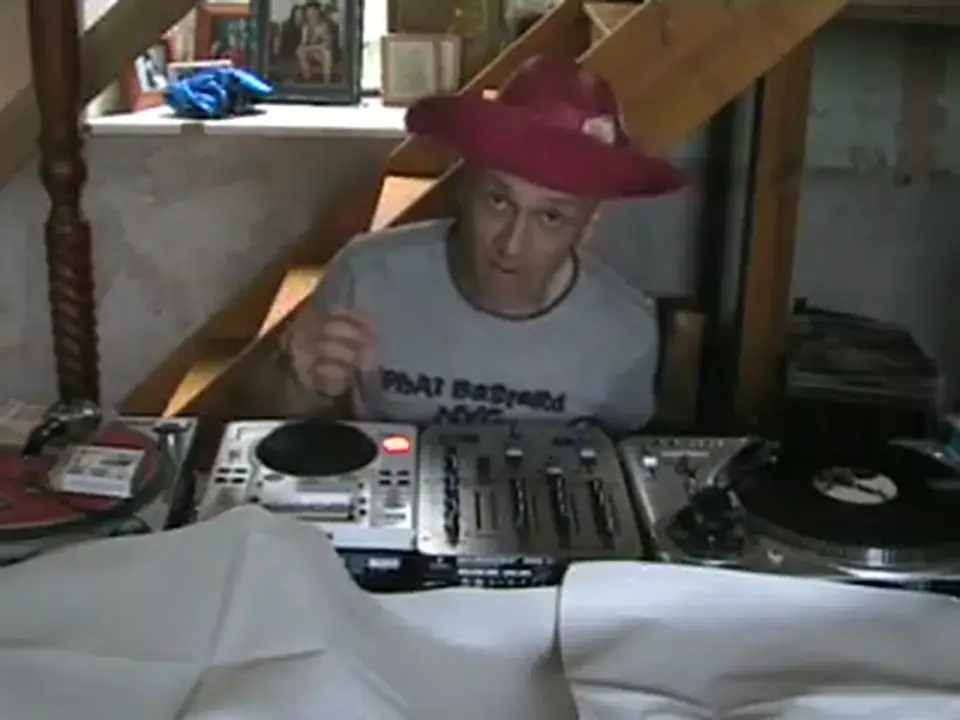
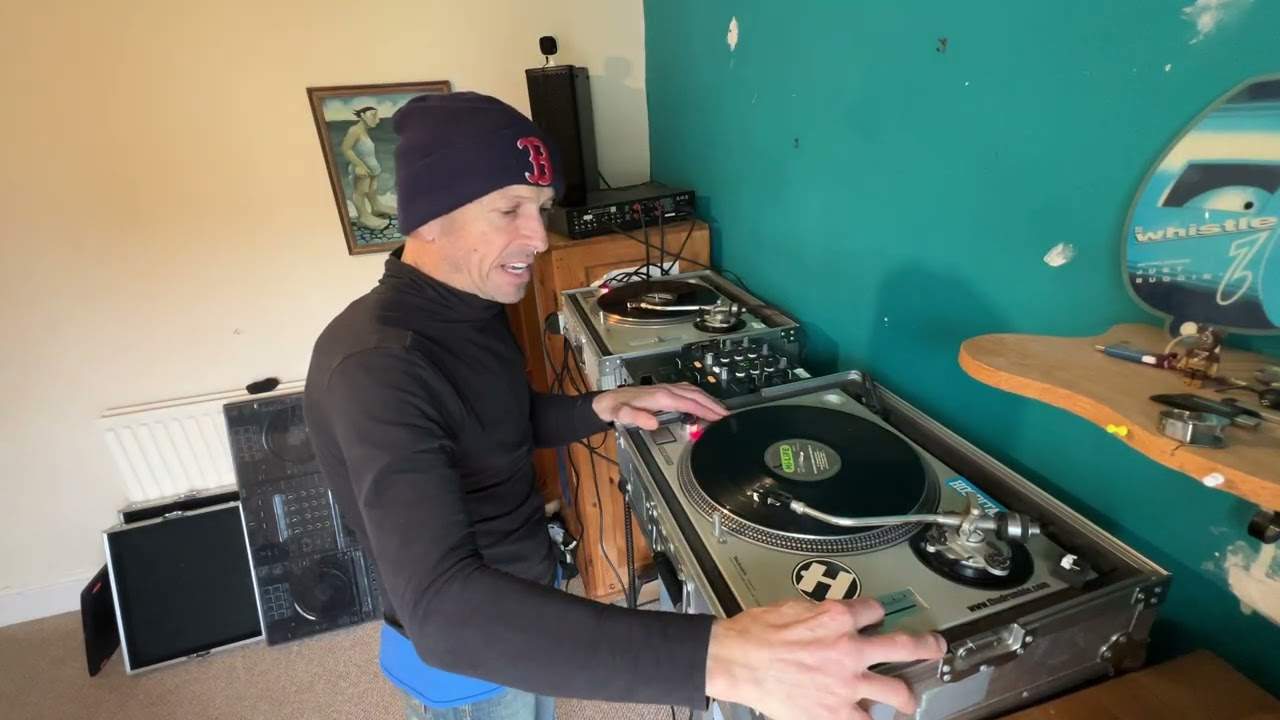
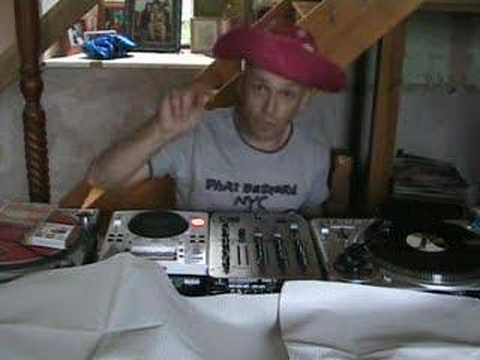
Alright folks, we've got a set of videos coming now and they are targeted at the complete total and utter novice. In other words, if you've never touched a turntable or CD player in your life and you've never seen a mixer, then these videos are for you. Now then, I've had quite a few emails, people have been asking me, what do people listen to, what do DJs listen to when they're using headphones? In other words, you see a DJ and he's like this, he's got his headphones on, he's doing this, well what is coming through here? If you think about it and you're a DJ, you know. But then again, if you think about it on the basis of, well, if someone's never ever heard what's coming through here before, how do they know what's coming through here? Quite a logical question. And there is a logical answer. Now then, very quickly, where a DJ is concerned, quite often they will have definitely...
Two sources of music. Now, it can be anything, OK? It can be a keyboard, it can be an effects, a drum effects unit, it can be a CD player, it can be a PC, it can be a turntable, a CD player, basically anything that makes music. The whole concept of a DJ is he can or she can mix two forms of music together almost to make one. Or, he can start off, he or she can start off with one form of music, then blend another one in, and then let the second one play and take the first one out. Now then, headphones, where we start to use the headphones is where we have that terminology that I described, blending. The usage of making the two come together. Now, first of all, I'm going to play you two different types of...
2:26 I have both volumes up on my mixer
Two parts of music, one from the CD player, the CDJ, and the other one from the turntable. Now then, listen to these because I'm going to have to mix these two together, okay? First of all, here's the CDJ. Right, we'll cue that up and get that started ready. Start at the beginning. Okay, now here's the other one and the other piece of music is going to be on the vinyl turntable. Now then, if let's say... I have both volumes up on my mixer. I have the crossfade in the middle and I start, and I start the two together and I play them together without listening to beats, without cueing anything in, without doing anything. Just for a start, this is what it sounds like. In other words, it's absolutely all over the place. Alright, now this is where we start looking more into how to synchronise beats and beatmatching.
Go and watch those videos. What we're on about here is what is going on in this guy here. Alright, now again, normal headphones are two, left and right. I've only got a right side or a left side, it depends on which side you want to listen to. But the main thing is, is you need one source, you need one headphone at least to be able to listen to one element. Now then, an easy way of describing it is this. Let's say for example, on your PA system or if you're looking at a DJ, this is the easy way of describing it. If you're looking at a DJ and you are listening to the music he's playing, okay? Now then, that music you're listening to is coming through the big PA, the speakers, the hi-fi, whatever. But the DJ will also have to listen to the music, well he'll listen to the music you can't actually hear yourself. Now then...
For example, let's say you're listening to the music that's coming out of this turntable. The music coming out of this turntable is going through this mixer and through the big PA. But at the same time, the DJ can hear what's coming through the CDJ, through the mixer, and he can hear that through his headphones. Not only can he hear that through his headphones, he can also hear the music that's coming out of the main PA. The reason being is because he will have his headphone on this ear, like so, listening to the CDJ. And then the other ear is going to be listening to the music coming out of the PA. Now the opposite can apply. Let's say the CDJ is playing the music out of the main PA, so you can hear the music out of the CDJ. Now then, the DJ then can hear the music that's playing out of the main speakers.
But, by pressing a couple of buttons, he can then hear the music that's playing on the vinyl turntable without you hearing it. Now that is the main thing, okay? That is the whole policy and philosophy behind using headphones and when you see a DJ using headphones, that's what he's doing. Now I'll give you a demonstration, alright? Let's put the volume up on the turntable.
5:27 I'm going to cue this up ready, using this on my right ear
Now, what I need to do, okay, and you need to watch a few other videos so you can see exactly what buttons I'm pressing, etc. But, what I'm doing now, volume up on the turntable. Right, now what I'm going to do now is I'm now going to cue up the actual volume or cue up the CDJ and listen to the CDJ only through my headphones. And not through the main PA, just through my headphones. So I'm going to cue this up ready, using this on my right ear. Okay, now I'm listening now to this through my headphones. The volume on the mixer on this channel is down. Now I'm going to slowly bring the volume up on this channel and have a listen. Okay, there you go. That's up and that's finished, okay? What I was doing...
It's basically, I was listening to this through this headphone, I was listening to the CDJ, while the volume was down, I could hear this channel. I could also hear the main PA through my other ear. You could hear the PA out there, but you couldn't hear what was coming through here, alright? Now then, again, dodgy hat. What I'm going to do now is I'm going to run this turntable back... A little bit, I'm going to mix it properly now, OK? Utilising headphones to listen to this one and utilising the main PA so you guys can listen to this but you can't listen to the headphones. And then as I slowly increase the speed, you will actually be able to hear what I am listening to as well through the headphones. But at the same time, what's happening...
7:18 The music then is starting to mix
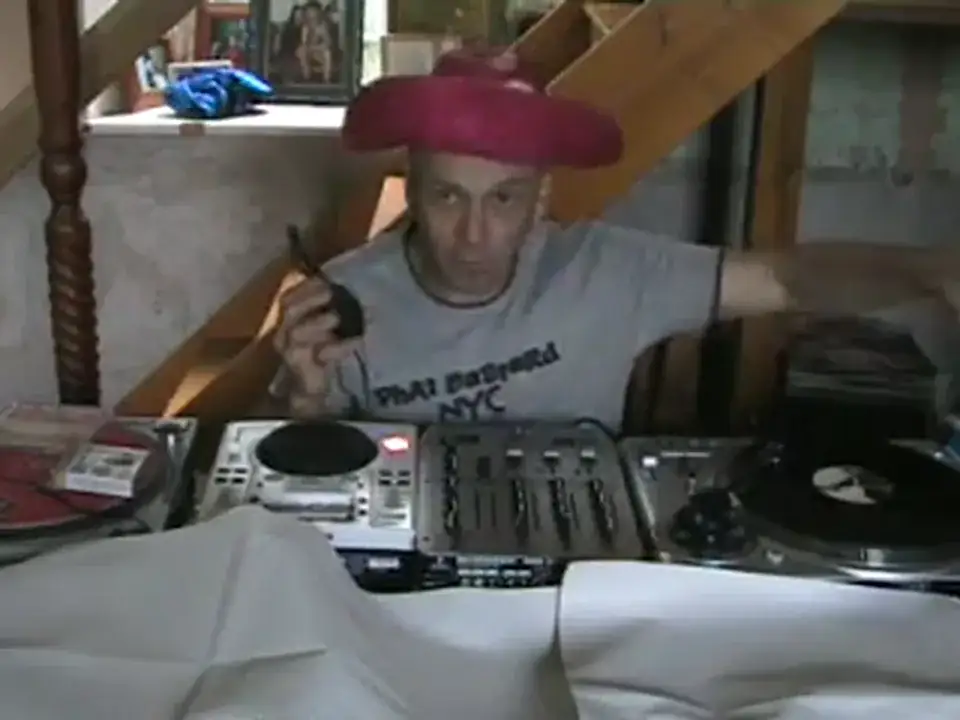
The volume that's coming through this headphone will slowly be coming through the main PA as well. And that is when we start to get the mix. That's what's happening. The music then is starting to mix. So let's try it. Okay, so what I'm going to do now is slowly bring the volume up. Let's start it off again. Sorry, it's halfway through. Okay. And go. Wrong one. It's alright, I'm going to start that again.
The principle behind using the headphones. Now then, again, if you think about it, alright, for someone just to say, well you play that, listen through here and you play that on the PA, you know, fair enough you may be explaining it, but what I'm trying to do in my videos is explain it. As in-depth as possible so anyone can understand it. Thank you for watching, practice and enjoy.
This transcript was produced automatically from the audio of the video and may contain mistakes.
This video is part of
Related videos
-
Complete Beginner DJ Lessons Tags Key BPM Etc
A more advanced lesson folded in early, and worth doing once rather than putting off, because everything it sets up gets used for years…
-
Complete Beginner DJ Mixing Lessons Video 19 Getting Your Kit Ready for an Easy Mix
A whole lesson on getting ready, which is the right call - the exercise in the next video only teaches anything if the two decks are…