 9:36
Why you dont get a good sound with too much bass.
Contents of the video
0:00 You must excuse me today because I've got hay fever
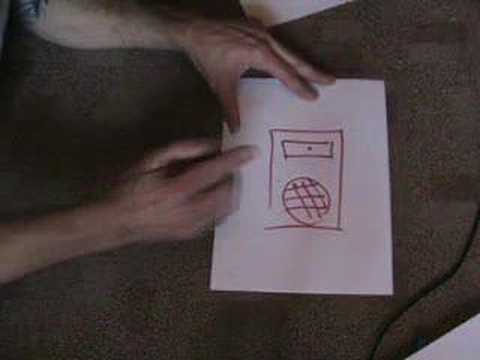
Alright folks, Jonathan here. You must excuse me today because I've got hay fever. It's a blinking pain in the arse. A lot of people have been mentioning about speakers and they want bass cabs and they want to know what speakers go where etc. Now, I'm going to give you a bit of a tutorial here on the good ways and the bad ways of using bass. Now we all like to have loads of bass booming all over the place but sometimes too much bass could be a problem And also, more importantly, could be a problem whereby you're trying to mix and you can't hear the music correctly. Now then, it could be because you're just turning up too much bass. I'll explain. Right, first of all, before we talk about why you're having problems with too much bass, let's look at a basic speaker. Now we've done these a few times. There you've got your bass, speaker with a bit of mid and top coming out of it, and there you've got a horn.
Now, of course, you can have it in all different shapes and sizes. Again, bass speaker, and you could have bullets tweeters there. Or, alternatively, you've got something like this with a bass speaker there, and then you've got a mid-range which is slightly smaller, and then you've got horn. And don't forget, if you've got a three-way system, it's almost equivalent of the bass on your actual mixer, the mid,
1:29 On your mixer, and then this one here is the top
On your mixer, and then this one here is the top. That's your treble. Now then, ah, never get a-fever, it's bloody horrible. Right, now there's something called frequency range. Now then, if you, let's say, drew a line, OK? Now then, let's say that line was, that was bass, and this was mid and top. And, oh, I can't even spell. Dear me, I'm going to leave this, who gives a monkey's? Mid and top, right, now then. What you've almost got here is you've got the hand clap, like this, really, really strange wiggly lines, and as you get into mid, they go a bit bigger, and then bass, they're like this. Alright, now just bear that in mind, that could be totally nothing to do with what we're talking about here anyway, but that will give you sort of a general idea. Now then, a speaker. Let's look at what a speaker looks like, OK? We're going to have a cross-section, and basically if you can imagine...
A round speaker like that, and there's the middle. What we're doing is we're chopping it right in the middle. So it looks something like this. And there's the magnet there, and it goes up and across. Now this here, if you imagine this bit here, that is the actual diaphragm. That's this bit around here. That bit in the centre is the centre bit where the magnet is. Now this bit here is the important bit. This is the coil, okay? Now then, I want you to bear that in mind, the coil, okay? Because that's the important bit we're going to talk about. What I'm going to do now, I'm going to split that particular diagram into two different diagrams now. Exactly the same, but I want to show you something. Now then, there's the spider, like so, okay? If I do it that way, that's probably a bit better for you, isn't it?
And then exactly the same here, there is the magnet. Now then, maybe you can see a difference. Of course nothing is to scale. But, now then, here's the coil. Now the coil in a speaker, OK, and there's the coil. Whenever that speaker isn't working, the coil is quite happily nested either side of the magnet. Well in fact it's actually around the magnet, but this is like I said, it's a cross section. Now when your speaker in your system is working, and it's going boom, boom, boom with bass, it's actually moving away from the magnet. Now it's moving quite a lot dependent on how much bass you're throwing into that speaker. Now then, this is very important. If you've got, for example, a speaker, And a mid-range like that. And all of a sudden you're throwing loads of bass into that speaker, OK? What's happening is that coil is moving away from the magnet. Now then, sound in music 99% of the time is a constant. In other words, if you can imagine vocals, melody and bassline continually being played, that music is... Excuse me.
5:13 All of this is going to be continually played through this speaker her
All of this is going to be continually played through this speaker here. But what's happening if all of a sudden you've got a big bass punch, boom! Now the coil is going to move away from that magnet. Now what is actually happening for a fraction of a second, but this is happening many times over the course of let's say that song is being played, the coil is going to be moving away from that magnet. is that any sound made just after that coil has left the magnet won't be heard or won't be heard correctly. Now then, if you can imagine, again, you have got bass and you've got mid and you've got a two-way speaker and you've got a two-way speaker like this there's your bass and there is your top Now then, if you put too much bass into this speaker, this is going boom, boom, boom, alright? Now, you will get bass, without a doubt. But, this guy here is also doing a lot of mid, here. Now then, quite often in music, the mid...
7:14 Your setup
This is the part that you like to hear because that's where the melody is and the vocals. Now, if this speaker is moving too much and it's moving out, as soon as it goes bam, it's out, any mid, any vocals, any melody might not be heard correctly. Now, this is why it's a good idea to not actually have your bass turned up too much because what you're doing is you could knacker or blow or break the speaker. Well, when I say hurt, I mean it's not good to have it loud all the time because of your amplifier. You could overheat your amplifier. But more importantly, you won't be hearing the mid correctly. Now then, if you want to have a good sound through your speaker, OK? The only thing to do is to turn the bass down a little bit, OK? Just a very tiny amount, alright? Now, try this. Go to your setup.
And turn everything up as you normally would and see what it's like. And then what I want you to do, I want you to turn your bass down a tiny bit and then turn it up to the original volume you had it in the first time, when you tried it the first time. And just see if there's a difference in sound because you might find that the mid is a lot better and a lot clearer. Now the last picture I'm going to show you, because I think my ten minutes is running out of time, is... Why people then have a two-way system? Or, let's say, bass and then, like Brian S. Redd has got it. There's a big bass cab that could be, say, the 18 inch. And then this could be a 12 inch and a 1 inch known as a compression driver. Now then, in a situation like this, it's fine to turn up the bass because what happens is this 18 inch driver will just be boom, boom, boom doing the bass and no mid. This one here
We'll be doing the mid and no bass. And this one here will be doing the top, and that won't be doing any mid or any bass. So, I mean, I hope you get the general idea of this particular video. It's basically to show you that by turning up the bass too much on a small setup, say in your bedroom, where you've just got a small speaker, say, I don't know, an 8 or a 10 inch or, say, a 6 inch Thanks for watching. Practice and enjoy.
This transcript was produced automatically from the audio of the video and may contain mistakes.