 9:13
Beginner Drum and bass DJ Lesson Mixing in Phrase
Contents of the video
0:00 Yes, ladies and gentlemen, like the Renegade Master, you can't get rid
Yes, ladies and gentlemen, like the Renegade Master, you can't get rid of me. Time for another demonstration stroke tutorial. This one is for a beginner DJ and it's mixing drum and bass. Now, possibly one of the most difficult genres to mix because it's all over the place. There's loads of beats going on. There's just the hi-hat, the snare, the drums. For some people, it can be a drumming nightmare. But it's actually quite easy, believe it or not. Now, just to let you know, the track I'm using is, I think it's Rufel's Grey Code Remix, Camco and Crooked. I hope I got that right. If I haven't got it right, do apologise. A big shout out to Hospital Records for letting me use their tunes, by the way. There will be a link in the description to Hospital Records.
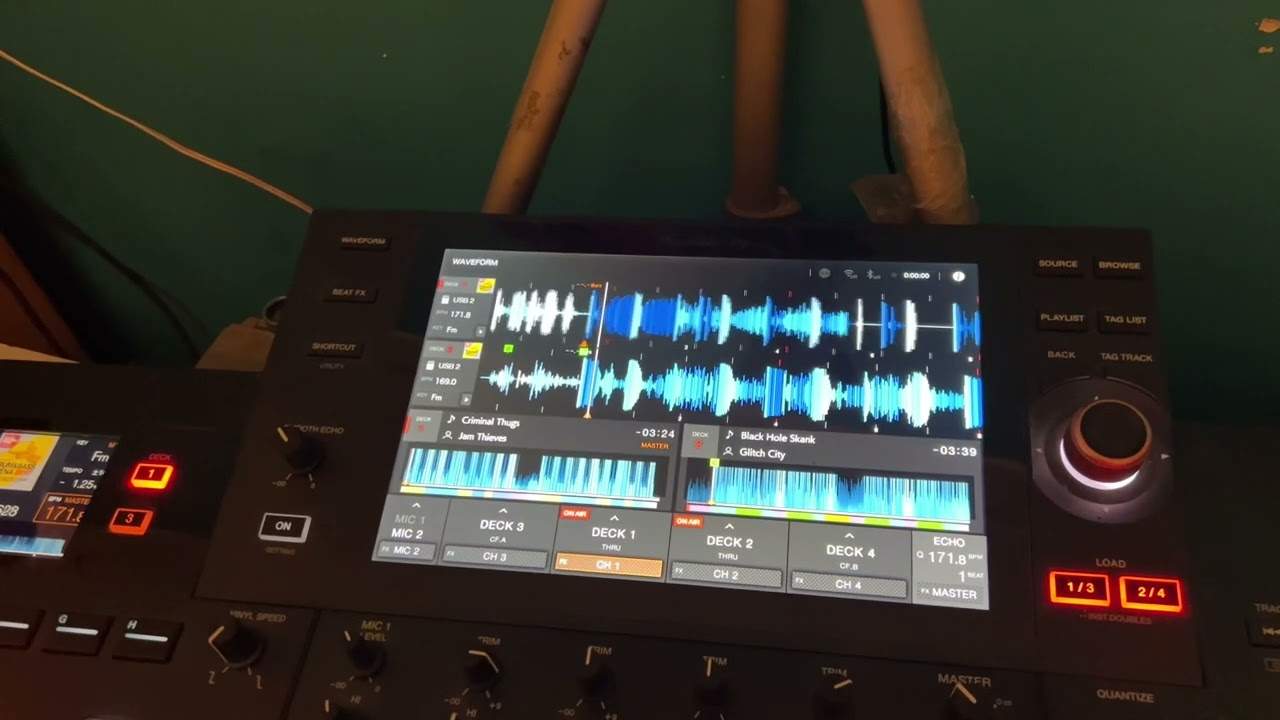
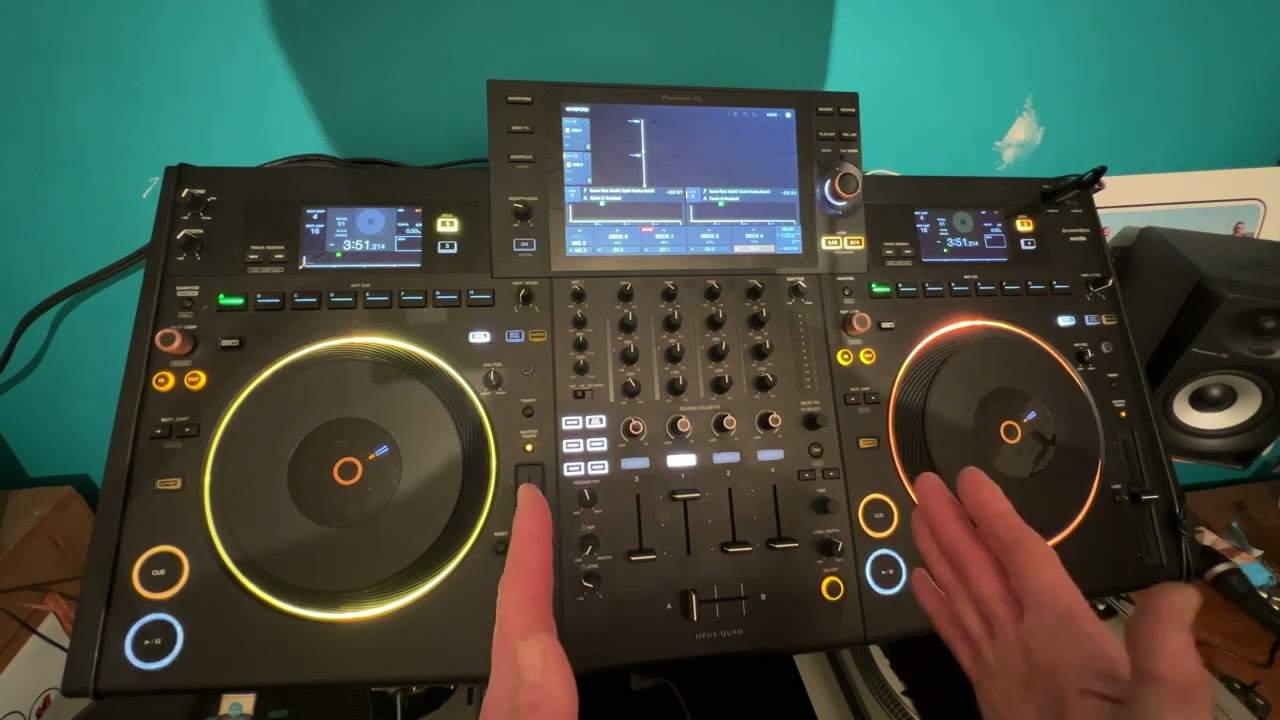
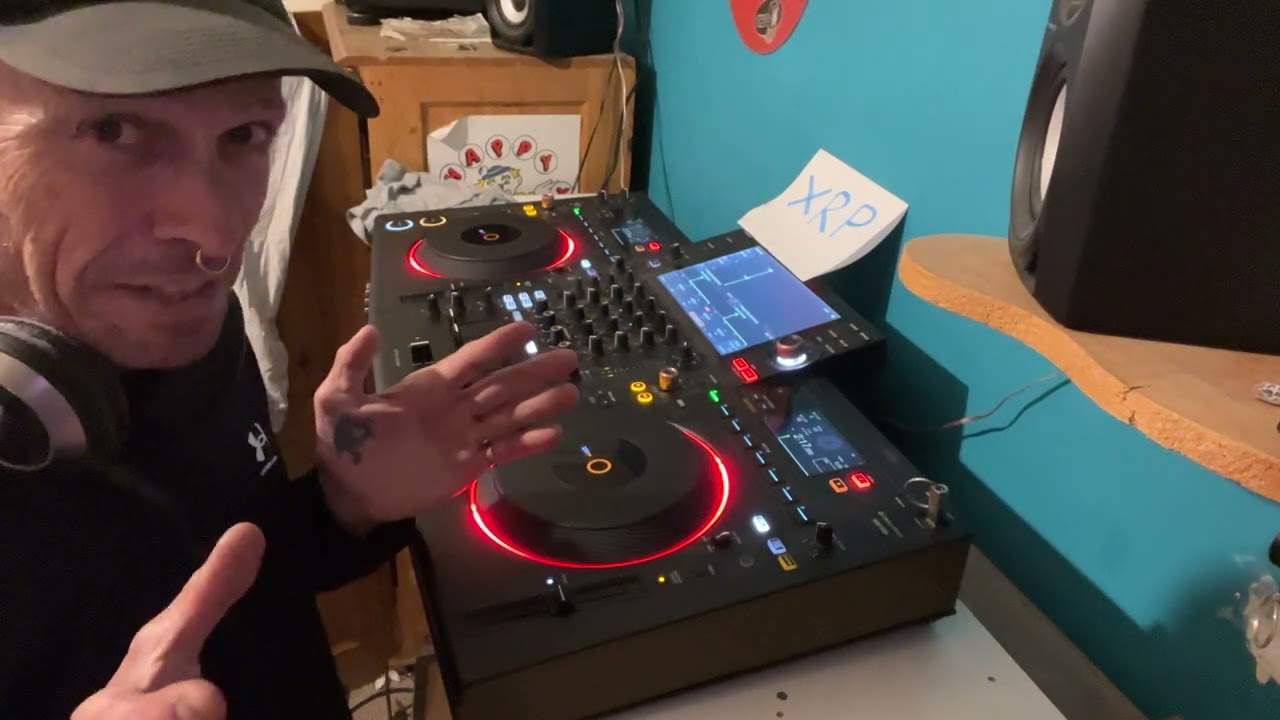
I'm using the Opus Quad. I've also, what I have done again, because this is for beginners, I have set this deck so we're on reset. So what that means is no matter where I put the pitch control, both sides will be exactly the same speed. So we're not going to do any necessary, we're not really going to do sort of beat matching, even though we may have to just... move the jog wheel slightly. This is more so about your timing and bringing the track in. Now, also what I've done, I've set a hot cue at a certain point. Have a listen.
1:37 It should be relatively straightforward
Stop it there. And on the other side, exactly the same hot cue.
Right. So it should be relatively straightforward. Now, what we're going to do here is almost like the wax on, wax off. And I personally think this kind of... practice is paramount because what you're doing is you're giving yourself muscle memory. In other words, if you do things again and again and again, you get to the stage where you don't even have to think about it. It just happens automatically. So what I'm going to do, I'm going to mix. I'm going to start the one side. I'm going to wait for sort of one or two bars. Start the other side, bring it in, take out the first side and then repeat the process. I'm going to do it the right way to begin. With and then I'm going to do it the wrong way after. I've done it the right way and then the wrong way.
I'll explain why the right way was the right way of the wrong way was the wrong way. Hope that makes sense. Anyway, here we go.
I believe I did the right way the wrong way and then the wrong way again. Now, so what was happening now in music apart from the beat there than the key and so on you will always have or most of the time you should have structure in the music itself. So what was happening is the track was going through its own structure. The musical content was going through a certain structure and then that structure was being repeated. So what I tried to do is the first time I form that transition, I was trying trying to keep in time with the structure of the music. So if we listen so
Fellow now here there it changes. Very slightly.
So what I'm trying to do is keep in time with the structure. Now, I could make it sound even worse by starting it off at the wrong time as well. Now let's try and do that and believe it or not when you're so used to getting it in time. Trust me on this as well. Maybe you're finding it difficult at the moment. But when you do get to the stage where you don't even have to think you always get it in time. It's actually more difficult to get it out of time. So here we go.
5:07 Why is drum and bass quite easy to mix?
So what happened there instead of me starting it, you know, 1 2 3 4 1 2 I was starting at 1 2 3 and then half a phrase inside the phrase. So that's where it can sound nuts. So why is drum and bass quite easy to mix? Well, what you'll find with D&B drum and bass is that it's formatted in groups of 16 bars. Now, I would hazard a guess that 99.999% of every single drum and bass track is 16 bars a change, 16 bars a change, 16 bars a change and so on. Now very often as well when you get to the break and just try this, just choose a track and try it and you may find hopefully cross fingers. I'm right. When you have a break very often, it will be 16 bars and you should have eight bars of kind of this slow melody with a bit of a tap in the background,
Which is your snare, your hi-hat, maybe as well. And then all of a sudden it will start to double in speed after four bars. It will double in speed two bars one bar bang. So it's almost like half half half boom. Now what that does in drum and bass? It gives the it picks up the vibe and energy gives you more euphoria for the drop and very often if you have two tracks that work really well together and you put them in time in the phrase, sorry, not in the phrase. Sorry in the break. That's when you can get a wicked double drop. So what I want you to do, okay, if you're not familiar with drum and bass again very briefly get the same track load the same file, same track on both sides, set a hot cue at the beginning of a phrase and just wax on wax off wax on wax off.
So let's do the same thing again. Here we go. Yeah, I'll play that one first. So two three four one two, three four and start.
Other side
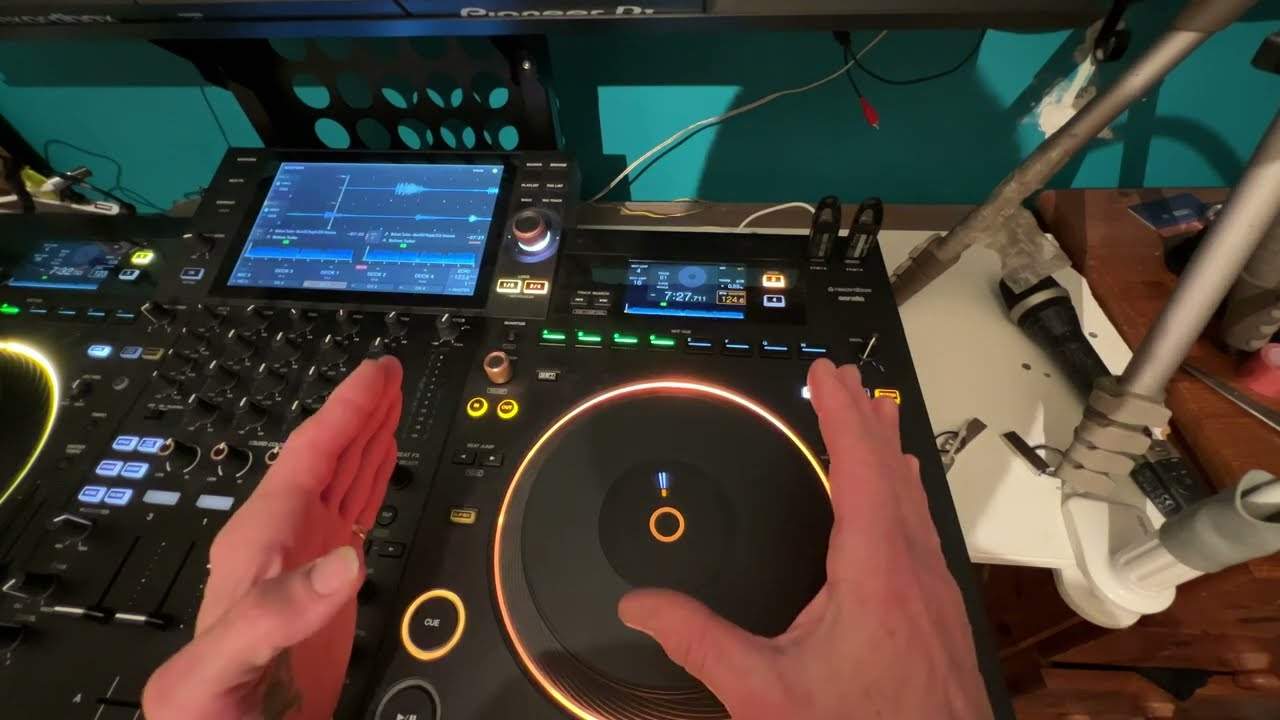
For now you notice as well. I may have been using the jog wheel very slightly. Now that's because when I pressed play, I'm not a machine. Maybe I was slightly too soon or slightly too late. So of course, I'm going to compromise. Sorry, I'm going to compensate or compromise. I'm going to compensate for that by of course moving the jog wheel. Now if you're too late, at pressing the play, of course, you will need to move the jog wheel clockwise to nudge it forward. If you're sorry, if you're too late, if you're too soon, I beg your pardon, you will need to move the jog wheel clockwise because if you too soon, you know that means the beats already started you too soon clockwise. If you're too late, no, sorry. Oh God,
You want to try doing this? You know seriously, if you're too late touching the job, I'm not, you know, some people say, oh, you should edit these things. I'm not going to edit. Why? It's because you can see how fun it is and how mad if you're too late at hitting the jog wheel, that means you're going to be behind the beat, which means you have to move the jog wheel clockwise. If you're too early, you're going to have to move it anti-clockwise to slow it down. My apologies. All right, sorry about that. Yes, I know. Anyway, thank you for watching. Don't forget. Leave us a comment. Let me know what you think and also in a comment, if you feel you've got an idea for another demo or tutorial or something like that, then give us a shout.
Let me know where you are around the world, what you're doing, what time of day it is, what you had for lunch? Maybe not, but thank you for watching practice and enjoy. Thank you.
This transcript was produced automatically from the audio of the video and may contain mistakes.
Related videos
-
Complete Beginner DJ Lessons Video 26 Practise Play Pause on Time in a Bar
The shortest exercise in the course, and the sort of thing that looks too simple to bother with. The drill Press play at the start of a…