 12:32
Easy DnB Mixing Lesson Looking into the Structure of the Phrase
Contents of the video
0:01 Another beginner DJ lesson for any DJ out there who's basically just s
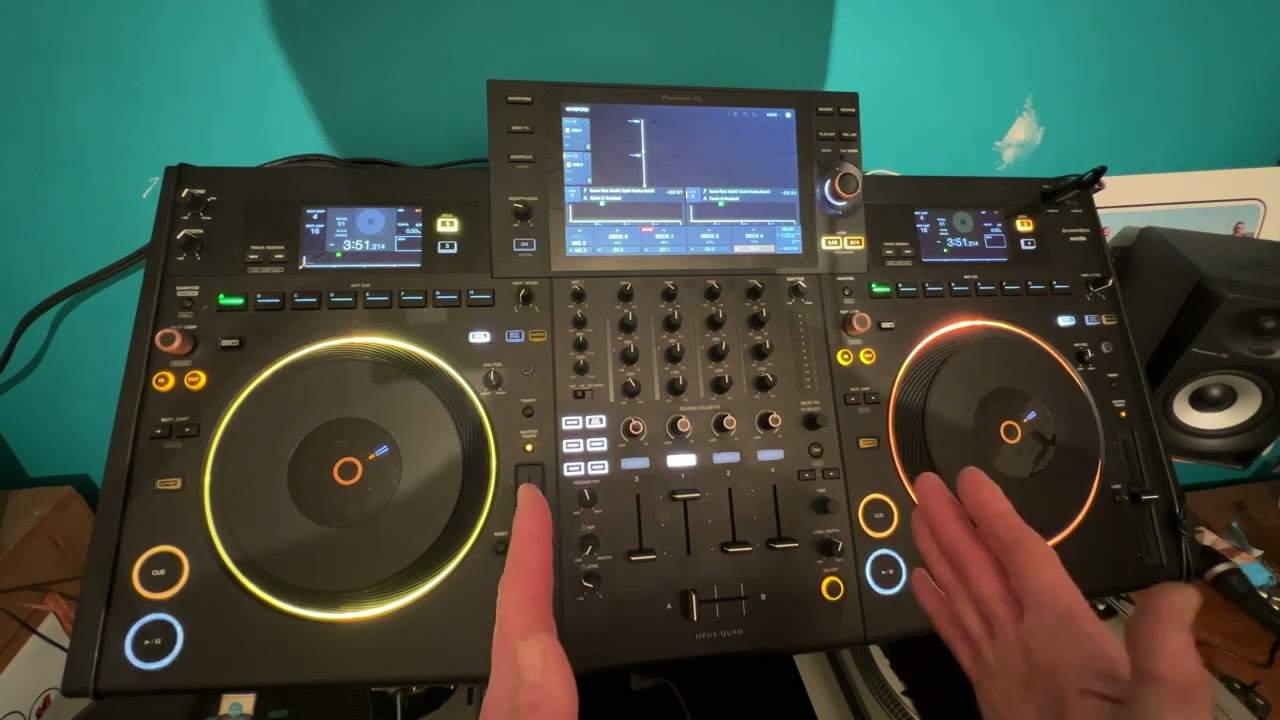
Right, ladies and gentlemen, another beginner DJ lesson for any DJ out there who's basically just started. And again, I emphasise this is a beginner DJ lesson. I'm using MP3 files. I have the Pioneer DJ Opus Quad. And as you can see, I'm only using MP3 files. If I was using a proper file put through rekordbox, we would of course see the WAV format, but we haven't got it. So it doesn't really matter actually, because even if you are a beginner DJ and take this, please put in a comment if you do or don't agree with me. I think this is good advice. And that is try not to abuse the software that you're using. In other words, try not to, you know, look at everything that's in key and BPM and phrasing and so on, because if you learn the easy way, it's very easy to get into that rut of just relying on the screen in front of you.
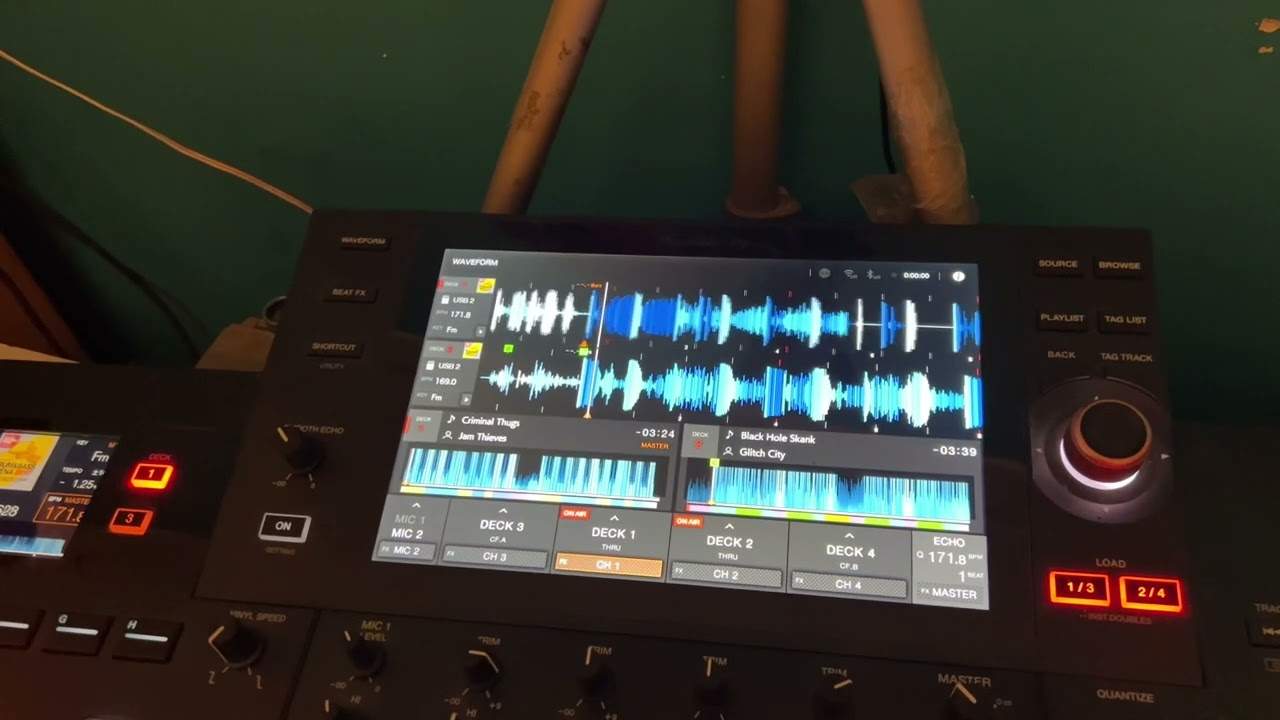
Whereas if you learn the hard way, it's a lot more difficult. Yes. There is the shadow of me in the background. Hello there. Right. Okay. So I have a tune here from Hospital Records. I have used this in a previous video. This is Aurora featuring Metric. This is the Justin Hawkins remix, Camco and Crooked. So what I'm going to do now, first of all, let's get everything set out. Okay. So let's try and go and explain. I'm going to explain exactly what I've done. I've got the same. Track on both sides, basically a mirror image. Now you can do one of two things. You can press the reset button on your controller. What that will do if you have one, it will put the track exactly at the correct speed. So it doesn't matter where you move the pitch. It's going to stay at the correct speed. Alternatively, what you can do, which is what I've done, you can see on the screen, the tempo is 0.00%, which means it's exactly at the correct speed.
2:45 Alternatively, if you want to, of course, you can use the crossfade
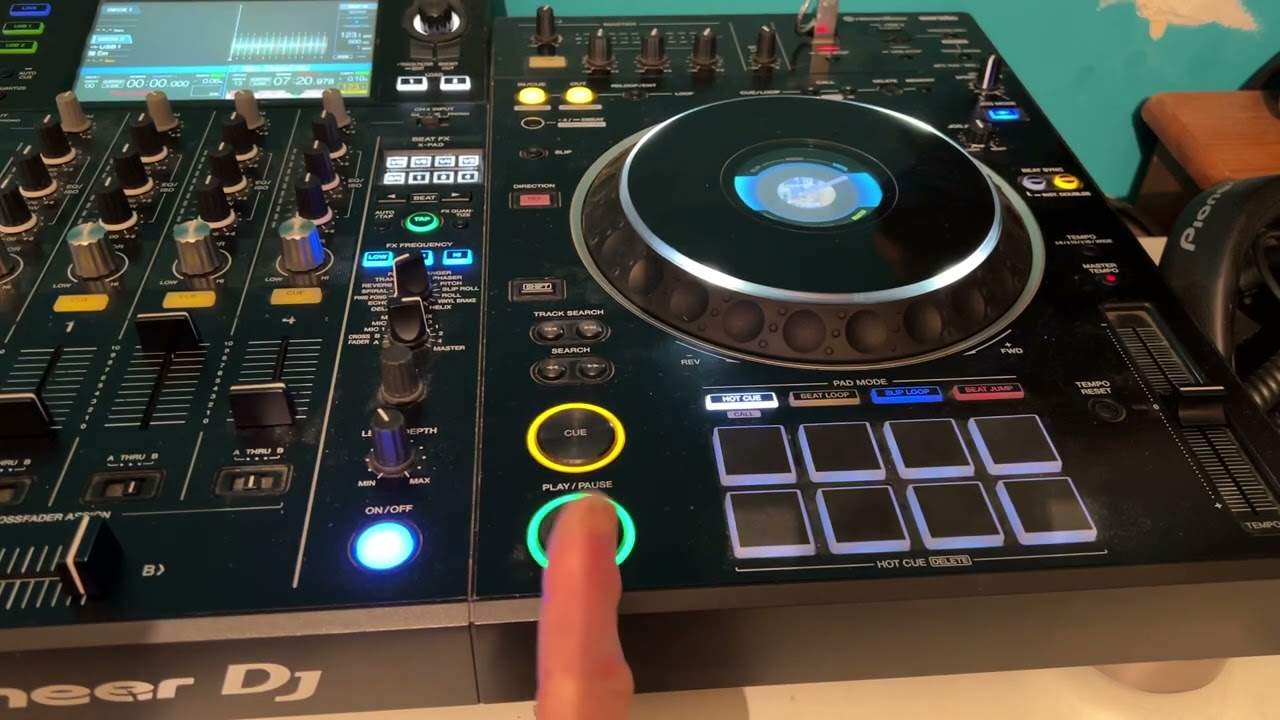
It should be same on the other side, plus or minus 6%, but that doesn't really matter. I've set a cue point here at the drop. So what I'm going to do, I'm going to explain first, I'm going to let the track on the left hand side play. I'm going to press the right hand side. Now we can do one of two things here. There are so many different ways of doing this, but we can either use the up faders, left side up, slowly bring the right side up, left side down. Alternatively, if you want to, of course, you can use the crossfade. So if you use a crossfade that is, of course, engaged, then what you will do, you have a crossfade on the left hand side. As you as you go through the transition, you do the transition, you'll slowly move the crossfade to the right. And then you're going to repeat the process of starting the left hand side. Now what you would normally do or sometimes you just cue
It up and wait for the, the drop or wait for the next phrase and start the other side. But what we're going to do, what I've done is I set cue points. So as soon as I hit that cue button, it will automatically start from the cue position. So what I'm going to do first of all, is talk you through the demonstration while I'm actually doing it. So let's just make sure we've got, let's press the first hot cue. Now again, right hand side, exactly the same hot cue. So also while the track is playing, I'm counting in my mind. One, two, three, four, one, two, three, four, one, two, three, four, one, two, three, four, and start. Now I can hear a slight echo. So what I'm going to do is just jog the jog wheel until I can hear the sound almost in the middle of
My head. I know that sounds a bit bizarre, but that's when you get a phasing sound. There you go. You see, you can really hear the transition at all. Now what I'm going to do, I'm just going to stop that track there. Let's bring the volume back up. I didn't have to do that. It's just the crossfade again. I'm still counting four, one, two, three, four, one, two, three, four, one, two, three, four, and start.
Start there and the other side now looks pretty simple pretty straightforward and I'll be honest with you it is but if you are a beginner it can be a logistical nightmare now one very important part is with drum and bass inside the phrasing and drum and bass is probably one of the most formatted styles out there because what you will find is each section pretty much is 16 bars 16 bars change 16 bars 16 bars even the break quite often is 16 bars and that quite often is cut up into segments so you may have eight bars of like a mellow kind of feel after the eight bars you'll have the beginning of you know the build-up after four bars the build-up will increase after two bars it will increase one bar half a bar quarter eighth and so on bang then you get the drop
8:05 It's sort of difficult because we have three sections
But also what we need to listen to now we're going to listen to the actual track itself and how the melody is constructed inside let's say for example the count of four so one two three four okay right let's listen again okay now what I heard was depending on how you count four bars of almost as though the melody has got its own kind of circle as though the producer has thought I'm going to make a certain part of the melody not only in time with the phrase the beats and bars but I'm going construct a little bit of melody inside a group of bars so again let's count four bars and let's see what it sounds like one two three four that's one one two three four two one two three three one two three four okay
Four definite bars and we had a nice roll a nice melody that seems to seem to begin and then finish you know it had its it almost had its own little song inside those four bars but watch and listen to the next four bars here we go let's do the first four one two three four one two three four one two three four one two three four one two three four one two three four one two three four that's two one two three four that's three one two three four that's four
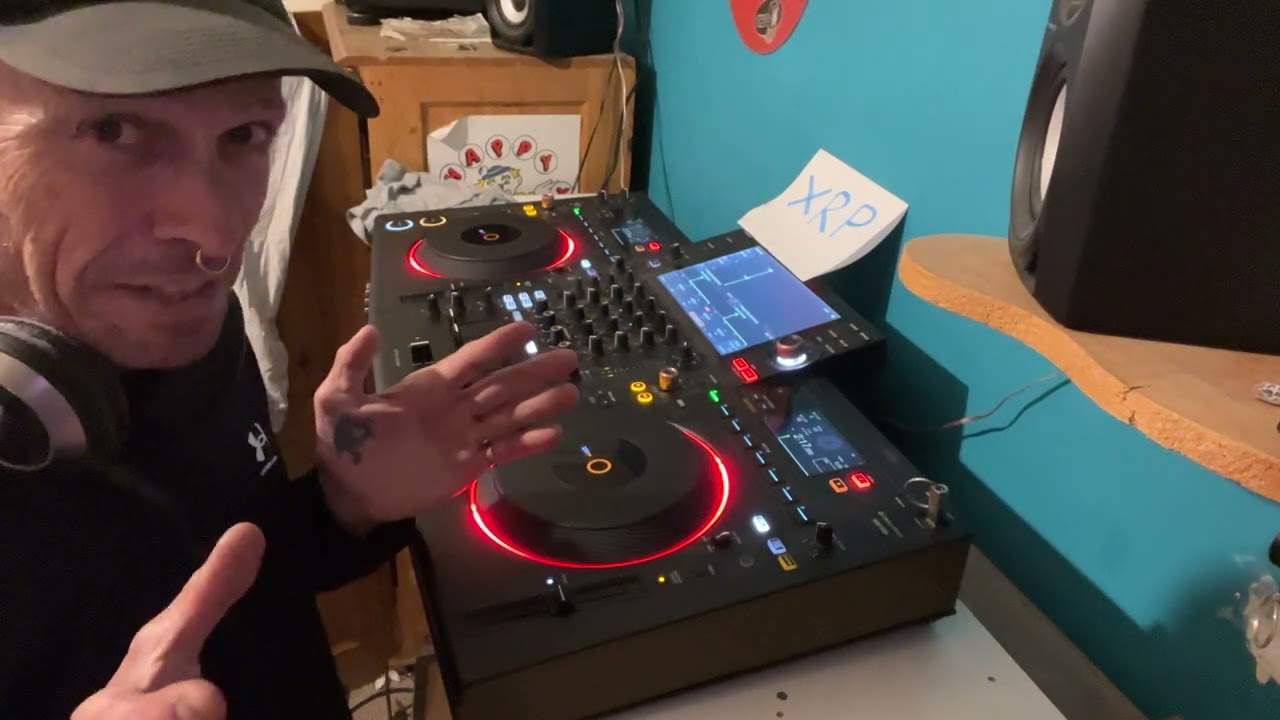
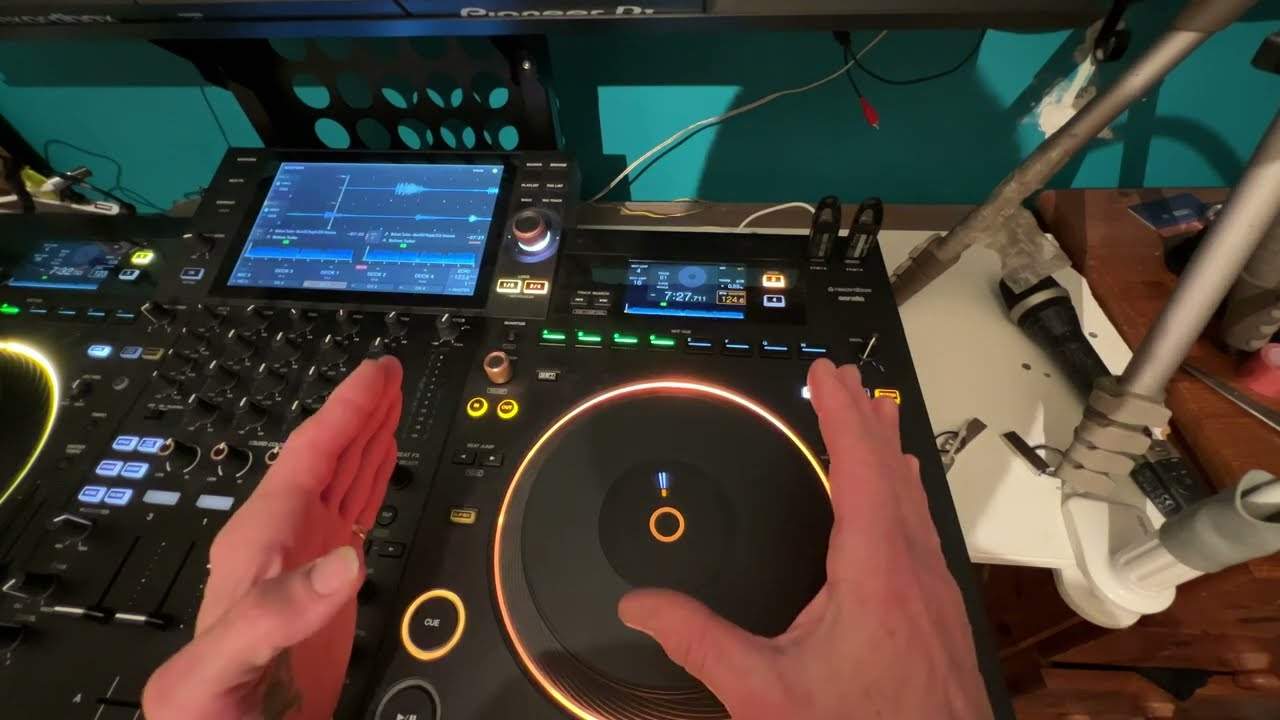
Okay We had pretty much exactly the same kind of structure in the melody in the second group. But also there was a little tiny change at the end. So if you imagine, let's imagine, for example, this entire controller is a group of bars. Now, it's sort of difficult because we have three sections. We have a turntable here. We have a mixer and a turntable. But let's, for argument's sake, say that the turntable is one section. Half the mixer is one section. The other half is another part. And the other side of the turntable is another part. Now, we could indeed class this controller as a phrase in drum and bass. You know, bam, bam, bam, bam, bam, bam, bam, bam, da, da, da, da, da, da. And then the next... Sorry.
Yeah. Laugh. Laugh. Go on. I don't care. And then da, da, da. And then the next part. And then that slight subtle change leading into the next part of the phrase, which is four bars. So guess what? Four and four... Sorry. Four and four is eight. Another four is twelve. Another four is sixteen. So we have our sixteen bars. Now, this is all relevant. Let's have a listen to the entire sixteen bars. One. Two.
Three.
Four. Five. Six.
Seven.
Eight.
Nine.
Ten.
Eleven. Twelve. Thirteen.
Fourteen.
Fifteen.
Sixteen.
10:15 We had a definite change there
Wow, there you go. See? Now we had a definite change there. We had some vocals coming in. So why is this relevant? All right. So let's go back to the beginning of the tutorial where we were going from one side to the other. Now, if I was to start the side that I'm going to be starting while the other side's playing, say at the first bar or maybe the second or the third bar, even though, even if I started it on the one, I would indeed be in time and, you know, the beats should align together. But the actual structure of the music won't work because there is structure. So not only in the beat and the BPM, but also in the structure of the track. So let's demonstrate that now. Here we go. So one, two, three, four.
One, two, three, four. One, two, three, four. You see? It's almost they overlapped. It sounded right, but it also sounded wrong. Now, that is that's a hurdle that a lot of people struggle with. Sort of fall over on. That's that's a problem with a lot of DJs when they're mixing drum and bass, then even though they're mixing it in time in key, if it's not not so much in phrase, but it's not if it's not mixed into the structure of the phrase, as explained earlier, it's going to sound off now. I hope that's a help. Now, thank you for watching. Don't forget, it's by Camco and Crooked Tracks called Aurora. Featuring Metric, Justin Hawkins Remix, a big shout and thank you to Hospital Records for, of course, letting me use their tunes and there will be info in the description on this track.
Don't forget, always leave a comment. I love your feedback. Thank you for watching. I'm still here. Practice and enjoy.
This transcript was produced automatically from the audio of the video and may contain mistakes.
Related videos
-
Complete Beginner DJ Lessons Video 26 Practise Play Pause on Time in a Bar
The shortest exercise in the course, and the sort of thing that looks too simple to bother with. The drill Press play at the start of a…