 11:36
Mixing reggae
On YouTube this video is called DJ Tutorial on how to mix Reggae Music
What this lesson teaches
He is a reggae enthusiast and says so, and the lesson is better for the affection in it.
The counting problem
People ask how you find the bars and phrases in reggae, and his answer is honest: it has a wobbly feel, but there is always a movement underneath it.
The technical reason is that reggae puts its emphasis in an unusual place. The strong beats are not where a four-to-the-floor listener expects them - the guitar and keys chop on the offbeats, and the bass and drum sit back behind the pulse rather than driving it from the front.
So the one is there, and almost nothing is landing on it conspicuously.
Watch the dancing
His best observation, and a genuinely useful way in.
People do not dance to reggae the way they dance to techno. There is no up-and-down on every beat. The movement is slower, wider and lateral - it rolls.
That tells you where the pulse is. The body of somebody who knows the music is tracking the real underlying beat, not the chops on the offbeats - so if you cannot find the one by listening, find it by watching somebody move.
What follows for mixing
Two things.
It is a lot of live playing, which means the tempo moves, with all the consequences from the funk and soul lessons - short overlaps, continuous correction, or cut rather than blend.
The space is different. Reggae arrangements leave gaps deliberately; dub in particular is built from absence. Those gaps are mix points, and there are more of them than in most genres.
The demonstration
He uses Bob Marley, on the grounds that it has to be - king of reggae as Elvis is to rock and roll and Aretha Franklin to soul.
Which is a reasonable choice for a lesson, though worth noting that the material he is describing - the wobble, the offbeat chop, the deliberate space - is at its most extreme in dub and roots, and that is where to go listening once you can hear what he is pointing at.
Contents of the video
0:01 I am a reggae lover
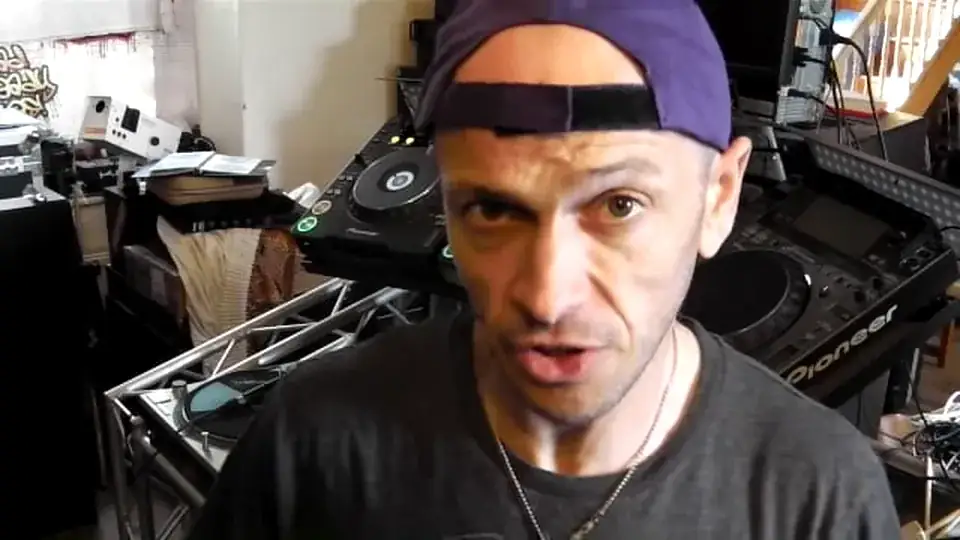
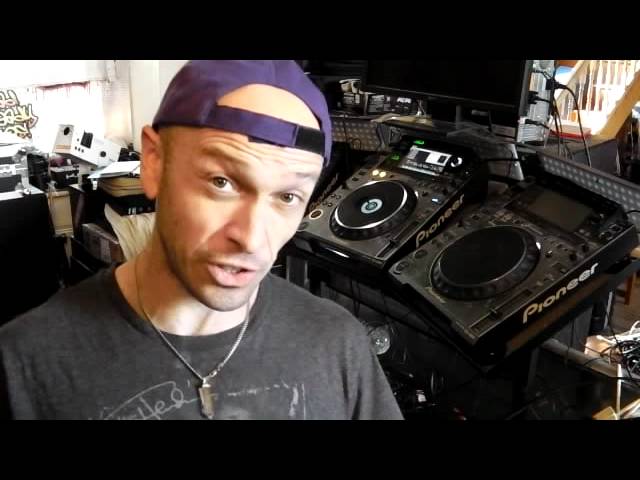
Alright guys, in this video we're going to be looking at mixing a style of music that can only be described as one of the best in the world, full stop. It's reggae. Now, I am a reggae lover. I've always liked it, always liked listening to it on the odd occasion. You bung on a couple of tunes and my personal opinion about reggae, it's the sort of stuff that you can just really chill out to. It's not, look at me I've got big testicles and I'm the baddest bloke going. It's just a beautiful, wonderful kind of music. Now many people say well how do you count it? How can you find the bars, the phrases, the beats? Well the only way of describing it, this is my way of describing it, it's got like a bit of a wobbly feel to it but there's always that
It's a movement. If you see people dancing to reggae, they're not doing like, oh, oh, oh, techno, techno. They're like, they're doing this because it's like, and this is where you see the booty moving. Good job you can't see my booty. You don't want to see that. Moving the booty like this, man. It's beautiful. Now, if I'm going to do a demonstration, it has to be on one person. No, it's not Tiesto. It's Mr. Bob Marley. It has to be. He is undisputedly the king of reggae, like Elvis is to rock and roll, and Aretha Franklin is, the queen of soul, Stevie Wonder, Michael Jackson. It has to be Mr. Marley. God bless him. Alright, check this out, have a listen to this guy. I will put the names of the songs in the description down there. I promise I will do it, alright?
2:35 It's warm, kind and considerate
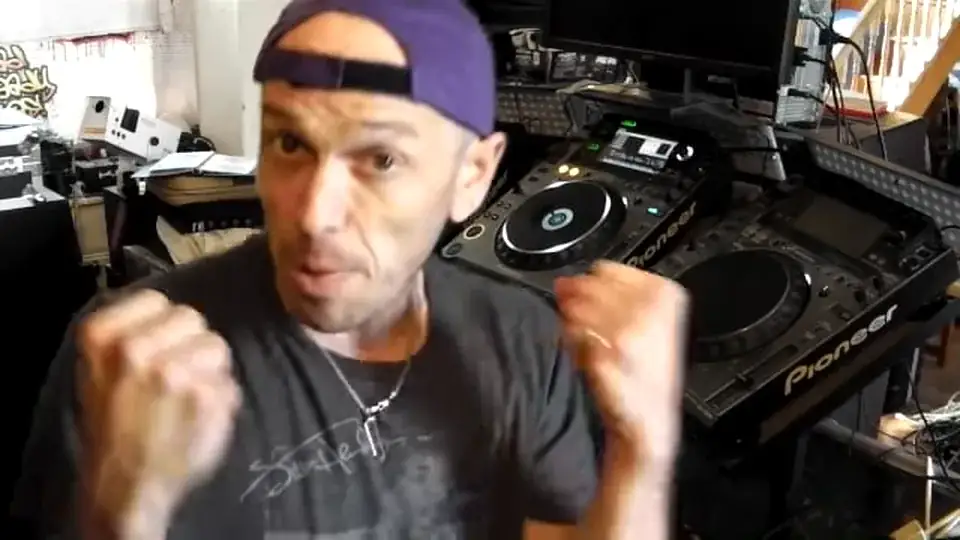
Now, the wobbly sound. This is how I'm going to explain it. Because if I explain it as in bassline or whatever, a lot of people know what the bassline is. But a wobbly sound will get this... Have a listen. Listen. Go into mid. It's sort of like low... It's a warm sound. It's a very warm feeling. If that was a person, it would come over to you. It'd be a big squishy person that would cuddle you and go... Ooh, like this. That is the way reggae appeals to people. It's warm, kind and considerate. All right, so what we'll do, we'll wop that up. Now where's the beat? What I'm going to do now is something really silly. No, it's not actually. I'm going to get a drum. Hold on. Right, I'm going to get this started instead.
Like this here is a snare. What they generally do with reggae, is they'll do something called a rim shot. Now a rim shot can be really loud! Generally what they'll do with reggae though, is there's the stick. And they'll have it like that. So you can hit the drum like that. You can hit it like that. And depending on how you hold the stick, is dependent on how much of a vibration and where the resonance, not resonance, forget that I don't want any resonance in this house, I tell you what otherwise, I'll have nowhere to sleep. Right, so if I hit it, if I hold the stick quite hard and I hold it quite tough and I'm not letting go, there's no movement whatsoever. Listen to the sound. Very light on it. So there, straight away we can get different sounds. That's generally what we will do with reggae. Sticky fall on floor. Sticky floor. Right, so listen.
4:31 How do you find the timing?
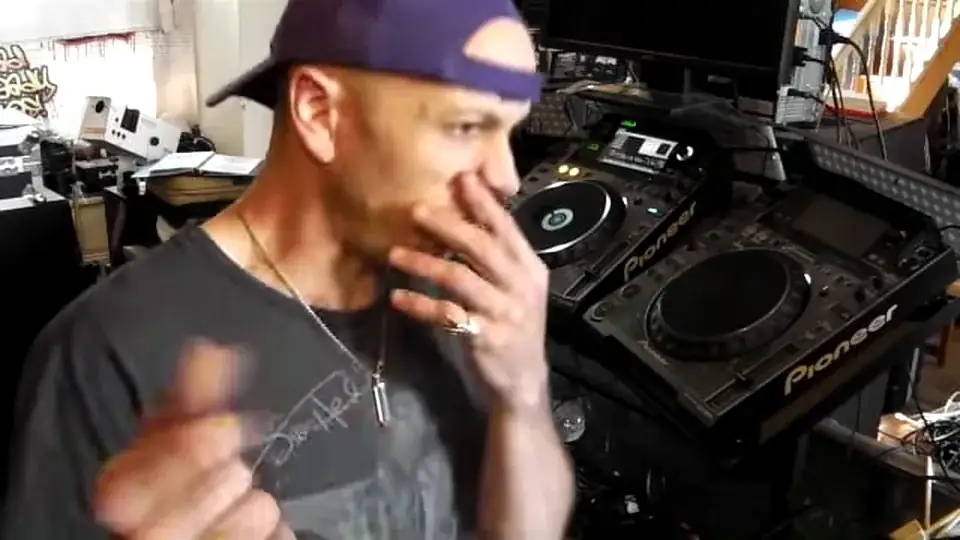
Right, how do you find the timing? 1, 2, 3, 4. 1, 2, 3, 4. 1, 2, 3, 4. 1, 2, 3, 4. And. The track I'm going to mix into this is another one by Bob. Reggae. Delve into the likes of mixing reggae. More often than not we do not have much time to mix one track into the other. Why? It's not like modern day dance music where you've got about 50 years of an introduction, you've got 4,000 decades of an instrumental break and right at the end you could literally build a house and it still hasn't finished. There's very little time to mix any track into the or one track into the next because you haven't got much of a gap quite often with the likes of reggae it's we're delving into the more He also covers popular tracks such as pop, introduction, vocals, melody, a tiny bit of a break, a tiny section where there's a tiny bit of an instrumental break and then it finishes. Very very important as well with old school reggae. It's made by real people, it's not a machine. Therefore if the BPM starts at for example this guy here, it's got 123.
You never know, it might be 1.22 halfway through. It could be 1.21 at the end or it could be back to 1.23. So the BPM, the beats per minute will fluctuate very slightly but they will fluctuate so you have to be very careful and listen to the track. So for goodness sake this is so important. If you're going to mix an old school reggae track one into the other and you start mixing it in at the beginning, or in other words here's the second one, here's the first one. If you start mixing the second one in on your headphones at the beginning of the first one and then when you're coming to the end of the first one and you start to mix the second one in you take your headphones off. Don't think for one second it will stay in perfect BPM because there is a very good chance it will go off.
7:09 Into the first one, when
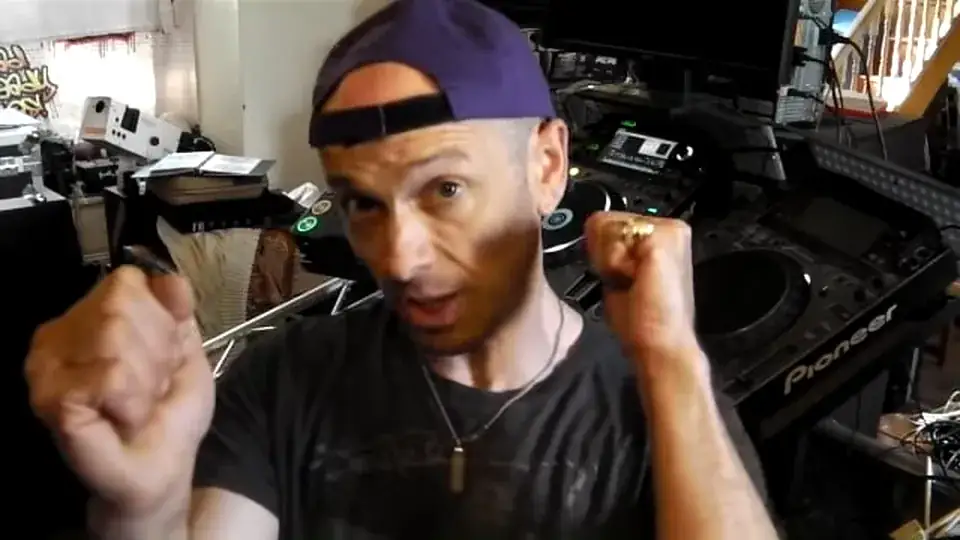
Because, like I said earlier, I will explain. When you mix the second one into the first one, when the first one is playing at the beginning, and let's say this one's 120 for just a number, 120, so you mix this one in at 120, by the time you mix this one in, this guy here could be, let's say, at 121, which means it will be off! And it'll go ka-dong, ka-dong, ka-dong, train crash! So what do you do? You have to do it on the fly. You've got to do it very quickly. So this is where maybe a slight chop comes in. Maybe not that beautiful blend as you would, let's say, do with the likes of techno and trance. Maybe it's more of a chop. Maybe it's more of a slight blend from one track into the other in half a bar. Maybe a quarter of a bar. Maybe even one beat. Maybe a cut straight from one to the other. Now what I've done with this one, I have found a perfect time to bring one track in.
A beautiful transition in between one song and the other. Now, I've taken a cue point, oh bugger, I didn't put the cue in. No, did I? It's a... Yeah, yeah. Around about this point where we get to two minutes and two seconds. Now, like I said, as soon as you hear that like I said, we're going to have... Get up, stand up, stand up for your right. Something like that anyway. Right, let's see if we can do it. Now bearing in mind I'm not going to have the headphones on here alright so we're going to try and do it. You may hear it in the background a little bit but that's me just cueing it up and then we'll bring the second one in. So here we go. So we'll start off again from that point in the first track. Now again, a lot of this is about knowing your tunes.
9:23 It's almost as though you can feel it
When we delve into the likes of techno and trance, and garage, speed garage, that kind of stuff, it's very formatted. You can almost, if you've got a wave format, you can see there are exactly the same gaps in between the highs and the lows, which near enough tells you there's going to be like eight bars there, eight bars there, maybe 1632. When we delve into the likes of this kind of music, you do need to know your songs. It's almost as though you can feel it. Feel. Hearing, yes. Seeing, watching an act. But more importantly, it's feeling the music. So, here, what I did, I listened to one, I thought, hmm, how about there? I got the second one, I thought, how long have I got for that second one before the sound, before the vocals comes in? Hmm, let me think. Where would that fit in with the first one? I'll try there? No. Should I, I'll try here? It's about experimentation and as I've always said, it's about practice and enjoy.
So again, I didn't mix this one in at the beginning of that one and then thought, that's brilliant, I've got it in time, in beat, and then bunged that one in because it would have gone off or it could have gone off if it was off time. What I did was I had that one, I messed around and then I brought that one in. Now this is where, and trust me, a lot of people seem to think that when you hear a DJ mix Pop songs, old school 50s, 60s, 70s, disco. It's like, oh no, it's crap, waste of time. Anyone can do that. Do you know what? That's actually more difficult than someone who is mixing the likes of modern day music. Because one important factor, like I did say earlier on, old school music, most of it was made by real artists. The drummer was not a machine, the drummer was a real drummer. So whether he's had three beers, four cups of coffee or maybe he's just woken up.
It's very unlikely that he or she will be able to keep perfect, perfect timing. So there's reggae for you. A little tiny insight, any comments, questions, put them down there. Practice and enjoy because I do and I have fun. Marvellous, thank you.
This transcript was produced automatically from the audio of the video and may contain mistakes.