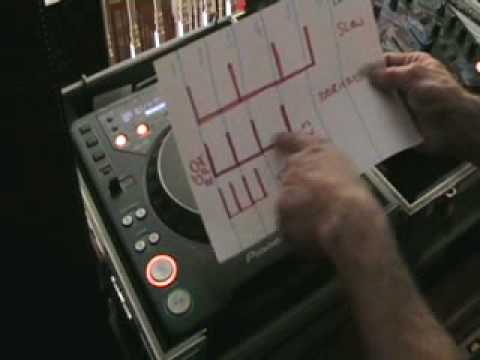
 4:28
BPM, pitch, timing and bars together
On YouTube this video is called Basic DJ Tutorial. BPM, PITCH, TIMING & BARS
What this lesson teaches
A more theoretical lesson, and it earns its place by turning BPM from a number on a screen into a distance you can picture.
The measurement, again
Pitch at centre, stopwatch started on a beat, count every beat until the watch reaches sixty seconds. That number is the BPM.
The picture
Here is the part worth having. Take a hypothetical track at 60 BPM.
Sixty beats in sixty seconds means one beat every second, exactly. So if you laid the seconds of a stopwatch alongside the beats of the music, they would coincide: beat one on second one, beat two on second two, and so on all the way along.
Four of those beats is a bar, and that bar occupies exactly four seconds.
What the pitch fader does to that picture
Now slow the track down.
The first beat still lands where you started the watch - that is where you began measuring. But the second beat no longer arrives on the second second. It arrives somewhere after it, and the third is further out still, and the bar has got wider.
Speed it up and the bar narrows.
Why this is the useful way to think about it
Because it makes beatmatching concrete.
Two tracks at different tempos have bars of different widths. Laying them on top of each other, the beats cannot stay aligned - the wider bar falls progressively behind. That is not a mysterious drift, it is two rulers with different markings.
Beatmatching is making the two widths equal. The pitch fader is the control that stretches or compresses one of them, and the jog wheel slides a ruler along without changing its markings.
Once you hold that picture, the rule from the beginner course - a constant gap means the tempos match, a changing gap means they do not - stops being a thing to memorise and becomes obvious.
Contents of the video
0:00 Timing, I'm on about actual timing
Alright folks, this particular video is all about understanding the philosophy behind the pitch control, timing, bars and when I talk about timing, I'm on about actual timing in seconds, minutes and hours etc. Now very quickly as well, if you don't know how to count BPM, the beats per minute in your music, I will explain. But even before I do that, what is BPM? What is beats per minute? Well basically it is as follows. What we're on about when we talk about BPM in music is how many beats there are in each minute, how many beats per minute. So for example you would count the beats per minute like this, get your turntable set up, make sure the pitch control is in the centre position. That's important to get the exact BPM. Then you play the music. By the way look in the description to the side of this video for the name of the track.
1:27 One minute or 60 seconds, that is the time when you will stop counting
Now at any given time during the course of this music, get a stopwatch ready, get your finger on the stopwatch and then on a beat you need to press start on your stopwatch and press the start, that beat, as the count of one. The first bar as follows, 1, 2, 3, 4, 5, 6, 7, 8, 9. Carry on counting, look at the stopwatch. As soon as the stopwatch reaches... One minute or 60 seconds, that is the time when you will stop counting. That's how you count BPM. So, let's have a look at that. What has that got to do with BPM timing and this guy here, the pitch control? Now, let's say hypothetically we have a track that is 60 BPM. 60 beats in every single minute. And let's imagine that the pitch control, when it's in the centre position,
2:55 Would always be at the count
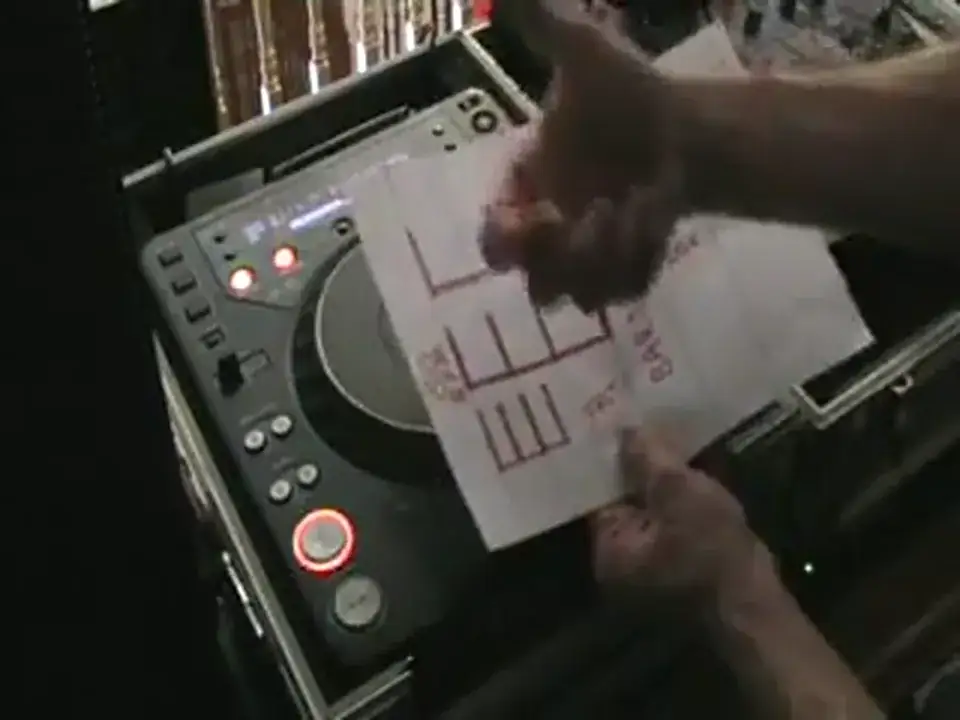
The DJ Tutor is playing that track, that is 60 BPM. Now what that means is the blue lines you can see is the timing on the stopwatch, the seconds, 1, 2, 3, 4, 5, 6. The middle diagram there is our timing of 60 BPM, 60 beats in every minute. So in other words, on the count of one we have our first beat, count of two we have So, one, two, three, four. Not only is that a bar, but we're getting one beat in every single second when the pitch is dead centre. If, on the other hand though, we started to slow the music down, what would happen now is that bar would start to increase, it would start to widen. So no longer would we have our first, our second, sorry, beat at the count of number two. The first one would always be at the count of 1, because that's where we started our stopwatch. 1. We start it here, 1, here, 1, and up here. I'll show you this one in a second. So, the first one is always at 1. But because we've slowed the pitch down, all of a sudden our second beat could be in between the count of 2 and the count of 3. Our third beat could be in between the count of 4 and the count of 5, and our fourth...
It could be in between the count of 5 and the count of 6. Okay, that's when we slow it down. But what happens when we speed it up? Like so. Well all of a sudden now what's happening is those beats are getting squashed now. So we're now, instead of getting less, we're now getting more. So the first one will always be at the count of number 1. But the second one could be before the count of number 2 on our stopwatch. And possibly the third one could be on the count of two, and the fourth one maybe just after. Now again, this isn't necessarily exact, but hopefully it's giving you an idea of the similarity on what's going on in relation to bars, timing, also the timing on a stopwatch, 1, 2, 3, 4, 5, 6, 7, etc., and exactly what the pitch call.
So I hope that's been a help. Practice and enjoy!
This transcript was produced automatically from the audio of the video and may contain mistakes.