 13:21
Basic Lesson with Using Vinyl for the New Mixing DJ
Contents of the video
0:00 A couple of tips here on using vinyl
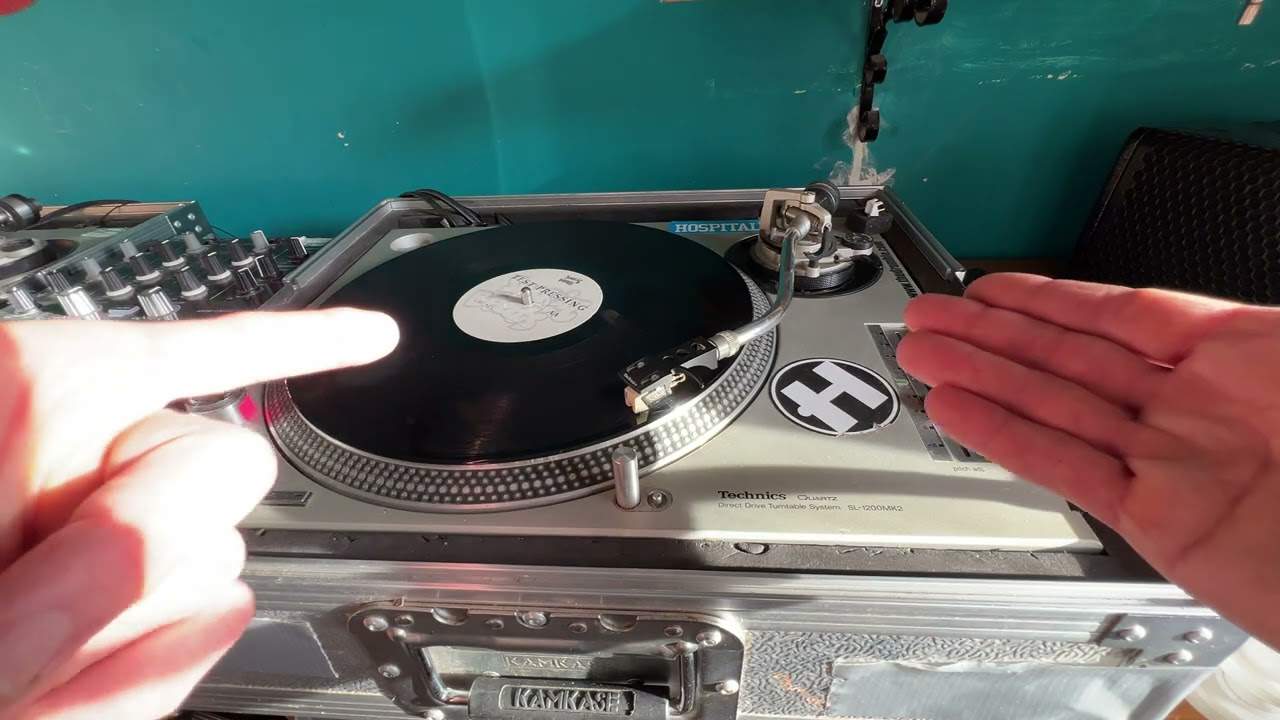
Alright, a couple of tips here on using vinyl. Now, first of all, there are no BPM readouts. I mean, alright, there's some form of a BPM readout on the DJM450, but there's no screens, nothing like that. Now, vinyl is completely different to any other format out there. Most old-school DJs will know what it's like using vinyl, but if you're relatively new and you started DJing maybe in the CD era or more recently, laptop and controller, then you may have no idea. So, videos like this, hopefully, will show you one way of learning how to mix. Using vinyl. Now, very important as well, if I'm just going to lift the tonearm up, put the needle halfway or the styli and tonearm itself halfway across the turntable.
Of course, at the moment now, it's on the armrest, but it's not on the armrest, sorry, it's on the rest that lets it sit above the piece of vinyl without it touching the vinyl. Just so you can see now the speed control or the pitch area. So, on the Technics SL1200MX... Mark II, the daddy of all turntables, we can increase or decrease by 8%, so what that means is, for example, if your track is 100 BPM, you bring it all the way towards you, it'll go to 108 BPM, all the way away from you, it will go to 92 BPM. Now, the problem with this is that if you have two tracks that seem to work harmonically but are quite a distance in BPM. away from each other, you may find that you might not even be able to mix them in because you may not be able to speed up or slow down both of them so they match the BPM.
Secondly, is when you do slow speed up, if you're out of a certain parameter, they then may, yes, have them in beat, but they may now be out of key. So the rule of thumb generally with vinyl turntables is... to make sure you're within plus or minus 3%, because if you go above or below that, above that or below that, what happens is you start to increase or decrease the sound of the track by sort of semitones, so it's a bit like going up a scale, you know, and you don't get that with modern day CD players or controllers, if you have master tempo or key lock engaged, because that will keep the key of the track, but it won't happen with vinyl turntables. So how can we practice using vinyl decks? Well, the best way of course is to have exactly the same track on both sides.
3:11 Centre, slight fluctuation, area track
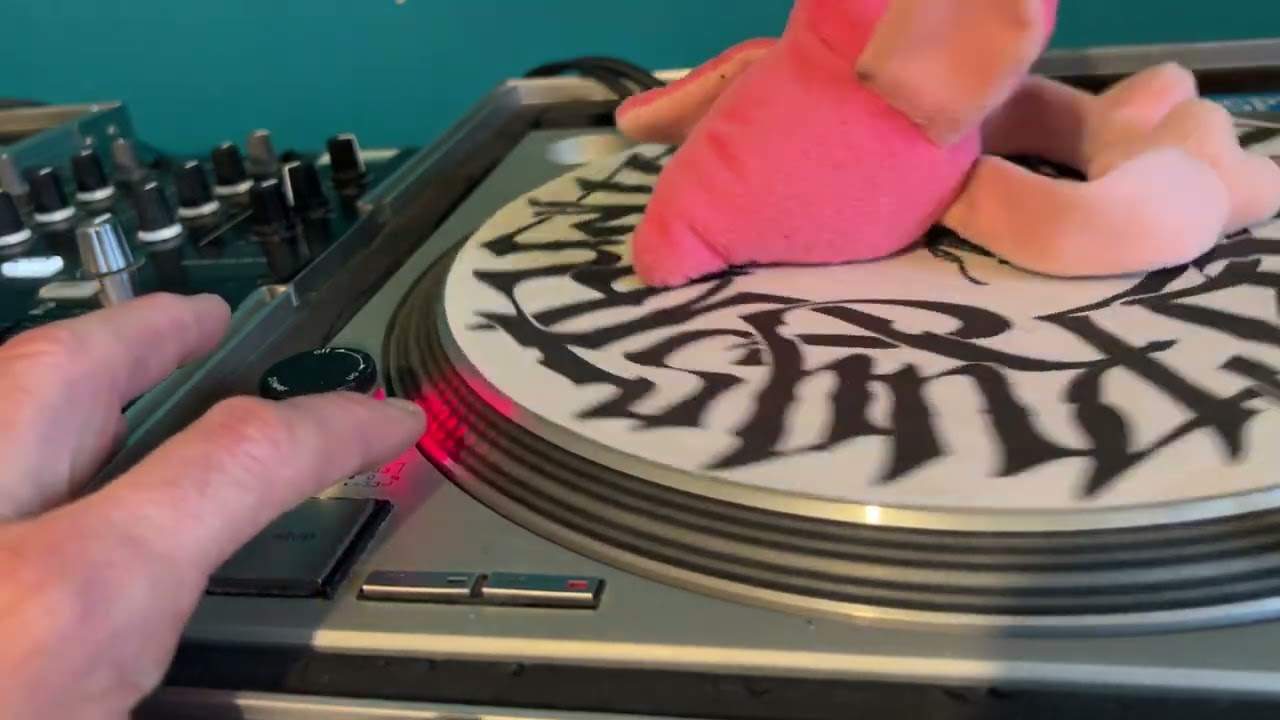
Alternatively, what you can do is quite often you'll be able to pick up a double vinyl and there'll be different mixes of it. This one here, Basement Jacks. Okay, so I'm going to be playing on the left hand side. This is going to be my sort of metronome. This is what I'm going to be mixing into. Okay, so... Also, yeah, another serious point here is that if you're using especially the Technics SL1200 Mark II or other turntables that have this issue, then just watch. Or well, you're watching anyway, sorry. Is quite often with the SL1200, some people do disable this, but there's a click in the centre area where we can see that green LED highlighted. Or shining, sorry. Now what that is, is in the pitch there's actually a tiny little circular metal ball attached to a spring.
So when you go to the centre point, that ball sort of slips into a hole and it sort of locks in place. Now it doesn't lock so you can't move it, but it is quite awkward to fine tune the BPM at that centre area. So again, if you're going to be using the same track... To learn how to mix using vinyl, of course it's obvious you're not going to have them both in the centre because it's very easy. What you need to do is make sure that you either move the pitches away from you or towards you out of that centre position. Also just to elaborate on that, if you are doing some kind of vinyl mix and you find that the track you're bringing in seems to want to match the BPM but it's very close to the centre... And you keep on tapping into that green...
My advice, old school advice is the track that's playing just increase or decrease the speed very slightly. So you're away from the area, the centre area in the track that you're bringing in. Which in turn will let you mix it in BPM wise correctly instead of maybe having a slight fluctuation at the centre point. So again I have brought now the left hand deck slightly towards me. So theoretically these two tracks should be the same, hopefully BPM. But you never know because they are different mixes there may be a slight fluctuation in BPM. Which in itself is great because it means there's more work for you to do. Now I'm not going to be using headphones here so I'll start that one up. Press play over here.
Put the needle on the record. Find the first beat. Now I haven't moved the pitch yet. Now we can hear that's off beat. Straight away.
6:05 I'm just going to put the track back sort of close to the beginning
Okay so what I'm going to do, repeat the process and again this is for the beginner. Again and again and again till we get an idea of where that pitch should be. So I'm just going to put the track back sort of close to the beginning. Find the beginning of the track I'm bringing in. I'm going to bring the pitch up slightly towards me. Now this is one way. Of trying to beat match for a beginner. Is move the pitch very slightly. Knock it in. Is it in time? Or even, for example, another way of doing it is something like this. So needle's on the record. Find the beginning. So the other track's playing. One, two, three, four, one, two. Let that play. So long as you brought it in correctly at the right time. Then you should be able to hear.
The first part of the two tracks working together in time. But if you do then start to hear them going off. It means that they are not in time. So I can demonstrate that now. Let's go back over here. Needle on there.
7:36 Even if I was a bit too soon or too late
And again a bit too soon.
Even if I was a bit too soon or too late. It would still go off beat. If they are not in beat. As we can hear. Here. OK. Because if you think about it. Now this again is pure logic. Let's imagine that indeed I did have this track. That you can see at the right BPM. Exactly the same BPM as the other track. And let's imagine that I was too early to bring the track in. Or too late to bring the track in. Now, if I was too early they would be off beat. If I was too late they would be off beat. A lot of people would think they are not at the right BPM. Well, they are. Because you need to listen to the difference in time between the two beats being off. Does that time stay at a constant? Or does that time fluctuate? In other words the two beats seem to move and drift apart.
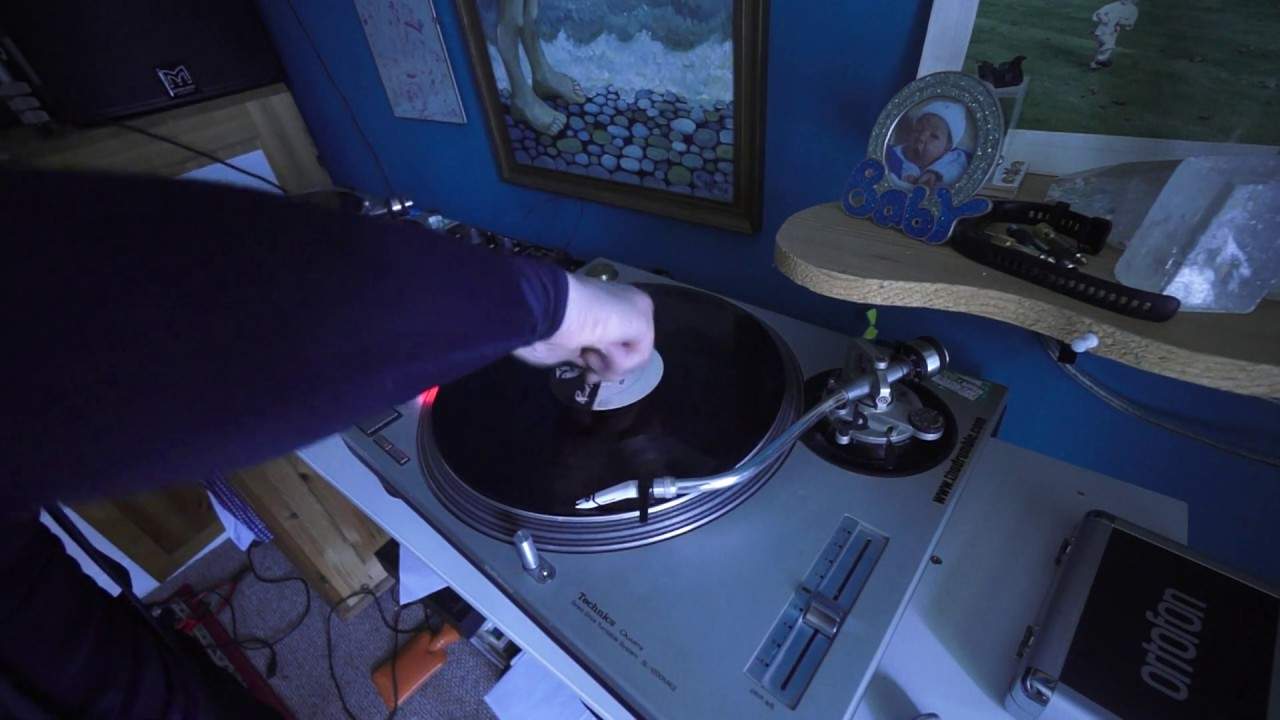
Or do the two beats that are off beat stay at a constant? In other words what is happening is they are off beat. But the off beat time in between those two beats stays exactly the same. Now if that's the case then believe it or not they are actually in beat. And all you need to do with vinyl then is perhaps just jog the turntable slightly forward. Now some DJ's tend to grab hold of the spindle right at the top and sort of nudge it forward. As you can see with the turntable off by me moving that I'm just moving the turntable very slightly. And this is an art form in itself and with experience you'll get better and better at it. Alternatively what you can do is put your finger on the side of the turntable for example like this.
You can hear I'm just slowing it down very slightly.
So again just to clarify set the pitch at one point, have a listen. Is it too slow? Is it too fast? If it's too slow speed it up slightly. Too fast? Slow it down. Have a listen repeat the process again and again and again until you're happy. Alternatively you can do something that I believe I was the first person to mention many years ago riding the pitch. And this is where you are juicing. You're just in control of the pitch and your moves while the track is playing will determine how fast it's going, how slow it's going till eventually you get them in beat. So let's do that right now. Needle on the record.
Get it ready and we'll start this one off. Now as well it's probably a good idea if you miss the first beat on the one you are trying to beat match to then wait till maybe the next half way through a phrase or the next phrase itself. Just so you have a similar sort of time signature. Close now.
11:22 I'm going to intentionally get this in at the wrong time
See them going off? That's about right.
So let's test back to what I said earlier about the two beats being off but not changing the distance between those two beats. So I'm going to intentionally get this in at the wrong time.
Same frequency both of them. Now let's try and get it in at the right time.
Slightly I have to admit.
Hope this demonstration has helped.
Thanks for watching, practice and enjoy.
This transcript was produced automatically from the audio of the video and may contain mistakes.