 14:52
Mixing on Vinyl Riding the Pitch Using the Platter or Moving the Record DJ Demonstration Tutorial
Contents of the video
0:01 In as great a detail as
All right, ladies and gentlemen, first of all, thank you for watching. I really do appreciate you sort of helping out with the channel. It's been going on for a very long time and hopefully I will carry on posting videos. So in this one, what we're going to do is I'm going to explain in as great a detail as possible the difference between what we call riding the pitch and using the platter and riding the pitch and using the platter. So in other words, I'm going to, I'm not going to be doing any mixing, just going to be using a beat. Again, the reason for that is just to simplify the video and also so we don't get any copyright issues. I'm not sure of the name of the track because this is from I think the 90s. It's on smoking beat beats, beg your pardon. I'll play a little bit of it where the baseline comes in there. But all I'm going to be doing is concentrating on just the beginning
So I can play a lot more of it and I haven't got any issues with copying the turntable. Okay, so there are three basic ways of beat matching. Number one is what we call riding the pitch. Now I would say that that is the most difficult. The easiest way is using the pitch and also at the same time you're going to be touching the platter. And then the third one is a bit of a culmination of all of them. So first of all, I want you to imagine and this is this is where it gets a little bit interesting and crazy. But again, it's all logical. Let's imagine you have a zig zag line, but the zig zag line is isn't just across across. It's actually if let me just zoom out a little bit, that's better. It's actually starts here and goes up across
Up across. But then what's actually happening? It's a bit like if you imagine you're looking at a Christmas tree, a Christmas tree theoretically should be a lot smaller at the top and wider at the bottom. So with riding the pitch, what you're doing in essence is you're starting at one side, you're moving straight across. And then when you go back to the other side where you started from, you're not going to go as far. And then when you go to the other side again, you're not going to go as far. So your movements end up being quite slow increments. Now the reason for that is very simple. And again, I bring back the analogy of the two cars trying to catch up with each other or should I say one car trying to catch up with the other one that's going a continual speed. For example, like I've said, BMW is going at 30. The Audi has no idea how fast the BMW is going. So of course, the person driving the Audi has got to somehow match their speed.
3:26 For example, what I'm going to do, let's imagine tracks playing
Now let's say they are in front of the BMW or even behind. If they're in front, of course, they need to slow down. If they're behind, they need to speed up. So the philosophy is exactly the same with both circumstances, but it's just the opposite. Excuse me. All right. So for example, what I'm going to do, let's imagine tracks playing.
Quite a bit point. I'm not going to slow down to the original position because it was already too slow. What I'm going to do, I'm going to then have the pitch slightly above where it was at the first position. And then maybe I'm catching up again, but I've gone too fast. So now I'm going to slow down, but slower than where it was at the second position. Speed it up a bit more, slow it down and so on. So basically my moves on the pitch start off quite. Abruptly, they're quite vigorous moves increasing, decreasing relatively dramatically. But slowly then I'm going to be moving it less and less now again with riding the pitch. If you watch many DJs, you'll probably notice that they very rarely take the finger off the pitch simply because and again if we get to very tiny increments or for example, not one mile an hour.
Very tiny increments or for example, not one mile an hour.
4:46 Of course, the Audi very soon is going to be too slow
But point not one mile an hour. So for example, BMW is going at 30 Audi's going at 28 if they start off at exactly the same time. Let's imagine they can. They can just all of a sudden 30 and 28. Well, of course, the Audi very soon is going to be too slow. The cat's trying to jump up, stay there.
So what the Audi needs to do after a certain amount of time is not go 30 but go. From 28 to 30 but go maybe 35 now as soon as the Audi catches up, of course, it's got to slow down. So let's imagine again. The Audi does not know how fast the BMW is going. So the Audi then has got to slow down. But the Audi knows that if it goes back to 28, it's going to be too slow. So maybe the Audi goes to 20. Sorry 32 realises too fast. Goes to 29 then goes to 31, goes to 20. Sorry 29 and a half then goes to 20. Sorry 30 and a half and so on till eventually what you're getting to is you're getting to a fraction of a percentage of mile an hour. And that's what we do with riding the pitch. It's big moves and then slowly slower increments.
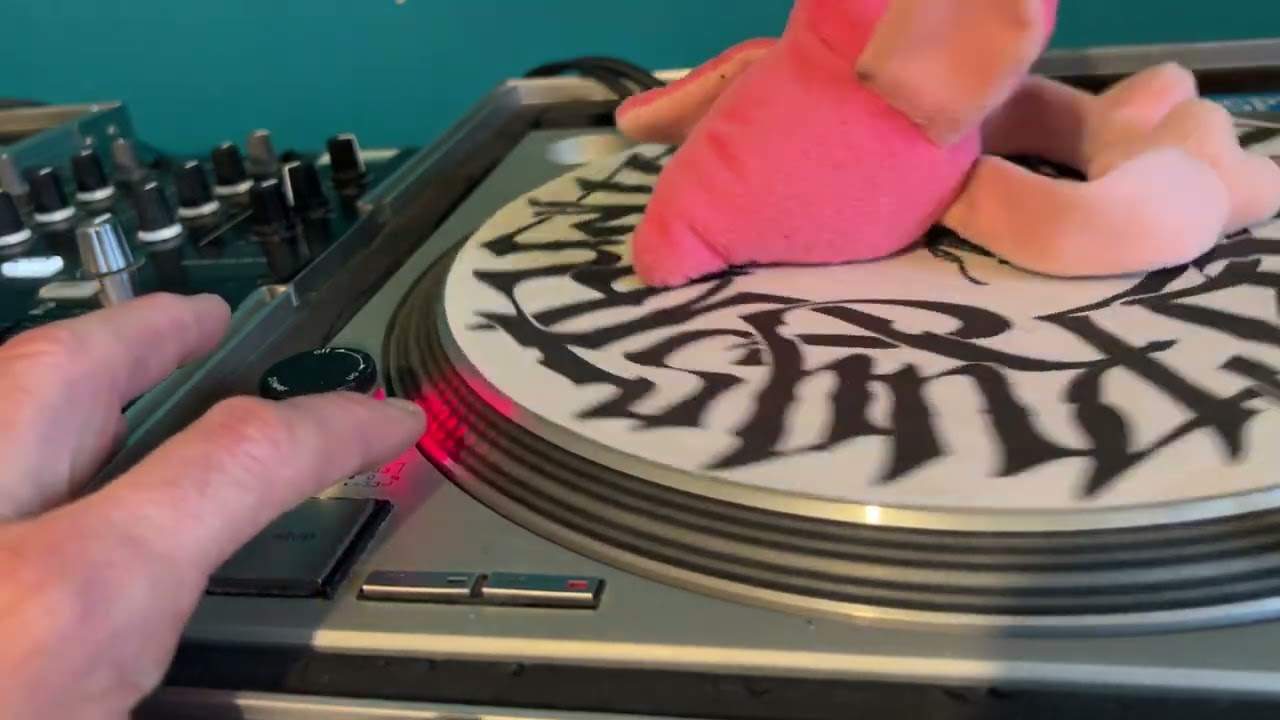
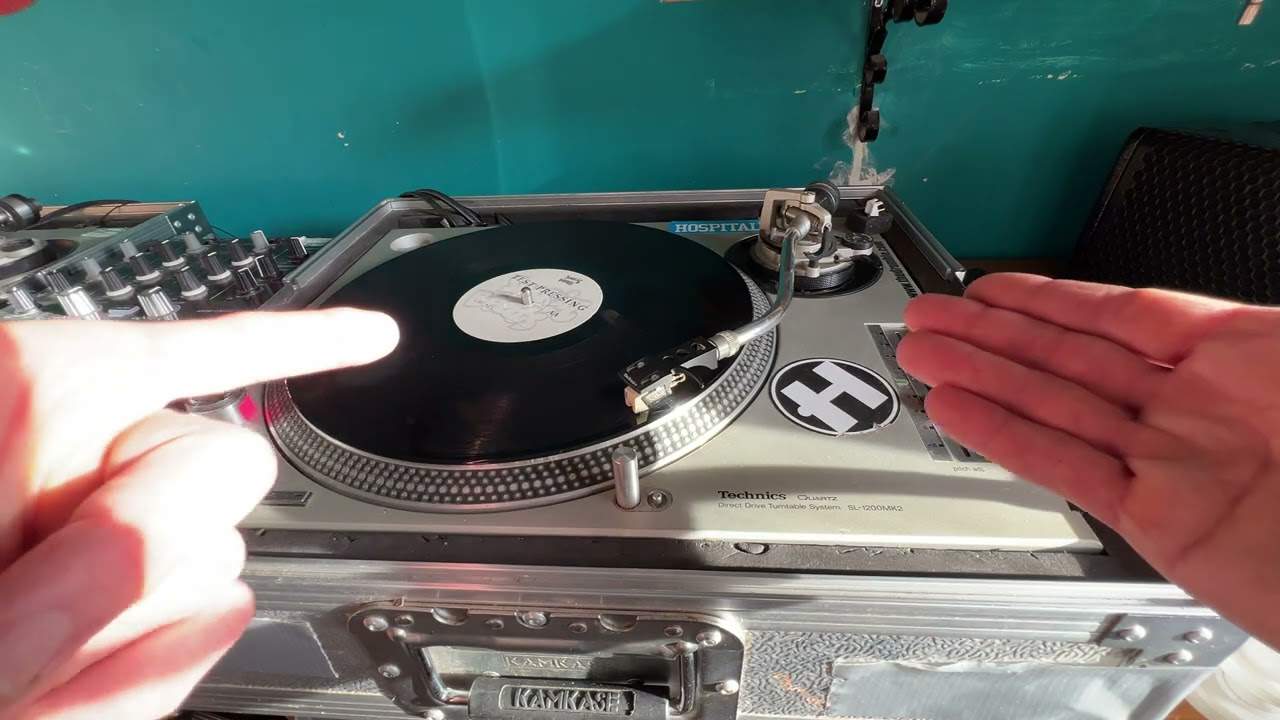
Now let's think about now not riding the pitch but using the platter. Okay. So what you're doing in essence with the platter when you see a DJ putting their finger on the side when they realise the track here is say too fast. So now BMW is going at 30 Audi's going at 35 what you're doing when you put your finger on the side, you're slowing it down. But only while you've got your finger on the side as soon as you take your finger off, of course, it's going to continue at its original speed. So we use the platter. I'm going to slow it down have a listen.
6:54 Maybe yes finger on the side in beat
So now what I want to do is as I've got it in beat now, let's say that's in beat. I need to move the pitch down slightly take my finger off have a listen. Is it still too fast? Yes. Let's say it is put my finger back on the platter move it down a bit more take my finger off. Is it still too fast? Maybe yes finger on the side in beat. I move it down again. There we go. Now again, all of this is really easy when I'm showing it but of course practice makes perfect again practice and enjoy. So that is the other way of getting in beats now exactly the same applies. Let's say if this track is too slow, but the difference here is what you can do as a couple of things. You can do always make sure as well. You've got a slip mat underneath your turntable.
What we can do now hold on. Let me just bring it back again to just the beat. So what I can do now is I can put my finger in the centre of the deck and what I'm doing here is I'm sort of almost rubbing the middle of the turntable and I'm actually sort of speeding it up. And while I'm doing that, I'm waiting till it's in beat maybe bring the pitch up slightly still too slow bring it up. Tiny bit more again and a tiny bit more till we're in beat. Now again, my advice is when you're doing something like this unless you're a professional and you know that as soon as you chuck it in you can hold the beat or get it in beat very quickly. My advice for a beginner or intermediate is to do these kind of moves while you're listening to the track on the headphones.
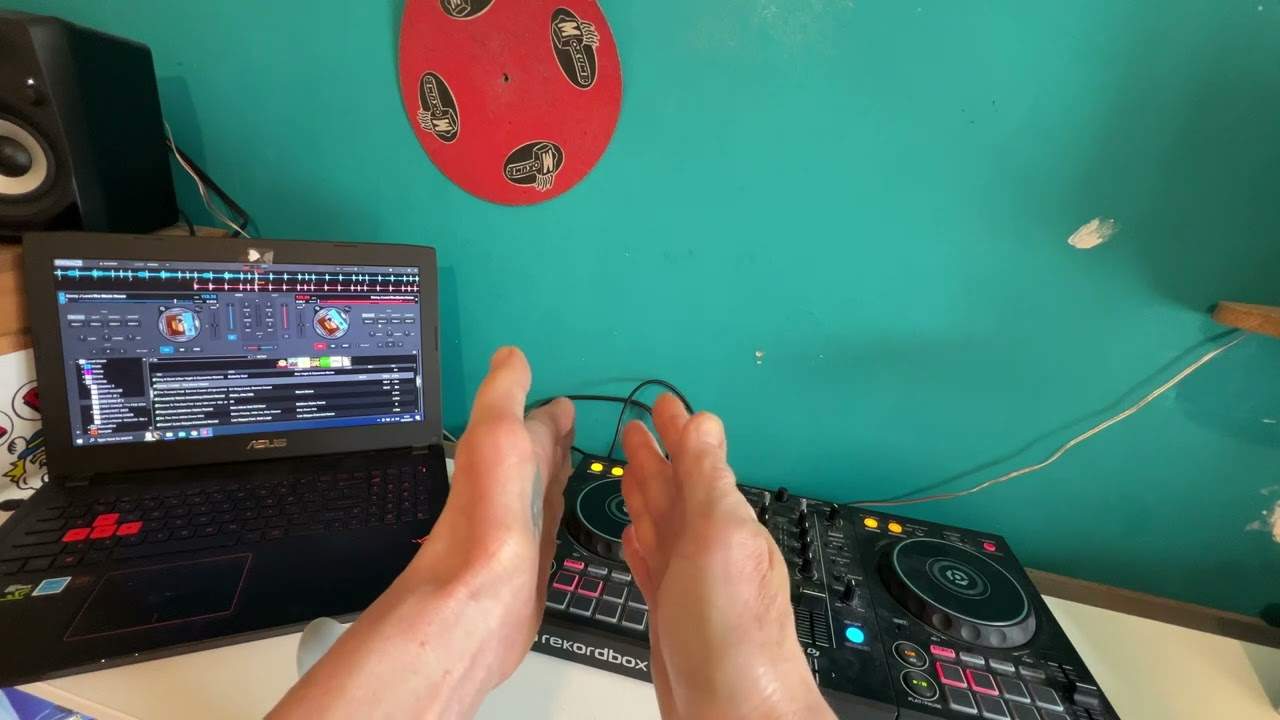
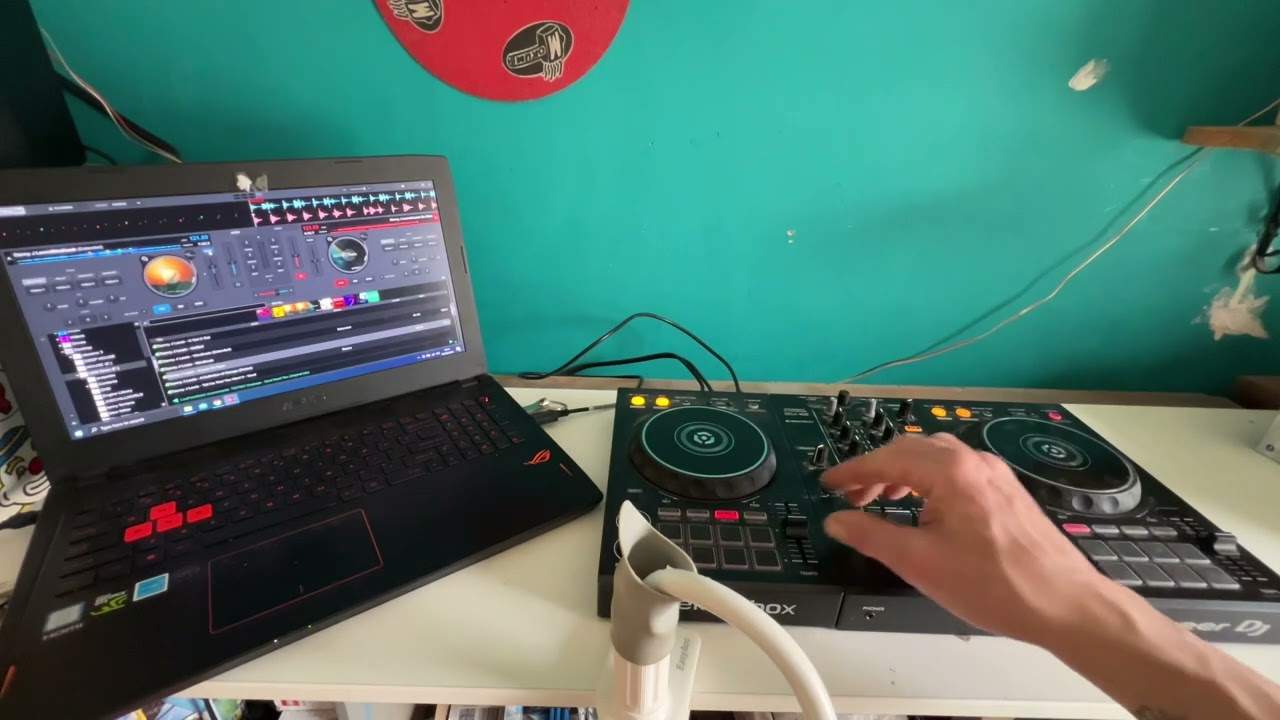
The worst thing in the world is to bring a track in and have that wobble sound where you can definitely hear the track speeding up or slowing down. And that's it's not really what you want. On the other hand, if you are a professional and you know exactly what you're doing and you know through experience no matter what you will get it in beat then it doesn't matter. Now here's the caveat and I said this time and time again we very rarely have this sound if you're you not so much if you're using digital. But let's be honest with today's technology. And of course computers and the visual imagery you've got on a laptop. You can have you can physically see the beat grid and you can tell whether the one beat is too
9:44 Again, I'm not saying that digital DJing is bad
Far in advance or behind. So by definition, all you've got to do is match those two beats and then you're good to go. Now again, I'm not saying that digital DJing is bad. Absolutely. Not at all because at the end of the day, we're all DJs. We're all in it for the love of the music the enjoyment and making sure people are happy, but let's go back to Brass Roots and I've said this time and time again if you want to learn the roots the basics of DJing what I highly recommend if you've got a laptop and I said this before most people imagine your controller is here nine times out of ten the DJ will have the laptop right in front of them now for me, that is an absolute categorical no-no because the only thing that should be in front of you
Is the crowd of people. If you've got a big screen in front of you then for all they know you're doing Facebook YouTube or whatever for God's sake have the laptop to the side of you also you need to work from the basics and just try the hard way move the laptop to the side to put the laptop down. So you can't see the beat grid and then try from day one the basics of using your ears not the laptop the trouble is the way technology is today. It's so easy to get a controller plug it in look at the beat grid and you've become the world's best DJ which fine, but as I said time and time again with DJing you listen to any mixes online where it's just the audio and it's synchronized to perfection then I would hazard a guess to say 99% of the time
It's done by a DJ in their room using sync and there you go. Let's get back to original DJing where we use our ears because I honestly think the way things are going more and more people are waking up even Joe blogs out in the street who doesn't really know much about DJing. Everyone's realizing now that anyone and everyone can become a DJ but in my mind if you do a mix if I hear a mix and I hear it slightly offbeat or there's an occasional out of key mix to me that's far superior than listening to some dodgy mix that just sounds like it's come from a studio and it's done by a CD so when we put all of this together what we've got that we put the needle back to the beginning and yet I do need new styli by the way.
12:25 Headphone, comment
So it's a little bit too fast speed up pitch up maybe do that slow it down and then they also I can go down here. So the advanced version really is when you're using all three and again, if you're going to do something like this for God's sake you know, don't do these kinds of moves while you're physically in the mix. So you're bringing this track in always do these kind of moves when you're listening through your headphones again. I'll just finish this video off the again, please in a comment but by far through my experience the best way of mixing like this is your headphones have your right or your left headphone as the monitor ear the monitor headphone for the track you're bringing in have the other one open.
So in other words, you have your right ear. Let's say for example with your headphone on your left ear is listening to the overall mix. So you're using your right ear to bring the track in and then when you're good to go bring them in a lot of people will of course use both headphones. You can use split cue and so on but again because I'm old school back in the day split cue was non-existent. In fact, bass mid and treble was non-existent. If you were lucky on your mixer you had tone control no cross fade absolutely nothing. I remember having I forget the name of it. You may remember blue mixer with the EQ at the top and the only thing you could do to get an effect was use the EQ. So all right, that's pretty much it for this
This session. Don't forget please let me know how you think and it would be great in a comment and I do try my best to look at all comments and let me know how you think what you think about this video if it's helped or not and also how do you learn to mix? How do you learn to queue up? How do you use the pitch because it's not only myself that looks at comments. There will be other DJs out there so you never know they may watch this video but they may actually get a lot more advice from the comment you leave really important. We're all in this together. It's a big community lots of love and as ever ladies and gentlemen practice and enjoy. Thank you.
This transcript was produced automatically from the audio of the video and may contain mistakes.