 9:16
Beat mixing tutorial for the DJ,. What toons have samples?
Contents of the video
0:00 Beats minute
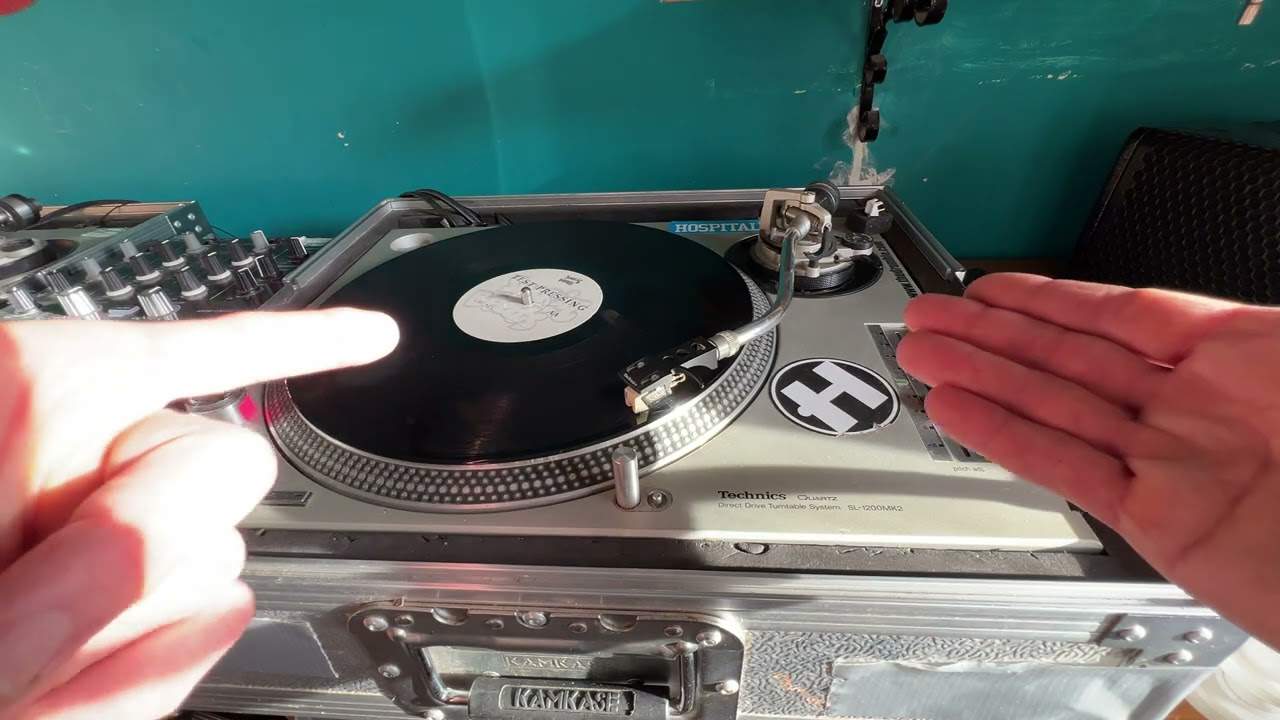
Alright folks, what I'm doing is I'm going to give you a bit of a tutorial on beatmatching, which is the one thing really that an actual mixing DJ has to really know. At the end of the day, if you want to mix two tunes together, if you want to make the beats together, you have to get them beatmatched. Right, now before we go into that, a lot of people have asked me about actual records with samples on. This is quite an old unit now, this is quite an old LP but I'm sure they still make them and also something like that. Now this is what you need to look for, this sort of thing, okay? Now on these guys you will have beats and also you'll have scratches, the fresh sound like I said, the whistle and goodness knows what else on it. But what you will have most importantly is you will have just beats. Now you'll have sounds like this, check this out, here we go. Now if you listen to that there's virtually no melody, no bass line, it's just a beat. Now then, what we'll do is we'll listen to the other one, check it out. Right, a lot slower.
1:58 In other words, in every single minute you'll hear 120 beats
Now then, on these particular records, what we've got, we've got the BPM, which is beats per minute. Now then, theoretically, if this guy here, track one, says 120 beats per minute, 120 beats in every single minute, what that means is that you should have, or should I say, when the actual pitch control is dead centre, in other words, if the record's going at 33 RPM... In the dead centre it will be at 33 RPM, like 45 or 33 and a third to be precise. Then it basically means at that point this record will be running at 120 beats per minute. In other words, in every single minute you'll hear 120 beats. Now, over on this side here we haven't got that, we haven't got anything on there at all. We've just got, well, I mean it's just basically the actual track, OK? Now let's say for example this was 120 BPM
That one over there was 130 BPM. Now straight away you will know you're going to have to slow this one down and you're going to have to speed this one up. Now you can do a lot of things here. One is you could just basically speed this one up as far as it can go, leave that one where it is or you could slow that one as far as you want to And then you could leave that one as it is, okay? So of course they would theoretically catch up, but another way of doing it is to speed this one up slightly and slow that one down. So in other words, 120, 130. We're going to go maybe 125 and then 125. Now what I'm going to do now is I'm going to mix these two together. The reason I think it's a good idea to mix this kind of record is simply because there's not very much going on. All we need to concentrate on initially
A good style of music to practice with is of course Techno, because it's very minimalistic, it's slightly faster, but it's slightly more difficult to match those beats. Not much else going on. So what we'll do now, I'm going to have to speed this one up, I'm going to have to slow this one down, okay? Because this particular track is a lot faster than that one just off camera. So what I'll do, I'll put them in the middle position and we can have a listen and you'll get a general idea of the actual speed when I say the actual speed of the tracks. On the basis that both of the pitch controls are dead centre. So we'll listen to this one first, here we go. Right, that's relatively fast. And then next one, a lot slower. Straight away I know I've got to speed that one up and I've got to slow that one down. So go back to this side, like so. Speed this one up. Now then, on this guy here I have not got what is known as pan control. Now pan control, if we look here, you can just about see it, I've got...
4:54 Low, mid, high and trim
Low, mid, high and trim. The trim is of course for gain control. That will increase and decrease the volume of each individual channel. The treble will increase the high, mid will increase the mid, the vocals, bass will increase the boom, the boom sound like the drum and bass or the bass in drum and bass. But what we haven't got on this guy here is we haven't got a pan control. Now then what I can do is, and again I've done this particular... I'll mention this in a particular video prior to this one, but of course it's always nice to just go over it again in a few other future videos like this one I'm doing now. So what I can do, I could actually set on my right hand deck this side, I could set the pan control to the right hand side. This side, the left hand deck, I can set the pan control to the left hand side. Now then, if I've got stereo speakers, I'll be hearing this side...
7:41 You think you've got to speed
The right side, right deck through right side, left deck through left side. And then you're almost trying to match the beats in the centre. I have said this before and it's a very good way of practising. Right, what we'll do now, we'll match these two beats up. We'll start this one off. And we'll get this one ready. Let's get back in beat. What you can see me do sometimes is you can see me move the pitch like that. Now then, I did explain this in a video that I made, well it was possibly one of the first videos ever made. And that is this. Think about it. Say the beats are going off very slightly, okay? One beat is behind the other. Now then, of course, the first thing is you think you've got to speed it up. A lot of people, they'll move the pitch a tiny bit forward, let's say for example, because that particular track is going too slow. So of course they think by moving that pitch control forward, it's going to catch up. Well, it's not going to because it's too late. The track is already behind, okay? What you will possibly need to do
Is push it up a lot further. In other words, yes admittedly if it went to the pitch, you move the pitch quite a lot, it would catch up, do apologise, but the trouble is then it would go too far. If you left it at that particular position it would just carry on going. So the idea is this, one track is say going behind, what you have to do is you have to increase the pitch quite considerably until they catch up and then you bring the pitch back down. If you leave the pitch control up When they catch up, that track that used to be too slow will go too fast and go offbeat. That's why it's a good idea to keep your hands on the pitch control. Now, a lot of things I've discussed in this particular video I've gone over in the past, but it doesn't really matter because let's be honest, like I have said, if I do one video on one subject...
Then eventually it's very difficult to find in the millions and millions on YouTube. If I do two or three on the same subject, then it's a little bit easier to find. I hope this has been a help. Practice and enjoy.
This transcript was produced automatically from the audio of the video and may contain mistakes.