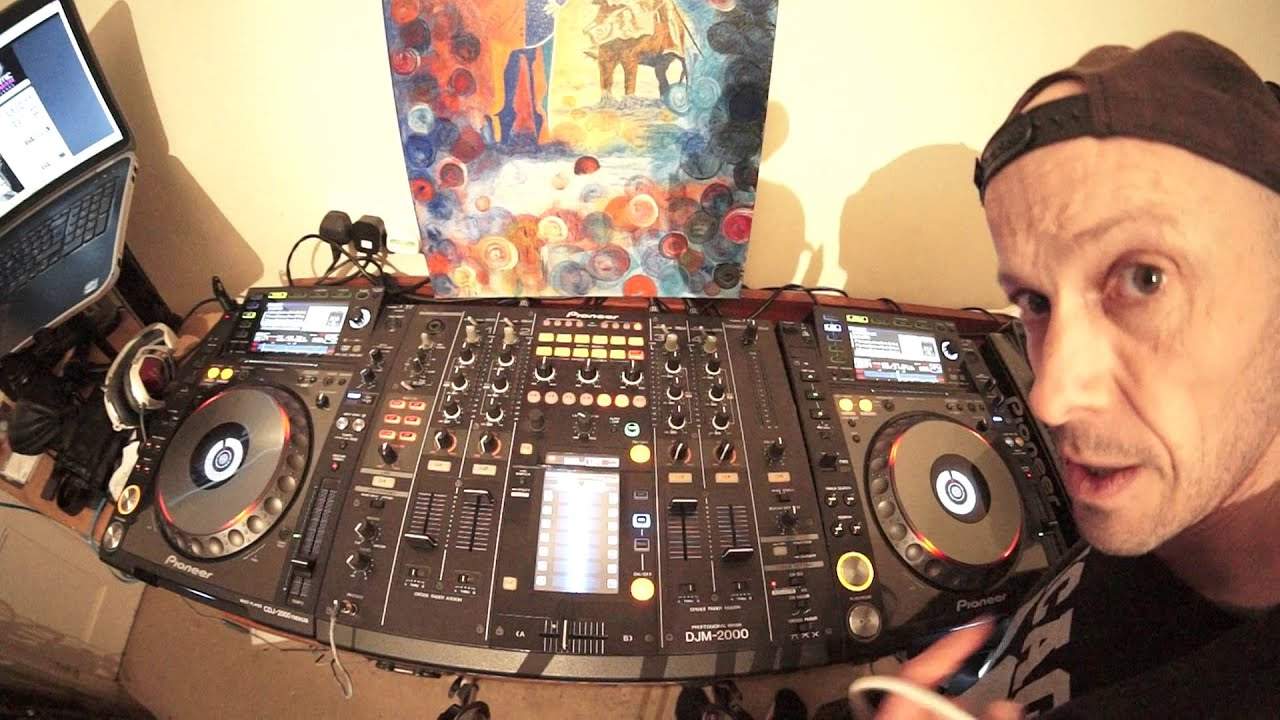
 16:33
Phrase mixing to make a set come alive
On YouTube this video is called Beginner DJ Lesson on How to Phrase Mix to Make Your Set Come Alive!
What this lesson teaches
The long one, aimed squarely at the inexperienced DJ, and it spends its first half getting the definition right - which is the correct priority, because "phrase" is used constantly and rarely explained.
What a phrase is
Not a sung line. In dance music a phrase is a block of the track that repeats and then changes.
His worked example builds it up:
- Sixteen beats of just a bass kick.
- Then it changes: sixteen beats of kick and bassline.
- Then again: kick, bassline and melody.
- Then vocals - and then chorus, verse, chorus, verse.
- Somewhere in there, an instrumental break.
Each of those is a phrase. The repetition is what makes it one; the change is what ends it.
How long
Four bars, eight, sixteen, thirty-two. Occasionally twenty-four. Mostly eight.
That is the number to assume when you have not counted a record yet, and you will be right far more often than not.
The practice setup
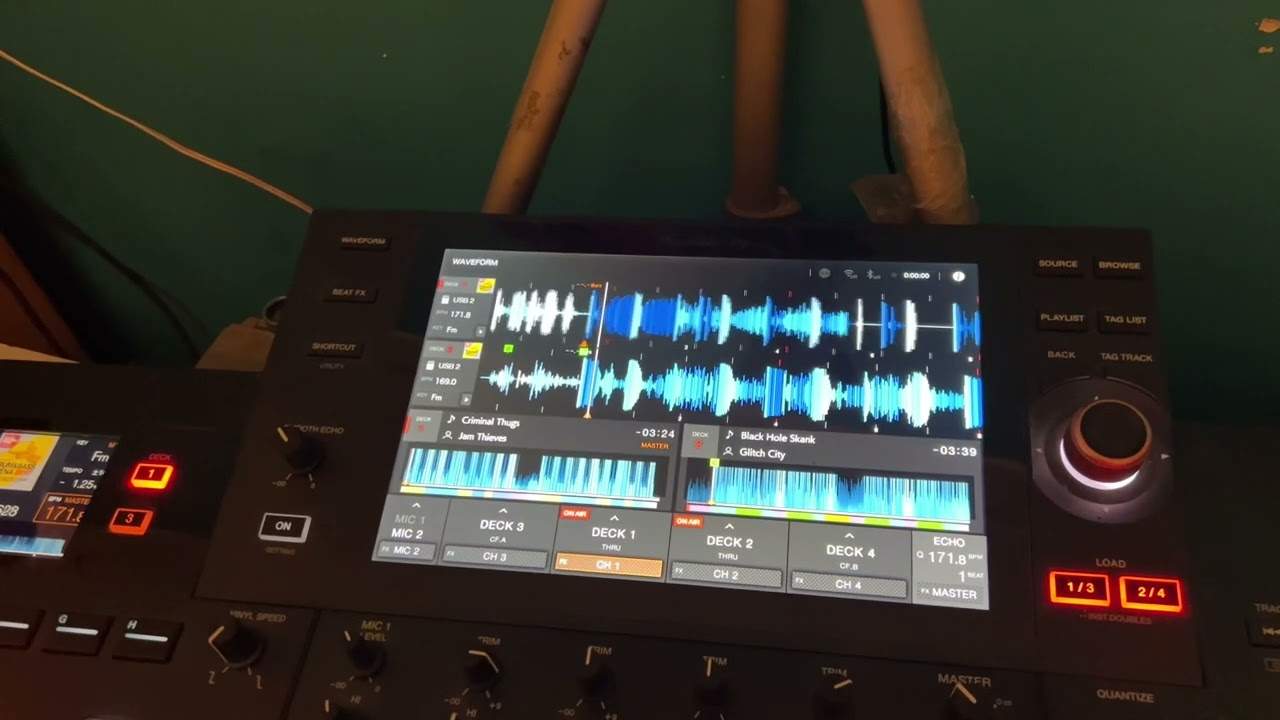
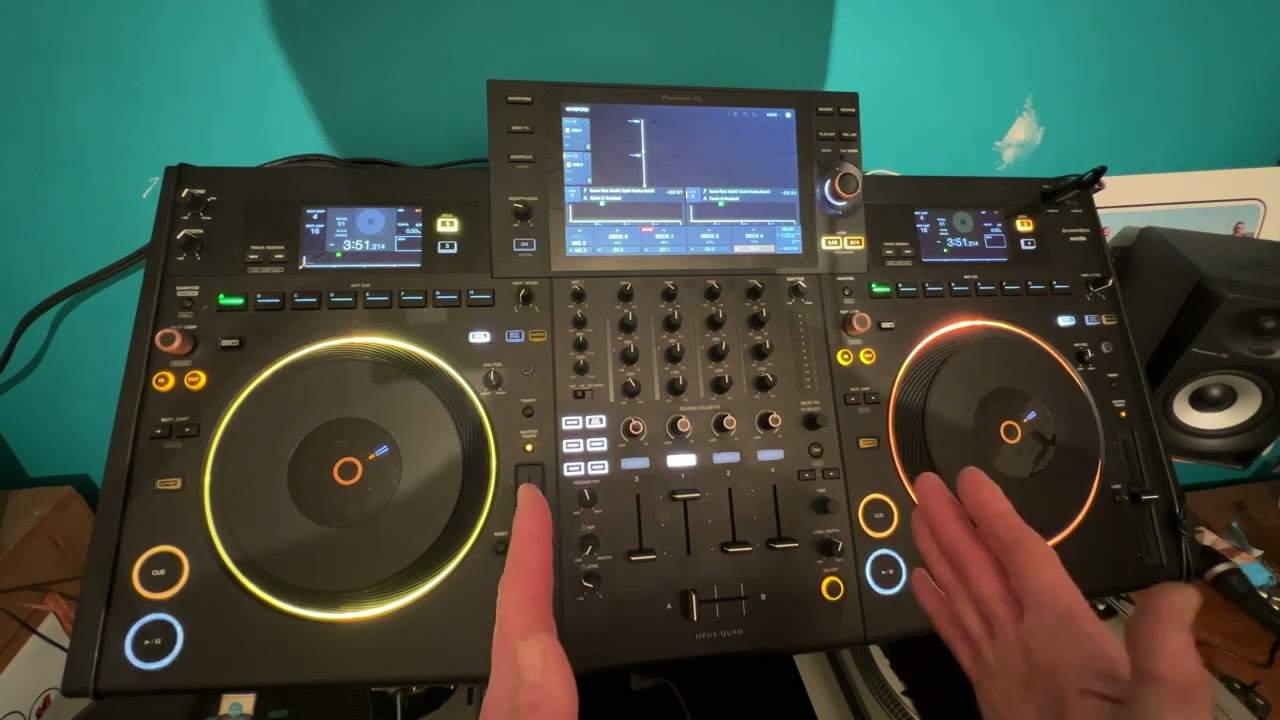
Same track on both decks, both at the same speed, which you achieve in whichever way your equipment allows:
- On a controller, he recommends using sync, deliberately. This is a lesson about structure and sync removes the variable that is not being taught.
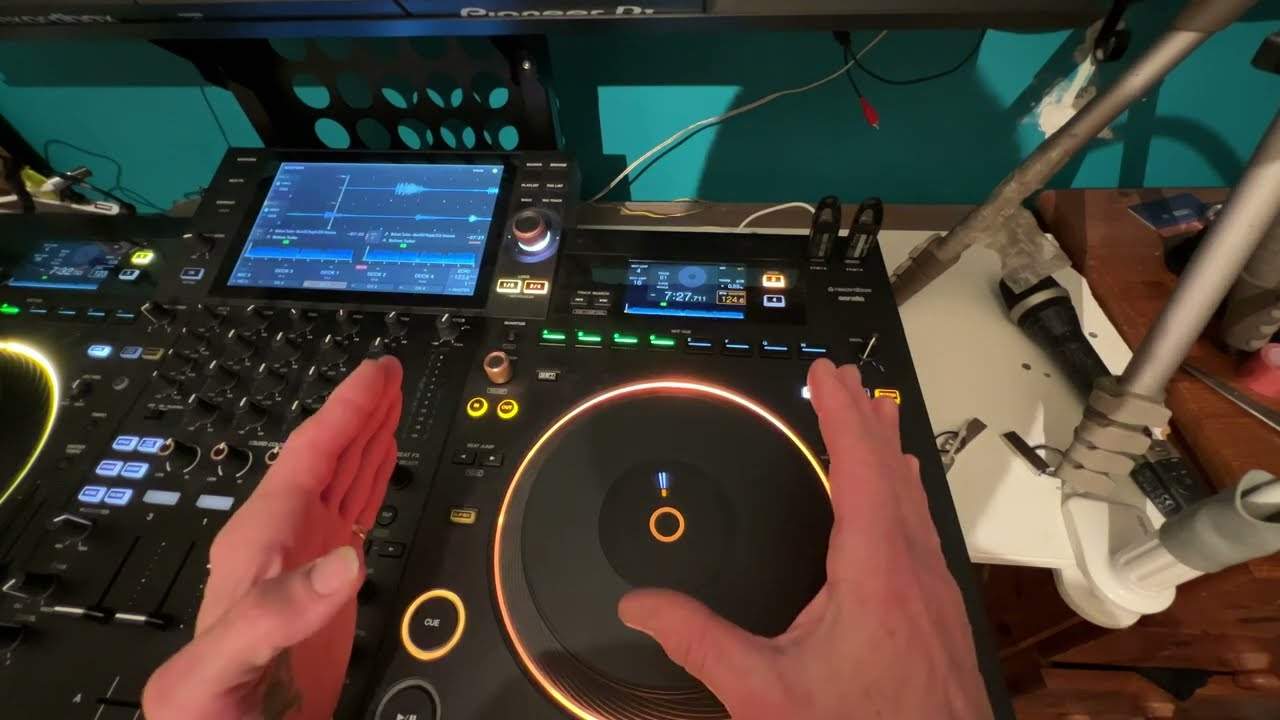
- On CDJs or turntables, set both pitches to the centre.
- On a player with tempo reset, engage it and the pitch position becomes irrelevant.
With two copies of one record at one speed, nothing can drift. Whatever you hear is the thing you are practising.
On using sync for this
Worth defending, since elsewhere the curriculum is firm about learning to beatmatch by ear.
Both positions are right at different moments. When you are learning to hear tempo, sync removes the lesson. When you are learning where in a track to make a move, beatmatching is a distraction consuming attention you need elsewhere.
Teach one thing at a time, and turn sync back off when you go back to the other one.
And a word about the hat and the camera
He spends two minutes on 360-degree video and whether people like it, which is entirely beside the point and completely characteristic. The series is made by somebody thinking aloud with a camera running, and the digressions are part of why the explanations land.
Contents of the video
0:00 I've got a cracking tune for you
Alright guys, I've got a cracking tune for you. It's by Mr Lenny Fontana featuring D-Train. D-Train is short for Deliverance Train. A big singer-songwriter from the 80s. The track is entitled When You Feel What Love Has. Kami Power Records, KPR162. Check out the link in the description. This video is all about phrase mixing. I'm just going to stop that there. I'm going to turn that so I can see me write. I have been putting a few 360 degree videos on recently and everyone seems to be pulling out their hair. Some people like it, some people dislike it. Well, I'm not going to be doing that forever, you know. I like to embrace new technology. 360 degree video technology is not in its infancy. It's, let's say, in its toddler stage. I did have what was called a Sony bloggy.
In 2007 I believe it was very dodgy and that did 360 degree video but the item I have now is a lot better and it's only going to get better so the potential for 360 is well mind-boggling really but on the odd occasion I will be putting a 360 video out there so shut up let's get on with it right okay so phrase mixing is a great way of learning how to mix correctly. Now this video is targeted for the new inexperienced DJ. What do you have to do with the kit you've got? First of all, if you're using a controller I highly recommend you use sync. If you haven't got a controller and you've got CDJs or maybe vinyl turntables, set the pitch to the center position. The idea is that you have the same track on both players
2:24 What's the definition of a phrase?
And what you're doing is you're going to have them both set at the same speed. Now with the Pioneer 2000 Nexus, I can set the tempo reset. What that means is that by setting that wherever the pitch is, it doesn't matter because both tracks will be the same speed but of course both tracks being the same track anyway. So what is phrase mixing? Is someone singing a phrase? No. What is a phrase? What's the definition of a phrase? Well, in dance music, EDM music, modern day dance music, a phrase is a part of the song that seems to be almost like a block in the track. It's almost as though there's a part of the song that seems to have a repetitive nature that goes on and on and on and then it changes.
4:09 Any drummers out there will know exactly what I'm about to say
And then you seem to have another part that seems to be quite repetitive, that goes on and on and on. Then it'll change again. For example, the beginning may just have 16 beats of a bass kick, and then it changes 16 beats of a bass kick and a bass line. And then maybe it changes again, 16 beats bass line, kick and a melody. And then all of a sudden you could have vocals, you could have the chorus, then the verse, then the chorus, then the verse. You could even have the instrumental break. Now in music terms we class these parts of the track as phrases and these phrases could be anything from 4 bars, 8 bars, 16, 32.
Occasionally you will get a 24, occasionally, but most of the time they will be in groups of 8. Right, 1, 1, 2, 3, 2, 1, 2, 3, 3, 1, 2, 3, 4, 1, 5, 1, 2, 3, boo, 1, 2, 3, 9, 1, 2, 3, 10, 1, 2, 11, 1, 2, 3, 12, 1, 2, 3, 13, 1, 2, 3, 14, 1, 2, 15, 1, 2, 3, 16, 1, 2, 3, 7, oh! Right, we had a change after 16. But we actually had a very subtle, subtle change after 8. Did you notice it? Listen again. 1, 1, 2, 3, 2, 1, 2, 3, 3, 1, 2, 3, 4, 1, 5, 1, 2, 3, 6, 1, 2, 3, 7, listen, 2, 3. Now, OK, any drummers out there will know exactly what I'm about to say. And they'll understand. Anyone who isn't a drummer, I'll try and explain. Drums.
6:46 That side over
You have a bass drum, which is the one that the drummer will use with their foot to kick that boom-boom. Then you have the snare, with your hand. But the other hand doesn't just sit there and do nothing but pick your nose or poke at women and go... Sorry. Beg your pardon. What it will do is use the hi-hat. So...
After eight bars, we had the hi-hat coming. It was very, very subtle, but it was there. But again, let's rewind a little bit to this video. A phrase can be four, eight or six, ah, eight, the word eight, the number eight. We had eight bars and then we had a very slight change. So if we really wanted to be anal, we could say, well, we had a change after eight bars, but really... With this track, we'll call it 16, but there was a definite change. I know I do go on, but I like to explain things in great detail so everyone can understand. Muchas gracias. Thank you very much. Tusen tak. Merci beaucoup. Dankeschön. Thank you very much. Kong hei fai choi. Happy New Year. Right, so from there we had a definite change, or a subtle change,
9:18 Chorus as a phrase
A change in the bass line came in there. Alright, now let's go to that side over there. So I'm just going to wang the camera around a little bit like that. I can't see myself now because the screen is on the other side so... Doesn't really matter. Right, what I'm going to do now, I've set up a couple of cue points here. So, let's have a look. Right, okay. There. Now then. Okay, chorus. Sorry, verse. Now chorus. Alright, this is the chorus. There. Okay, so a definite change there. Now again for the discerning ear you may think well where is the change? But in a lot of modern day tracks we will have chorus, verse, chorus, verse. So we had a bit of the verse, I'll go back a little bit. This is the verse. Still on the verse. This is the chorus. How do we know when...
They're singing the chorus, the verse. I'll explain. A chorus is a part of the track that will be repeated over and over again. The words in the chorus will be repeated over and over again. Whereas a verse is the story of the track. And the story will not... Play over or be said over and over again. You have a part of a story in one verse, then you have the chorus. You have another part of the story in another verse, completely different to the first part of the story in the first verse, and then you'll have a chorus again. So the chorus will... The artist will sing the same thing, but the verse, most of the time, not all the time, most of the time, there will be different words in the verse. Really important. OK, so let's go to that chorus again and I start counting from the beginning of that chorus and see how many bars and more importantly, see how many bars we have in that phrase because we're going to class that verse. Sorry.
12:09 I'm going to press Q on this side
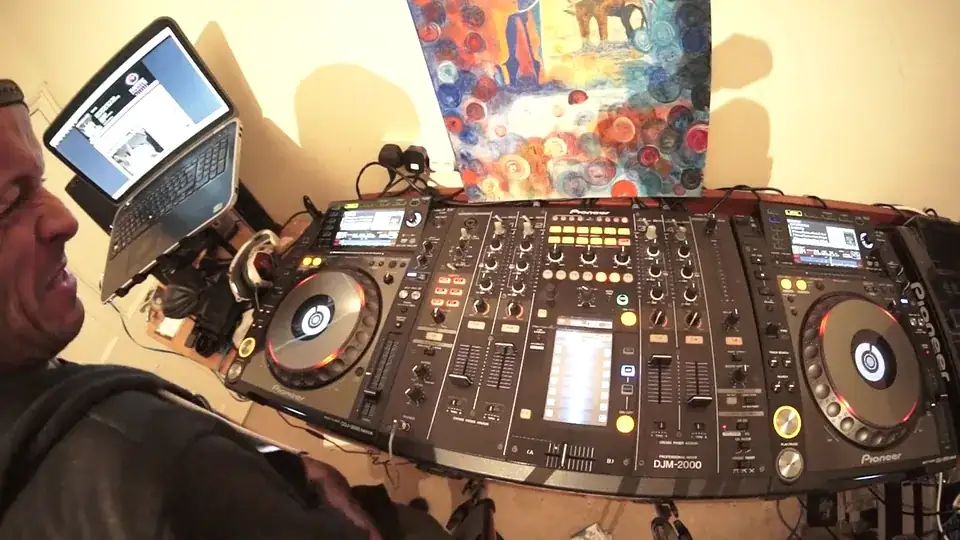
Chorus as a phrase. 1, 1, 2, 3, 2, 1, 2, 3, 3, 1, 2, 3, 4, 1, 2, 3, 5, 1, 2, 3, 6, 1, 2, 3, 7, 1, 2, 3, 8, 1, 2, 3, 9, 1, 2, 3, 10, 1, 2, 3, 11, need more fingers, 12, 13, 1, 2, 3, 14, 1, 2, 3, 15, 1, 2, 3. 16, 1, 2, 3. OK, we have a change. Now then, this is the genius, the wondrous part of phrase mixing. This is the part that puts a shiver down your spine when it's done correctly. We have 16 bars before we get into the bass line from the beginning on the left-hand deck, the beginning of the track. On the other side, the right hand side, at the beginning of the chorus we have 16 bars then we have a change. Now you do not need to have rocket science technology in your brain to work this one out. You do not need to be able to, I don't know, to become a fantastic musician and all of a sudden play wonderful instruments and be the world's best. It's very simple. 16-16. So...
13:18 That point now, just before
I'm going to ask you a question. What do you think will happen if I start this track at the beginning of the chorus? What will we hear on this track after the chorus? What will we hear? We'll hear the bassline, won't we? We'll hear that melody coming in and it will snap in not only in time because we set the two tracks at exactly the same BPM Because it's the same track, it will be matched musically, just so long as we of course don't hit the bridge, but that's not this, we're not going to delve into that at the moment. But what will happen is as soon as the vocals finish on the right hand... Earthquake. Stop it. No, seriously, stop picking your bloody nose, will you? Now, and put that cup of tea down and listen and pay attention. Thank you. There, right. So, sorry about that.
So as soon as that track finishes with the vocals, this one will come with the melody which...
Okay, so let's do this. So what I need to do now, I'm going to move my crossfade to the right-hand side. I'm going to zip back a little bit before the point arise where I need to start this one off. I'm going to press Q on this side. I'm going to pick my headphones up and I'm not going to pick my nose. I'm going to press play there. And go back to A. Nope, not that one there. I want to go forward a bit. Just going to go to that point now, just before the chorus. I started this track. Listen. And you had that feel for love in the background because that was what you had, the vocals directly after the chorus. Okay, to prove a point, I'm going to do it again. So let's go over. Let's zip it back a little bit. This time I'm going to snap it straight over.
You notice where I brought it back. Let's just zip it back a little bit. There. So we were exactly at the right point. So, why do this? Why waste valuable time watching me? Freaking out of my boggles. Why are you doing this? Well, for a start, when you're using the same track, it has the same structure if you have it on two decks or 500. Also, when you're setting the tempo, To exactly the same, you don't have to worry about beatmatching them. But also it is a great way of teaching yourself how to phrase mix perfectly. Because to become a good DJ who can construct a good set, if you can mix in key, in time, it doesn't really matter about mixing same genres because sometimes mixing different genres is more fun. But if you can phrase mix perfectly,
Clashes of vocals over vocals, bassline over bassline, melody over melody. And your mixes will become far more smoother. I hope that's been a help. Practice and enjoy. And a big shout out to Mr Fontana and D-Train in the house. Thank you.
This transcript was produced automatically from the audio of the video and may contain mistakes.