 10:15
Cutting in on time and on the phrase
On YouTube this video is called Beginner DJ Transition Mixing Lesson on Cutting in Time and Phrase
What this lesson teaches
Demonstration first, explanation afterwards - and the explanation identifies an off-by-one error that is easy to make and very hard to spot in yourself.
Short phrases
The track he uses is around three minutes, which makes it a radio length - and radio-length records have shorter phrases than twelve-inch mixes. His first phrase is eight bars, where a six-to-ten minute club mix might run sixteen or thirty-two.
Worth knowing before you count anything: the phrase length depends on what the record is for.
The error
Here is the thing to take away.
With an eight-bar phrase, people bring the next track in on the eight. With a four-bar one, on the four.
That is one bar early.
The next track comes in on the bar after the phrase finishes - on bar nine, or bar five. That bar is the one of the next phrase, and that is where the new record's own first bar has to land for the two to agree.
Count it through and it is obvious: if your incoming track starts on your outgoing track's bar eight, then its bar one is sitting on top of the last bar of a phrase, and every subsequent phrase boundary in the two records will be a bar apart for as long as they are both playing.
What it sounds like
He brings it in on the four deliberately so you can hear the mistake.
His description is exactly right: it's almost like we've got an echo. It sounds okay, but it's not right.
That is why the error survives. It does not sound broken - the beats are still matched, the keys still agree, nothing clashes obviously. It sounds slightly wrong in a way most people cannot locate, and so they conclude the two records do not suit each other and move on.
How to check yourself
Count out loud, and make the number you say when you press play be the one, not the last number of the previous phrase.
If you find yourself saying "...seven, eight" and pressing on "eight", you have it wrong. It should be "...seven, eight, one" - and the press happens on that one.
Contents of the video
0:00 First of all the demonstration, then the explanation
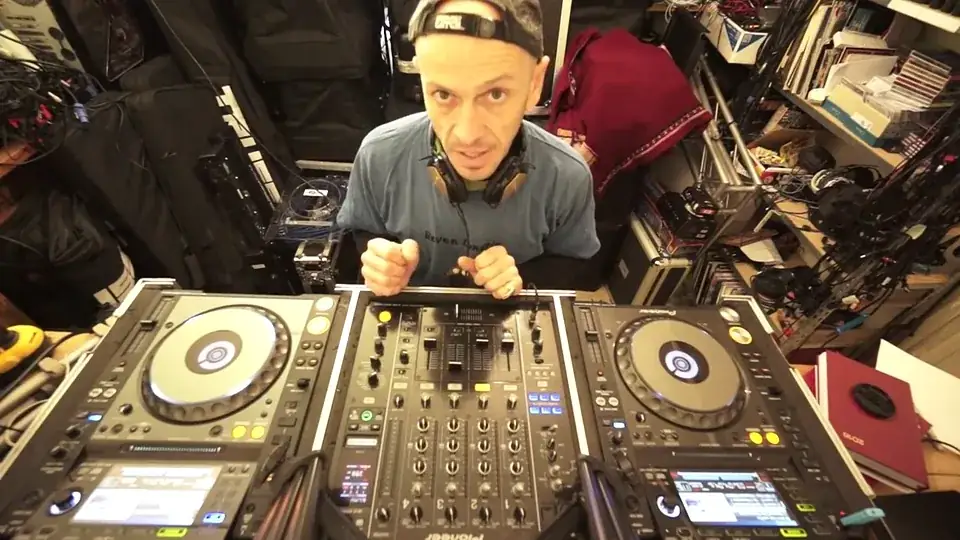
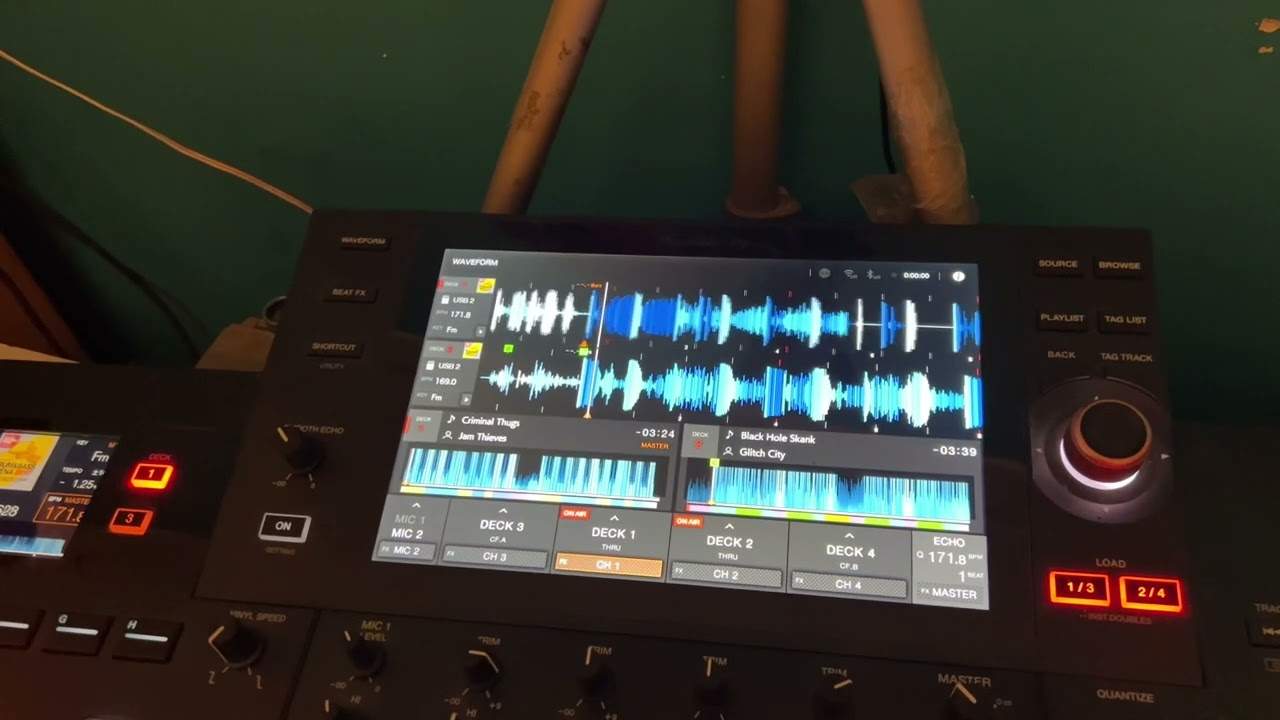
Alright guys, first of all the demonstration, then the explanation. The tune I'm using is Diamond Skin Sneaks from Mr Lenny Fontana, KPR 158. There will be info in the description on Karmic Power Records and also where you can get this tune from. I'm going to prove to you that bringing it in where you possibly thought it was at the right time is actually at the wrong time. Also demonstration, which is a great way of snapping in tunes and then the explanation afterwards. So here we go. Same track. OK. Now we're going to cut. One more time. 1, 2, 3, 4. 1, 2, 3, 4. 1, 2, 3, 4.
1:45 This happens to be around about three minutes song, so it's ideal for
OK, so what's going on? Right, the track has like most EDM tracks we have phrasing and the first phrase in this track is eight bars. This happens to be around about three minutes song, so it's ideal for radio. So the phrasing in this track is going to be a lot smaller than your normal, let's say 12 inch single, which is anything from six minutes up to sometimes eight or 10 minutes long. So what I was doing, I was starting the next track halfway through the first phrase, bringing it in and then doing likewise with the other side and so on and so on. Then during the latter part of the demonstration, I then just chopped the one track in. Oh, after the first phrase, first eight bars. Now you may be going wrong here. What you might be doing is you may think that the next track needs to come in on the eight or the next track needs to come in on the four. It actually doesn't. The next track, believe it or not, needs to come in on the four. It actually doesn't.
The next track, believe it or not, comes in the bar after that and I will explain. So if we have a listen here, let's count the bars. One, one, two, three, two, one, two, three, three, one, two, three, four, one, two, three, five. That's where it actually comes in. So what I'm going to do now, I'm going to bring this track in on the four and let's see what it sounds like. So I'll not only bring it in, I'll bring it into the mix as well. So one, one, two, three, two, one, two, three, three, one, two, three, four. It's almost like we've got an echo. It just, it sounds okay, but it's not right. It's not the correct, the correct. That was sort of a correct and a right. Correct. Bloody hell, I just got a new word. The correct. That's the correct thing to do. Bloody hell. There you go. It's patented. It's on the web. Right. So let's try it now
On the eight. Okay, so we'll start it again. One, one, two, three, two, one, two, three, three, one, two, three, four, one, two, three, five, one, two, three, six, one, two, three, seven, one, two, three, eight, one, two. See, it's not happening. Now let's bring it in at the correct time signature. This is really important. One, one, two, three, two, one, two, three, three, one, two, three, four, one, two, three, five, one, two, three, six, one, two, three, seven, one, two, three, eight, one, two, three. So timing is the key. Now let's try this a bit further through the track. I'm going to go to a break. Okay, so one, one, two, three, two, one, two, three, three, one, too much now. Right, I'm going to do the same
Thing now, but this time I'm going to bring it in at the incorrect time signature, the incorrect time. And I'm going to make sure that they're in beat, but let's see if it sounds as good as it did then. All right, so we will slip that back to around about sort of there-ish.
6:58 Let's get our counting perfect
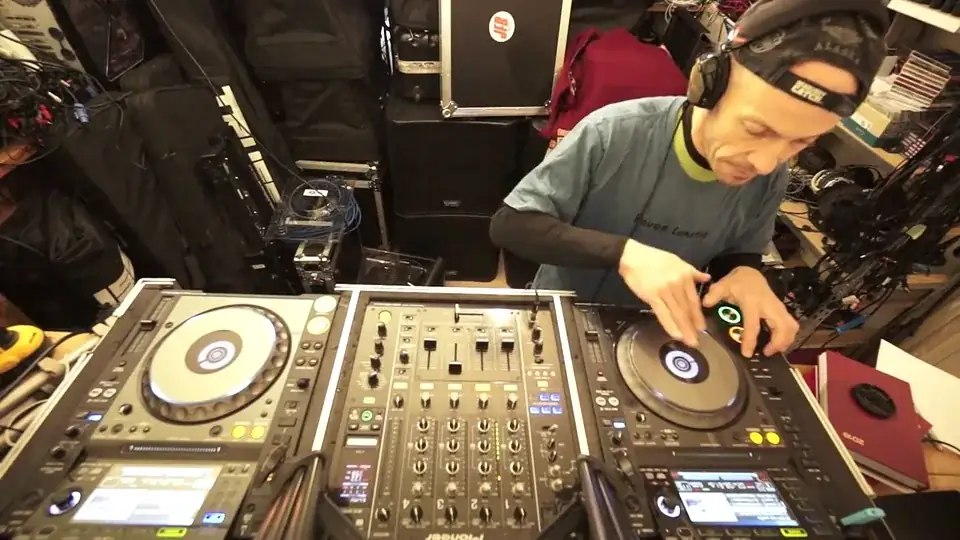
Okay, let's get our counting perfect. So I'm going to start this one over here at the break again. So that's on my one, that's the count of one. So I'm going to bring that in at the wrong time signature at the beginning or when I say the beginning of, the beginning of the next phrase. So we've got the introduction which is here. So I'm going to bring this one in on the eight. So one, one, two, three, two, one, two, three, three, one, two, three, four, one, two, three, five, one, two, three, six, one, two, three, seven, one, two, three, eight. This doesn't sound too bad. It's not too bad but it is definitely the wrong time signature. Now this is really important when you're trying to construct a mix where you want that block effect. You want one block to finish, the other
Block to start and you could have a bit of a transition over the top. What am I on about? Well for example, you may have the vocals on one track finish and the vocals on the other track start. So you don't have vocals overlapping vocals but at the same time you can still have the track with the vocals that are finished have the melody carrying on and the track with the vocals starting having a bass line so if you think about it it's a bit i suppose it would be like a six that way and a six no one a six that way and a six that way yeah because you would have the track now you have to bear with me here sadly i do know what i'm on about the track you're mixing in could say have a melody so the melody plays while the other track is playing with the vocals and then as soon as the vocals
Finishes on that one the vocals comes in on this one with the melody still playing believe it or not the voc the track with the vocals that was playing no longer has vocals but has the bass line over so that's where you get the across here and there that's the melody vocals uh vocals bass line yes right okay so i hope that's been a help i'm sorry i haven't confused you if you are scratching your head right now just make sure you get a hoover and clear up all of the dandruff terrible i have that problem all the time um right i'll finish off with practice and enjoy and a big shout out to comic power records thank you very much
This transcript was produced automatically from the audio of the video and may contain mistakes.