 7:38
Beginner Drum and bass Mixing Lesson on Counting a Bar and Finding a Phrase
Contents of the video
0:00 The track I'm using is by Danny Bird
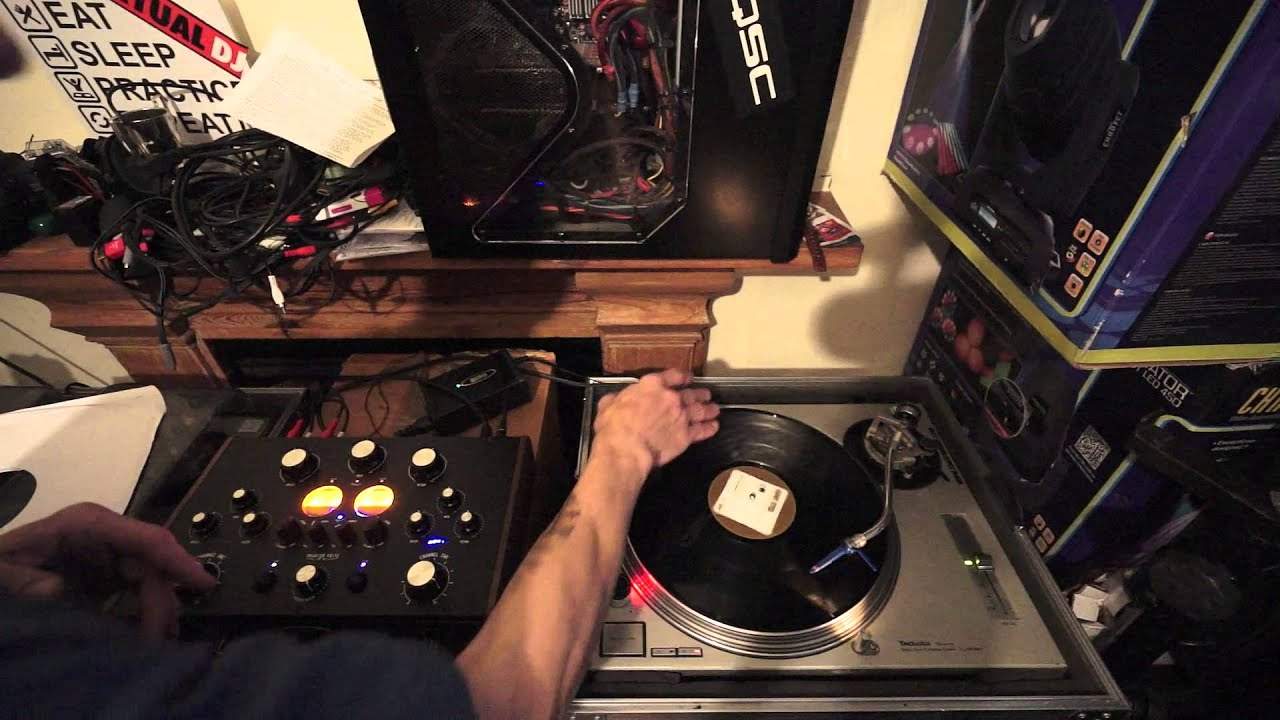
All right guys, this is a beginner lesson on learning how to count the bars and phrases in a genre known as drum and bass. The track I'm using is by Danny Bird. It's the Winchester Club. The reference number on this piece of vinyl is D-88LP. The turntable I'm using is the Technics SL1200 Mark II, club standard from years ago. The mixer is from Super Stereo. It's known as the DN78. It's a hand-built rotary mixer in the UK. There'll be a link in the description to where you can get more info on the mixer. Also, more info on Danny Bird in the description. Now first of all I'm going to play the track and let's work out exactly how not only how the track starts but how your counting should start when we hear that first kick. Here we go.
1:40 To make note of is
Okay, so I'm gonna rewind it So there is our first beat. Now a lot, not all, a lot of drum and bass tunes will start off with some form of melody in the background. What we need to do is we need to determine We're not talking really about melody in this track because this track starts off with straightforward kick, but we need to work out exactly where to start counting when we hear that first kick. So let's have a listen. Now the first thing to make note of is that when you do get a first kick in drum and bass and there are more drum patterns that follow or exactly the same drum pattern that follows then you need to work out where about The first kick is in relation, of course to a bar So for this instance the first kick you hear is the count of one in a bar as in 1 2 3 4
So what I'm going to do now, I'm gonna start counting my bars at the beginning of this track. Now while I count I'm to be counting like this one two three four one two three two one two three three one two three four one two three five and so on now what I want you to do is also listen to a tiny difference in the drum pattern and also listen to how I'm counting and you will find that the changes in the drum pattern will correspond to 8 and 16 and 8 and 16 and so on very rarely do you have a 5 or a 3 or a 7 or a 9 what you will find especially with drum and bass it's very much formatted and it's perfect for what we call phrase mixing and also drops and also double drops so we'll start again here we go so here we go
One two three four one two three two one two three three one two three four one two three five one two three six one two three seven one two three eight one two three nine one two three ten two three eleven one two three 12, 1, 2, 3, 13, 1, 2, 3, 14, 1, 2, 3, 15, 1, 2, 3, 16. OK, so we had a definite change after the 16th bar. But did you also notice that when we got to 4, there was a slight change in the drum pattern? Also at 8, there was another slight change. So this proves that this drum and bass tune, along with many others, are very much formatted. Now what I'm going to do now, I'm going to move the needle to a random point in the middle of the track. Just very random. We'll put it there. OK, and I'm going to start to play the track again.
And let's see if we can pick up on not bars, but the phrasing of this track. What I'm doing now, I'm listening for a change somewhere in the track. We've got a bass line in the background. Let's hear, listen, there's our change.
4:52 I'm going to start counting from here
I'm going to start counting from here. 1, 1, 2, 3, 2, 1, 2, 3, 3, 1, 2, 3, 4, 1, 2, 3, 5, 1, 2, 3, 6, 1, 2, 3, 7, 1, 2, 3, 8, 9, 10. 1, 2, 3, 9, 1, 2, 3, 10, 1, 2, 3, 11, 1, 2, 3, 12, 1, 2, 3, 13, 1, 2, 3, 14, 1, 2, 3, 15, 1, 2, 3, 16, 1, 2, 3. And break. OK, so what we did, what have we done? We started at the beginning of the track. We worked out that there was a definite, a definite change after 4. Well, not an actual change, but there was a definite kind of riff after 4 bars. There was a little change after 8, but there was a big change after 16. I chose a random part in the middle of the track and we found there was again a definite change after 16. We've got into the break and so on and so on. Now you can do this with practically every single drum and bass.
I just want to show you something else as well. Now, this can only be done on vinyl. It can't be done on any other format, but I'm going to move this very slowly and you may need to pause the camera. But can you see some form of this like a circular shape? It's almost like a spiral shape moving around the vinyl. Now that is the drum pattern and a way to determine if the BPM of a piece of vinyl, is exact all the way through, is to make sure that the spiral is a continual spiral with no breaks. Now sometimes you may find on especially old school drum and bass tunes that the spiral will seem to have a step in it. Now that was from years ago when the producer maybe didn't have the technology to splice on a computer.
What they had to do was splice on tape. But nowadays, with modern day technology, of course, everything's done on a PC. So looking at this vinyl, it's perfectly BPM'd all the way through. All right, there's the vinyl, Danny Bird, The Winchester Club. The reference on this is D double eight LP. I'll finish off, it's on Hospital Records by the way, and I'll finish off with practice and enjoy. Thank you very much.
This transcript was produced automatically from the audio of the video and may contain mistakes.