 27:50
Beginner Step BY Step DJ Beat Mixing Lesson Made Easy CDJ Vinyl or Controller
Contents of the video
0:01 Welcome to a beginner lesson
Right, ladies and gentlemen, welcome to a beginner lesson. Now, this possibly could help you in many ways. First of all, I want to introduce you to Pinky Ella over there. Now, that pink flamingo, long story there, but many years ago, my daughter, Ella, I took her to a car boot sale in Penant, which is along the west coast of Wales, and we found one of those. She was only sort of three or four at the time. She was obsessed with it to the extent where it just got black. And while I was still a parent, in other words, while I was still with Ryan and Ella, long story, we won't go there. I said to her, well, why don't I get another one and take Pinky Ella's sister, that one there, away with me? So this Pinky Ella, this charming sort of TY kind of thing, has been like to Vegas, to Germany, all around the UK, to Ibiza, to Spain.
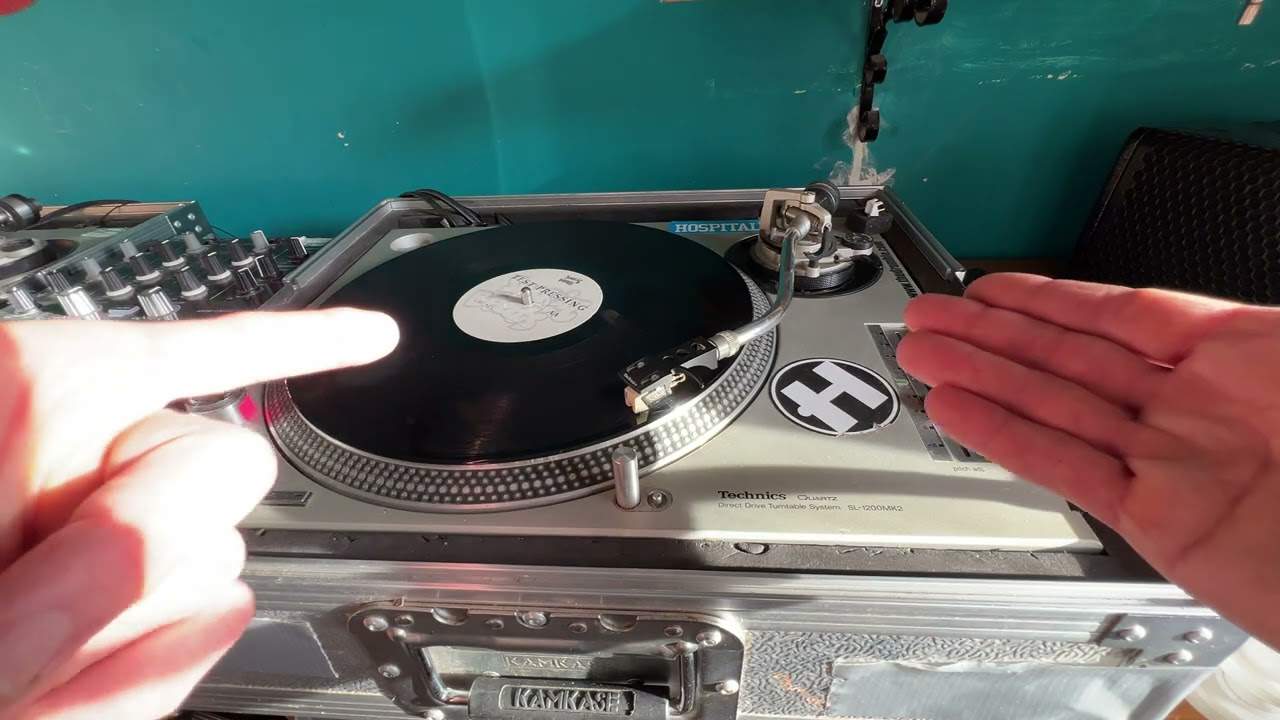
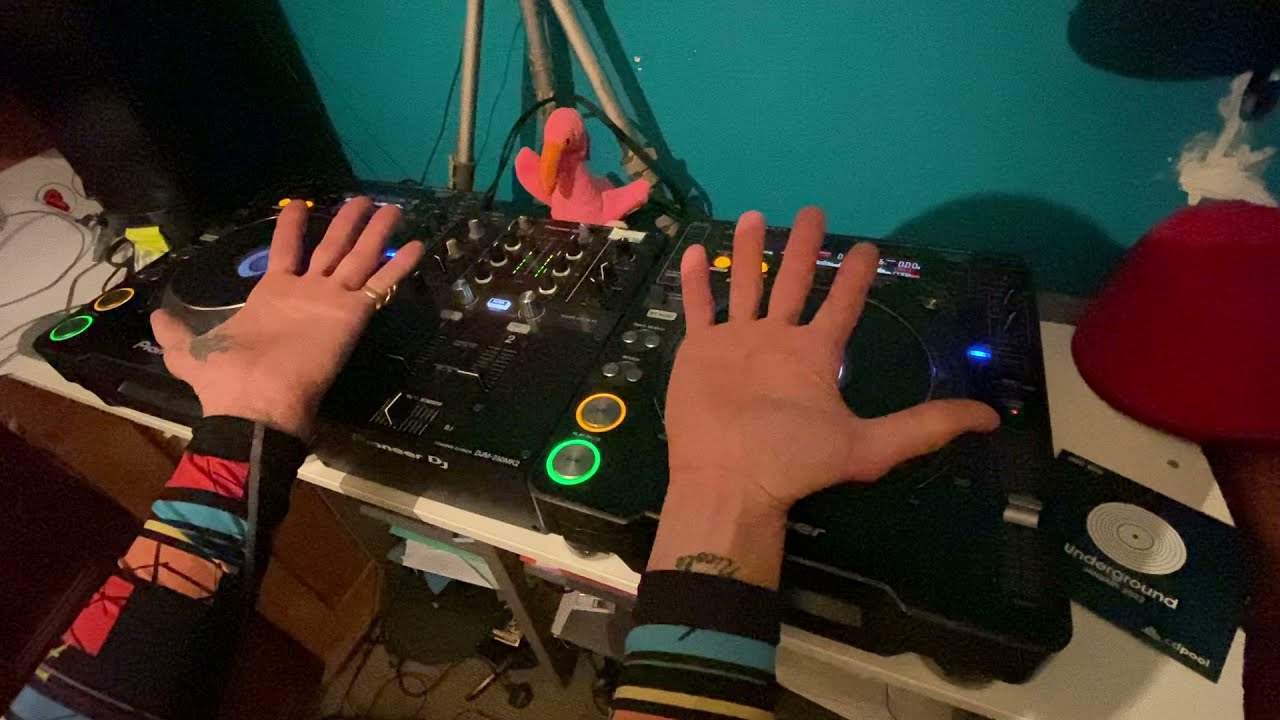
And if you've watched my old school videos... you'll see that that pink flamingo has been absolutely everywhere. So I'm going to dedicate this video to Ella. Dad loves you. Right, so it is a beginner lesson. And if you take my advice here, you can't go wrong. Now, I'm using CDJ's old school styley, the Pioneer CDJ-1000 Mark 3s. And also I'm using a cut from the underground releases from January 2021. It's version 20-22 from CDpool. Check out the link in the description. A side note here, is that even though we're moving forward with digital and everyone's using bloody clouds and god knows what. I still believe, honestly believe, that you need to have hard copies of your music. So if you are solely relying on the cloud, you're an idiot.
On the other hand... If you're relying on the cloud... but you have a backup with hard... with hard copies. I'm not on about a hard drive or a thumb drive because they can go wrong. Of course, a CD can go wrong as well, but it's a little bit, I suppose, like let's say, you know, all of a sudden there's a mass food shortage and you're rushed to the supermarkets to go and buy your loaf of bread and your bit of cheese and I don't know, your left-handed screwdriver. I must take mine back because I need a right-handed screwdriver. The last time I bought a left-handed couldn't use it. You'll find that the supermarkets are empty, it's all gone. So in other words, if all of a sudden the proverbial hits the fan, I shouldn't really say the shit hits the fan,
3:20 I have exactly the same tune
So I won't say that, you're stuffed if you rely on the cloud. On the other hand, if you do have hard copies, full-on, well done. Right, so what are the cats doing? Okay, so what I'm about to show you here is a great way of learning how to beatmix. It's, I want to say, simple. It's sort of simple. So have a listen. I'll just turn it up a little bit. Well, a little bit lot. So I have exactly the same tune. Now again, this, excuse me, this video is completely, totally and utterly for beginners. So if you are intermediate or you know how to mix, do me a favour and yourself, turn off and go and perm your hair. I've had a bad hair day today. I need to perm my hair. I haven't got any. Right, so what I've got is I have exactly the same track on both sides.
In other words, there's actually a mirror image. So if whatever I do here on this track, I want to do on that side as well, sort of, I will explain. Now, if you're having trouble with beatmixing, then this video is for you. On the other hand, if you're not having trouble with beatmixing, sod off. Right, so...
4:27 There's a very, very slight echo there
I'm going to speed that one up a little bit. Now, to the discerning ear, you may find that is it in beat or is it out of beat? Well, it's slightly off. There's a very, very slight echo there. But did you notice the echo did not change? Let me do that again. Same there. What happened is I played the tracks or the track at exactly the same, same speed. I started it at the same time. Admittedly, when I started that earlier, I did notice that the left-hand deck was a fraction too slow. I mean, a fraction, minimal amount. But what happened with the second time I played the tracks? They were exactly in time. But also, let's delve really deep here. Let's go deep. Let's go deep, baby.
Is that the frequency of those two tracks together, the one track, didn't change. Now, I'm going to play them again and I will explain what I mean by the frequency and what I was listening for. Now, can you hear that high sound? Let me bring one down. Bring that down and put the other one up. Play them together. So, what's happening is my two hands, there you go, are the track and I'm putting them together. So, what's happening is while they're playing, they're moving forward and they're overlapping each other. They're almost sort of cancelling each other out. Now, that is a sound that you need to listen for. Now, I'm going to delve deep here even though this is a beginner lesson because you guys are, you know, you're pretty
7:23 My hands and let's slowly move
Savvy. What's happening here is that the other track or both tracks are overlapping each other and even though one may be a fraction, I mean, when I say a fraction, if we were, say, looking at my hands here, you know, maybe you can just about see my other hand peek from the other side like so. Whereas, if I put them right next overlapping, theoretically, you should only be able to see one hand but if I move it very slightly, you can see the other hand and my fingers from the other hand appearing. But what's happening here is my hands aren't moving. They're staying together. Now, let's look at my hands and let's slowly move them like that. Very slowly. Over time, you can see indeed my other fingers are starting to appear. Now, I'm going
To emulate that now by slowing one deck down very slightly by 0.10%. Here we go. Volume's up. Can you hear that frequency? The sound seems to be changing. Now, try this. Okay. So, over time, what's going to happen is that frequency, that sound is going to slowly change and if I gave it more time, I don't really want to do that because it would take, I don't know how long, about 55 days. Just kidding. Only about 54. Just kidding. Only maybe about a minute. You would indeed start to hear it. So, I'm going to do something slightly different now. I'm going to put the right deck again up to 0.0. So, they're both exactly the same BPM. Now, what I'm going to do is I'm going to start them off at different times. Here we go. They are indeed not in beat but they're actually
In time. Why? How? What's going on? It's very simple. There is an echo. There definitely is an echo but the frequency of that echo is not changing. Now, this is where a lot of people make the mistake because they think they're out of beat. Oh, they're not in sync. Well, what you have to listen for, this is the key. Please listen. Rewind if you miss it. You have to listen to the difference in the sound of the beats. Are they staying together or are they moving? Now, let me show you what happened there with my hand. It was like that, OK? But my hands aren't moving. They're staying at the same position. Now, let's repeat that, OK? But let's get them in beat. Here we go. Now they're in beat and they'll stay in
Beat. It's the same track. Let's get them off beat again. So, very quickly as well, when you hear two
Beats, you think they're not at the same BPM. Listen, try and listen to see if you can hear the beats going off beat more or less. If they're going off beat more, they're not at the same BPM. If they're going off less, they're not at the same BPM. So what do I mean by that? Well, if they're going off more, of course it means that one's faster than the other. If they're going off less, it means that one's going faster than the other because what's actually happening is one of the tracks is moving away. So let me show you, one of the tracks is moving away like that or what's happening is one of the tracks is slowly getting back in beat with the other one. Now this is the key here. I mean, I can't explain this enough and this is sort of the fundamental
12:14 This, but I can't really demonstrate
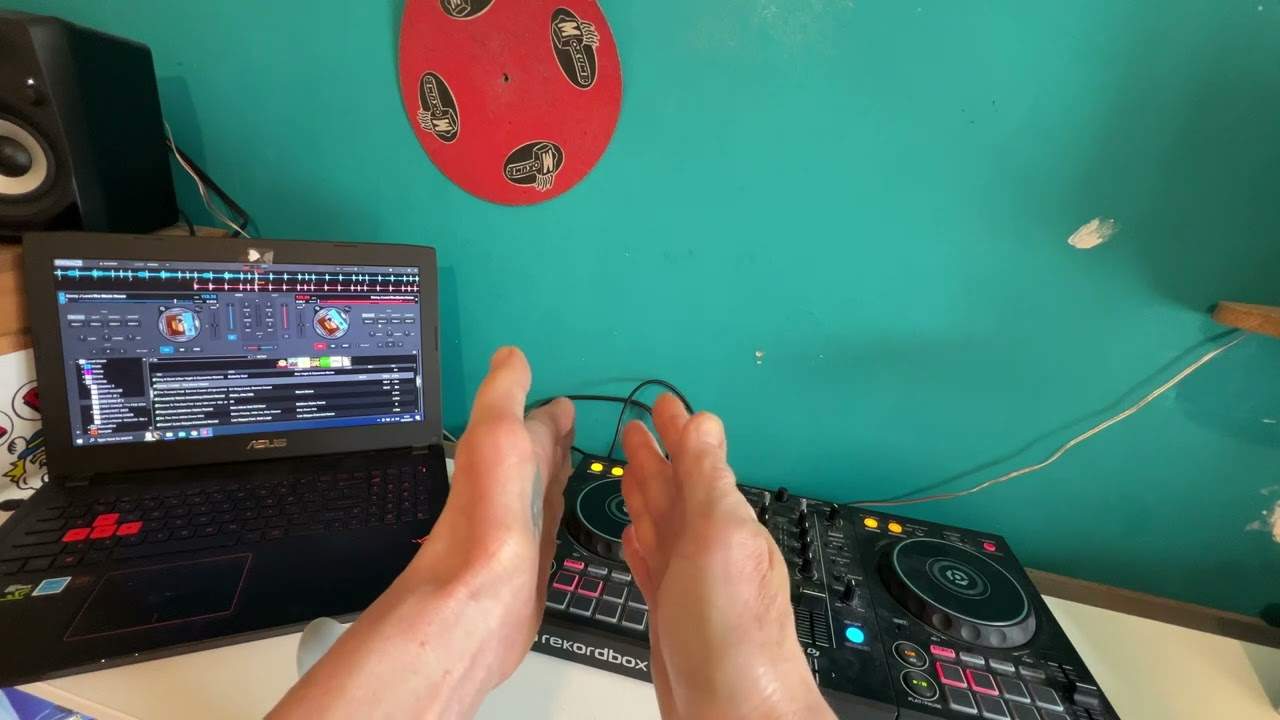
Of beat matching. If you can master this, you've got it. Now again, I'm using CDJs. You can do exactly what I'm doing with any controller around the world so long as it's not a Mickey Mouse controller that costs you £4.99 you got from Christmas and it breaks as soon as you open the box. You might as well use the box actually. Most people do. Anyway, what you can do as well is, if you're using CDJs, your right hand deck, unplug the left hand RCA either out of the mixer or the CD player. The other deck you unplug the opposite cable, the opposite RCA out of that deck. So theoretically then the right deck will only play through the right speaker and the left deck will only play through the left speaker. Now this is where we get a little bit more interesting and this
Button, I can explain this, but I can't really demonstrate this over the web because you're listening to this through a dodgy. Well, it's not actually dodgy iPhone. It's an old one. It's an 11 now and they've got iPhone 55,000 by now. Anyway, so if you do that and you press play at the same time, exactly the same time, all that's happening is guess what? Because it's the same track. You are hearing the track as it would be played. You are only playing one side because if I'm playing one side, of course the right side will be through the right speaker. The left will be indeed through the left speaker. But if I'm playing only the right side from the right deck and the left side from the left deck press them
Both at the same time, I'm actually theoretically playing the same track right and left. And this is where it gets very interesting because what you'll find is if they're slightly off beat, this is when you can physically, and I mean, this is, this is amazing. Every time I've taught people this, they're like, wow, it is amazing because you can physically feel the sound move from speaker to speaker if it's off beat. So of course, what you need to do is get it in the middle. Alternatively, if you want to use headphones, you can indeed monitor. So maybe right side down, have your right ear ear cup on your headphones over your right ear. Now is listening to the right CDJ. The left side then is through the speaker here. If you do this,
You can actually physically feel the sound move inside your head. It's really wacky. All right. So that's sort of a demonstration there, but more importantly, what we can do if we use the same track, we can do a remix. We can edit, we can use hot cues. And again, this is a great way of practicing now. As I say to everyone, I teach it's the old karate kid thing. Wax on wax on wax on wax off. Do it again and again. And again, there's something called muscle memory. If you do it enough, your brain finally will go, oh, you're pissing me off. You bloody idiot. I've had enough of this fine, right? I'll just do what you want me to do. So over time you should buy rights, be able to master the art of beat matching.
15:11 Let it play for quite a while on your headphones
Now, let's say you're using different tracks. Of course, you need to make sure they're in key or keys that work. What you need to listen for is that slight change the variation in the tap of the sound. So for example, if you're playing one track and you start the other one on your headphones and it seems to be in beat great, fine. Let it play. Let it play for quite a while on your headphones. Listen for that echo. But before you start thinking it's out of beat, listen to the echo. Is the echo changing? In other words, is it moving like that? I'm moving my hands across if it is then they are indeed not in beat. On the other hand, if the echo does not change frequency, they are definitely at the same BPM. They're just
Not in beat. i know it sounds simple for people who know what they're doing and for people who have not got the bloody foggiest it's like i prefer to do rocket science but wax on wax off so here we go not using headphones by the way i'm going to start this one other side can you hear that slight variation in frequency see now they're very close start the other side again change in frequency i should have spun that back oh it was right at the beginning i'm not going to rewind this or edit it you know me the thing is though i can see the bpm now let's take it to the next level so what i'm going to do now and i'd like you to try this as well is cover up those screens okay there's something that when i say i agree or disagree with um i don't mind people looking at screens
But the trouble is with today's djing is it so easy to look at a screen and rely on the screen but i'll be honest with you if you need sorry i'll start again if you want to learn the basics and you want to learn from scratch and you want to internally know what you're doing there's nothing better than using your ears so i'm going to bring that forward bring the other one forward now it's very likely they are
Going to start them again at the same time okay can you hear the frequencies changing and they're going off beat now there's one of four moves i can do to find out which one's faster or slower any one of those four moves will tell me which one is faster or slower i can move the jog wheel on the right deck clockwise or anti-clockwise left clockwise or anti-clockwise either one of those will tell me if the left deck is faster than the right or the right deck is faster than the left or the left deck slower than the right or bananas and apples chimpanzees right okay so what i'm going to do now i'm just going to move the jog wheel on the right hand side clockwise let's give it a go i did move it anti-clockwise there a bit let's wait
20:08 Wheel clockwise, moved wheel, move pitch
Till they go completely off beat sorry to bore you right they're going off beat clockwise here we go okay now did you hear when i moved this clockwise yes they were off beat but they started to get even more off beat that tells me this side is too fast i'll show you here we go i'm now going to move it anti-clockwise let's wait till they go off beat that hurt back my finger going off beat anti-clockwise now they're back right how did i know that well it was it was because when i moved the jog wheel clockwise on the right deck the beats went off even more so the side was going faster so by my action of moving the jog wheel clockwise extended the difference in the beats working together so in other words what was happening if i use
My hands they were going off beat like that i moved the jog wheel clockwise and they went like that so they went off beat even more now something that a lot of people get wrong is they move the jog wheel in the wrong direction and then guess what it gets back in beat but what happens is you're no longer in time with a bar one two three four you're actually now at the next beat so for example together one two three four but what's happening is if you move it too much what happens is it's one and two two and three three and four so you end up being one beat uh in advance forward or one beat back so let me repeat that again I'm now going to move this anti-clockwise now what I'm gonna do is move the pitch down slightly too much they're really close there they are really close maybe I should
Have had them further away but basically what I'm doing here is I'm trying to get them in beat uh not very well by the looks of it okay now if I say move the pitch on the right hand deck even more
Now what we should be able to hear is when I start them off they'll be in beat and then the right deck will speed up and we'll hear the beats go off a lot quicker here we go there you go now that's called a train wreck something else that's really important about beat matching and most DJs think they have to be in beat well of course they do but actually they don't let's imagine you want to do a
You've heard they're not in beat excuse me glad you didn't hear that I was a quiet burp I'll release that later on very loudly at the cats um let's imagine you want to do a quick mix of say one or two bars now let me demonstrate that with them not in beat okay maybe one bar all right so what happened there even though they weren't in beat because I did a quick transition um that is you even though I brought the volume up again you did here but let's imagine I didn't bring the volume back up the listener would not indeed hear that they were off beat because the transition was very quick so what I'm getting at here is basically the further apart the beats are the quicker the transition has to be the closer they are in beat the longer the transition can
Be so if you are let's say a DJ who likes to have a smooth long mix of say five years they've got to be in beat on the other hand if you're doing a really quick mix and you want to bang in those tunes as fast as you can they don't really have to be perfectly in beats so long as they're very close and the transition is one two three four bars you'll get away with it now I don't know the rule of thumb which is I don't know about that long and that long if I put them together it's even longer um but you know basically what I'm
Saying is you know you're bunging tunes on left right and center then don't bother spending hours actually you can't spend hours and hours because if you're putting tunes on you anyway if you do like to do very short and quick mixes don't try and get them in beat and fine-tune them so long as they're roughly the same BPM you can get away with it on the other hand if you like long smooth mixes of course they do need to be a lot closer in beat and if you like to have a mix that lasts indeed have to be in beat full stop so let me take the covers off let me put them back to the center so put that to the center now again I'm using sort of relatively old-school technology here even though when I had these uh actually not these but the first uh 1000s they were new and
They were like oh my God gold dust nowadays you can I don't know I mean the technology today is crazy so of course you could use tempo reset as well right I hope that's been a help okay again a very very simple tutorial now what I'd like to talk about now is about two three weeks ago I found this website called deep radio d3ep.com now I'm not being sponsored or anything like that uh to say this about this radio station but if you're sick and tired of the radio station you're listening to go and check it out because they play I mean if you like sort of soulful music deep vibey you know your sort of tunes that you'd hear with a slamming bass line you need to go and check them out they are insane I mean it's all DJs from
Around well I believe they're from around the world um but you've got to check them out d3ep.com deep radio so if you like soulful house music or music with vibe and energy you've got to check them out all right I will put a link in the description a big shout out to deep radio thank you very much for watching and as ever practice and enjoy thank you
This transcript was produced automatically from the audio of the video and may contain mistakes.