 11:08
Best New DJ Way to Beat Match for the Beginner DJ BY Ellaskin the DJ Tutor
Contents of the video
0:00 It's just me in my room doing some stuff
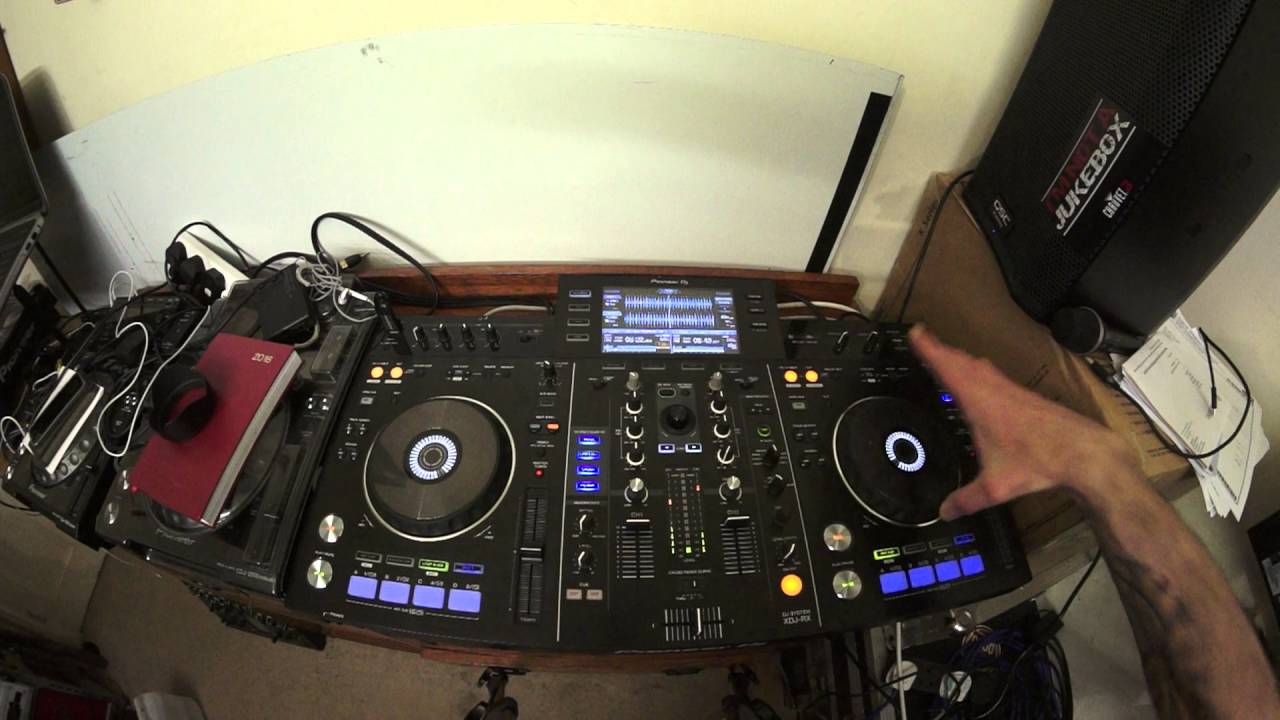
Right guys, as you know, I do not have a cameraman. It's just me in my room doing some stuff. This is a demonstration, also a tutorial, hopefully inspiring you, more importantly making you beatmatch perfectly. This is what we like. Track we're using is from Mr. Lenny Fontana, Karmic Power Records. It's a track entitled Moment of Love. Check out the link in the description. So, I'm going to give you a demonstration first, then I will give you the explanation. So, here we go. That is the demonstration. I'm going to move the camera over so we're facing or in closer proximity to the RX and let's have a look. So, we're in close proximity to the RX and let's have a look. We do have the wide-angle lens on, so I do apologize and I will explain in greater detail what I did or what was going on.
2:27 In this case, 126 BPM
Okay, same track on both sides, first of all. Secondly, the track on the left hand side is at the original speed that the producer made it at. In this case, 126 BPM. That means for every minute we will hear, believe me, or not, 126 beats. That's why it's called BPM, Beats Per Minute. A lot of you already know that. Some people for the very first time in this video will be hearing it. Always bear that in mind. On the right hand side, again, the same track, but I set the right hand side to the wide feature. Now, first of all, if you're not familiar with the wide feature, I'll just explain a couple of pointers here on the left hand side. It's irrelevant whether the tempo is plus, minus, anything. So long as the pitch is in the center position exactly, that means it will be at the same BPM of when the track was made originally.
I can, on the right hand side, I can set on the RX to plus or minus 6, 10, 16 or wide. Plus or minus six means that I can increase or decrease the speed by 6% of the original BPM. Now, I'm not a great mathematician. I'm not going to make a fool of myself. So let's have a look at 10%. So if I press to 10%, which on the RX is highlighted now in red, that will give me an increase of 10% or decrease. So 126 will be 12.6 BPM faster if I move the pitch all the way as far as it will go towards me. The other way is away from me, of course, and that will decrease the speed by 12.6%. We're not going to do that. I have set or I set this to the wide feature. Now, the wide will increase or decrease the speed by 100%. What that means is press play. If I push the pitch all the way,
5:41 Treat it with respect and you will be able to get it
Far away from me as it can physically go, it will stop because that's it. You're slowing it down by 100%. Guess what? Finito. It stopped. Bring it towards me and it's no longer 126. It says here 252. 126 and 126. Yes. Of course, 100 and 100 is 200. Two lots of 20 is 40. Two lots of sixes is 12. 200 and 40 and 12. One. Sorry. One. Why do I say one? 252. Let's have a listen. Rather fast. Okay. So what I did, I set on the right-hand side the player to the wide feature. I made a note of the original BPM of the track on the left, 126 and with wide engaged, also with master tempo engaged, very important because it will keep the same key. I then reduced the speed to half the original speed. 126 in half is 63. Now, when you're in wide, you'll find that you have very little control
Over the pitch and it is quite difficult to get it exactly in time. But be very, very careful. Treat it with respect and you will be able to get it. Okay. So what's happening now is the one on the left is at the original speed. The one on the right is just at half speed. So for example, every time we count four beats, the one on the left, we're actually only going to be able to count two on the right. Now that wasn't the last of it. What I did do is I reduced the bass on the right-hand side, emphasizing more the mid and the high. Too much bass will overpower the entire mix and it's not very good for trying to work out if one's faster or slower than the other. Also, no need for headphones. When you've got headphones on,
You're more inclined to be listening on one ear through this and that. And it's just too much. Forget it. No need. So press play two, three, four, one, two, three, four, one, two, three, four, one, two, three, and one, two, three, four, one, two. Now I can hear myself that this is too fast. So it's not fast as in it's going faster. This is the actual kicks are out of sync. The kicks on the one on the right are just a little bit before the one on the left. Now that's better. Now again, if you're not sure experiment with a jog wheel. This is where your ear comes into play. Have a mess around. If you move the jog wheel anti-clockwise, does it seem to sound as though it's more in time or less? If more in time,
7:47 The jog will be in opposite direction
You're going the right way. Less, you're going the wrong way. the jog will be in opposite direction. Now have a listen with the bass up on both of them, there's too much going on. I'll stop that there. Now another reason for removing the bass is the whole track is playing a lot slower so what that means is one of course we're in half time but also every single note, every single beat, bass line, kick will be playing for longer. So if you imagine I now have in front of the camera for the partially sighted my hands flat as I'm about to clap my hands. Now let's imagine that I move my hands around about 10cm away from each other. Now let's imagine that is the bass kick in the track that's playing on the left so we will hear
That bass kick for that only. Now let's have a look at the one on the right. Now that's now double the size so we're listening to it for twice as long which means the bass itself, the sound will be there for longer meaning it will overpower the rest of the sound therefore by reducing the bass on the right hand side will mean that the right hand side that is playing half time will be, there will be more emphasis let's say on the mid and top and not so much on the bass but by all means of course you can increase or decrease. You can have a bit of fun like that alright. Now again this is something to do at home and practice, have fun with okay. Right I'm just going to bring the camera around here and right I hope that's been a bit of a help and I will finish off with saying
Alright so no practice and enjoy thank you very much for watching and don't forget there will be loads more tutorials like this. Most of my tutorials are always free, gratis and for nothing. You may on the odd occasion see an advert come up now believe it or not but these videos are known as revenue sharing where I get a tiny little kick back and of course so does Google. But on the odd odd odd occasion I will do known as the Red Videos where you have to pay to view. Those videos are far longer and there is more it's not more interesting content but let's say I feel as though I am putting a lot of time and effort into those videos so have a listen, have a watch and let's continue practicing and enjoying and also if you're a DJ out there and you feel as though you have got some knowledge
To pass on then by all means open an account and upload some videos. Alright, practice and enjoy. Thank you very much.
This transcript was produced automatically from the audio of the video and may contain mistakes.